

 Ver en contexto
 Enviar
 Compartir
 Detalles

 Descargar
 Similares
 Radiografía
 Presentación de diapositivas
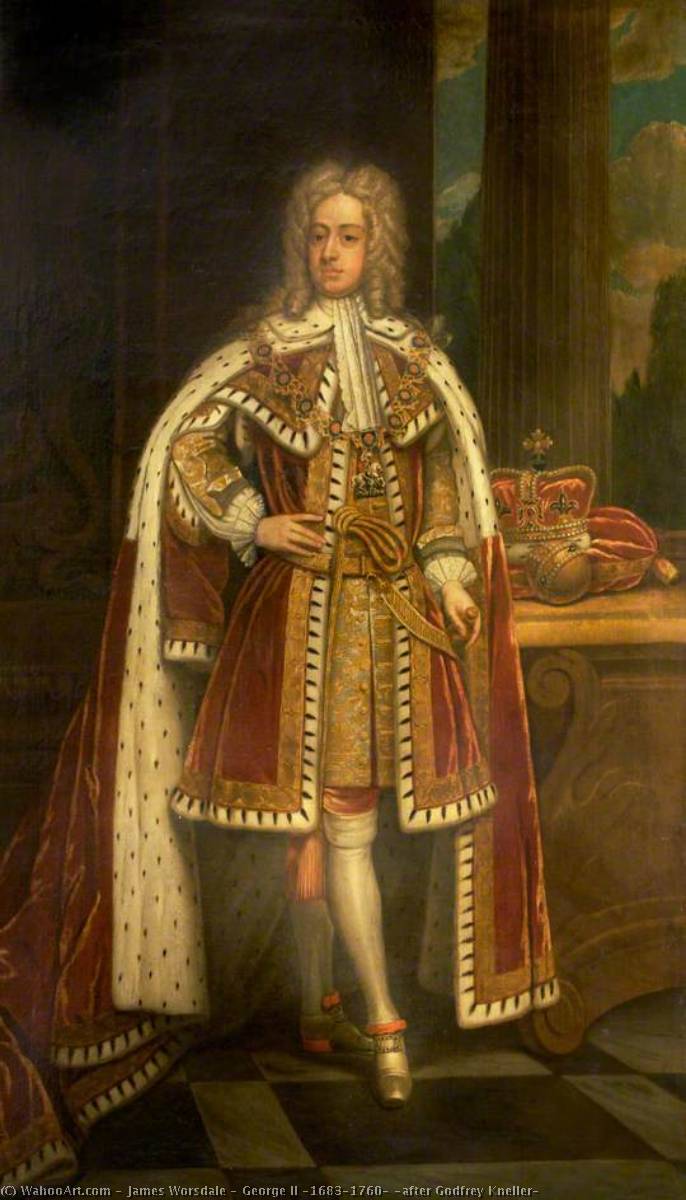
George II (1683–1760) (after Godfrey Kneller)
 1733
1733 234.0 x 144.0 cm
 Castillo de Chester
 Ver más
Adquiera una imagen digital de alta resolución y optimizada, muy superior a la vista previa en línea.
Cada archivo es preparado meticulosamente por nuestros especialistas internos mediante el uso de herramientas avanzadas y un experto retoque manual. Nos aseguramos de que cada imagen posea una claridad excepcional, una precisión cromática impecable y un detalle minucioso.
El archivo final se entrega por correo electrónico en un plazo de 72 horas, optimizado para su uso inmediato en entornos profesionales, editoriales y de impresión. Esta es la misma calidad en la que confían los estudios de diseño, las editoriales y las galerías de primer nivel.
Imagen Digital
Descarga un archivo de alta resolución para exhibición personal, impresión y proyectos creativos. ( Comprar impresión Comprar pintura hecha a mano)
Incluido en cada pedido de imágenes digitales
Entrega digital experta, garantizada.
Al elegir ArtsDot.com, no solo está adquiriendo una imagen; está recibiendo una obra de arte digital mejorada profesionalmente, elaborada con precisión y respaldada por una garantía de satisfacción. Esto es todo lo que incluye su pedido, automáticamente:

Entrega rápida por email
Recibirá su archivo de imagen digital en alta resolución por correo electrónico en un plazo de 72 horas tras realizar su pedido, listo para su uso inmediato.

Archivo digital optimizado por IA
Su obra de arte se optimiza profesionalmente mediante herramientas avanzadas de IA y edición manual, garantizando el máximo detalle, claridad y precisión cromática.

Reenvío gratuito de por vida
¿Has borrado o perdido tu archivo por error? No te preocupes: te lo volveremos a enviar en cualquier momento, sin coste adicional.

Sin gastos de importación, siempre
Disfrute de su obra de arte al instante sin aduanas, aranceles ni gastos de envío; las descargas digitales siempre están libres de impuestos.

Garantía de fidelidad de color
Garantizamos que su imagen digital refleje los colores originales con la mayor fidelidad posible, mediante el uso de herramientas profesionales y gestión del color.

Garantía de satisfacción de 60 días
Si no está satisfecho con su imagen digital, la revisaremos o le reembolsaremos el 100% en un plazo de 60 días, sin preguntas.

100% Garantía de devolución de dinero
¿No está satisfecho? Obtenga un reembolso completo dentro de los 60 días posteriores a la recepción de su archivo digital, sin necesidad de explicaciones.

Descuentos por pedidos grandes
Compra 3 imágenes, ahorra 10% - Compra 5, ahorra 15% - Compra 10+, ahorra 20%. Ideal para proyectos creativos, galerías y agencias.
Obras relacionadas










Biografía del artista
James Worsdale: The Rake’s Painter of Dublin and London
James Worsdale, a figure as captivating as the portraits he created, remains an intriguing enigma within 18th-century art history. Born into poverty in Ireland around 1692 – though the exact date is uncertain – his life was a whirlwind of theatrical performances, literary deception, and surprisingly lucrative commissions for portraiture. More than just a painter, Worsdale cultivated a persona as a flamboyant rake, a witty conversationalist, and a master of social maneuvering, skills that ultimately propelled him to prominence within London’s most fashionable circles despite lacking formal artistic training. His legacy isn't found in the pristine halls of art academies but rather in the vibrant, often scandalous, stories surrounding his life and the striking images he captured.
Worsdale’s early years were marked by a somewhat unconventional apprenticeship under Godfrey Kneller, a renowned portraitist. However, this began with a secret marriage to Kneller's niece – an act that led to his abrupt dismissal. This incident, shrouded in rumor and speculation, shaped Worsdale’s later life, fueling claims of familial connections he frequently exploited for personal gain. He quickly learned to leverage charm and deception, skills that would prove far more valuable than technical skill when it came to securing patronage.
The Hellfire Club and a Literary Persona
Dublin in the mid-18th century was a hotbed of intellectual and social intrigue, and Worsdale found himself at its center. He became deeply involved with the infamous Hellfire Club, a secretive society founded by Richard Parsons, 1st Earl of Rosse, and Lord Blayney. This group, known for its hedonistic pursuits and unorthodox beliefs, provided Worsdale with a platform to hone his social skills and cultivate a reputation as a witty and engaging companion. It was within this environment that he began experimenting with writing plays – often borrowing or adapting existing works – and even acting on stage, initially in the company of Smock Alley Theatre.
Worsdale’s theatrical ventures weren't solely for personal amusement; they were also a means to an end. He skillfully exploited his connections within Dublin’s literary circles, purchasing plays from struggling authors and presenting them as his own creations. This practice, while ethically questionable, allowed him to maintain a consistent stream of income and further solidify his position as a prominent figure in the city's cultural landscape. His association with Laetitia Pilkington, a sharp-tongued writer herself, is particularly noteworthy – she penned a scathing prologue for one of his plays, “The Cure for a Scold,” revealing her awareness of his deceptive practices.
A Painter’s Unconventional Path
Despite his theatrical endeavors and literary schemes, Worsdale's primary claim to fame rests on his portraiture. He possessed an undeniable talent for capturing personality – not through meticulous technique but through astute observation and a keen understanding of human psychology. His subjects weren’t idealized; they were presented with their flaws and eccentricities, reflecting the spirit of the age. He painted a diverse range of individuals, from prominent literary figures like Thomas Southerne and Beau Nash to members of the Hellfire Club and even royalty – including Princess Louisa.
Worsdale’s technique was deliberately understated. He avoided elaborate detailing or dramatic lighting, instead relying on subtle shifts in expression and posture to convey his subjects' character. His portraits were often described as “conversation pieces,” intended to be displayed and discussed rather than admired for their artistic merit. His success wasn’t due to formal training but to his ability to connect with his sitters, extracting a genuine likeness that resonated with viewers.
London Years and Legacy
Worsdale spent periods of time in London, continuing to act and paint portraits for substantial commissions. He maintained connections with Matthew Pilkington, a fellow actor and writer, and continued to exploit his literary contacts. In 1752, he even appeared on the stage as Lady Pentweazle in Foote’s comedy ‘Taste,’ showcasing his versatility and willingness to embrace unconventional roles. His later years were marked by a persistent need for financial security, often achieved through questionable means.
James Worsdale died in London in 1767 at the age of 75. His life was one of contradictions – a painter who lacked formal training, an actor who relied on deception, and a socialite who thrived on wit and charm. While art historians may not celebrate his technical skill, Worsdale’s legacy endures as a fascinating example of a man who successfully navigated the complexities of 18th-century society through intelligence, audacity, and a remarkable ability to cultivate relationships. His portraits remain valuable historical documents, offering glimpses into the lives and personalities of some of the era's most influential figures – and revealing the captivating story of a truly unconventional artist.
Breves datos
- Artistic Movement Or Style: Portraiture
- Artists Who Influenced This Artist: ['Godfrey Kneller']
- Date Of Death: 1767
- Full Name: James Worsdale
- Nationality: Irish and English
- Notable Artworks:
- The Assembly
- Queen of Spain
- Cure for a Scold
- Place Of Birth: Ireland/England

