

 Ver en contexto
 Enviar
 Compartir
 Detalles

 Descargar
 Similares
 Radiografía
 Presentación de diapositivas
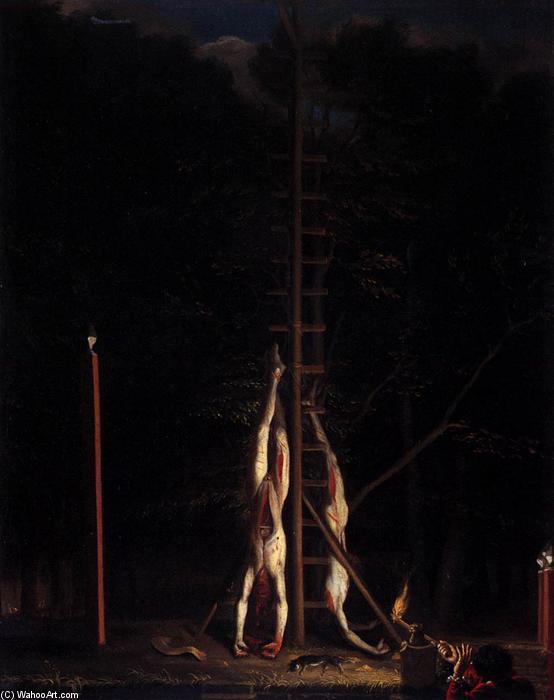
The Corpses of the De Witt Brothers
 Oil On Canvas
- WallArt
- Baroque Realism
 1672
1672 70.0 x 56.0 cm
 Rijksmuseum
 Ver más
Giclée / Impresión de arte
Impresiones giclée o en lienzo de calidad de museo con producción rápida y opciones de acabado flexibles. ( Comprar pintura hecha a mano Comprar imagen)




P118B $10

P118H $10

P118W $10

P438Z $10

P508JH $12

P508YH $12

P805H $10

P805Z $10

P919BZ $10

P919G $10

P919XJ $10

P959ZH $10

P968JZ $12

W106C $8

W218G $10

W218JH $8

W218Y $10

W307PJ $10

W316G $10

W316PJ $8

W316Y $10

W398PJ $8

W4111J $10

W500HY $15

W500JH $15

W692G $12

W849H $8

W940BG $15

W953PJ $8




Elija entre nuestros tamaños predefinidos que respetan las proporciones originales de la obra.

Puede introducir sus propias dimensiones para adaptarse a un marco o espacio específico. Si el tamaño seleccionado no coincide con las proporciones de la imagen original, recortaremos la obra de arte o extenderemos la imagen con un borde con efecto espejo o de color sólido. Se enviará una maqueta digital para su aprobación antes de que comience la producción.
Tenga en cuenta que la vista previa en pantalla no refleja el recorte o la extensión real. Solo la maqueta mostrará con precisión la composición final.
Aunque existen tamaños personalizados, recomendamos seleccionar una dimensión de la lista predefinida para preservar las proporciones originales.
Envío a todo el mundo () en 2 semanas en lugar de las 4/5 semanas estándar. (23 agosto)

Envío exprés gratuito a todo el mundo

Lienzo de lino de alta calidad

Seguro de envío total

Garantía de reembolso de impuestos aduaneros

Garantía de fidelidad cromática exacta

Política de devolución de 60 días (solo por defectos)

Garantía de devolución del 100% del dinero

Descuento por cantidad
 La opción de vidrio solo está disponible en tamaños inferiores a 110 cm.

The Corpses of the De Witt Brothers
Giclée / Impresión de arte
Dimensiones de la reproducción
-


Precio total final
$ 62
Descripción de la pieza
A Macabre Tableau of Political Turmoil: Jan de Baen’s “The Corpses of the De Witt Brothers”
Jan de Baen's "The Corpses of the De Witt Brothers," painted in 1672-75, is not merely a depiction of a brutal event; it’s a chillingly effective indictment of political violence and a haunting meditation on power, betrayal, and the fragility of life. This monumental oil painting, now residing within the esteemed collection of the Rijksmuseum in Amsterdam, captures the aftermath of the shocking lynching of Johan and Cornelis de Witt – two towering figures who dominated Dutch politics for decades before their untimely demise. The scene unfolds with stark realism and dramatic intensity, transporting the viewer directly into the heart of a nation gripped by turmoil.
The painting’s subject matter is undeniably unsettling: the bodies of the brothers are suspended from a tall wooden ladder, their limbs grotesquely contorted against the backdrop of a dark, densely wooded landscape. The executioners' tools—axes, knives, and other implements of violence—are scattered around them, serving as grim reminders of the barbarity that transpired. De Baen doesn’t shy away from depicting the gruesome details – the flayed skin, the severed limbs, the exposed musculature – yet he does so with a controlled hand, imbuing the scene with a sense of solemn dignity rather than mere sensationalism. The figures are rendered in muted tones of brown, grey, and ochre, creating an atmosphere of somber reflection and emphasizing the starkness of death.
A Masterclass in Caravaggian Drama: Technique and Composition
De Baen’s technical skill is immediately apparent in the painting's masterful use of chiaroscuro – a dramatic contrast between light and shadow. A small fire or lantern, positioned at the base of the ladder, casts long, theatrical shadows that engulf much of the scene, intensifying the sense of drama and highlighting key elements such as the tools and a solitary figure clad in dark clothing standing in the foreground. This technique, reminiscent of Caravaggio’s work, draws the viewer's eye to specific details while simultaneously creating an overall atmosphere of foreboding. The artist employs loose brushstrokes, particularly on the wooden ladder and the bodies themselves, lending a sense of texture and roughness that reinforces the painting’s visceral impact.
The composition is carefully orchestrated to maximize its emotional effect. The verticality of the ladder immediately draws the eye upwards, emphasizing the height of the figures and their vulnerability. The surrounding trees are rendered with varying degrees of detail – some sharply defined, others blurred into the background – creating a sense of depth and atmospheric perspective. Geometric shapes—the rectangular ladder, the roughly human forms, and the organic outlines of the foliage—dominate the scene, grounding the chaotic subject matter within a framework of controlled order. The use of size diminution effectively conveys the distance between the foreground figure and the distant trees, further enhancing the painting’s spatial depth.
Historical Context: A Nation in Crisis
“The Corpses of the De Witt Brothers” is inextricably linked to one of the most turbulent periods in Dutch history – the Rampjaar of 1672. This year witnessed a series of devastating military defeats for the Republic, including the loss of its fleet at Gravelines and the invasion of the Netherlands by Louis XIV’s forces. The de Witt brothers, as influential figures within the government, were blamed for the country's misfortunes, fueling widespread resentment and ultimately leading to their brutal assassination. The painting serves as a potent symbol of this period of political instability and social unrest, capturing the collective grief and outrage felt throughout the nation.
It’s important to note that the brothers had been instrumental in shaping Dutch policy for years prior to the Rampjaar. Johan de Witt, as Grand Pensionary, was a shrewd administrator who skillfully navigated the complex political landscape of the Republic. Cornelis de Witt, as bailiff of Dordrecht and representative of the States-General, played a crucial role in defending Dutch interests abroad. Their deaths were not merely a personal tragedy; they represented a significant blow to the stability and prosperity of the nation.
Symbolism and Emotional Resonance
Beyond its historical significance, “The Corpses of the De Witt Brothers” is rich in symbolism. The act of lynching itself represents the dangers of mob rule and the erosion of justice. The exposed bodies serve as a stark reminder of the consequences of political ambition and the fragility of human life. The solitary figure in the foreground, shrouded in darkness, may represent the viewer – an observer confronted with the horrors of violence and injustice. The painting’s somber palette and dramatic lighting evoke feelings of sorrow, dread, and perhaps even a sense of moral outrage. It is a powerful testament to the enduring human capacity for both cruelty and compassion.
Reproductions of this iconic artwork offer a compelling opportunity to engage with a pivotal moment in Dutch history while appreciating De Baen’s exceptional artistic skill. Its haunting imagery continues to resonate today, prompting reflection on themes of power, betrayal, and the enduring consequences of political violence.
Obras relacionadas
Biografía del artista
La elegancia del retrato en la Edad de Oro holandesa
Jan de Baen se erige como una figura prominente dentro de la ilustre Edad de Oro holandesa, celebrado por sus retratos exquisitamente elaborados que capturaron el espíritu y la dignidad de sus sujetos aristocráticos. Nacido en Haarlem el 20 de febrero de 1633, su infancia estuvo marcada por una profunda tragedia; la muerte prematura de sus padres lo dejó huérfano con tan solo tres años. Al quedar bajo el cuidado de su tío, Hinderk Pyman —magistrado y pintor que residía en Emden—, de Baen recibió sus primeras pinceladas de inspiración de un hombre que le inculcaría un aprecio inicial por la labor artística. Esta experiencia formativa impulsó a de Baen hacia una formación formal, comenzando su aprendizaje con el renombrado Jacob Adriaensz Backer en Ámsterdam en 1645, donde perfeccionó sus habilidades junto a uno de los maestros más formidables de la época.
La influencia de Backer resultó ser fundamental, moldeando la sensibilidad estilística de de Baen y estableciendo las bases para sus futuras aspiraciones artísticas. A medida que maduraba, de Baen desarrolló una capacidad única para navegar las comple de jerarquías sociales del siglo XVII a través de su arte. Se convirtió en un pintor que comprendía el sutil lenguaje del estatus, aportando a su obra una clase particular de elegancia y halago que era sumamente apreciada por sus acaudalados mecenas. Este talento para hacer que sus sujetos parecieran tanto reales como notablemente distinguidos le permitió ascender rápidamente en la prominencia, llevándolo finalmente a servir al exiliado Carlos II de Inglaterra durante el tiempo que el monarca permaneció en Holanda.
Un legado de grandeza real y política
La trayectoria de la carrera de de Baen estuvo íntimamente ligada a las cambiantes mareas políticas de Europa. Tras la Restauración de 1660, aunque tuvo oportunidades de acompañar a la corte inglesa de regreso a Londres, optó en su lugar por una vida estable en La Haya. Fue aquí donde su reputación alcanzó su cenit. Su producción artística abarcó diversos géneros, pero el retrato permaneció como su obra dominante, reflejando los intereses multifacéticos del periodo. Ganó renombre por sus representaciones de figuras influyentes como Cornelis de Witt y Johan de Witt, hermanos que ocuparon puestos de considerable poder dentro del gobierno holandés. En estas obras, capturó sus semblanzas con una precisión notable, transmitiendo un sentido de solemnidad y grandeza que inmortalizó su peso político.
Más allá de la élite política holandesa, el pincel de de Baen alcanzó la cúspide misma de la realeza europea. Es célebre por haber capturado el parecido del rey Guillermo III de Inglaterra, consolidando su reputación como un retratista capaz de elevar a sus sujetos a un estatus icónico. Su habilidad para combinar un realismo meticuloso con una estética favorecedora lo convirtió en uno de los pintores de retratos más populares entre 1665 y 1700. Mientras que la historia suele recordar las sombras densas de Rembrandt o el brío de Frans Hals, de Baen ofreció una visión diferente y más pulida: una de luz, refinamiento y la sofisticada gracia de los altos escalafones de La Haya.
Técnica, vida personal y años finales
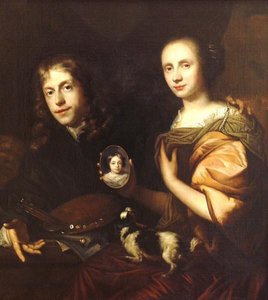
Más allá del realismo meticuloso, la técnica de de Baen lo distinguió por su capacidad para satisfacer el ansia de prestigio de la época. Dominó el arte de presentar texturas —el brillo de la seda, el peso del terciopelo y los intrincados detalles del encaje— de una manera que hablaba directamente a la riqueza de sus modelos. Su trabajo no consistía meramente en documentar, sino en la creación de una persona idealizada. Esta destreza se observa quizás de forma más íntima en su Autorretrato con su esposa, Maria de Kinderen de 1674, donde despliega tanto sus atributos pictóricos como una tierna conexión con su familia, recordándonos que detrás de los grandes retratos de reyes se encontraba un hombre profundamente arraigado en su propia realidad doméstica.
La vida de de Baen fue de triunfo profesional y continuidad personal. Se casó con Maria de Kinderen en 1665 y juntos criaron una numerosa familia, que incluyó al menos ocho hijos, uno de los cuales, Jacobus, siguió los pasos de su padre para convertirse también en pintor. Este ciclo de linaje artístico es un testimonio de la naturaleza perdurable de la tradición holandesa. Jan de Baen falleció en La Haya el 8 de marzo de 1702, dejando tras de sí una obra que sigue siendo una ventana vital al esplendor, la política y la refinada elegancia de la Edad de Oro holandesa.
Jan De Baen
1633 - 1702 , Países Bajos
Datos clave
- Artistic Movement Or Style: Pintura del Siglo de Oro holandés
- Artists Who Influenced This Artist: Jacob Adriaensz Backer
- Date Of Birth: 20 febrero 1633
- Date Of Death: 1702
- Full Name: Jan de Baen
- Nationality: Holandés
- Notable Artworks:
- El Cuerpo De Los Hermanos Witt
- Retrato De Johan De Witt
- Place Of Birth: Haarlem, Países Bajos
Artículos relacionados

Los 10 Maestros del Siglo de Oro Holandés: Arte, Historia y Decoración Exclusiva
Descubre los 10 imprescindibles del Siglo de Oro Holandés: Rembrandt, Vermeer y más. Explora la historia, técnica y belleza de estos lienzos clásicos. Encuentra reproducciones de arte exclusivas para decorar tu hogar en .
Pieter de Hooch: Illuminating Dutch Domestic Life & Golden Age Charm
Explore the captivating world of Pieter de Hooch, a master of Dutch Golden Age painting. Discover his innovative use of light, intimate domestic scenes, and lasting influence on art history. Learn more at ArtsDot.
Jan Steen: A Master of Dutch Genre Painting & the Golden Age
Explore the life & art of Jan Steen, a leading Dutch Golden Age painter renowned for his humorous genre scenes & insightful social commentary. Discover his techniques, legacy, and collecting tips.
Willem van de Velde the Elder: Master of Maritime Painting & Chronicler of the Dutch Golden Age
Discover the captivating maritime paintings of Willem van de Velde the Elder, a master chronicler of the Dutch Golden Age. Explore his unparalleled realism and lasting influence on naval art history.

Reflejos de una Época Dorada: La Pintura Barroca Holandesa y la Innovación Cultural
Descubra la riqueza y el detalle de la pintura barroca holandesa del Siglo de Oro. Explore las obras maestras de Rembrandt, Vermeer y otros artistas clave. Análisis experto e historia cultural.

