 Ver en contexto
 Enviar
 Compartir
 Detalles

 Descargar
 Similares
 Radiografía
 Presentación de diapositivas
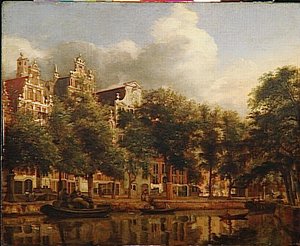
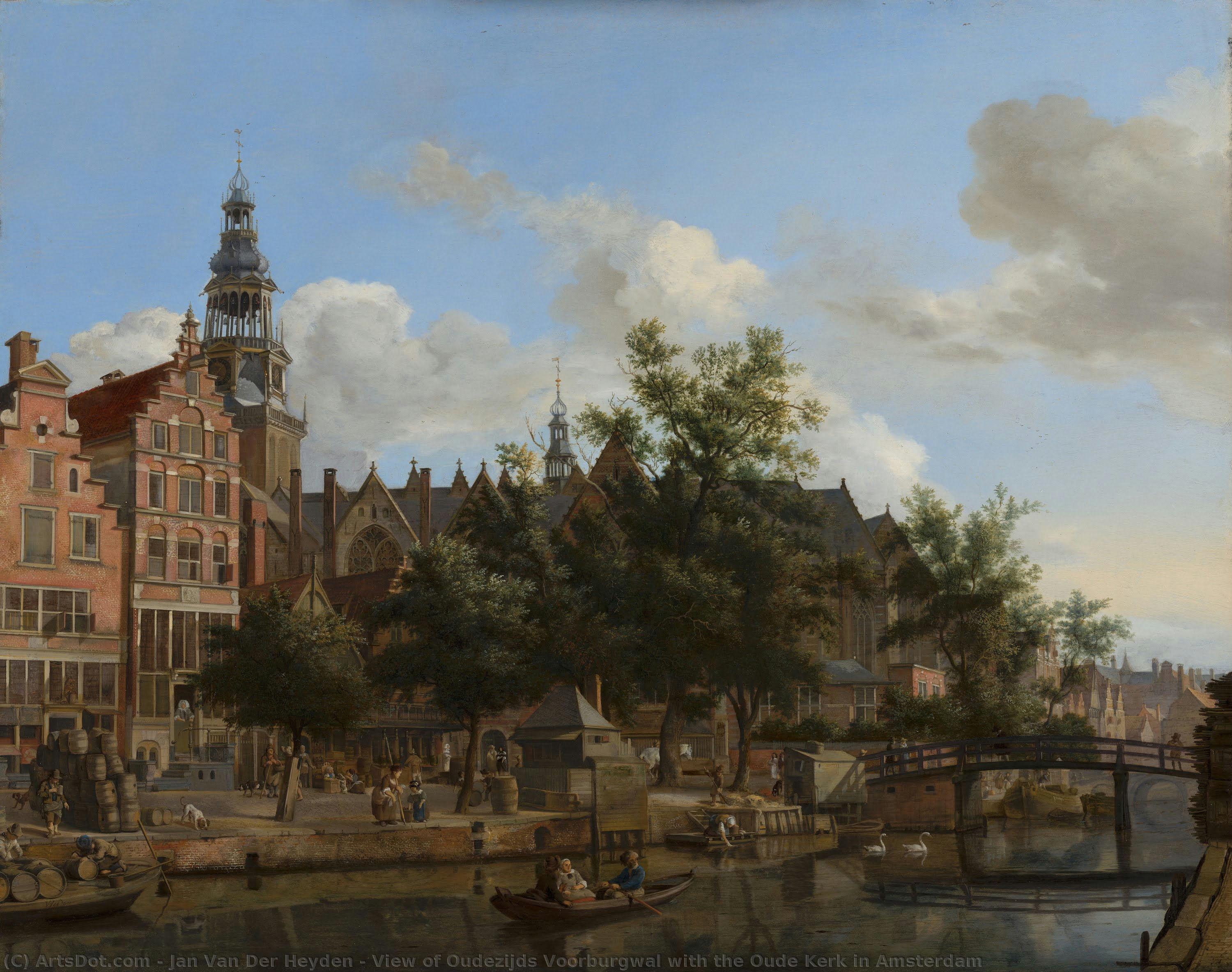
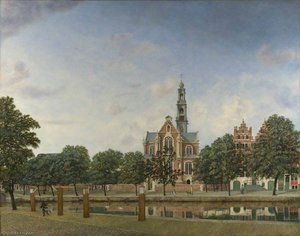
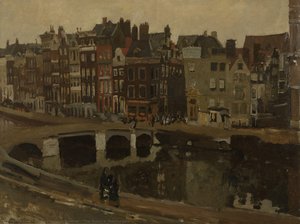
View of Oudezijds Voorburgwal with the Oude Kerk in Amsterdam
 Acrylic On Canvas
- WallArt
- Dutch Golden Age
 1670
1670 41.0 x 52.0 cm
 Mauritshuis
 Ver más
Reproducción al óleo hecha a mano
Óleo sobre lienzo pintado a mano en el tamaño y marco de su elección, realizado por encargo por nuestros artistas. ( Comprar impresión Comprar imagen)




P118B $10

P118H $10

P118W $10

P438Z $10

P508JH $12

P508YH $12

P805H $10

P805Z $10

P919BZ $10

P919G $10

P919XJ $10

P959ZH $10

P968JZ $12

W106C $8

W218G $10

W218JH $8

W218Y $10

W307PJ $10

W316G $10

W316PJ $8

W316Y $10

W398PJ $8

W4111J $10

W500HY $15

W500JH $15

W692G $12

W849H $8

W940BG $15

W953PJ $8




Elija entre nuestros tamaños predefinidos que respetan las proporciones originales de la obra.

Puede ingresar sus propias dimensiones para adaptarse a un marco o espacio específico. Si el tamaño seleccionado no coincide con las proporciones de la imagen original, recortaremos la obra o extenderemos la pintura con elementos adicionales pintados a mano. Se le enviará una maqueta digital para su aprobación antes de comenzar la producción.
Tenga en cuenta que la vista previa en pantalla no refleja el recorte o la extensión reales. Solo la maqueta mostrará con precisión la composición final.
Si bien existen tamaños personalizados, recomendamos seleccionar una dimensión de la lista predefinida para preservar las proporciones originales.
Tras realizar el pedido, el equipo de ArtsDot.com enviará un correo electrónico al cliente para solicitar instrucciones y proporcionarle una vista previa del boceto.
Envío a todo el mundo () en 3-4 semanas en lugar de las 5 semanas estándar. (2 septiembre). Sin comprometer la calidad.

Envío exprés gratuito a todo el mundo

Lienzo de lino de alta calidad

Seguro de envío total

Garantía de reembolso de impuestos aduaneros

Garantía de fidelidad cromática exacta

Política de devolución de 60 días (solo por defectos)

Garantía de devolución del 100% del dinero

Descuento por cantidad
 La opción de vidrio solo está disponible en tamaños inferiores a 110 cm.

View of Oudezijds Voorburgwal with the Oude Kerk in Amsterdam
Técnica de reproducción
Dimensiones de la reproducción
-


Precio total final
$ 263
A Glimpse into 17th Century Amsterdam: Jan van der Heyden’s Canal Masterpiece
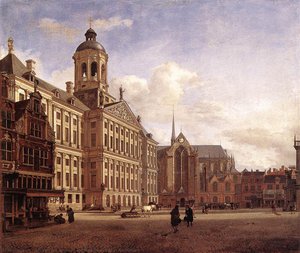
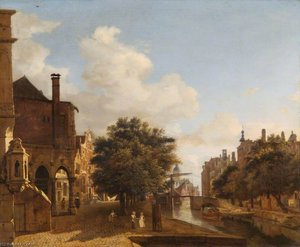
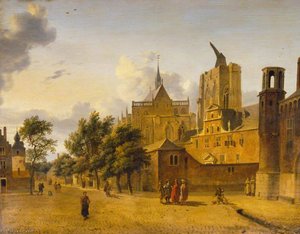
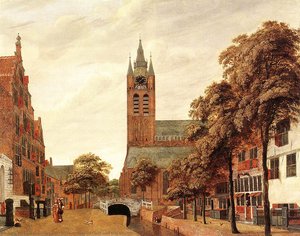
Jan van der Heyden's “View of Oudezijds Voorburgwal with the Oude Kerk in Amsterdam” isn’t merely a painting; it’s a meticulously crafted window into the vibrant heart of 17th-century Amsterdam. Completed around 1670, this remarkable cityscape transcends simple topographical representation, offering instead a profound sense of urban life and the burgeoning spirit of a thriving mercantile capital. Van der Heyden, already renowned as an innovative fire engine designer and street lighting pioneer, here showcases his exceptional skill in capturing the essence of a bustling canal scene – a testament to his keen observation and artistic talent.
The painting immediately draws the eye with its dynamic composition. The foreground is dominated by the Oude Kerk, Amsterdam’s oldest church, rendered with astonishing detail. Its weathered brickwork, intricate gables, and soaring spire are depicted with a precision that speaks to Van der Heyden's dedication to accuracy. Beyond the church, the canal – the Oudezijds Voorburgwal – flows steadily, reflecting the light and activity of the surrounding buildings. Numerous boats, from modest barges to larger merchant vessels, navigate the waterway, their presence adding layers of movement and texture to the scene.
The Precision of Detail: Van der Heyden’s Technique
What truly distinguishes this work is Van der Heyden's masterful technique. He employed a characteristic “pointillé” style – a dense network of tiny, closely spaced brushstrokes – that creates an illusion of incredible depth and realism. This method, honed through his experience in glass painting (a craft demanding meticulous control), allows him to build up surfaces with subtle gradations of light and shadow, imbuing the buildings with a palpable sense of solidity and volume. Notice how he captures the reflections shimmering on the water’s surface – a testament to his understanding of atmospheric perspective and light behavior.
Furthermore, Van der Heyden wasn't content with simply replicating what he saw. He subtly enhanced the scene with figures—pedestrians strolling along the quays, merchants conducting business, and children playing in the streets. These additions, likely executed by his collaborator Adriaen van de Velde (a skilled figure painter), breathe life into the cityscape, transforming it from a static representation into a dynamic tableau of everyday activity. The inclusion of a clock tower adds another layer of detail, anchoring the scene within the temporal flow of Amsterdam’s daily rhythm.
Symbolism and Context: A City in Transition
“View of Oudezijds Voorburgwal with the Oude Kerk” offers more than just a picturesque snapshot; it reflects the social and economic transformations occurring in Amsterdam during the late 17th century. The city was experiencing an unprecedented period of growth, fueled by its role as a major center for trade, finance, and intellectual exchange. The canal system, like the one depicted here, was the lifeblood of this burgeoning economy, facilitating the movement of goods and people throughout the region.
The Oude Kerk itself holds significant symbolic weight. As Amsterdam’s oldest church, it represented the enduring strength of the Calvinist faith amidst a rapidly changing world. Van der Heyden's depiction of the church underscores its importance as a focal point for community life and spiritual reflection. The painting can be interpreted as a celebration of Amsterdam’s prosperity and civic pride – a visual testament to the city’s remarkable dynamism and cultural vitality.
Bringing History Home: Reproductions and Artistic Legacy
Reproductions of “View of Oudezijds Voorburgwal with the Oude Kerk in Amsterdam” offer a captivating way to bring this iconic scene into your home or office. Whether you choose a high-quality print on canvas, paper, or metal, you’ll be able to appreciate Van der Heyden's meticulous detail and masterful composition. This painting remains a cornerstone of Dutch Golden Age art, showcasing the era’s fascination with urban landscapes and its commitment to capturing the beauty and complexity of everyday life.
Obras relacionadas
Biografía del artista
Primeros Años y Formación
- Nacimiento: Gorinchem, Países Bajos (1637)
- Fallecimiento: 1712
- Jan van der Heyden nació en Gorinchem, hijo de un padre menonita. Su familia se mudó a Ámsterdam en 1646.
- Probablemente recibió su formación artística inicial dentro de su familia, posiblemente por parte de su hermano, Goris van der Heyden, que fabricaba y vendía espejos.
- Se cree que pudo haber aprendido dibujo de un pintor de vidrieras, potencialmente Jacob van der Ulft, un reconocido pintor de vidrieras de Gorinchem.
- Las primeras obras incluyeron pinturas sobre vidrio (verre eglomisé), lo que sugiere un enfoque temprano en las artes decorativas.
Desarrollo Artístico y Obras Clave
- Van der Heyden se especializó en paisajes urbanos, convirtiéndose en uno de los principales pintores arquitectónicos del Siglo de Oro Neerlandés.
- Fue uno de los primeros pintores holandeses en dedicar la mayor parte de su producción a vistas de ciudades.
- Sus pinturas a menudo representaban diversas vistas de Ámsterdam, así como paisajes de otras ciudades holandesas, flamencas y alemanas.
- Obras notables incluyen:
- Vista de Oudezijds Voorburgwal con la Oude Kerk en Ámsterdam
- Naturaleza muerta con Globo, Libros y Seda China
- Una Fantasía Arquitectónica
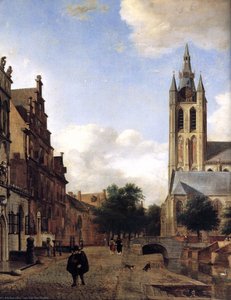
- Vista de Delft con el Viejo Iglesia
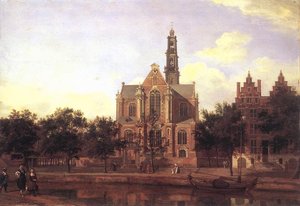
- Vista de la Westerkerk, Ámsterdam
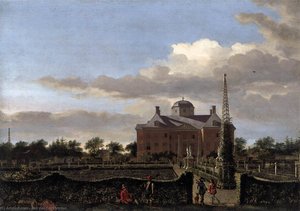
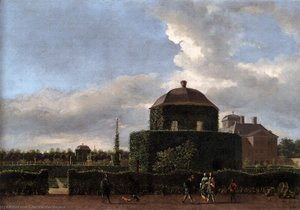
- Huis ten Bosch en La Haya y su Jardín Formal (Vista desde el Este)
- A menudo pintaba fincas campestres, como Goudestein, encargadas por Joan Huydecoper II.
- Su estilo se caracteriza por un manejo detallado y una representación realista de los elementos arquitectónicos.
Innovaciones en Ingeniería y Contribuciones al Combate contra Incendios
- Más allá de la pintura, Van der Heyden fue un ingeniero e inventor con importantes contribuciones a la tecnología contra incendios.
- Junto con su hermano Nicolaes, inventó mejoras a la manguera contra incendios en 1672.
- Modificó los camiones manuales de bomberos y reorganizó el cuerpo de bomberos voluntarios (1685).
- Escribió e ilustró *Brandspuiten-boek*, el primer manual sobre extinción de incendios.
- Diseñó e implementó un sistema de alumbrado público para Ámsterdam, que permaneció en funcionamiento durante más de un siglo.
Influencias y Significado Histórico
- Van der Heyden estuvo influenciado por maestros holandeses anteriores conocidos por su detalle arquitectónico y realismo.
- Su enfoque innovador a los paisajes urbanos lo estableció como pionero en el género.
- Sus representaciones detalladas de la vida urbana brindan valiosas perspectivas sobre el Ámsterdam del siglo XVII y otras ciudades.
- Sus contribuciones en ingeniería mejoraron significativamente las capacidades contra incendios, impactando la seguridad urbana.
- Anticipó movimientos artísticos posteriores con sus "fantasías arquitectónicas", combinando elementos de diferentes estructuras.
Vida Posterior y Legado
- Van der Heyden se casó con Sara ter Hiel en 1661 y vivió en el canal Herengracht en Ámsterdam.
- Murió como un hombre rico en 1712, dejando atrás una sustancial herencia que incluía más de setenta de sus propias pinturas.
- Su único alumno conocido fue su hijo, Jan.
- El legado de Van der Heyden radica no solo en sus logros artísticos sino también en sus invenciones prácticas que moldearon la vida urbana y la seguridad.
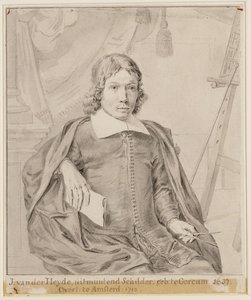
Jan van der Heyden
1637 - 1712 , Países Bajos
Datos clave
- Artistas Que Influyeron: ['Jacob van der Ulft']
- Fecha De Fallecimiento: 28 de marzo de 1712
- Fecha De Nacimiento: 5 de marzo de 1637
- Lugar De Nacimiento: Gorinchem, Países Bajos
- Movimiento Artístico: Barroco Neerlandés
- Nacionalidad: Neerlandés
- Nombre Completo: Jan van der Heyden
- Obras Notables:
- Vista de Oudezijds Voorburgwal
- Bodegón con Globo y Libros
- Fantasía Arquitectónica
- Vista de Delft con Iglesia Vieja
- Vista de la Westerkerk, Ámsterdam
- Huis ten Bosch, La Haya
Artículos relacionados

Los 10 Maestros del Siglo de Oro Holandés: Arte, Historia y Decoración Exclusiva
Descubre los 10 imprescindibles del Siglo de Oro Holandés: Rembrandt, Vermeer y más. Explora la historia, técnica y belleza de estos lienzos clásicos. Encuentra reproducciones de arte exclusivas para decorar tu hogar en .

Rembrandt van Rijn: Las 25 Obras Maestras que Definen un Genio | Arte, Historia y Decoración
Descubre las 25 obras maestras de Rembrandt van Rijn, el genio del barroco holandés. Explora su historia, técnica y simbolismo en retratos icónicos como 'La Ronda Nocturna'. Encuentra reproducciones de arte exclusivas para decorar tu hogar con ArtsDot.com.
Jan Steen: A Master of Dutch Genre Painting & the Golden Age
Explore the life & art of Jan Steen, a leading Dutch Golden Age painter renowned for his humorous genre scenes & insightful social commentary. Discover his techniques, legacy, and collecting tips.

Reflejos de una Época Dorada: La Pintura Barroca Holandesa y la Innovación Cultural
Descubra la riqueza y el detalle de la pintura barroca holandesa del Siglo de Oro. Explore las obras maestras de Rembrandt, Vermeer y otros artistas clave. Análisis experto e historia cultural.

La Luz y la República: Innovación Artística en el Siglo de Oro Neerlandés
Descubra la innovación artística del Siglo de Oro Neerlandés. Explore las obras maestras de Rembrandt y Vermeer, técnicas revolucionarias y el legado perdurable de este florecimiento cultural. ¡Sumérjase en la luz y la belleza!