

 Ver en contexto
 Enviar
 Compartir
 Detalles

 Descargar
 Similares
 Radiografía
 Presentación de diapositivas
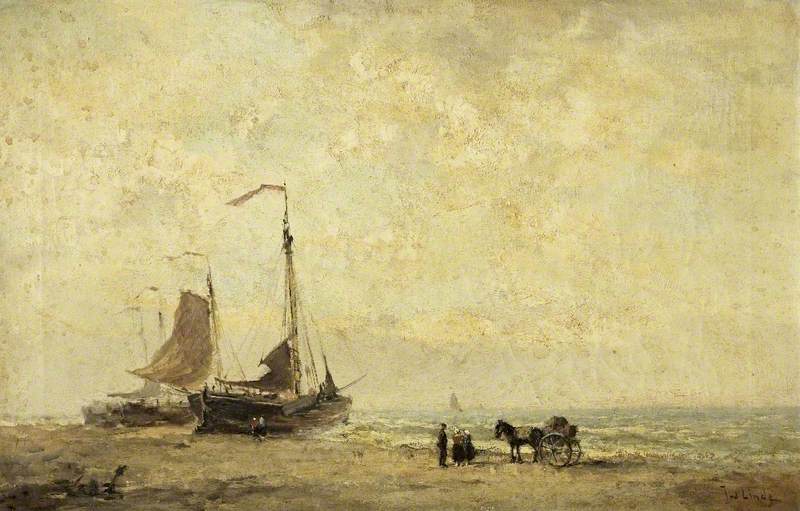
Dutch Seascape with Fishing Boats
 37.0 x 56.0 cm
 Ver más
Reproducción al óleo hecha a mano
Óleo sobre lienzo pintado a mano en el tamaño y marco de su elección, realizado por encargo por nuestros artistas. ( Comprar impresión Comprar imagen)




































Elija entre nuestros tamaños predefinidos que respetan las proporciones originales de la obra.

Puede ingresar sus propias dimensiones para adaptarse a un marco o espacio específico. Si el tamaño seleccionado no coincide con las proporciones de la imagen original, recortaremos la obra o extenderemos la pintura con elementos adicionales pintados a mano. Se le enviará una maqueta digital para su aprobación antes de comenzar la producción.
Tenga en cuenta que la vista previa en pantalla no refleja el recorte o la extensión reales. Solo la maqueta mostrará con precisión la composición final.
Si bien existen tamaños personalizados, recomendamos seleccionar una dimensión de la lista predefinida para preservar las proporciones originales.
Tras realizar el pedido, el equipo de ArtsDot.com enviará un correo electrónico al cliente para solicitar instrucciones y proporcionarle una vista previa del boceto.
Envío a todo el mundo () en 3-4 semanas en lugar de las 5 semanas estándar. (30 agosto). Sin comprometer la calidad.

Envío exprés gratuito a todo el mundo

Lienzo de lino de alta calidad

Seguro de envío total

Garantía de reembolso de impuestos aduaneros

Garantía de fidelidad cromática exacta

Política de devolución de 60 días (solo por defectos)

Garantía de devolución del 100% del dinero

Descuento por cantidad
 La opción de vidrio solo está disponible en tamaños inferiores a 110 cm.

Dutch Seascape with Fishing Boats
Técnica de reproducción
Dimensiones de la reproducción
-


Precio total final
$ 263
Obras relacionadas
Biografía del artista
Jan van der Linde: A Painter of Tranquil Dutch Landscapes
Jan van der Linde (1864 – 1945) was a Dutch landscape painter who achieved considerable renown for his serene depictions of the Dutch countryside, particularly windmills and river scenes. Born in Amsterdam, he possessed an innate talent for capturing the subtle beauty of the natural world—a fascination that would define his artistic career and solidify his place as one of the most respected figures within the Hague School movement.- Early Life & Education: Van der Linde’s formative years were spent immersed in the intellectual atmosphere of Amsterdam, where he studied at the Koninklijke Academie voor Beeldende Künsten (Royal Academy for Fine Arts). He initially pursued studies in architecture but quickly gravitated towards painting, recognizing its capacity to convey emotion and observation with unparalleled precision.
- Influence of Impressionism: Like many artists of his time, Van der Linde was profoundly impacted by the burgeoning Impressionist movement spearheaded by Claude Monet and Pierre-Auguste Renoir. These painters’ emphasis on capturing fleeting moments of light and color instilled in him a desire to move beyond traditional academic conventions—a pivotal shift that would propel him toward a distinctly personal artistic vision.
- The Hague School: Van der Linde joined the Hague School around 1892, alongside artists such as Isaac Israelson and Anton Mauve. This collective championed a distinctive aesthetic characterized by muted palettes, atmospheric perspective, and an unwavering commitment to portraying landscapes with uncompromising realism. The Hague School’s rejection of theatrical grandeur favored instead contemplative observation and subtle tonal gradations—values that perfectly mirrored Van der Linde's artistic sensibilities.
Notable Works & Artistic Style
Van der Linde’s oeuvre comprises approximately 300 paintings, predominantly landscapes featuring windmills, rivers, meadows, and coastal vistas. His technique was meticulously honed through years of diligent practice—employing a layered glazing method that allowed him to achieve remarkable luminosity and depth. He skillfully utilized atmospheric perspective, subtly blurring distant elements to convey the feeling of airiness and distance—a hallmark of Impressionist influence. Furthermore, his compositions often incorporated carefully positioned figures—typically farmers or laborers—to imbue his landscapes with human presence and narrative resonance.- “The Windmill” (1896): This iconic painting exemplifies Van der Linde’s mastery of tonal gradation and atmospheric perspective. The windmill dominates the scene, bathed in soft sunlight, while its surroundings are rendered with delicate brushstrokes that capture the hazy stillness of a Dutch summer day.
- “The River Maas” (1897): Another celebrated masterpiece showcases Van der Linde’s ability to convey emotion through color and texture. The river flows serenely beneath a canopy of trees—creating an immersive experience for the viewer, mirroring the tranquility of rural life.
Legacy & Historical Significance
Jan van der Linde's contribution to Dutch landscape painting is undeniable. He remains revered as one of the foremost exponents of Impressionism within the Hague School—a movement that profoundly shaped the artistic landscape of the late 19th century. His paintings continue to inspire admiration for their understated beauty and profound psychological insight—serving as enduring emblems of Dutch cultural heritage. Beyond his artistic achievements, Van der Linde’s unwavering dedication to capturing the essence of the natural world cemented his reputation as a visionary artist who championed a humanist aesthetic rooted in observation and contemplation. He died peacefully in Amsterdam in 1945, leaving behind an indelible mark on the history of art.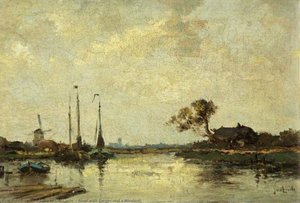
jan van der linde
1864 - 1945
Datos clave
- Artistic Movement Or Style: Impressionism
- Artists Or Movements Influenced By This Artist: ['Post-Impressionism']
- Artists Who Influenced This Artist:
- Claude Monet
- Vincent van Gogh
- Date Of Birth: 1864
- Date Of Death: 1945
- Full Name: Jan van der Linde
- Nationality: Dutch
- Notable Artworks:
- River with Barges and a Windmill
- Dutch Seascape with Fishing Boats
- Place Of Birth: Netherlands

