 Ver en contexto
 Enviar
 Compartir
 Detalles

 Descargar
 Similares
 Radiografía
 Presentación de diapositivas
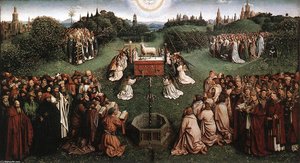
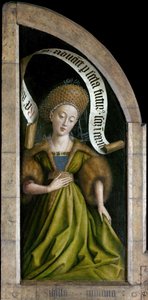
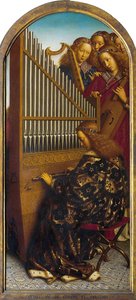
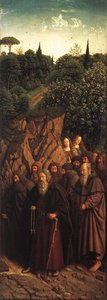
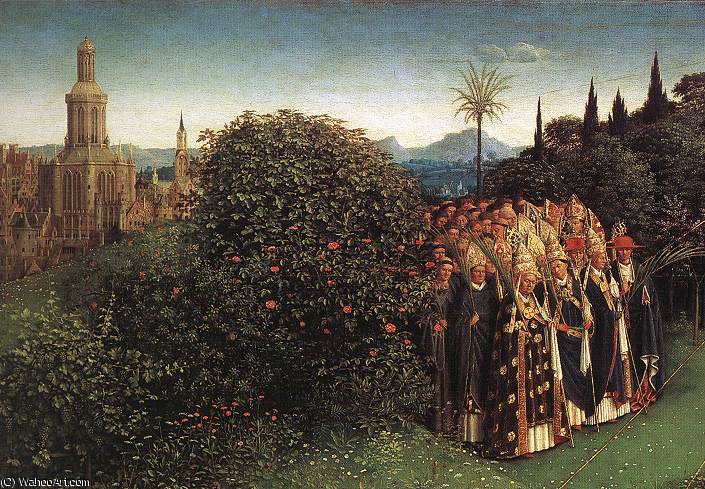
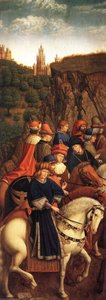
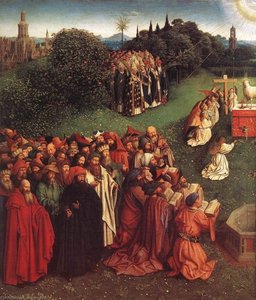
The Ghent Altarpiece Adoration of the Lamb (detail top left)

 Ver más
Reproducción al óleo hecha a mano
Óleo sobre lienzo pintado a mano en el tamaño y marco de su elección, realizado por encargo por nuestros artistas. ( Comprar impresión Comprar imagen)




P118B $10

P118H $10

P118W $10

P438Z $10

P508JH $12

P508YH $12

P805H $10

P805Z $10

P919BZ $10

P919G $10

P919XJ $10

P959ZH $10

P968JZ $12

W106C $8

W218G $10

W218JH $8

W218Y $10

W307PJ $10

W316G $10

W316PJ $8

W316Y $10

W398PJ $8

W4111J $10

W500HY $15

W500JH $15

W692G $12

W849H $8

W940BG $15

W953PJ $8




Elija entre nuestros tamaños predefinidos que respetan las proporciones originales de la obra.

Puede ingresar sus propias dimensiones para adaptarse a un marco o espacio específico. Si el tamaño seleccionado no coincide con las proporciones de la imagen original, recortaremos la obra o extenderemos la pintura con elementos adicionales pintados a mano. Se le enviará una maqueta digital para su aprobación antes de comenzar la producción.
Tenga en cuenta que la vista previa en pantalla no refleja el recorte o la extensión reales. Solo la maqueta mostrará con precisión la composición final.
Si bien existen tamaños personalizados, recomendamos seleccionar una dimensión de la lista predefinida para preservar las proporciones originales.
Tras realizar el pedido, el equipo de ArtsDot.com enviará un correo electrónico al cliente para solicitar instrucciones y proporcionarle una vista previa del boceto.
Envío a todo el mundo () en 3-4 semanas en lugar de las 5 semanas estándar. (5 septiembre). Sin comprometer la calidad.

Envío exprés gratuito a todo el mundo

Lienzo de lino de alta calidad

Seguro de envío total

Garantía de reembolso de impuestos aduaneros

Garantía de fidelidad cromática exacta

Política de devolución de 60 días (solo por defectos)

Garantía de devolución del 100% del dinero

Descuento por cantidad
 La opción de vidrio solo está disponible en tamaños inferiores a 110 cm.

The Ghent Altarpiece Adoration of the Lamb (detail top left)
Técnica de reproducción
Dimensiones de la reproducción
-


Precio total final
$ 263
A Masterpiece Unveiled: The Ghent Altarpiece
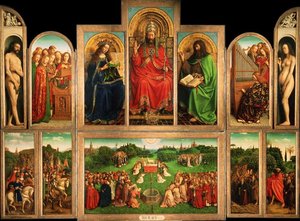
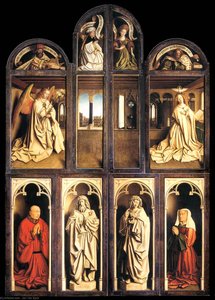
The Ghent Altarpiece, formally known as “The Adoration of the Mystic Lamb,” stands not merely as a painting but as a profound testament to the burgeoning artistic spirit of 15th-century Flanders. Created by Jan van Eyck and his brother Hubert between 1422 and 1432, this monumental polyptych dominates its space within St Bavo’s Cathedral in Ghent, Belgium, captivating viewers with its astonishing detail and revolutionary techniques. It's a work that transcends mere religious depiction, offering a glimpse into the intellectual and cultural landscape of a world on the cusp of transformation – a world where meticulous observation, innovative materials, and burgeoning humanist ideals began to intertwine.

The Revolutionary Technique: Oil Paint and the Dawn of Realism
What immediately arrests the eye is the sheer luminosity and depth achieved through Jan van Eyck’s pioneering use of oil paint. Prior to this, artists primarily relied on tempera, a medium that produced relatively flat, matte surfaces. Oil paint, however, allowed for layering, blending, and subtle gradations of tone – creating an unprecedented level of realism and tactile quality. The meticulous detail evident in the altarpiece’s rendering of fabrics, textures, and even individual strands of hair is a direct consequence of this innovation. Van Eyck's mastery extended to glazing techniques, where thin layers of translucent paint were applied over dried underlayers, building up color and depth with remarkable precision. This wasn’t simply about replicating reality; it was about capturing the *essence* of reality – its light, shadow, and subtle nuances.
A Narrative of Redemption: Symbolism and Allegory
The Ghent Altarpiece is a complex tapestry of religious symbolism, interwoven with allegorical references. At its heart lies the “Adoration of the Mystic Lamb,” representing Christ as the sacrificial lamb offered for humanity’s salvation. The scene unfolds within a meticulously rendered landscape, featuring a castle, a river, and a grove of trees – elements laden with symbolic meaning. The figures surrounding the lamb are not merely saints; they represent virtues like Faith, Hope, Charity, and Prudence, each depicted in exquisite detail. The inclusion of Adam and Eve, along with the prophets and sibyls, establishes a lineage connecting creation to redemption, reinforcing the central theme of divine grace. Even the colors themselves carry symbolic weight – blues and greens representing heaven and nature, while reds and golds evoke royalty and divinity.
A Window into its Time: Context and Legacy
The creation of the Ghent Altarpiece coincided with a period of significant social and intellectual change in Europe. The rise of mercantile wealth fueled artistic patronage, while burgeoning humanist thought emphasized observation, reason, and human potential. Jan van Eyck’s work reflects this evolving worldview – a celebration of beauty, detail, and the dignity of humankind. The altarpiece's journey through history—including its theft, hiding, and eventual restoration—only adds to its mystique. Today, it stands as a powerful symbol of artistic achievement, religious devotion, and the enduring legacy of Jan van Eyck, one of the true giants of Western art. Its influence can be seen in countless subsequent works, cementing its place as a cornerstone of the Early Netherlandish style and a pivotal moment in the history of painting.
Obras relacionadas
Biografía del artista
vida temprana y carrera
Jan van Eyck, una figura destacada del temprano movimiento de la pintura neerlandesa, nació alrededor de 1390 en Maaseik, actual Bélgica. Para 1422, se había establecido como un maestro pintor con un taller y asistentes en La Haya. Notablemente, sirvió a Juan III el Cruel y más tarde Felipe el Bueno, duque de Borgoña, como pintor de la corte, gozando de alto prestigio e involucrándose en actividades diplomáticas.contribuciones artísticas
Las obras de Van Eyck, inicialmente basadas en el estilo gótico internacional, trascendieron sus límites a través de su enfoque naturalista mejorado y el uso innovador del óleo. Esto estableció un nuevo estándar en el arte, convirtiéndolo en un pionero del temprano movimiento de la pintura neerlandesa. Algunas de sus obras notables incluyen:- Dios el Padre (212 x 83 cm, renacimiento del norte, óleo sobre tabla, ver en ArtsDot.com)
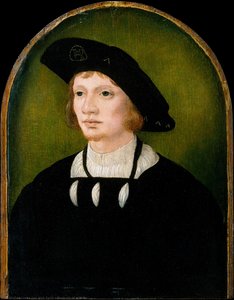
- Retrato de un joven (33 x 19 cm, renacimiento del norte, óleo sobre tabla, ver en ArtsDot.com)
- Triptico de Dresde (Virgen y Niño con San Miguel y Santa Catalina y una donante) (28 x 38 cm, Gemäldegalerie alte meister, Dresde, Alemania, renacimiento del norte, madera, ver en ArtsDot.com)
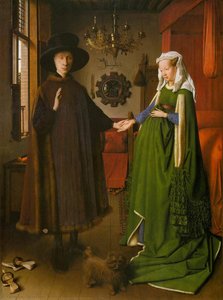
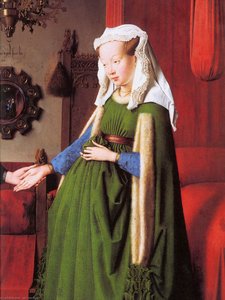
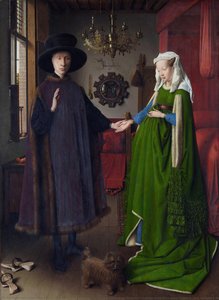
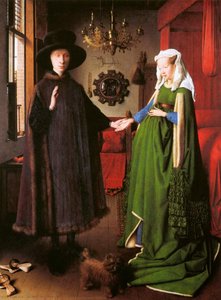
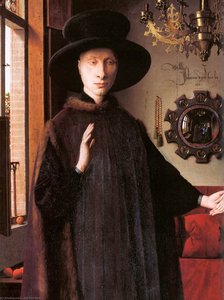
- Retrato de Giovanni Arnolfini y su esposa (detalle) (National Gallery, Londres, Reino Unido, óleo, ver en ArtsDot.com)
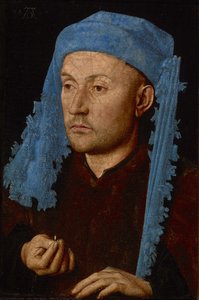
- Hombre con turbante azul (17 x 23 cm, el Museo Nacional de Arte de Rumanía, Bucarest, Rumania, renacimiento del norte, madera, ver en ArtsDot.com)
legado e influencia
La influencia de Van Eyck fue profunda, allanando el camino para la floreciente tradición de la pintura neerlandesa temprana. Su uso innovador del óleo añadió profundidad y realismo a sus obras, convirtiéndolo en una figura **renombrada en el mundo del arte**. Para explorar más las obras de Jan van Eyck y el movimiento de la pintura neerlandesa temprana, visite la página de Jan van Eyck en ArtsDot.com.lecturas adicionales
* Wikipedia: [Jan van Eyck](https://en.wikipedia.org/wiki/jan_van_eyck) * ArtsDot.com: pintor neerlandés del norte * ArtsDot.com: el movimiento de arte neerlandés temprano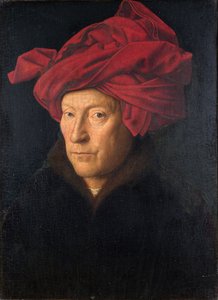
Jan van Eyck
1390 - 1441 , Países Bajos
Datos clave
- Artistic Movement Or Style: Pintura flamenca temprana
- Artists Or Movements Influenced By This Artist: ['Escuela Flamenca']
- Date Of Birth: c. 1390
- Date Of Death: 1441
- Full Name: Jan van Eyck
- Nationality: Flemeco
- Notable Artworks:
- Triptico de Gante
- Retrato de Arnolfini
- Place Of Birth: Maastricht, Países Bajos
Artículos relacionados

Los 10 Maestros del Primitivo Flamenco: Obras que Definen un Arte Inigualable | ArtsDot
Descubre los 10 imprescindibles del Primitivo Flamenco: Jan van Eyck, Robert Campin y más. Explora la historia, simbolismo y técnica de estas obras maestras renacentistas tempranas. Encuentra reproducciones de arte de museo en ArtsDot.com.
Jan van Eyck: Innovation, Symbolism & the Dawn of Early Netherlandish Painting
Explore the revolutionary art of Jan van Eyck! Discover his groundbreaking oil painting techniques, hidden symbolism, and lasting impact on the Early Netherlandish Renaissance. A deep dive for art enthusiasts.

Renacimiento Flamenco Temprano: 10 Obras Maestras que Cambiaron la Historia del Arte | ArtsDot
Descubre las 10 obras maestras del Renacimiento Flamenco Temprano. Explora la historia de Jan van Eyck, Robert Campin y más. Reproducciones de arte en ArtsDot.com para decorar tu hogar con belleza y elegancia. ¡Explora la colección online!
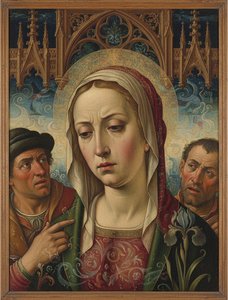
Hugo van der Goes: Devotion, Innovation & the Psychological Depth of Early Netherlandish Painting
Explore the revolutionary art of Hugo van der Goes – a master of Early Netherlandish painting renowned for his dramatic realism, psychological depth & profound influence on Renaissance artists. Discover his iconic works and lasting legacy.
El Amanecer de una Nueva Visión: Contexto Histórico e Influencia Borgoña en el Renacimiento Temprano Flamenco
Descubre la riqueza del Renacimiento Temprano Flamenco y la influencia del Estado Borgoñón. Analizamos a Jan van Eyck, Robert Campin y el simbolismo oculto en sus obras maestras. ¡Explora la historia del arte con ArtsDot!