 Ver en contexto
 Enviar
 Compartir
 Detalles

 Descargar
 Similares
 Radiografía
 Presentación de diapositivas
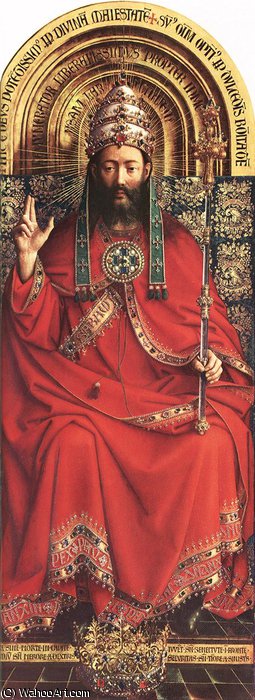
the ghent altarpiece god almighty

 Ver más
Giclée / Impresión de arte
Impresiones giclée o en lienzo de calidad de museo con producción rápida y opciones de acabado flexibles. ( Comprar pintura hecha a mano Comprar imagen)




P118B $10

P118H $10

P118W $10

P438Z $10

P508JH $12

P508YH $12

P805H $10

P805Z $10

P919BZ $10

P919G $10

P919XJ $10

P959ZH $10

P968JZ $12

W106C $8

W218G $10

W218JH $8

W218Y $10

W307PJ $10

W316G $10

W316PJ $8

W316Y $10

W398PJ $8

W4111J $10

W500HY $15

W500JH $15

W692G $12

W849H $8

W940BG $15

W953PJ $8




Elija entre nuestros tamaños predefinidos que respetan las proporciones originales de la obra.

Puede introducir sus propias dimensiones para adaptarse a un marco o espacio específico. Si el tamaño seleccionado no coincide con las proporciones de la imagen original, recortaremos la obra de arte o extenderemos la imagen con un borde con efecto espejo o de color sólido. Se enviará una maqueta digital para su aprobación antes de que comience la producción.
Tenga en cuenta que la vista previa en pantalla no refleja el recorte o la extensión real. Solo la maqueta mostrará con precisión la composición final.
Aunque existen tamaños personalizados, recomendamos seleccionar una dimensión de la lista predefinida para preservar las proporciones originales.
Envío a todo el mundo () en 2 semanas en lugar de las 4/5 semanas estándar. (23 agosto)

Envío exprés gratuito a todo el mundo

Lienzo de lino de alta calidad

Seguro de envío total

Garantía de reembolso de impuestos aduaneros

Garantía de fidelidad cromática exacta

Política de devolución de 60 días (solo por defectos)

Garantía de devolución del 100% del dinero

Descuento por cantidad
 La opción de vidrio solo está disponible en tamaños inferiores a 110 cm.

the ghent altarpiece god almighty
Giclée / Impresión de arte
Dimensiones de la reproducción
-


Precio total final
$ 62
Descripción de la pieza
The Divine Tapestry: Jan van Eyck’s Ghent Altarpiece
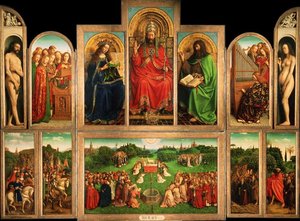
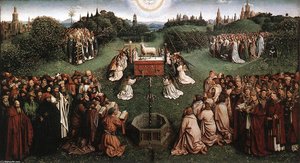
Within the hallowed halls of St Bavo's Cathedral in Ghent resides a masterpiece that transcends mere paint and canvas—the Ghent Altarpiece, or as it’s known in Dutch, “De aanbidding van het Lam Gods.” Completed around 1432 by the visionary brothers Jan and Hubert van Eyck, this monumental polyptych isn’t simply a religious tableau; it's an immersive experience, a testament to early Netherlandish artistry, and a window into the soul of fifteenth-century Europe. More than six centuries after its creation, the altarpiece continues to captivate viewers with its astonishing detail, profound symbolism, and the sheer audacity of its ambition.
The scale alone is breathtaking – nearly 12 feet tall and over 23 feet wide when fully open. This immense size wasn’t merely for show; it was a deliberate choice to envelop the viewer in the scene depicted, transporting them into the heart of the divine narrative. The brothers van Eyck were pioneers, not just in technique but also in concept. They moved beyond the stylized representations of medieval art, striving for an unprecedented level of realism—a commitment to capturing the textures of fabric, the gleam of metal, and the subtle nuances of human expression that would define the Early Netherlandish style. Jan van Eyck’s meticulous approach is particularly evident in the rendering of light; it seems to emanate from within the objects themselves, creating a palpable sense of depth and volume.
A Narrative Unfolding: Scenes from Heaven and Earth
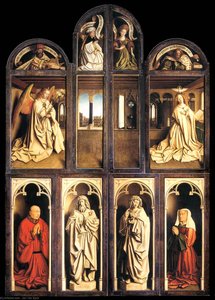
The altarpiece unfolds like a meticulously crafted book, divided into two distinct registers. The outer panels depict scenes from the Old Testament – the adoration of the Magi, the Massacre of the Innocents, and the Killing of Abel—serving as a bridge between the earthly realm and the divine promise of salvation. These narratives are not merely decorative; they establish a theological framework for the central panel, which portrays the Annunciation, the moment when the Archangel Gabriel informs Mary that she will conceive Jesus Christ. The figures themselves are rendered with astonishing precision: Mary’s serene expression, the delicate folds of her robe, and the intricate details of Gabriel's wings all speak to the brothers’ mastery of observation and representation.
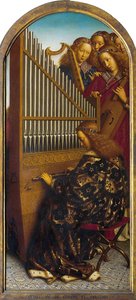
The inner panels, revealed when the altarpiece is opened, depict a heavenly vision. At its heart lies “The Deësis,” a profoundly moving image of God the Father flanked by Mary and John the Baptist. This central panel embodies the concept of intercession—a plea for divine mercy offered through these two figures. The surrounding panels showcase angels playing music, symbolizing the harmony of creation, and on either side, portraits of Adam and Eve, representing humanity’s fallen state and its potential for redemption. The use of gold leaf throughout the altarpiece further elevates the scene, suggesting the glory and majesty of God's realm.
Symbolism Woven into Every Detail
Beyond their narrative function, each element within the Ghent Altarpiece is laden with symbolic meaning. The lilies held by Gabriel represent Mary’s purity and virginity, while the dove hovering above her signifies the Holy Spirit—the divine power that brought about Christ's conception. The use of ultramarine blue, derived from lapis lazuli (a pigment incredibly expensive at the time), is particularly striking, signifying royalty and divinity. Even the architectural details – the columns, arches, and windows – are imbued with symbolic significance, reflecting the medieval understanding of space and order.
The inclusion of donor portraits—the figures of Joost Vijdt and his wife Lysbette Borluut—is a unique feature of the altarpiece. These depictions served as a testament to the patrons’ piety and generosity, ensuring their place within this sacred narrative. Their presence underscores the intimate connection between art and faith in fifteenth-century society.
A Legacy of Innovation
The Ghent Altarpiece stands as a pivotal work in the history of Western art. It represents a radical departure from the conventions of medieval painting, embracing realism, perspective, and meticulous detail to an unprecedented degree. Jan van Eyck’s pioneering use of oil paint—a technique that allowed for greater luminosity and richer colors than tempera—revolutionized artistic practice and paved the way for future generations of painters. The altarpiece's enduring appeal lies not only in its technical brilliance but also in its profound spiritual depth, offering a timeless meditation on faith, humanity, and the divine.
Today, meticulously restored after surviving centuries of turmoil, including being hidden during the Reformation and briefly held as a Nazi trophy, the Ghent Altarpiece continues to inspire awe and wonder. Reproductions offer a glimpse into this extraordinary masterpiece, allowing its beauty and complexity to be appreciated by a wider audience.
Obras relacionadas
Biografía del artista
vida temprana y carrera
Jan van Eyck, una figura destacada del temprano movimiento de la pintura neerlandesa, nació alrededor de 1390 en Maaseik, actual Bélgica. Para 1422, se había establecido como un maestro pintor con un taller y asistentes en La Haya. Notablemente, sirvió a Juan III el Cruel y más tarde Felipe el Bueno, duque de Borgoña, como pintor de la corte, gozando de alto prestigio e involucrándose en actividades diplomáticas.contribuciones artísticas
Las obras de Van Eyck, inicialmente basadas en el estilo gótico internacional, trascendieron sus límites a través de su enfoque naturalista mejorado y el uso innovador del óleo. Esto estableció un nuevo estándar en el arte, convirtiéndolo en un pionero del temprano movimiento de la pintura neerlandesa. Algunas de sus obras notables incluyen:- Dios el Padre (212 x 83 cm, renacimiento del norte, óleo sobre tabla, ver en ArtsDot.com)
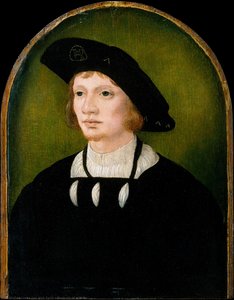
- Retrato de un joven (33 x 19 cm, renacimiento del norte, óleo sobre tabla, ver en ArtsDot.com)
- Triptico de Dresde (Virgen y Niño con San Miguel y Santa Catalina y una donante) (28 x 38 cm, Gemäldegalerie alte meister, Dresde, Alemania, renacimiento del norte, madera, ver en ArtsDot.com)
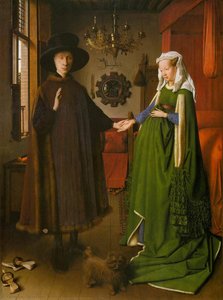
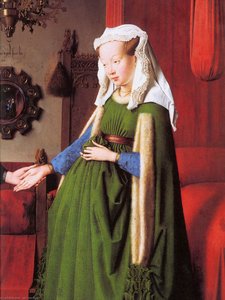
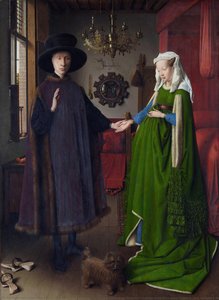
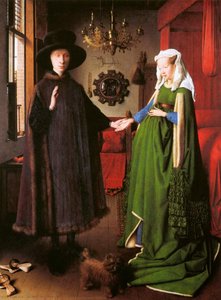
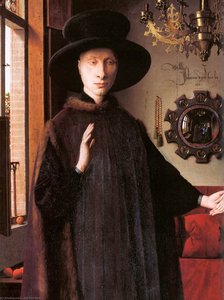
- Retrato de Giovanni Arnolfini y su esposa (detalle) (National Gallery, Londres, Reino Unido, óleo, ver en ArtsDot.com)
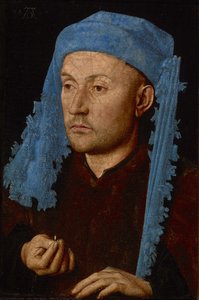
- Hombre con turbante azul (17 x 23 cm, el Museo Nacional de Arte de Rumanía, Bucarest, Rumania, renacimiento del norte, madera, ver en ArtsDot.com)
legado e influencia
La influencia de Van Eyck fue profunda, allanando el camino para la floreciente tradición de la pintura neerlandesa temprana. Su uso innovador del óleo añadió profundidad y realismo a sus obras, convirtiéndolo en una figura **renombrada en el mundo del arte**. Para explorar más las obras de Jan van Eyck y el movimiento de la pintura neerlandesa temprana, visite la página de Jan van Eyck en ArtsDot.com.lecturas adicionales
* Wikipedia: [Jan van Eyck](https://en.wikipedia.org/wiki/jan_van_eyck) * ArtsDot.com: pintor neerlandés del norte * ArtsDot.com: el movimiento de arte neerlandés temprano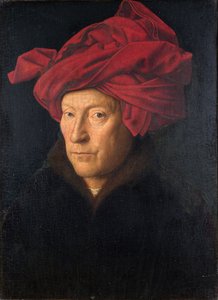
Jan van Eyck
1390 - 1441 , Países Bajos
Datos clave
- Artistic Movement Or Style: Pintura flamenca temprana
- Artists Or Movements Influenced By This Artist: ['Escuela Flamenca']
- Date Of Birth: c. 1390
- Date Of Death: 1441
- Full Name: Jan van Eyck
- Nationality: Flemeco
- Notable Artworks:
- Triptico de Gante
- Retrato de Arnolfini
- Place Of Birth: Maastricht, Países Bajos
Artículos relacionados

Los 10 Maestros del Primitivo Flamenco: Obras que Definen un Arte Inigualable | ArtsDot
Descubre los 10 imprescindibles del Primitivo Flamenco: Jan van Eyck, Robert Campin y más. Explora la historia, simbolismo y técnica de estas obras maestras renacentistas tempranas. Encuentra reproducciones de arte de museo en ArtsDot.com.
Jan van Eyck: Innovation, Symbolism & the Dawn of Early Netherlandish Painting
Explore the revolutionary art of Jan van Eyck! Discover his groundbreaking oil painting techniques, hidden symbolism, and lasting impact on the Early Netherlandish Renaissance. A deep dive for art enthusiasts.
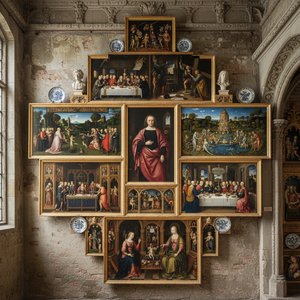
Renacimiento Flamenco Temprano: 10 Obras Maestras que Cambiaron la Historia del Arte | ArtsDot
Descubre las 10 obras maestras del Renacimiento Flamenco Temprano. Explora la historia de Jan van Eyck, Robert Campin y más. Reproducciones de arte en ArtsDot.com para decorar tu hogar con belleza y elegancia. ¡Explora la colección online!
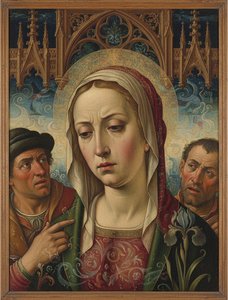
Hugo van der Goes: Devotion, Innovation & the Psychological Depth of Early Netherlandish Painting
Explore the revolutionary art of Hugo van der Goes – a master of Early Netherlandish painting renowned for his dramatic realism, psychological depth & profound influence on Renaissance artists. Discover his iconic works and lasting legacy.
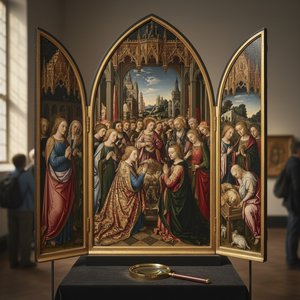
El Amanecer de una Nueva Visión: Contexto Histórico e Influencia Borgoña en el Renacimiento Temprano Flamenco
Descubre la riqueza del Renacimiento Temprano Flamenco y la influencia del Estado Borgoñón. Analizamos a Jan van Eyck, Robert Campin y el simbolismo oculto en sus obras maestras. ¡Explora la historia del arte con ArtsDot!