

 Ver en contexto
 Enviar
 Compartir
 Detalles

 Descargar
 Similares
 Radiografía
 Presentación de diapositivas
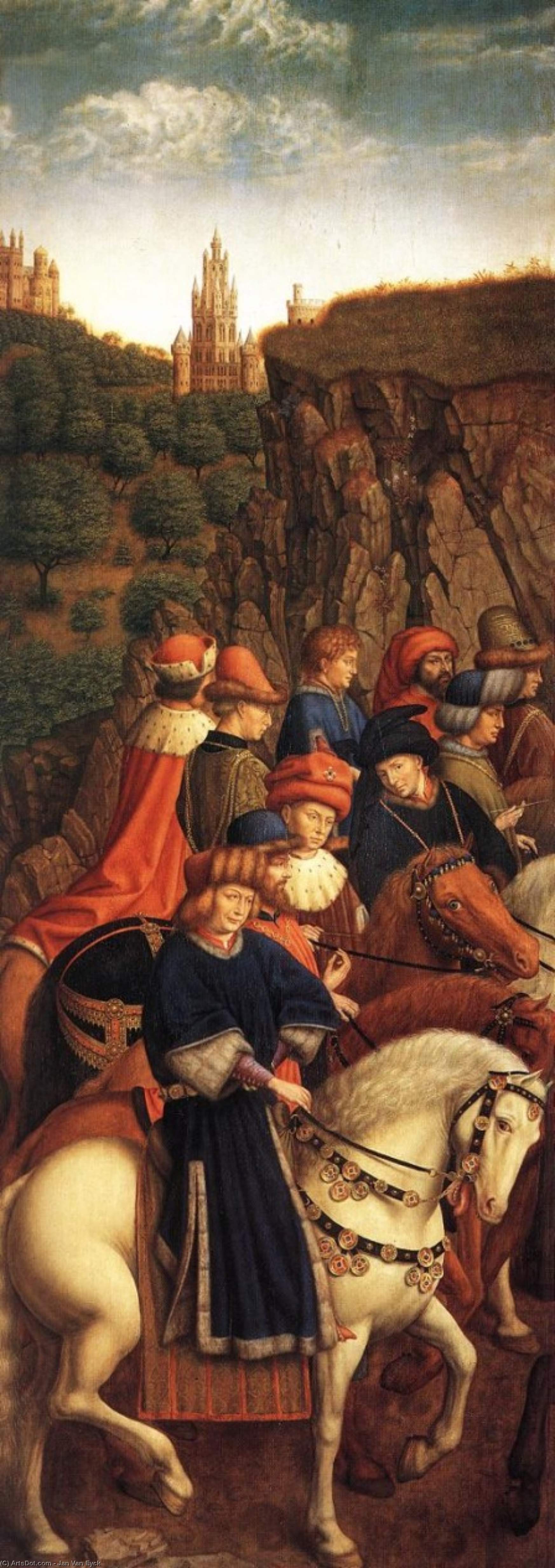
the ghent altarpiece the just judges


 Ver más
Adquiera una imagen digital de alta resolución y optimizada, muy superior a la vista previa en línea.
Cada archivo es preparado meticulosamente por nuestros especialistas internos mediante el uso de herramientas avanzadas y un experto retoque manual. Nos aseguramos de que cada imagen posea una claridad excepcional, una precisión cromática impecable y un detalle minucioso.
El archivo final se entrega por correo electrónico en un plazo de 72 horas, optimizado para su uso inmediato en entornos profesionales, editoriales y de impresión. Esta es la misma calidad en la que confían los estudios de diseño, las editoriales y las galerías de primer nivel.
Imagen Digital
Descarga un archivo de alta resolución para exhibición personal, impresión y proyectos creativos. ( Comprar impresión Comprar pintura hecha a mano)
Incluido en cada pedido de imágenes digitales
Entrega digital experta, garantizada.
Al elegir ArtsDot.com, no solo está adquiriendo una imagen; está recibiendo una obra de arte digital mejorada profesionalmente, elaborada con precisión y respaldada por una garantía de satisfacción. Esto es todo lo que incluye su pedido, automáticamente:

Entrega rápida por email
Recibirá su archivo de imagen digital en alta resolución por correo electrónico en un plazo de 72 horas tras realizar su pedido, listo para su uso inmediato.

Archivo digital optimizado por IA
Su obra de arte se optimiza profesionalmente mediante herramientas avanzadas de IA y edición manual, garantizando el máximo detalle, claridad y precisión cromática.

Reenvío gratuito de por vida
¿Has borrado o perdido tu archivo por error? No te preocupes: te lo volveremos a enviar en cualquier momento, sin coste adicional.

Sin gastos de importación, siempre
Disfrute de su obra de arte al instante sin aduanas, aranceles ni gastos de envío; las descargas digitales siempre están libres de impuestos.

Garantía de fidelidad de color
Garantizamos que su imagen digital refleje los colores originales con la mayor fidelidad posible, mediante el uso de herramientas profesionales y gestión del color.

Garantía de satisfacción de 60 días
Si no está satisfecho con su imagen digital, la revisaremos o le reembolsaremos el 100% en un plazo de 60 días, sin preguntas.

100% Garantía de devolución de dinero
¿No está satisfecho? Obtenga un reembolso completo dentro de los 60 días posteriores a la recepción de su archivo digital, sin necesidad de explicaciones.

Descuentos por pedidos grandes
Compra 3 imágenes, ahorra 10% - Compra 5, ahorra 15% - Compra 10+, ahorra 20%. Ideal para proyectos creativos, galerías y agencias.
Descripción del coleccionable
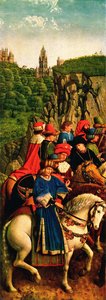
The Ghent Altarpiece: The Just Judges – A Vision of Power and Divine Justice
Jan van Eyck’s “The Just Judges,” a captivating depiction of mounted figures before a formidable castle, stands as a testament to the artist's unparalleled skill and his pivotal role in shaping the course of Western art. This work, though often overshadowed by the globally renowned "Ghent Altarpiece," embodies many of the same revolutionary techniques and thematic concerns that define Van Eyck’s legacy. The scene unfolds with an almost photographic realism, a hallmark of Early Netherlandish painting, achieved through his masterful manipulation of oil paints – a medium he essentially pioneered. Light, rendered with astonishing accuracy, cascades across the horses and riders, illuminating their textures and creating a palpable sense of depth. The castle itself, a symbol of authority and fortification, anchors the composition, suggesting a narrative of judgment and control.
Technique and Innovation: Van Eyck’s Oil Mastery
- Oil Paint Application: Van Eyck's genius lay in his innovative use of oil paint. Unlike previous artists who employed tempera, which required immediate layering and lacked the ability to blend smoothly, oil paints allowed for meticulous detail, subtle gradations of tone, and extended working times. This enabled him to build up complex surfaces with incredible realism – observe the individual strands of hair on the horses’ manes, the glint of metal armor, or the intricate patterns in the clothing.
- Layering and Glazing: The painting demonstrates Van Eyck's signature technique of layering thin washes of translucent oil paint (glazes) over a dry underpainting. This created an astonishing luminosity and depth of color, capturing the way light interacts with surfaces – a crucial element in his realism.
- Attention to Detail: Every aspect of the composition, from the reflections in the horses’ eyes to the texture of the castle walls, is rendered with painstaking precision, showcasing Van Eyck's meticulous observation and artistic skill.
Symbolism and Context: A Portrait of Power and Divine Authority
The figures depicted – a group of men on horseback – are often interpreted as representing the “Just Judges,” figures from biblical narratives who administer justice. The castle, frequently associated with royal power and divine authority, reinforces this interpretation. Van Eyck’s choice to portray these figures in such a dynamic pose suggests not merely a static depiction but an active engagement with themes of law, order, and ultimately, divine judgment. The scene likely reflects the political climate of the time – the burgeoning power of the Burgundian dukes – while simultaneously invoking timeless religious symbolism. The use of red and black clothing amongst the riders adds to the dramatic effect, potentially signifying different roles or allegiances within this symbolic tableau.
Emotional Impact and Artistic Legacy
"The Just Judges" is more than just a technically brilliant painting; it evokes a powerful sense of awe and contemplation. The sheer scale of the scene, combined with Van Eyck’s masterful rendering of light and form, draws the viewer into the heart of the composition. This work exemplifies Van Eyck's ability to translate complex ideas – religious, political, and philosophical – into a visually compelling narrative. It remains a cornerstone of Early Netherlandish painting, profoundly influencing generations of artists who followed, and continues to captivate audiences with its beauty, realism, and enduring symbolism. A hand-painted reproduction offers the opportunity to experience this masterpiece firsthand, bringing Van Eyck’s revolutionary vision into your space.
Obras relacionadas
Biografía del artista
vida temprana y carrera
Jan van Eyck, una figura destacada del temprano movimiento de la pintura neerlandesa, nació alrededor de 1390 en Maaseik, actual Bélgica. Para 1422, se había establecido como un maestro pintor con un taller y asistentes en La Haya. Notablemente, sirvió a Juan III el Cruel y más tarde Felipe el Bueno, duque de Borgoña, como pintor de la corte, gozando de alto prestigio e involucrándose en actividades diplomáticas.contribuciones artísticas
Las obras de Van Eyck, inicialmente basadas en el estilo gótico internacional, trascendieron sus límites a través de su enfoque naturalista mejorado y el uso innovador del óleo. Esto estableció un nuevo estándar en el arte, convirtiéndolo en un pionero del temprano movimiento de la pintura neerlandesa. Algunas de sus obras notables incluyen:- Dios el Padre (212 x 83 cm, renacimiento del norte, óleo sobre tabla, ver en ArtsDot.com)
- Retrato de un joven (33 x 19 cm, renacimiento del norte, óleo sobre tabla, ver en ArtsDot.com)
- Triptico de Dresde (Virgen y Niño con San Miguel y Santa Catalina y una donante) (28 x 38 cm, Gemäldegalerie alte meister, Dresde, Alemania, renacimiento del norte, madera, ver en ArtsDot.com)
- Retrato de Giovanni Arnolfini y su esposa (detalle) (National Gallery, Londres, Reino Unido, óleo, ver en ArtsDot.com)
- Hombre con turbante azul (17 x 23 cm, el Museo Nacional de Arte de Rumanía, Bucarest, Rumania, renacimiento del norte, madera, ver en ArtsDot.com)
legado e influencia
La influencia de Van Eyck fue profunda, allanando el camino para la floreciente tradición de la pintura neerlandesa temprana. Su uso innovador del óleo añadió profundidad y realismo a sus obras, convirtiéndolo en una figura **renombrada en el mundo del arte**. Para explorar más las obras de Jan van Eyck y el movimiento de la pintura neerlandesa temprana, visite la página de Jan van Eyck en ArtsDot.com.lecturas adicionales
* Wikipedia: [Jan van Eyck](https://en.wikipedia.org/wiki/jan_van_eyck) * ArtsDot.com: pintor neerlandés del norte * ArtsDot.com: el movimiento de arte neerlandés temprano
Jan van Eyck
1390 - 1441 , Países Bajos
Breves datos
- Artistic Movement Or Style: Pintura flamenca temprana
- Artists Or Movements Influenced By This Artist: ['Escuela Flamenca']
- Date Of Birth: c. 1390
- Date Of Death: 1441
- Full Name: Jan van Eyck
- Nationality: Flemeco
- Notable Artworks:
- Triptico de Gante
- Retrato de Arnolfini
- Place Of Birth: Maastricht, Países Bajos

