

 Ver en contexto
 Enviar
 Compartir
 Detalles

 Descargar
 Similares
 Radiografía
 Presentación de diapositivas
Título traducido: Retrato de un hombre (Memorias leales)


 Ver más
Adquiera una imagen digital de alta resolución y optimizada, muy superior a la vista previa en línea.
Cada archivo es preparado meticulosamente por nuestros especialistas internos mediante el uso de herramientas avanzadas y un experto retoque manual. Nos aseguramos de que cada imagen posea una claridad excepcional, una precisión cromática impecable y un detalle minucioso.
El archivo final se entrega por correo electrónico en un plazo de 72 horas, optimizado para su uso inmediato en entornos profesionales, editoriales y de impresión. Esta es la misma calidad en la que confían los estudios de diseño, las editoriales y las galerías de primer nivel.
Imagen Digital
Descarga un archivo de alta resolución para exhibición personal, impresión y proyectos creativos. ( Comprar impresión Comprar pintura hecha a mano)
Incluido en cada pedido de imágenes digitales
Entrega digital experta, garantizada.
Al elegir ArtsDot.com, no solo está adquiriendo una imagen; está recibiendo una obra de arte digital mejorada profesionalmente, elaborada con precisión y respaldada por una garantía de satisfacción. Esto es todo lo que incluye su pedido, automáticamente:

Entrega rápida por email
Recibirá su archivo de imagen digital en alta resolución por correo electrónico en un plazo de 72 horas tras realizar su pedido, listo para su uso inmediato.

Archivo digital optimizado por IA
Su obra de arte se optimiza profesionalmente mediante herramientas avanzadas de IA y edición manual, garantizando el máximo detalle, claridad y precisión cromática.

Reenvío gratuito de por vida
¿Has borrado o perdido tu archivo por error? No te preocupes: te lo volveremos a enviar en cualquier momento, sin coste adicional.

Sin gastos de importación, siempre
Disfrute de su obra de arte al instante sin aduanas, aranceles ni gastos de envío; las descargas digitales siempre están libres de impuestos.

Garantía de fidelidad de color
Garantizamos que su imagen digital refleje los colores originales con la mayor fidelidad posible, mediante el uso de herramientas profesionales y gestión del color.

Garantía de satisfacción de 60 días
Si no está satisfecho con su imagen digital, la revisaremos o le reembolsaremos el 100% en un plazo de 60 días, sin preguntas.

100% Garantía de devolución de dinero
¿No está satisfecho? Obtenga un reembolso completo dentro de los 60 días posteriores a la recepción de su archivo digital, sin necesidad de explicaciones.

Descuentos por pedidos grandes
Compra 3 imágenes, ahorra 10% - Compra 5, ahorra 15% - Compra 10+, ahorra 20%. Ideal para proyectos creativos, galerías y agencias.
Descripción del coleccionable
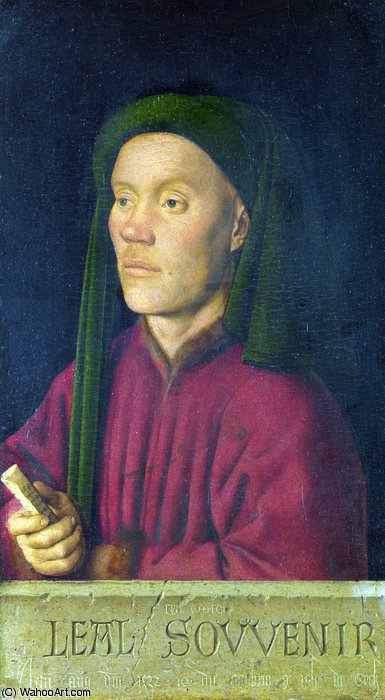
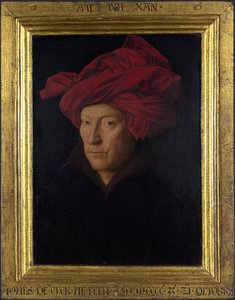
Portrait of a Man (Léal Souvenir)
Jan van Eyck’s “Portrait of a Man” (“Léal Souvenir”), completed in 1432, stands as an unparalleled testament to the burgeoning Renaissance spirit within Early Netherlandish painting. Currently housed at the National Gallery in London, this unassuming oak panel portrait transcends mere representation; it embodies meticulous observation, symbolic layering, and masterful execution—elements that continue to fascinate art historians and inspire collectors alike. The painting’s enduring appeal lies not only in its technical brilliance but also in its enigmatic subject matter and profound exploration of human psychology.A Window into Burgundian Society
The portrait captures a man dressed in the garb of nobility, adorned with a scarlet robe and a verdant wool chaperon—a sartorial choice indicative of his position within Philip the Good’s court. This context is further enriched by the presence of two figures flanking him, adding depth to the composition and hinting at social connections. The artist's deliberate inclusion of these companions underscores the importance of patronage in shaping artistic endeavors during this period, demonstrating how artists responded to the demands of their patrons and reflected prevailing cultural values.The Artistry of Oil Paint: Technique and Detail
Van Eyck’s unparalleled skill is immediately apparent through his masterful use of oil paint on oak panel—a technique that revolutionized painting at the time. Unlike tempera paints, which required painstaking layering and were prone to cracking, oil allowed for unprecedented levels of detail and luminosity. The artist skillfully captured subtle nuances of light and shadow, creating a remarkably realistic depiction of the sitter’s face and clothing. Close examination reveals meticulous attention to texture—the velvety sheen of the robe, the delicate folds of the chaperon, and even the minute imperfections of the stone parapet—a testament to Van Eyck's dedication to achieving photographic accuracy.Symbolism Embedded in Stone
The backdrop of the portrait is dominated by a monumental stone parapet bearing three inscribed panels—a deliberate artistic choice that elevates the work beyond mere likeness. The uppermost panel proclaims “TYΜ.ωΘΕΟϹ,” a Greek phrase referencing God, reflecting the humanist ideals prevalent during the Renaissance and hinting at themes of faith and spirituality. Beneath this inscription is “Leal Souvenir,” a French dedication signifying loyalty to memory—a poignant reminder of the sitter’s life and legacy. Finally, Van Eyck's signature with the date of execution anchors the composition in time, solidifying its place within the artistic canon. The parapet itself serves as a visual metaphor for permanence and contemplation, prompting viewers to ponder the enduring power of art to convey meaning beyond its surface appearance.A Portrait Beyond Appearance
More than just a depiction of physical features, “Portrait of a Man” delves into the sitter’s inner life—his gaze directs towards the viewer with an expression of solemn thoughtfulness. This psychological acuity distinguishes Van Eyck's work from earlier portraits that prioritized idealized beauty; instead, he presents a human figure imbued with dignity and introspection. The artist’s subtle rendering of facial musculature and eye expression speaks to his profound understanding of human anatomy and emotion—a hallmark of Renaissance artistic innovation.- Discover more about Wikipedia.
- Explore the works of https://ArtsDot.com/@/Flemish-Painters.
- Learn about the history of painting on Wikipedia.
Obras relacionadas
Biografía del artista
vida temprana y carrera
Jan van Eyck, una figura destacada del temprano movimiento de la pintura neerlandesa, nació alrededor de 1390 en Maaseik, actual Bélgica. Para 1422, se había establecido como un maestro pintor con un taller y asistentes en La Haya. Notablemente, sirvió a Juan III el Cruel y más tarde Felipe el Bueno, duque de Borgoña, como pintor de la corte, gozando de alto prestigio e involucrándose en actividades diplomáticas.contribuciones artísticas
Las obras de Van Eyck, inicialmente basadas en el estilo gótico internacional, trascendieron sus límites a través de su enfoque naturalista mejorado y el uso innovador del óleo. Esto estableció un nuevo estándar en el arte, convirtiéndolo en un pionero del temprano movimiento de la pintura neerlandesa. Algunas de sus obras notables incluyen:- Dios el Padre (212 x 83 cm, renacimiento del norte, óleo sobre tabla, ver en ArtsDot.com)
- Retrato de un joven (33 x 19 cm, renacimiento del norte, óleo sobre tabla, ver en ArtsDot.com)
- Triptico de Dresde (Virgen y Niño con San Miguel y Santa Catalina y una donante) (28 x 38 cm, Gemäldegalerie alte meister, Dresde, Alemania, renacimiento del norte, madera, ver en ArtsDot.com)
- Retrato de Giovanni Arnolfini y su esposa (detalle) (National Gallery, Londres, Reino Unido, óleo, ver en ArtsDot.com)
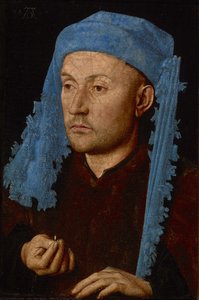
- Hombre con turbante azul (17 x 23 cm, el Museo Nacional de Arte de Rumanía, Bucarest, Rumania, renacimiento del norte, madera, ver en ArtsDot.com)
legado e influencia
La influencia de Van Eyck fue profunda, allanando el camino para la floreciente tradición de la pintura neerlandesa temprana. Su uso innovador del óleo añadió profundidad y realismo a sus obras, convirtiéndolo en una figura **renombrada en el mundo del arte**. Para explorar más las obras de Jan van Eyck y el movimiento de la pintura neerlandesa temprana, visite la página de Jan van Eyck en ArtsDot.com.lecturas adicionales
* Wikipedia: [Jan van Eyck](https://en.wikipedia.org/wiki/jan_van_eyck) * ArtsDot.com: pintor neerlandés del norte * ArtsDot.com: el movimiento de arte neerlandés temprano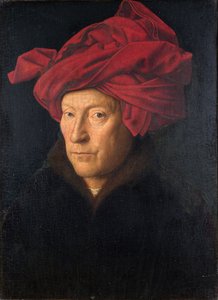
Jan van Eyck
1390 - 1441 , Países Bajos
Breves datos
- Artistic Movement Or Style: Pintura flamenca temprana
- Artists Or Movements Influenced By This Artist: ['Escuela Flamenca']
- Date Of Birth: c. 1390
- Date Of Death: 1441
- Full Name: Jan van Eyck
- Nationality: Flemeco
- Notable Artworks:
- Triptico de Gante
- Retrato de Arnolfini
- Place Of Birth: Maastricht, Países Bajos

