Menú
Asesoría de arte gratuita
Ver en contextoVer en contexto Vista previa en RAVista previa en RA Comprar impresión Comprar impresiónComprar imagen Comprar imagen EnviarEnviar
DetallesDetalles Añadir a favoritos Añadir a favoritos DescargarDescargar SimilaresSimilares RadiografíaRadiografía Presentación de diapositivasPresentación de diapositivas

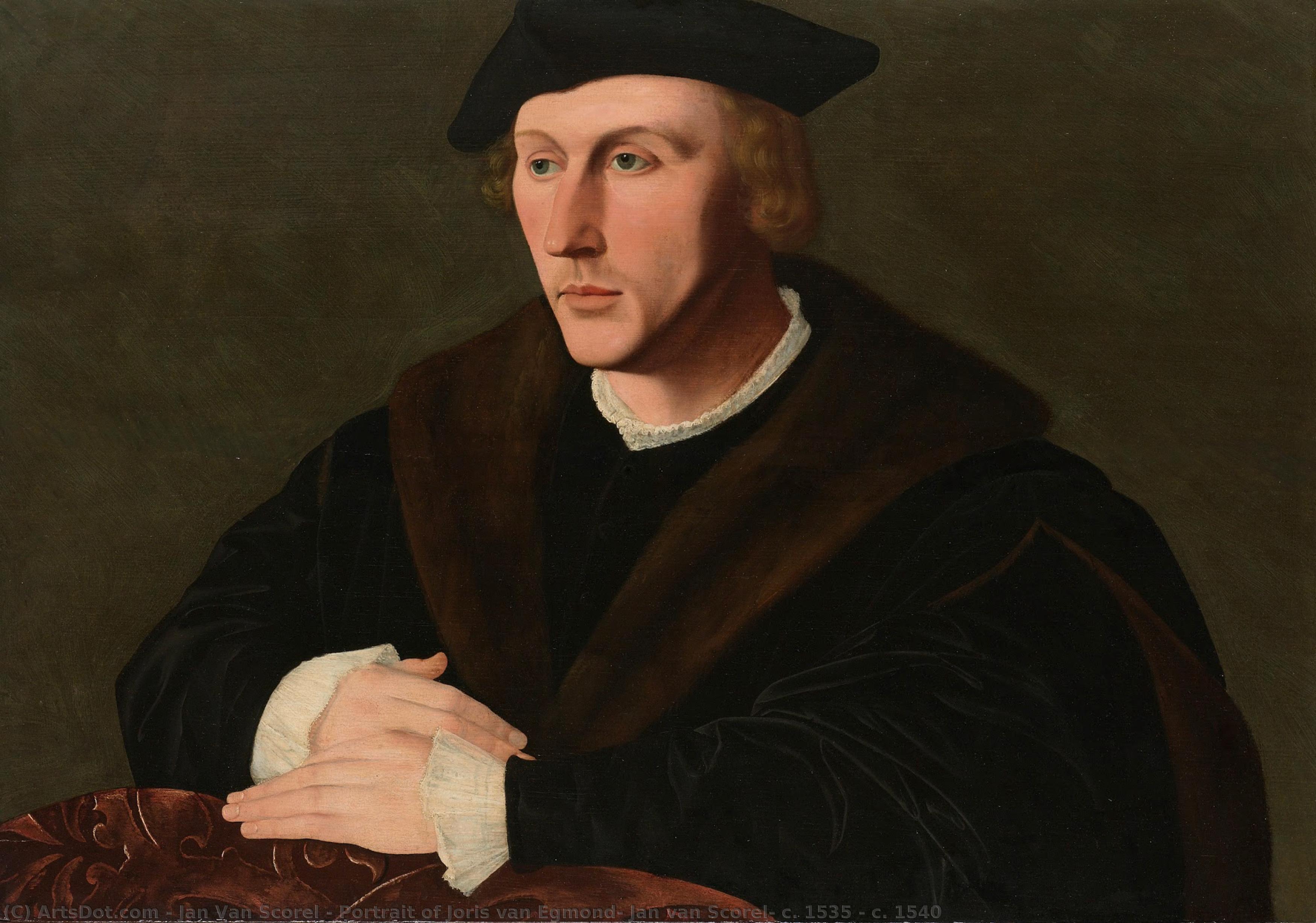
Portrait of Joris van Egmond, Jan van Scorel, c. 1535 - c. 1540

  • Fecha de creación1540
  • Dimensiones57.0 x 81.0 cm

Descubre la fusión única de estilos italiano y holandés en Jan van Scorel. Maestro del romanismo, sus obras emblemáticas como el Sippenaltar reflejan una rica tradición artística renacentista. #arteholandes #renacimientoitaliano

Reproducción al óleo hecha a mano

Óleo sobre lienzo pintado a mano en el tamaño y marco de su elección, realizado por encargo por nuestros artistas. (Comprar impresión Comprar impresiónComprar imagen Comprar imagen)

Estándar
a medida
CM
INCH

Elija entre nuestros tamaños predefinidos que respetan las proporciones originales de la obra.

ancho
altura

Puede ingresar sus propias dimensiones para adaptarse a un marco o espacio específico. Si el tamaño seleccionado no coincide con las proporciones de la imagen original, recortaremos la obra o extenderemos la pintura con elementos adicionales pintados a mano. Se le enviará una maqueta digital para su aprobación antes de comenzar la producción.
Tenga en cuenta que la vista previa en pantalla no refleja el recorte o la extensión reales. Solo la maqueta mostrará con precisión la composición final.
Si bien existen tamaños personalizados, recomendamos seleccionar una dimensión de la lista predefinida para preservar las proporciones originales.

Ejemplos de lo que se puede personalizar: Reemplace el rostro con una foto del cliente; Agregue una mascota (por ejemplo, cambie un gato por un perro); Incluya un mensaje oculto en el fondo; Cambie el paisaje o los elementos del fondo.
Tras realizar el pedido, el equipo de ArtsDot.com enviará un correo electrónico al cliente para solicitar instrucciones y proporcionarle una vista previa del boceto.

Envío a todo el mundo () en 3-4 semanas en lugar de las 5 semanas estándar. (28 agosto). Sin comprometer la calidad.

why_choose_icon
Envío exprés gratuito a todo el mundo
why_choose_icon
Lienzo de lino de alta calidad
why_choose_icon
Seguro de envío total
why_choose_icon
Garantía de reembolso de impuestos aduaneros
why_choose_icon
Garantía de fidelidad cromática exacta
why_choose_icon
Política de devolución de 60 días (solo por defectos)
why_choose_icon
Garantía de devolución del 100% del dinero
why_choose_icon
Descuento por cantidad

Precio total

$ 263

reproduction

Portrait of Joris van Egmond, Jan van Scorel, c. 1535 - c. 1540

Técnica de reproducción

Dimensiones de la reproducción

-

Precio total final

$ 263

The sitter in this unusual oblong painting can be identified by the inscription on the frame as Joris van Egmond, Bishop of Utrecht from 1534 to 1559. He wears a black tabbaard gown lined with brown fur over a black doublet and a white shirt with a ruffled collar and cuffs, and has a black baret on his head.9 He is portrayed life-sized, turned slightly into three-quarter view against an undifferentiated green background. Joris rests his hands on the rounded form of a dark red, patterned cushion which can be seen in the lower left corner. In contrast to other portraits by Scorel in which the sitter makes eye contact with the beholder, Joris appears here distant and contemplative. His aristocratic appearance and formal pose are enhanced by the format, which emphasises the width of the shoulders and the expansive, silky surfaces of the costume. Joris van Egmond, the son of Magdalena van Werdenborgh and Jan I, Count of Egmond (for their portraits, see SK-A-1547, SK-A-1548), was a member of a family that was successively raised in political importance by the Habsburgs in the late 15th and 16th centuries. Joris had met the emperor, Charles V, when he was a student at Louvain in 1520; and Charles later sponsored Joris for church posts, securing for him first a canonry in Liège (1525) and, after some negotiations lasting from 1525 to 1532, the office of commendatory abbot of St Amand. In 1534, Charles V nominated Joris Bishop of Utrecht, and his consecration took place the following year. Joris was considered a wise church administrator in Utrecht, and was admired for his piety and learning.10 He was a generous patron of the arts with gifts of stained glass (in Utrecht, Haarlem, Gouda and The Hague), paintings, and additions to the bishop’s residence at Wijk bij Duurstede, which Charles V granted Joris in 1545.11 Although no one has doubted the attribution of this portrait to Scorel, there are various possibilities for its date. Some have assumed Scorel and Joris van Egmond were already in contact by c. 1530-31 and that the Rijksmuseum portrait dates from this period. Hoogewerff was the first to note this possible connection, basing his observation on a 1531 poem dedicated to Joris which praises an image of Christ by Scorel that the Egmond family owned.12 Another possibility for the date is c. 1533, when Scorel is known to have visited the court in Mechelen and presumably met the important cleric, Jean II Carondelet, whom Scorel depicted in a portrait that is remarkably similar in size and composition.13 With its green background and near “scalping” of Joris van Egmond’s head, the format of the painting is similar to Scorel’s portraits of Utrecht Jerusalem pilgrims. The greater space on each side of Joris’s figure, however, more closely parallels the spacing in the group portrait in the Utrecht series that is dated c. 1535.14 Although Scorel’s portrait layouts are routinely contour in type, the underdrawing of Joris’s head (fig. a) is similar to those portraits in the series of Jerusalem pilgrims that date from c. 1535 to c. 1541.15 It is most likely, then, that the Rijksmuseum painting depicts Joris van Egmond after he assumed the office of Bishop of Utrecht in 1534, or somewhat later, as is also implied by the dendrochronology. At that time Joris would have been in his 30s, and his lean face shows no signs of age. The overall style of the portrait with its strong illumination, opaque, flat painting in the flesh areas, and sense of pattern comes close to tendencies in Scorel’s later work around 1540. Moreover, in the underdrawing of the Rijksmuseum painting, Joris wears a ring - possibly a bishop’s ring.16 Although the artist often used an oblong format in his works, his adoption of it for a portrait is exceptional. There are only a few precedents. Several of Lucas van Leyden’s portrait drawings of the early 1520s use a wide, horizontal format, as do the portrait drawings in Dürer’s sketchbook made during his journey to the Netherlands in 1520-21.17 Friedländer made the interesting suggestion that these examples by Lucas and Scorel recalled the portrait busts by the German sculptor Conrad Meit,18 whose works would have been known at the court in Mechelen. With its strong horizontal presentation and more schematised portrayal of the sitter, the Portrait of Joris van Egmond represents Scorel’s venture into the realm of official portraiture. M. Faries, 2010 Literature updated, 2016

Biografía del artista

primeros años y formación

jan van scorel, un destacado pintor neerlandés, nació en schoorl, Países Bajos, en 1495. Aunque sus primeros años y su formación no están ampliamente documentados, se cree que estudió bajo la tutela de diversos maestros, entre ellos pieter gerritsz en haarlem, jacob cornelisz en amsterdam, o jan gossaert en utrecht.

trayectoria e influencias

los viajes de van scorel lo llevaron hasta italia, donde absorbió la esencia del estilo pictórico italiano, convirtiéndose en uno de los pioneros del estilo romanista. su obra estuvo profundamente influenciada por giorgione, y también mantuvo colaboraciones con maarten van heemskerck. las vivencias de van scorel en jerusalén se ven reflejadas en muchas de sus obras tardías, las cuales exhiben su magistral y única fusión de los estilos neerlandés e italiano.

obras notables y legado

entre las obras más destacadas de van scorel se encuentran:
  • sippenaltar (1520), completada en la aldea de obervellach
  • retratos, retablos y paisajes, muchos de los cuales fueron destruidos durante la iconoclasia de la reforma
  • colaboraciones con maarten van heemskerck y michelangelo
el legado de van scorel está marcado por sus significativas contribuciones al renacimiento neerlandés, introduciendo elementos italianos en la pintura de los Países Bajos. su obra puede apreciarse en diversos museos, incluyendo el museo van gogh (Países Bajos), que también alberga una extensa colección de las obras de van gogh.

estilo artístico y trascendencia

aspectos clave del estilo de van scorel:
  • fusión de influencias italianas y neerlandesas
  • uso de estilos romanistas en la pintura neerlandesa
  • colaboraciones con artistas prominentes de la época
la obra de van scorel es un testimonio del intercambio cultural y la innovación artística del periodo renacentista. su legado continúa inspirando tanto a entusiastas del arte como a académicos.

lecturas adicionales y recursos

para obtener más información sobre jan van scorel y sus obras, visite:
Jan Van Scorel

Jan Van Scorel

1495 - 1562 , Países Bajos

Datos clave

  • Artistic Movement Or Style: Romanista, Renacimiento
  • Artists Or Movements Influenced By This Artist:
    • Maarten van Heemskerck
    • Renacimiento Italiano
  • Artists Who Influenced This Artist:
    • Pieter Gerritsz
    • Jacob Cornelisz
    • Jan Gossaert
  • Date Of Birth: 1495-08-01
  • Date Of Death: 1562-12-06
  • Full Name: Jan van Scorel
  • Nationality: Holandés
  • Notable Artworks:
    • Retablo de Sippen
    • Retrato de un humanista
  • Place Of Birth: Schoorl, Países Bajos