Menú
Ver en contextoVer en contexto Vista previa en RAVista previa en RA Comprar impresión Comprar impresiónComprar pintura hecha a mano Comprar pintura hecha a mano EnviarEnviar
DetallesDetalles Añadir a favoritos Añadir a favoritos DescargarDescargar SimilaresSimilares RadiografíaRadiografía Presentación de diapositivasPresentación de diapositivas

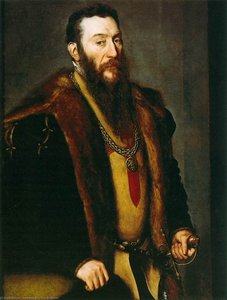
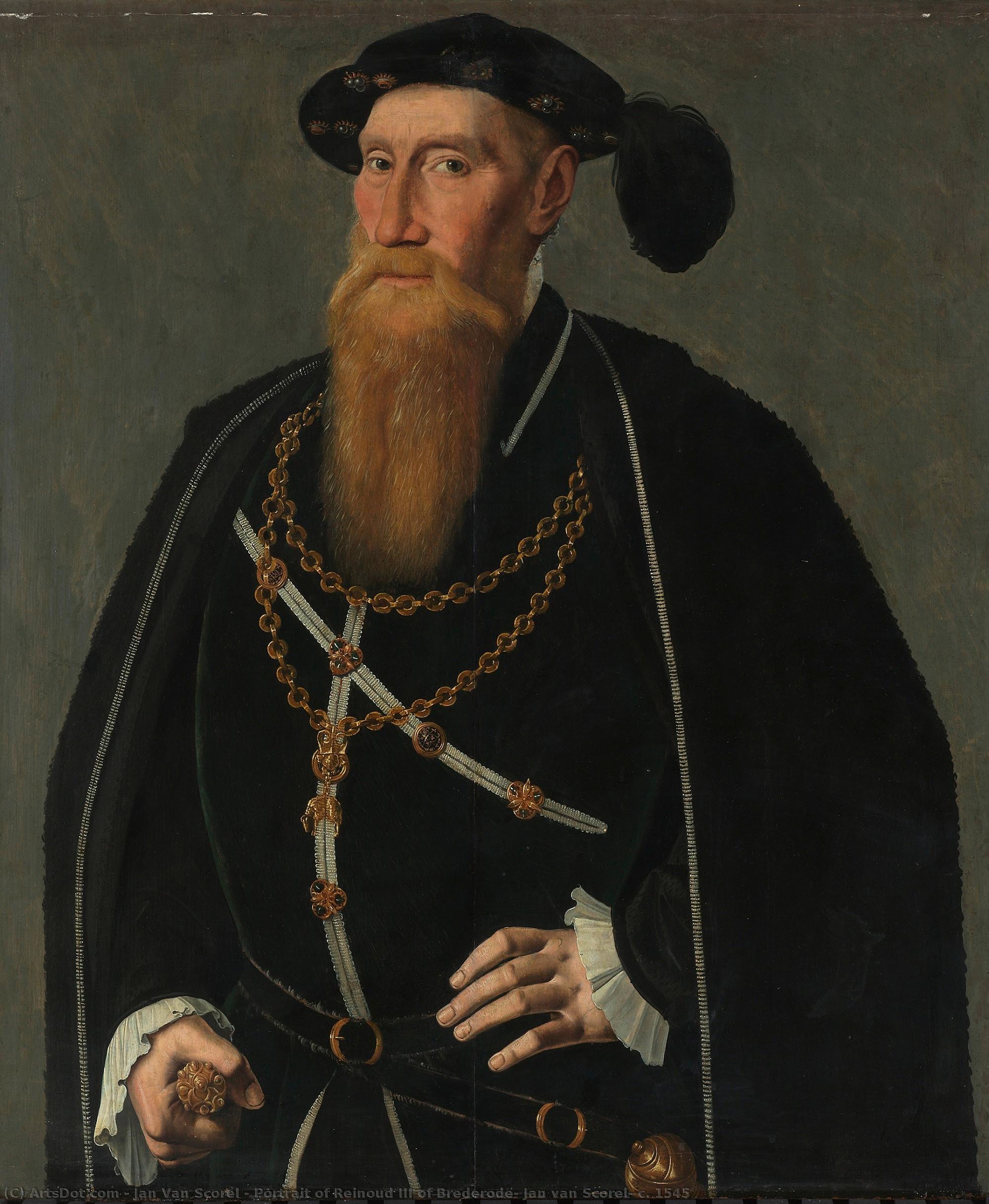
Portrait of Reinoud III of Brederode, Jan van Scorel, c. 1545

Admire Jan van Scorel’s 1545 portrait of Reinoud III of Brederode! A commanding knight depicted in rich detail, showcasing the artist's signature style & Burgundian opulence.

Descubre la fusión única de estilos italiano y holandés en Jan van Scorel. Maestro del romanismo, sus obras emblemáticas como el Sippenaltar reflejan una rica tradición artística renacentista. #arteholandes #renacimientoitaliano

Adquiera una imagen digital de alta resolución y optimizada, muy superior a la vista previa en línea.

Cada archivo es preparado meticulosamente por nuestros especialistas internos mediante el uso de herramientas avanzadas y un experto retoque manual. Nos aseguramos de que cada imagen posea una claridad excepcional, una precisión cromática impecable y un detalle minucioso.

El archivo final se entrega por correo electrónico en un plazo de 72 horas, optimizado para su uso inmediato en entornos profesionales, editoriales y de impresión. Esta es la misma calidad en la que confían los estudios de diseño, las editoriales y las galerías de primer nivel.

Imagen Digital

Descarga un archivo de alta resolución para exhibición personal, impresión y proyectos creativos. (Comprar impresión Comprar impresiónComprar pintura hecha a mano Comprar pintura hecha a mano)

Precio total

$ 24,00

Incluido en cada pedido de imágenes digitales

Entrega digital experta, garantizada.

Al elegir ArtsDot.com, no solo está adquiriendo una imagen; está recibiendo una obra de arte digital mejorada profesionalmente, elaborada con precisión y respaldada por una garantía de satisfacción. Esto es todo lo que incluye su pedido, automáticamente:

shipping_icon
Entrega rápida por email

Recibirá su archivo de imagen digital en alta resolución por correo electrónico en un plazo de 72 horas tras realizar su pedido, listo para su uso inmediato.

canvas_icon
Archivo digital optimizado por IA

Su obra de arte se optimiza profesionalmente mediante herramientas avanzadas de IA y edición manual, garantizando el máximo detalle, claridad y precisión cromática.

insurance_icon
Reenvío gratuito de por vida

¿Has borrado o perdido tu archivo por error? No te preocupes: te lo volveremos a enviar en cualquier momento, sin coste adicional.

tax_icon
Sin gastos de importación, siempre

Disfrute de su obra de arte al instante sin aduanas, aranceles ni gastos de envío; las descargas digitales siempre están libres de impuestos.

color_icon
Garantía de fidelidad de color

Garantizamos que su imagen digital refleje los colores originales con la mayor fidelidad posible, mediante el uso de herramientas profesionales y gestión del color.

return_icon
Garantía de satisfacción de 100 días

Si no está satisfecho con su imagen digital, la revisaremos o le reembolsaremos el 100% en un plazo de 100 días, sin preguntas.

guarantee_icon
100% Garantía de devolución de dinero

¿No está satisfecho? Obtenga un reembolso completo dentro de los 100 días posteriores a la recepción de su archivo digital, sin necesidad de explicaciones.

discount_icon
Descuentos por pedidos grandes

Compra 3 imágenes, ahorra 10% - Compra 5, ahorra 15% - Compra 10+, ahorra 20%. Ideal para proyectos creativos, galerías y agencias.

Standing before a neutral grey background and portrayed half-length, Reinoud III van Brederode assumes a commanding pose with his left arm akimbo. His proper right hand most likely holds the hilt of a dagger, since a sword hilt - slightly cut off by the panel’s lower edge - can be seen just below his left hand. Although the sitter seems to be portrayed past middle age, Reinoud’s beard has not yet turned completely white.14 He is depicted here as a knight of the Order of the Golden Fleece, having been inducted into the order at the 1531 chapter meeting in Tournai. Hoogewerff states that he is portrayed as dean of the order,15 but Reinoud held this office only for a few months at the very end of his life in 1556.16 He wears a double golden chain from which the insignia of the order are suspended: a fire-steel (the Burgundian briquet), a flint issuing flames, and the golden fleece pendant. Order paraphernalia belonging to Reinoud, the insignia and red, black and white robes, are listed in his 1556 estate inventory.17 The chain was added in paint only and was painted in over the ribbons on Reinoud’s doublet. The doublet, although appearing to be black, must be a dark blue, since the colour could be penetrated by infrared reflectography. The doublet is ornamented with crossed white ribbons to which six pins with alternating floral motifs have been attached. Similar badge-like pins, with clusters of pearls and flame motifs, decorate Reinoud’s black baret, which is of a type that dates to the mid-1540s.18 De Meyere notes that something of Reinoud’s taste can be sensed in this portrait, since the 1556 inventory of his estate listed expensive clothing along with many pearls and precious jewels.19 Reinoud’s cape, draped elegantly over his shoulders, is pure black and has a slight nubby texture. As a Brederode, Reinoud III was a member of the leading family of Holland nobles, and he served in important advisory and military capacities for Charles V.20 This portrait has been attributed more often to Cornelis Anthonisz, because this artist is known to have included a portrait of Reinoud III in a woodcut series of his own design, the Lords of Brederode, c. 1550-51, which he also dedicated to Reinoud III.21 Furthermore, there are two equestrian portraits of Reinoud attributed to Cornelis Anthonisz, one a woodcut (RP-P-BI-126).22 and the other a painting in the Vianen Town Hall.23 None of these portraits, however, have any direct similarities to the Rijksmuseum painting. Both Reinoud III and Jan van Scorel moved in the same court circles (see the biography), and there were any number of occasions when the two could have met. From 1535 to 1545 Scorel owned portions of a house along with Wolfert of Brederode, Lord of Cloetinge (d. 1548), who was Reinoud’s brother.24 During negotiations preceding the impoldering of the Zijpe by Scorel and his partners in 1552, the painter came to an agreement with Reinoud III about the position of one of the proposed dikes.25 In 1546, Scorel is known to have hosted one of the guests at the meeting of the Order of the Golden Fleece in Utrecht,26 an event that may have occasioned the Rijksmuseum portrait. Although the estimates are slightly earlier, dendrochronology does not contradict a date in the mid-1540s. Ultimately, the question of attribution must be decided on the basis of style. The strong silhouette, together with the patterns established by the placement of the hands and decorative features of the costume, stress the two-dimensional aspects of the composition. The planar conception of Scorel’s works is a characteristic that has long been recognised, having been expounded for the first time by Wescher in 1938 when differentiating Scorel’s compositions from Heemskerck’s.27 In this work, Scorel’s presentation is highly schematic, and this tendency can be seen in other official portraits, such as those of the ecclesiastics Joris van Egmond (see SK-C-1618), and Jean II van Carondelet in Brussels.28 Scorel sets heads and shoulders off sharply against the background in another work that is close in date, Five Members of the Utrecht Brotherhood of Jerusalem Pilgrims of circa 1541.29 This painting also relies on a restricted palette and includes half-length figures with elegant hand gestures along the lower edge. The geometric faceting in Reinoud’s face and the contrast of impasto highlights with thin glazes for shade is typical of Scorel’s portrait method, although in this case occasional retouching obscures some of these details.30 It is the underdrawing, however, that secures the attribution (fig. a). For portraiture, Scorel lays out facial features with assuredly drawn contours, such as the circles revealed around Reinoud’s eyes and the long, curvilinear lines in the nose. Scorel uses this type of underdrawing in his portraits almost without exception. M. Faries, 2010 Revised by the author, 2016 (download previous version below)

Biografía del artista

primeros años y formación

jan van scorel, un destacado pintor neerlandés, nació en schoorl, Países Bajos, en 1495. Aunque sus primeros años y su formación no están ampliamente documentados, se cree que estudió bajo la tutela de diversos maestros, entre ellos pieter gerritsz en haarlem, jacob cornelisz en amsterdam, o jan gossaert en utrecht.

trayectoria e influencias

los viajes de van scorel lo llevaron hasta italia, donde absorbió la esencia del estilo pictórico italiano, convirtiéndose en uno de los pioneros del estilo romanista. su obra estuvo profundamente influenciada por giorgione, y también mantuvo colaboraciones con maarten van heemskerck. las vivencias de van scorel en jerusalén se ven reflejadas en muchas de sus obras tardías, las cuales exhiben su magistral y única fusión de los estilos neerlandés e italiano.

obras notables y legado

entre las obras más destacadas de van scorel se encuentran:
  • sippenaltar (1520), completada en la aldea de obervellach
  • retratos, retablos y paisajes, muchos de los cuales fueron destruidos durante la iconoclasia de la reforma
  • colaboraciones con maarten van heemskerck y michelangelo
el legado de van scorel está marcado por sus significativas contribuciones al renacimiento neerlandés, introduciendo elementos italianos en la pintura de los Países Bajos. su obra puede apreciarse en diversos museos, incluyendo el museo van gogh (Países Bajos), que también alberga una extensa colección de las obras de van gogh.

estilo artístico y trascendencia

aspectos clave del estilo de van scorel:
  • fusión de influencias italianas y neerlandesas
  • uso de estilos romanistas en la pintura neerlandesa
  • colaboraciones con artistas prominentes de la época
la obra de van scorel es un testimonio del intercambio cultural y la innovación artística del periodo renacentista. su legado continúa inspirando tanto a entusiastas del arte como a académicos.

lecturas adicionales y recursos

para obtener más información sobre jan van scorel y sus obras, visite:
Jan Van Scorel

Jan Van Scorel

1495 - 1562 , Países Bajos

Breves datos

  • Artistic Movement Or Style: Romanista, Renacimiento
  • Artists Or Movements Influenced By This Artist:
    • Maarten van Heemskerck
    • Renacimiento Italiano
  • Artists Who Influenced This Artist:
    • Pieter Gerritsz
    • Jacob Cornelisz
    • Jan Gossaert
  • Date Of Birth: 1495-08-01
  • Date Of Death: 1562-12-06
  • Full Name: Jan van Scorel
  • Nationality: Holandés
  • Notable Artworks:
    • Retablo de Sippen
    • Retrato de un humanista
  • Place Of Birth: Schoorl, Países Bajos