

 Ver en contexto
 Enviar
 Compartir
 Detalles

 Descargar
 Similares
 Radiografía
 Presentación de diapositivas
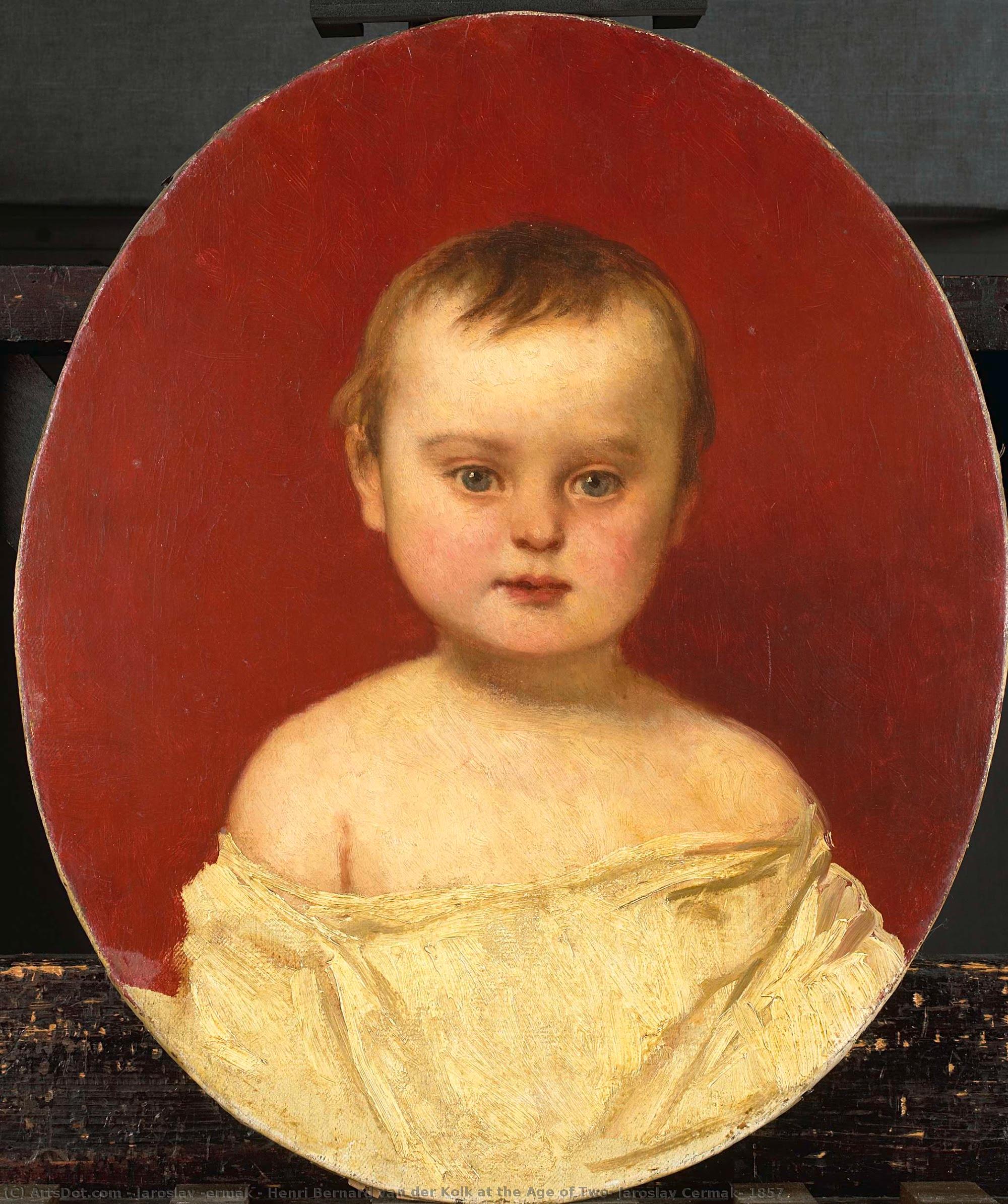
Henri Bernard van der Kolk at the Age of Two, Jaroslav Cermak, 1857
 1857
1857 54.0 x 45.0 cm
 Ver más
Adquiera una imagen digital de alta resolución y optimizada, muy superior a la vista previa en línea.
Cada archivo es preparado meticulosamente por nuestros especialistas internos mediante el uso de herramientas avanzadas y un experto retoque manual. Nos aseguramos de que cada imagen posea una claridad excepcional, una precisión cromática impecable y un detalle minucioso.
El archivo final se entrega por correo electrónico en un plazo de 72 horas, optimizado para su uso inmediato en entornos profesionales, editoriales y de impresión. Esta es la misma calidad en la que confían los estudios de diseño, las editoriales y las galerías de primer nivel.
Imagen Digital
Descarga un archivo de alta resolución para exhibición personal, impresión y proyectos creativos. ( Comprar impresión Comprar pintura hecha a mano)
Incluido en cada pedido de imágenes digitales
Entrega digital experta, garantizada.
Al elegir ArtsDot.com, no solo está adquiriendo una imagen; está recibiendo una obra de arte digital mejorada profesionalmente, elaborada con precisión y respaldada por una garantía de satisfacción. Esto es todo lo que incluye su pedido, automáticamente:

Entrega rápida por email
Recibirá su archivo de imagen digital en alta resolución por correo electrónico en un plazo de 72 horas tras realizar su pedido, listo para su uso inmediato.

Archivo digital optimizado por IA
Su obra de arte se optimiza profesionalmente mediante herramientas avanzadas de IA y edición manual, garantizando el máximo detalle, claridad y precisión cromática.

Reenvío gratuito de por vida
¿Has borrado o perdido tu archivo por error? No te preocupes: te lo volveremos a enviar en cualquier momento, sin coste adicional.

Sin gastos de importación, siempre
Disfrute de su obra de arte al instante sin aduanas, aranceles ni gastos de envío; las descargas digitales siempre están libres de impuestos.

Garantía de fidelidad de color
Garantizamos que su imagen digital refleje los colores originales con la mayor fidelidad posible, mediante el uso de herramientas profesionales y gestión del color.

Garantía de satisfacción de 60 días
Si no está satisfecho con su imagen digital, la revisaremos o le reembolsaremos el 100% en un plazo de 60 días, sin preguntas.

100% Garantía de devolución de dinero
¿No está satisfecho? Obtenga un reembolso completo dentro de los 60 días posteriores a la recepción de su archivo digital, sin necesidad de explicaciones.

Descuentos por pedidos grandes
Compra 3 imágenes, ahorra 10% - Compra 5, ahorra 15% - Compra 10+, ahorra 20%. Ideal para proyectos creativos, galerías y agencias.
Obras relacionadas

Biografía del artista
The Poetic Realism of Jaroslav Čermák
Jaroslav Čermák, a name perhaps less immediately recognizable than some of his contemporaries, nevertheless occupies a significant and deeply affecting space within the landscape of 20th-century Czech painting. Born in 1896, his life unfolded against a backdrop of immense political and social upheaval – from the waning days of the Austro-Hungarian Empire through two World Wars, the establishment and subsequent suppression of democratic ideals in Czechoslovakia, and decades under communist rule. This tumultuous context profoundly shaped not only Čermák’s personal trajectory but also the very essence of his artistic vision. He remains alive today, a living testament to a bygone era and a continuing source of inspiration for those drawn to his quietly powerful depictions of everyday life.Early Life and Artistic Formation
Čermák's early exposure to art came through his father, who was an amateur painter. This initial familial influence sparked a lifelong passion, leading him to formally study at the Academy of Fine Arts in Prague under Antonín Slavíček. Slavíček, a prominent figure in Czech Impressionism and later Poetic Realism, proved to be a pivotal mentor. Under Slavíček’s guidance, Čermák initially embraced the principles of plein air painting, capturing the fleeting effects of light and atmosphere. However, he soon began to diverge from pure Impressionistic techniques, seeking a more substantial engagement with subject matter and a deeper emotional resonance in his work. The vibrant artistic community of Prague during this period – a city brimming with Cubists, Expressionists, and Surrealists – undoubtedly broadened Čermák’s understanding of modern art movements, though he ultimately charted his own distinct course. His early works reveal a sensitivity to color and composition, but also hint at the growing desire to portray not merely *what* he saw, but *how* it felt.The Rise of Poetic Realism
Čermák became a leading figure in the development of Poetic Realism – a distinctly Czech artistic style that emerged in the 1930s as a reaction against both the formal experimentation of avant-garde movements and the perceived superficiality of Impressionism. Unlike Social Realism, which aimed to depict the struggles of the working class with explicit political messaging, Poetic Realism focused on the beauty and dignity found within ordinary life. Čermák’s paintings from this period – scenes of family gatherings, quiet interiors, landscapes imbued with a sense of melancholy – are characterized by their subtle emotional depth, meticulous detail, and evocative use of light and shadow. He wasn't interested in grand narratives or dramatic events; instead, he found poetry in the commonplace, elevating the everyday to something worthy of contemplation. His work often features women engaged in domestic tasks, not as symbols of oppression, but as embodiments of resilience, grace, and quiet strength.Navigating Political Turmoil and Artistic Legacy
The Nazi occupation of Czechoslovakia during World War II presented immense challenges for Čermák and his fellow artists. While he avoided overt political statements in his work, the atmosphere of oppression inevitably permeated his paintings, manifesting as a sense of isolation and vulnerability. After the war, with the establishment of the communist regime, Poetic Realism initially found favor due to its focus on relatable subject matter. However, the increasingly rigid demands for Socialist Realist aesthetics soon clashed with Čermák’s more nuanced and introspective approach. He continued to paint throughout his life, though his later works often reflect a sense of quiet defiance and a longing for a simpler past. His unwavering commitment to his artistic principles, even in the face of political pressure, is a testament to his integrity as an artist. Today, Jaroslav Čermák’s paintings are celebrated for their timeless beauty, emotional honesty, and profound understanding of the human condition. He left behind a body of work that serves as a poignant reminder of the power of art to find meaning and solace in even the most challenging of times.Key Characteristics & Influences
- Subtle Emotional Depth: Čermák’s paintings are not overtly dramatic, but rather convey emotion through nuanced details and atmospheric effects.
- Meticulous Detail: He possessed a remarkable ability to capture the textures and forms of everyday objects with incredible precision.
- Evocative Use of Light & Shadow: Light plays a crucial role in creating mood and atmosphere, often highlighting the vulnerability or resilience of his subjects.
- Focus on Ordinary Life: He found beauty and dignity in commonplace scenes, elevating the everyday to something worthy of contemplation.
- Influence of Antonín Slavíček: His mentor’s emphasis on plein air painting and Poetic Realism profoundly shaped Čermák’s artistic development.
Breves datos
- Artistic Movement Or Style: Socialist Realism
- Date Of Death: Living
- Full Name: Jaroslav Čermák
- Nationality: Czech
- Notable Artworks:
- Construction Workers
- Steelworkers
- Harvest Festival

