

 Ver en contexto
 Enviar
 Compartir
 Detalles

 Descargar
 Similares
 Radiografía
 Presentación de diapositivas
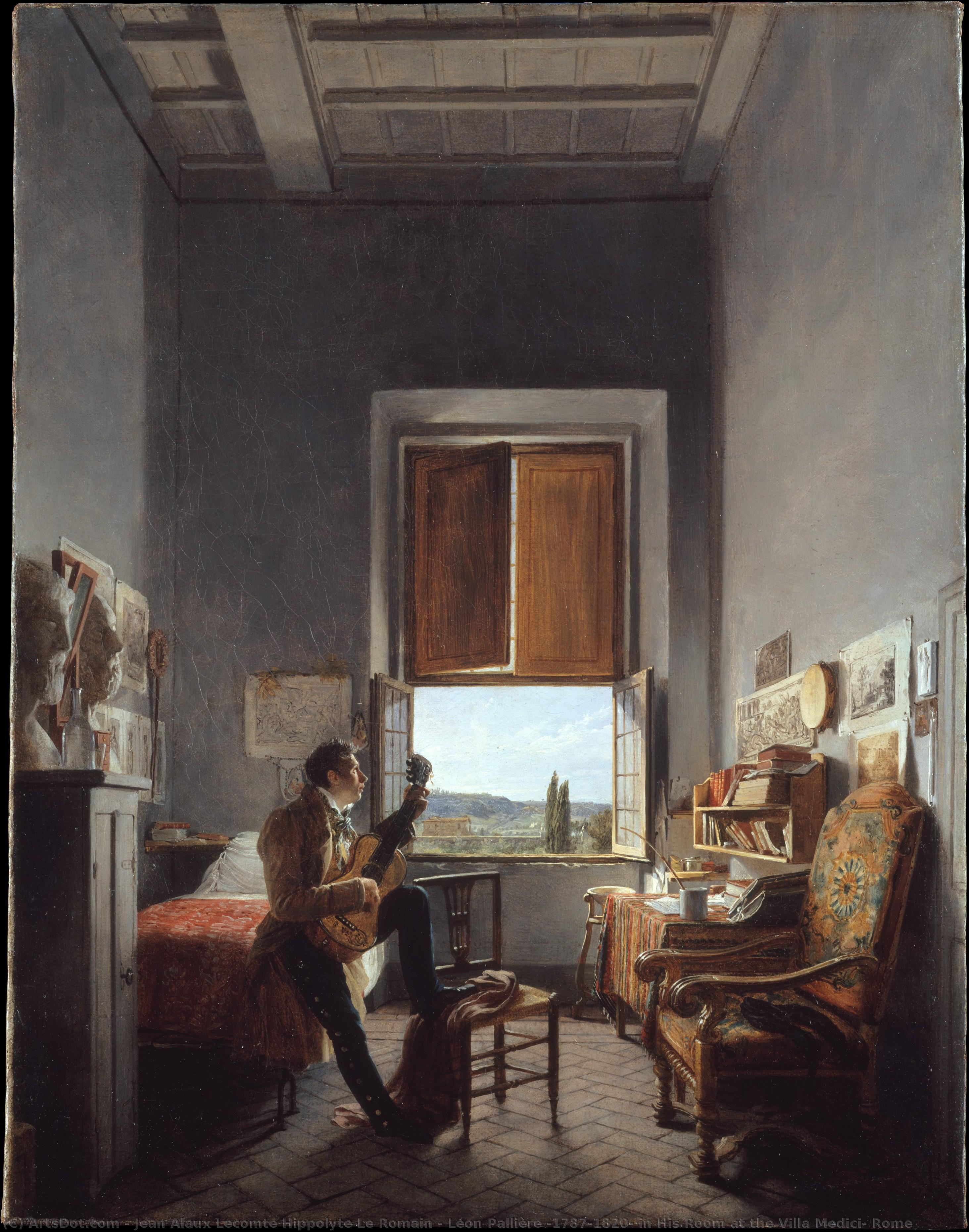
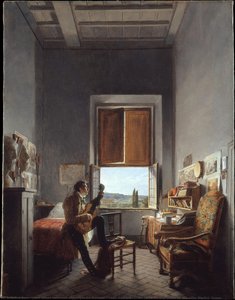
Léon Pallière (1787–1820) in His Room at the Villa Medici, Rome
 1817
1817 58.0 x 45.0 cm
 Museo Metropolitano de Arte
 Ver más
Giclée / Impresión de arte
Impresiones giclée o en lienzo de calidad de museo con producción rápida y opciones de acabado flexibles. ( Comprar pintura hecha a mano Comprar imagen)




































Elija entre nuestros tamaños predefinidos que respetan las proporciones originales de la obra.

Puede introducir sus propias dimensiones para adaptarse a un marco o espacio específico. Si el tamaño seleccionado no coincide con las proporciones de la imagen original, recortaremos la obra de arte o extenderemos la imagen con un borde con efecto espejo o de color sólido. Se enviará una maqueta digital para su aprobación antes de que comience la producción.
Tenga en cuenta que la vista previa en pantalla no refleja el recorte o la extensión real. Solo la maqueta mostrará con precisión la composición final.
Aunque existen tamaños personalizados, recomendamos seleccionar una dimensión de la lista predefinida para preservar las proporciones originales.
Envío a todo el mundo () en 2 semanas en lugar de las 4/5 semanas estándar. (1 septiembre)

Envío exprés gratuito a todo el mundo

Lienzo de lino de alta calidad

Seguro de envío total

Garantía de reembolso de impuestos aduaneros

Garantía de fidelidad cromática exacta

Política de devolución de 60 días (solo por defectos)

Garantía de devolución del 100% del dinero

Descuento por cantidad
 La opción de vidrio solo está disponible en tamaños inferiores a 110 cm.

Léon Pallière (1787–1820) in His Room at the Villa Medici, Rome
Giclée / Impresión de arte
Dimensiones de la reproducción
-


Precio total final
$ 62
Obras relacionadas







Biografía del artista
Jean-Alaux Lecomte Hippolyte Le Romain: A Master of Napoleonic Drama
The world of 19th-century art is replete with depictions of military conflict, yet few artists managed to capture the visceral reality and dramatic intensity of battle with such compelling power as Jean-Alaux Lecomte Hippolyte Le Romain. Born in Paris in 1786, Le Romain’s career unfolded against the backdrop of a rapidly changing Europe – a continent grappling with the legacy of Napoleon Bonaparte and perpetually poised on the brink of war. His life, though tragically cut short in 1864, left behind a remarkable body of work that continues to resonate with its dramatic realism and profound understanding of human experience under extreme pressure.
Le Romain’s early artistic training remains somewhat shrouded in mystery, but it is believed he initially studied at the École des Beaux-Arts in Paris. However, his true passion lay not in idealized landscapes or classical subjects, but in the gritty details of military life and the harrowing spectacle of war. This fascination was fueled by a deep respect for history and a keen interest in the Napoleonic era – an era that had profoundly shaped France and Europe. He quickly established himself as a painter specializing in historical paintings, particularly those depicting significant battles and campaigns from the French Revolutionary period through the reign of Napoleon.
The Rise of a Military Romantic
Le Romain’s artistic style evolved dramatically over his career, reflecting both the prevailing trends of the Romantic movement and his own unique vision. Initially influenced by the works of artists like David, he gradually developed a more dynamic and emotionally charged approach. His paintings are characterized by their meticulous attention to detail – from the uniforms of the soldiers to the terrain of the battlefield – yet they never succumb to mere technical virtuosity. Instead, Le Romain used these details to create a sense of immediacy and authenticity, drawing the viewer directly into the heart of the action.
A key element of his style was his masterful use of light and shadow. He employed dramatic chiaroscuro – strong contrasts between light and dark – to heighten the emotional impact of his scenes. The smoke-filled skies, the flickering flames of burning buildings, and the desperate faces of the soldiers all contribute to a sense of chaos and urgency. Furthermore, Le Romain’s compositions are often deliberately asymmetrical, creating a feeling of instability and movement that mirrors the tumultuous nature of war. He wasn't simply illustrating battles; he was conveying the psychological toll on those who fought them.
Notable Works and Influences
Le Romain’s most celebrated works depict pivotal moments from the Napoleonic Wars, including the Battle of Austerlitz (1805), the Battle of Borodino (1812), and the Battle of Waterloo (1815). His painting “Bivouac d'Osterode” (1807), depicting the aftermath of a Russian campaign, is particularly noteworthy for its depiction of exhausted soldiers huddled around a meager fire – a poignant reminder of the human cost of war. His work "Bass ophicleide view 1" showcases his ability to capture the sounds and atmosphere of battle through visual representation.
While Le Romain was undoubtedly influenced by the Romantic tradition, he also drew inspiration from classical art and military history. He meticulously researched historical accounts and consulted with veterans to ensure the accuracy of his depictions. Interestingly, his work "Léon Pallière (1787–1820) in His Room at the Villa Medici, Rome" demonstrates a shift towards a more intimate and contemplative style, possibly reflecting a period of personal reflection or artistic experimentation.
Legacy and Historical Significance
Jean-Alaux Lecomte Hippolyte Le Romain’s paintings remain significant not only for their artistic merit but also for their historical documentation. They offer invaluable insights into the realities of warfare during the Napoleonic era, providing a visceral understanding of the experiences of soldiers on the front lines. His work helped to shape public perception of war and its consequences, moving beyond romanticized notions of heroism and glory.
Despite his untimely death in 1864, Le Romain’s legacy endures. His paintings are held in prominent museums throughout France and Europe, and continue to be studied by art historians and military scholars alike. He stands as a testament to the power of art to capture history, evoke emotion, and illuminate the human condition – particularly in times of conflict. His ability to translate the chaos and drama of battle onto canvas cemented his place as one of the most important artists of the 19th century.
jean alaux lecomte hippolyte le romain
1786 - 1864
Datos clave
- Artistic Movement Or Style: Historical painting
- Date Of Birth: 1786
- Date Of Death: 1864
- Full Name: Jean-Alaux Lecomte Hippolyte Le Romain
- Nationality: French
- Notable Artworks:
- Bivouac d'Osterode
- Bass ophicleide view
- Place Of Birth: Paris, France

