

 Ver en contexto
 Enviar
 Compartir
 Detalles

 Descargar
 Similares
 Radiografía
 Presentación de diapositivas
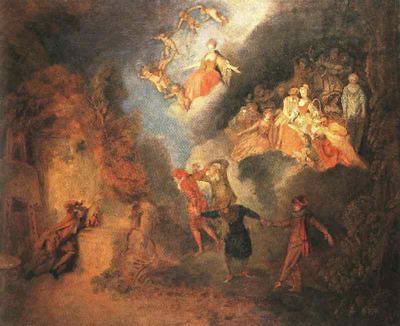
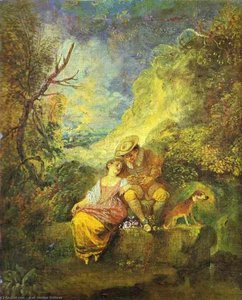
El Sueño del Artista

 Ver más
Adquiera una imagen digital de alta resolución y optimizada, muy superior a la vista previa en línea.
Cada archivo es preparado meticulosamente por nuestros especialistas internos mediante el uso de herramientas avanzadas y un experto retoque manual. Nos aseguramos de que cada imagen posea una claridad excepcional, una precisión cromática impecable y un detalle minucioso.
El archivo final se entrega por correo electrónico en un plazo de 72 horas, optimizado para su uso inmediato en entornos profesionales, editoriales y de impresión. Esta es la misma calidad en la que confían los estudios de diseño, las editoriales y las galerías de primer nivel.
Imagen Digital
Descarga un archivo de alta resolución para exhibición personal, impresión y proyectos creativos. ( Comprar impresión Comprar pintura hecha a mano)
Incluido en cada pedido de imágenes digitales
Entrega digital experta, garantizada.
Al elegir ArtsDot.com, no solo está adquiriendo una imagen; está recibiendo una obra de arte digital mejorada profesionalmente, elaborada con precisión y respaldada por una garantía de satisfacción. Esto es todo lo que incluye su pedido, automáticamente:

Entrega rápida por email
Recibirá su archivo de imagen digital en alta resolución por correo electrónico en un plazo de 72 horas tras realizar su pedido, listo para su uso inmediato.

Archivo digital optimizado por IA
Su obra de arte se optimiza profesionalmente mediante herramientas avanzadas de IA y edición manual, garantizando el máximo detalle, claridad y precisión cromática.

Reenvío gratuito de por vida
¿Has borrado o perdido tu archivo por error? No te preocupes: te lo volveremos a enviar en cualquier momento, sin coste adicional.

Sin gastos de importación, siempre
Disfrute de su obra de arte al instante sin aduanas, aranceles ni gastos de envío; las descargas digitales siempre están libres de impuestos.

Garantía de fidelidad de color
Garantizamos que su imagen digital refleje los colores originales con la mayor fidelidad posible, mediante el uso de herramientas profesionales y gestión del color.

Garantía de satisfacción de 60 días
Si no está satisfecho con su imagen digital, la revisaremos o le reembolsaremos el 100% en un plazo de 60 días, sin preguntas.

100% Garantía de devolución de dinero
¿No está satisfecho? Obtenga un reembolso completo dentro de los 60 días posteriores a la recepción de su archivo digital, sin necesidad de explicaciones.

Descuentos por pedidos grandes
Compra 3 imágenes, ahorra 10% - Compra 5, ahorra 15% - Compra 10+, ahorra 20%. Ideal para proyectos creativos, galerías y agencias.
Descripción del coleccionable
A Delicate Brushstroke: The Life and Art of Jean-Antoine Watteau
Jean-Antoine Watteau, a name that whispers elegance and fleeting beauty—a cornerstone of the Rococo movement—transformed Valenciennes into a beacon of artistic innovation in 1684. His brief yet monumental career irrevocably reshaped eighteenth-century painting, steering it away from the weighty grandeur of the Baroque towards an ethereal realm characterized by refined leisure, subtle emotion, and exquisitely crafted illusionism. Watteau’s path wasn't paved with conventional acclaim; he began his artistic journey battling obscurity within Paris’s competitive art circles—a testament to his unwavering dedication and visionary spirit. Born into modest circumstances—his father a skilled roofer—young Watteau possessed an innate talent for drawing, nurtured by the vibrant tapestry of Valenciennes’ streets. This formative exposure instilled in him not merely observational skill but also a profound appreciation for human experience, themes that would become central to his enduring legacy. Early training under local artists honed his technique and fostered a sensitivity to color and composition—elements he would master with breathtaking precision throughout his prolific output.- Subject Matter: Watteau’s canvases rarely depict grand historical narratives or religious iconography. Instead, he favored scenes of aristocratic gatherings – fêtes galantes – capturing fleeting moments of idyllic romance and carefree revelry amongst elegantly dressed figures in picturesque landscapes.
- Style: The Rococo style, championed by Watteau, prioritized delicacy, ornamentation, and asymmetry—a deliberate rejection of Baroque formality. Lines flowed gracefully, colors shimmered with pastel hues, and surfaces were treated with a velvety smoothness that created an immersive sensory experience for the viewer.
Technique: Illusionism and Atmospheric Depth
Watteau’s mastery lay in his innovative use of illusionistic painting techniques—particularly sfumato—which blurred outlines and softened edges to achieve remarkable atmospheric depth. He meticulously layered translucent glazes over the initial underpainting, creating a luminous effect that captured the diffused light of twilight landscapes. This painstaking process demanded considerable patience and skill, resulting in canvases imbued with an unparalleled sense of realism despite their stylized aesthetic. Watteau’s brushstrokes were remarkably subtle—almost invisible to the naked eye—further enhancing the painting's ethereal quality and conveying a profound emotional resonance.Historical Context: A Shift Towards Sentimentality
Watteau emerged during a period of significant social and cultural change in France, as aristocratic patronage replaced papal influence as the primary source of artistic support. The Enlightenment’s emphasis on reason and intellect contrasted sharply with the Baroque’s preoccupation with religious fervor and dramatic spectacle. Watteau responded to this evolving sensibility by prioritizing psychological nuance and emotional subtlety—a hallmark of Rococo art. His paintings explored themes of love, beauty, and melancholy, reflecting the anxieties and aspirations of the upper classes as they navigated the complexities of aristocratic life.Symbolism: Angels, Dreams, and Pastoral Ideal
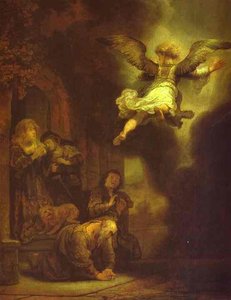
Throughout his oeuvre, Watteau employed symbolic imagery to convey deeper meanings beyond mere visual representation. Recurring motifs included angels—often depicted in serene repose—representing divine grace and spiritual contemplation; fantastical landscapes—such as ‘Embarking to Cythera’—symbolizing the realm of dreams and imagination; and idealized pastoral scenes—evoking notions of innocence, harmony, and timeless beauty. These elements contributed to Watteau's ability to evoke profound emotional responses in viewers, capturing the elusive essence of human experience with unparalleled grace and artistry.Emotional Impact: Capturing Fleeting Moments of Delight
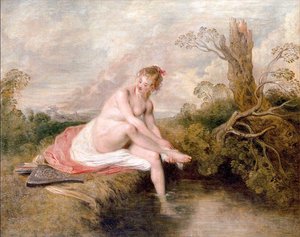
Ultimately, Watteau’s art transcends mere decoration—it aspires to capture the ephemeral beauty of life itself. His paintings invite contemplation on themes of desire, longing, and fleeting pleasure—themes that resonate powerfully across centuries. Viewing ‘The Artist's Dream,’ or ‘Diana Bathing,’ is akin to stepping into a delicately crafted world where emotion reigns supreme, reminding us of the importance of savoring every precious moment. The artist’s vision—embodied in Watteau’s masterful brushstrokes—continues to inspire awe and admiration for its exquisite beauty and enduring psychological depth.Obras relacionadas
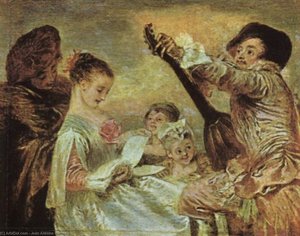

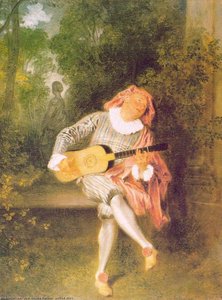
Biografía del artista
vida temprana y formación
Jean Antoine Watteau, un pintor francés, nació en Valenciennes, Francia, en 1684. Hay poco conocimiento sobre su vida temprana, pero se cree que recibió formación del artista Julien en Valenciennes antes de mudarse a París en 1702.ascenso a la prominencia
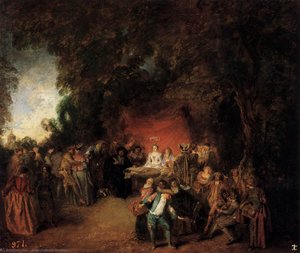
El estilo único de Watteau, que combinaba elementos de los estilos barroco y rococó emergente, rápidamente ganó popularidad. Su obra se caracterizó por su calidad luminosa y onírica, a menudo presentando escenas de la vida cotidiana y representaciones teatrales. Obras notables de este período incluyen:- El baile campestre (1718-1721), una pintura que muestra su dominio para capturar la esencia de la vida rústica y despreocupada.
- Ceres (Verano) (1705), un ejemplo de su habilidad para representar la belleza de la naturaleza y la experiencia humana.
- El contrato matrimonial (1710), una obra que destaca su capacidad para equilibrar la intimidad de las escenas domésticas con la formalidad de los acuerdos contractuales.
influencia y legado
El impacto de Watteau en el mundo del arte fue significativo, influyendo en el desarrollo del estilo rococó. Su obra se puede encontrar en varios museos, incluyendo el Galería Nacional de Arte (Washington, Estados Unidos) y el Museo del Prado (España). A pesar de su fallecimiento prematuro a los 37 años, Watteau dejó una marca indeleble en la historia del arte.explora más
Para profundizar en el mundo de Watteau, visite [https://ArtsDot.com/@/jean-antoine-watteau](https://ArtsDot.com/@/jean-antoine-watteau) y descubra la extensa colección de sus obras, incluyendo:- Retrato de una niña con sombrero (1715-1720), que muestra su habilidad para capturar las sutilezas de la expresión humana.
- Estudio de una mujer girando y cinco estudios de manos (1708-1712), que destaca su dedicación a dominar la complejidad de la forma humana.
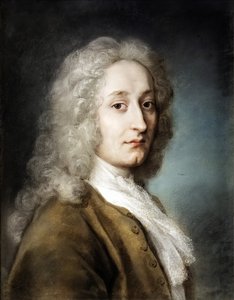
Jean-Antoine Watteau
1684 - 1721 , Francia
Breves datos
- Artistas Influenciados:
- Fragonard
- Boucher
- Artistas Que Influyeron:
- Tiziano
- Rubens
- Fecha De Muerte: 1721
- Fecha De Nacimiento: 1684
- Lugar De Nacimiento: Valenciennes, Francia
- Movimiento Artístico: Rococó
- Nacionalidad: Francés
- Nombre Completo: Jean-Antoine Watteau
- Obras Notables:
- El baile campestre
- Ceres (Verano)
- El contrato matrimonial
- Gilles
- Embarque a Citera
- Peregrinación a Citera

