 Vista previa
 Compartir
 Compartir
 Ver detalles

 Descargar
 Ver similares
 Radiografía
 Presentación de diapositivas
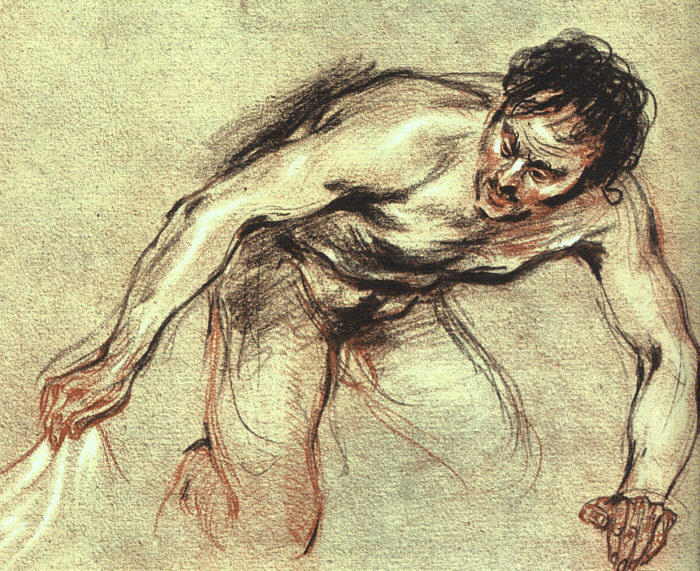
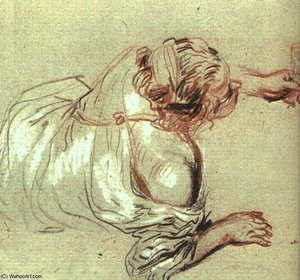
Kneeling Male Nude

 Leer más
Giclée / Impresión de arte
Impresiones giclée o en lienzo de calidad de museo con producción rápida y opciones de acabado flexibles. ( Encargar reproducción pintada a mano Comprar descarga)




P118B $10

P118H $10

P118W $10

P438Z $10

P508JH $12

P508YH $12

P805H $10

P805Z $10

P919BZ $10

P919G $10

P919XJ $10

P959ZH $10

P968JZ $12

W106C $8

W218G $10

W218JH $8

W218Y $10

W307PJ $10

W316G $10

W316PJ $8

W316Y $10

W398PJ $8

W4111J $10

W500HY $15

W500JH $15

W692G $12

W849H $8

W940BG $15

W953PJ $8




Elija entre nuestros tamaños predefinidos que respetan las proporciones originales de la obra.

Puede introducir sus propias dimensiones para adaptarse a un marco o espacio específico. Si el tamaño seleccionado no coincide con las proporciones de la imagen original, recortaremos la obra de arte o extenderemos la imagen con un borde con efecto espejo o de color sólido. Se enviará una maqueta digital para su aprobación antes de que comience la producción.
Tenga en cuenta que la vista previa en pantalla no refleja el recorte o la extensión real. Solo la maqueta mostrará con precisión la composición final.
Aunque existen tamaños personalizados, recomendamos seleccionar una dimensión de la lista predefinida para preservar las proporciones originales.
Envío a todo el mundo () en 2 semanas en lugar de las 4/5 semanas estándar. (21 agosto)

Envío exprés gratuito a todo el mundo

Lienzo de lino de alta calidad

Seguro de envío completo

Garantía de reembolso de aranceles aduaneros

Garantía de fidelidad cromática exacta

Política de devolución de 60 días (solo por defectos)

Garantía de devolución del 100% del dinero

Oferta por volumen
 La opción de vidrio solo está disponible en tamaños inferiores a 110 cm.

Kneeling Male Nude
Giclée / Impresión de arte
Tamaño de la reproducción
-


Precio total
$ 62
Descripción de la pieza
A Moment of Contemplation: Exploring Watteau's "Kneeling Male Nude"
Jean-Antoine Watteau’s “Kneeling Male Nude” is more than just a depiction of the human form; it’s a poignant distillation of Rococo sensibilities, a whisper of melancholy, and a testament to the artist’s profound understanding of gesture and emotion. Painted during his tragically short career – from 1684 to 1721 – this oil on canvas captures a single, intensely private moment, inviting viewers into a world of restrained elegance and subtle psychological depth. The subject, a powerfully built male nude kneeling with hands clasped to his knees, isn’t merely posed; he seems lost in thought, gazing upwards as if searching for something beyond the confines of the painted space. This upward gaze is crucial, immediately establishing a sense of yearning or perhaps even spiritual contemplation – a hallmark of Watteau's work and reflective of the era’s fascination with courtly love and idealized beauty.
The Rococo Aesthetic: Grace and Intimacy
- Style & Technique: Watteau masterfully employs the hallmarks of the Rococo style. The brushwork is delicate, almost translucent, creating a shimmering effect that softens the contours of the figure and contributes to the overall atmosphere of dreaminess. Notice the subtle modeling of the muscles, not rendered with the stark realism favored by the Baroque, but rather sculpted through careful layering of color and light – a technique perfected by Watteau’s meticulous observation of the human form.
- Composition: The composition itself is deceptively simple, yet profoundly effective. The kneeling pose immediately draws the viewer's eye, while the wall in the background provides a sense of depth and anchors the figure within a defined space. This careful arrangement contributes to the painting’s quiet intensity.
Historical Context: A Shifting Artistic Landscape
Watteau emerged during a pivotal moment in art history, marking a decisive break from the grandeur and dramatic narratives of the Baroque period. Following the death of Louis XIV, France’s artistic landscape shifted towards a more intimate and refined aesthetic – the Rococo. Watteau's work reflected this change, moving away from heroic subjects and elaborate allegories to focus on scenes of leisure, courtship, and aristocratic life. His paintings were often commissioned for private collections, intended to be enjoyed in the seclusion of salons and boudoirs, further emphasizing their intimate character.
Symbolism and Emotional Resonance
The kneeling posture itself is laden with symbolic weight. It suggests humility, introspection, or perhaps even a moment of vulnerability. The upward gaze adds another layer of interpretation – a desire for transcendence, a longing for beauty, or simply a contemplation of the heavens. Watteau’s ability to imbue such a seemingly simple scene with such profound emotional resonance is what elevates this work beyond mere representation and transforms it into a timeless meditation on the human condition. The painting speaks to themes of loneliness, aspiration, and the search for meaning – emotions that continue to resonate with viewers today.
A Timeless Masterpiece: Reproduction Possibilities
Watteau’s “Kneeling Male Nude” remains a captivating work of art, offering a glimpse into the delicate beauty and emotional depth of the Rococo era. ArtsDot.com offers meticulously crafted hand-painted reproductions that faithfully capture the essence of this iconic painting, allowing you to bring its timeless elegance into your home or office. Our skilled artisans utilize archival quality materials and techniques to ensure that each reproduction is a faithful representation of Watteau’s original masterpiece, preserving its beauty for generations to come.
Obras relacionadas

Biografía del artista
vida temprana y formación
Jean Antoine Watteau, un pintor francés, nació en Valenciennes, Francia, en 1684. Hay poco conocimiento sobre su vida temprana, pero se cree que recibió formación del artista Julien en Valenciennes antes de mudarse a París en 1702.ascenso a la prominencia
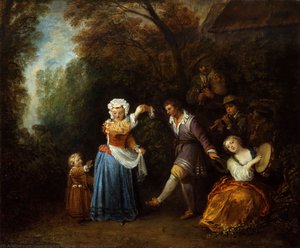
El estilo único de Watteau, que combinaba elementos de los estilos barroco y rococó emergente, rápidamente ganó popularidad. Su obra se caracterizó por su calidad luminosa y onírica, a menudo presentando escenas de la vida cotidiana y representaciones teatrales. Obras notables de este período incluyen:- El baile campestre (1718-1721), una pintura que muestra su dominio para capturar la esencia de la vida rústica y despreocupada.
- Ceres (Verano) (1705), un ejemplo de su habilidad para representar la belleza de la naturaleza y la experiencia humana.
- El contrato matrimonial (1710), una obra que destaca su capacidad para equilibrar la intimidad de las escenas domésticas con la formalidad de los acuerdos contractuales.
influencia y legado
El impacto de Watteau en el mundo del arte fue significativo, influyendo en el desarrollo del estilo rococó. Su obra se puede encontrar en varios museos, incluyendo el Galería Nacional de Arte (Washington, Estados Unidos) y el Museo del Prado (España). A pesar de su fallecimiento prematuro a los 37 años, Watteau dejó una marca indeleble en la historia del arte.explora más
Para profundizar en el mundo de Watteau, visite [https://ArtsDot.com/@/jean-antoine-watteau](https://ArtsDot.com/@/jean-antoine-watteau) y descubra la extensa colección de sus obras, incluyendo:- Retrato de una niña con sombrero (1715-1720), que muestra su habilidad para capturar las sutilezas de la expresión humana.
- Estudio de una mujer girando y cinco estudios de manos (1708-1712), que destaca su dedicación a dominar la complejidad de la forma humana.
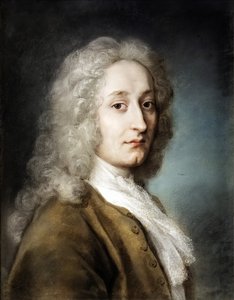
Jean-Antoine Watteau
1684 - 1721 , Francia
Datos clave
- Artistas Influenciados:
- Fragonard
- Boucher
- Artistas Que Influyeron:
- Tiziano
- Rubens
- Fecha De Muerte: 1721
- Fecha De Nacimiento: 1684
- Lugar De Nacimiento: Valenciennes, Francia
- Movimiento Artístico: Rococó
- Nacionalidad: Francés
- Nombre Completo: Jean-Antoine Watteau
- Obras Notables:
- El baile campestre
- Ceres (Verano)
- El contrato matrimonial
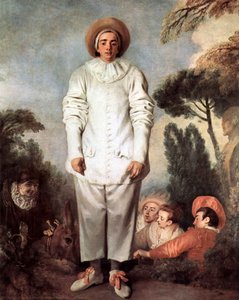
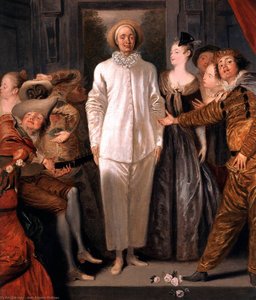
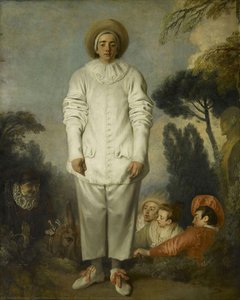
- Gilles
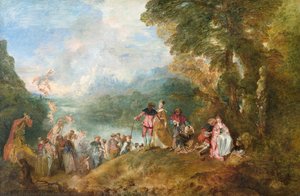
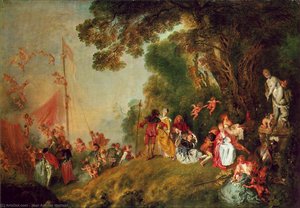
- Embarque a Citera
- Peregrinación a Citera
Artículos relacionados

Rococó: 10 Obras Maestras que Definieron una Época | Arte y Decoración en
Descubre las 10 obras maestras del Rococó que marcaron una época. Explora la elegancia de Fragonard, Boucher y Watteau en . Reproducciones de arte de calidad museo para decorar tu hogar con estilo.

Giclée Prints: Archival Quality & Aesthetic Nuances for the Discerning Collector
Explore the world of giclée prints with ArtsDot. Learn about archival quality, aesthetic nuances & investment potential. Expert guidance for discerning art collectors seeking museum-quality reproductions and lasting value.
Art Prints vs. Oil Paintings: A Newlywed's Guide to Curating a Timeless Home Collection
Discover how to choose between exquisite hand-painted oil reproductions and versatile art prints. Our expert guide for newlyweds helps you balance budget and beauty to curate a timeless, soulful home collection filled with meaning and lasting legacy.

La Estética Rococó: Opulencia, Rebelión y Placer en el Arte del Siglo XVIII
Descubre la fascinante estética rococó: su historia, características clave y los artistas más influyentes del siglo XVIII. Un análisis profundo para amantes del arte y coleccionistas.

Echoes of Time: Exploring the Enduring Appeal & Historical Context of Vintage Art Prints
Explore the captivating world of vintage art prints! Discover their history, collecting tips & enduring appeal. Expert insights on chromolithography and building a legacy collection with ArtsDot.