 Ver en contexto
 Enviar
 Compartir
 Detalles

 Descargar
 Similares
 Radiografía
 Presentación de diapositivas
Pierrot content


 Ver más
Reproducción al óleo hecha a mano
Óleo sobre lienzo pintado a mano en el tamaño y marco de su elección, realizado por encargo por nuestros artistas. ( Comprar impresión Comprar imagen)




P118B $10

P118H $10

P118W $10

P438Z $10

P508JH $12

P508YH $12

P805H $10

P805Z $10

P919BZ $10

P919G $10

P919XJ $10

P959ZH $10

P968JZ $12

W106C $8

W218G $10

W218JH $8

W218Y $10

W307PJ $10

W316G $10

W316PJ $8

W316Y $10

W398PJ $8

W4111J $10

W500HY $15

W500JH $15

W692G $12

W849H $8

W940BG $15

W953PJ $8




Elija entre nuestros tamaños predefinidos que respetan las proporciones originales de la obra.

Puede ingresar sus propias dimensiones para adaptarse a un marco o espacio específico. Si el tamaño seleccionado no coincide con las proporciones de la imagen original, recortaremos la obra o extenderemos la pintura con elementos adicionales pintados a mano. Se le enviará una maqueta digital para su aprobación antes de comenzar la producción.
Tenga en cuenta que la vista previa en pantalla no refleja el recorte o la extensión reales. Solo la maqueta mostrará con precisión la composición final.
Si bien existen tamaños personalizados, recomendamos seleccionar una dimensión de la lista predefinida para preservar las proporciones originales.
Tras realizar el pedido, el equipo de ArtsDot.com enviará un correo electrónico al cliente para solicitar instrucciones y proporcionarle una vista previa del boceto.
Envío a todo el mundo () en 3-4 semanas en lugar de las 5 semanas estándar. (31 agosto). Sin comprometer la calidad.

Envío exprés gratuito a todo el mundo

Lienzo de lino de alta calidad

Seguro de envío total

Garantía de reembolso de impuestos aduaneros

Garantía de fidelidad cromática exacta

Política de devolución de 60 días (solo por defectos)

Garantía de devolución del 100% del dinero

Descuento por cantidad
 La opción de vidrio solo está disponible en tamaños inferiores a 110 cm.

Pierrot content
Técnica de reproducción
Dimensiones de la reproducción
-


Precio total final
$ 263
A Symphony of Rococo Grace
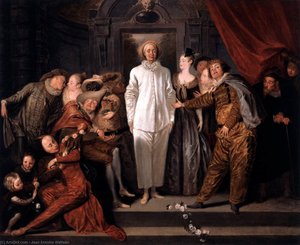
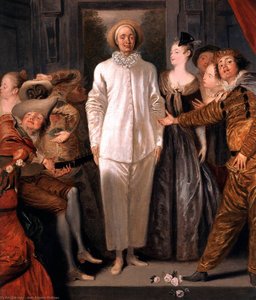
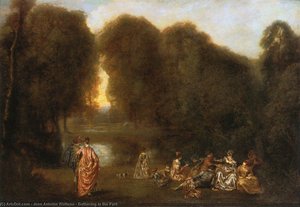
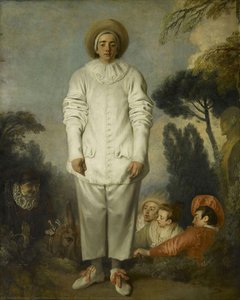
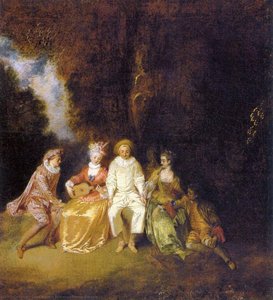
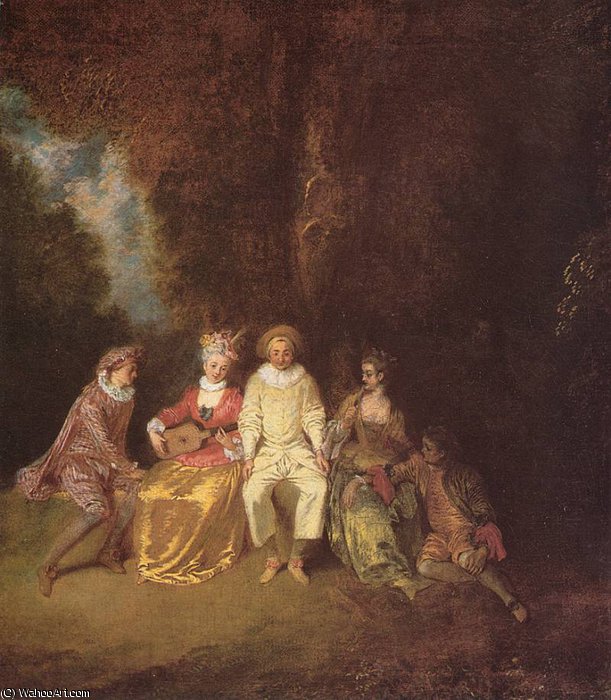
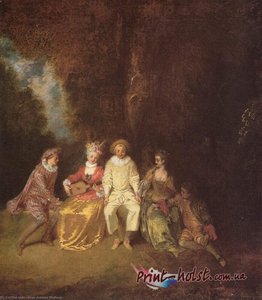
In the delicate dance of light and shadow that defines Jean-Antoine Watteau’s Pierrot Content, we find more than just a painting; we encounter the very heartbeat of the Rococo era. Completed during the early years of the eighteenth century, this masterpiece serves as a window into a world where the heavy, dramatic tensions of the Baroque have dissolved into a luminous celebration of leisure and subtle emotion. The scene unfolds within an idyllic, sun-dappled forest setting, where a group of figures gathers in a moment of quiet, social harmony. As one gazes upon the canvas, there is an immediate sense of joie de vivre—a joyful vitality that invites the viewer to step away from the rigors of reality and into a realm of pastoral elegance.
The composition is masterfully orchestrated to guide the eye through a landscape of soft textures and gentle interactions. A group of five individuals, nestled comfortably against the earth and beneath the sheltering canopy of a tree, engages in the quiet art of conversation. The presence of musical instruments, such as the violin resting near the center, suggests a soundtrack of melodic lightness that complements the visual rhythm of the piece. This is not a scene of grand historical conquest, but rather an intimate fête galante, a genre Watteau himself pioneered, which captures the fleeting beauty of aristocratic pleasure and the poetic charm of the natural world.
Technique and the Art of Atmosphere
Watteau’s technical prowess is evident in his ability to manipulate oil on canvas to achieve a sense of ethereal lightness. His brushwork, often described as delicate and fluid, avoids harsh outlines, allowing forms to emerge softly from the background. This technique creates a dreamlike atmosphere where the boundaries between the figures and their lush environment seem almost permeable. The color palette is quintessential Rococo: a sophisticated arrangement of pastel hues, shimmering silvers, and earthy tones that evoke the soft flickering light of an afternoon in a manicured garden.
For the discerning collector or interior designer, the emotional resonance of Pierrot Content lies in its profound duality. While the surface of the painting radiates tranquility and social ease, there remains an underlying layer of wistful melancholy—a characteristic "sweet sadness" that Watteau mastered so uniquely. This subtle tension provides the work with a psychological depth that prevents it from being merely decorative. It is a piece that commands attention not through volume, but through its ability to whisper stories of romance, contemplation, and the ephemeral nature of time.
An Enduring Legacy for Modern Spaces
Integrating a high-quality reproduction of this masterpiece into a contemporary interior offers an opportunity to introduce a sense of historical prestige and refined elegance. Whether placed in a sunlit drawing room or a sophisticated study, Pierrot Content acts as a focal point of tranquility. Its soft textures and organic composition harmonize beautifully with both classical and modern decor, providing a sophisticated counterpoint to the sharp lines of contemporary furniture.
To possess such a work is to hold a fragment of art history—a tribute to an era that valued wit, intimacy, and the exquisite beauty found in life's most fleeting moments. For those seeking to curate a space filled with inspiration, Watteau’s vision offers a timeless sanctuary of grace and poetic light.
Obras relacionadas

Biografía del artista
vida temprana y formación
Jean Antoine Watteau, un pintor francés, nació en Valenciennes, Francia, en 1684. Hay poco conocimiento sobre su vida temprana, pero se cree que recibió formación del artista Julien en Valenciennes antes de mudarse a París en 1702.ascenso a la prominencia
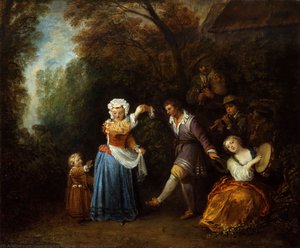
El estilo único de Watteau, que combinaba elementos de los estilos barroco y rococó emergente, rápidamente ganó popularidad. Su obra se caracterizó por su calidad luminosa y onírica, a menudo presentando escenas de la vida cotidiana y representaciones teatrales. Obras notables de este período incluyen:- El baile campestre (1718-1721), una pintura que muestra su dominio para capturar la esencia de la vida rústica y despreocupada.
- Ceres (Verano) (1705), un ejemplo de su habilidad para representar la belleza de la naturaleza y la experiencia humana.
- El contrato matrimonial (1710), una obra que destaca su capacidad para equilibrar la intimidad de las escenas domésticas con la formalidad de los acuerdos contractuales.
influencia y legado
El impacto de Watteau en el mundo del arte fue significativo, influyendo en el desarrollo del estilo rococó. Su obra se puede encontrar en varios museos, incluyendo el Galería Nacional de Arte (Washington, Estados Unidos) y el Museo del Prado (España). A pesar de su fallecimiento prematuro a los 37 años, Watteau dejó una marca indeleble en la historia del arte.explora más
Para profundizar en el mundo de Watteau, visite [https://ArtsDot.com/@/jean-antoine-watteau](https://ArtsDot.com/@/jean-antoine-watteau) y descubra la extensa colección de sus obras, incluyendo:- Retrato de una niña con sombrero (1715-1720), que muestra su habilidad para capturar las sutilezas de la expresión humana.
- Estudio de una mujer girando y cinco estudios de manos (1708-1712), que destaca su dedicación a dominar la complejidad de la forma humana.
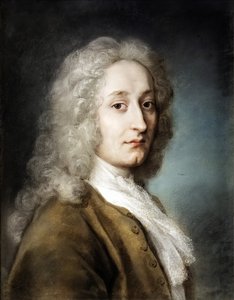
Jean-Antoine Watteau
1684 - 1721 , Francia
Datos clave
- Artistas Influenciados:
- Fragonard
- Boucher
- Artistas Que Influyeron:
- Tiziano
- Rubens
- Fecha De Muerte: 1721
- Fecha De Nacimiento: 1684
- Lugar De Nacimiento: Valenciennes, Francia
- Movimiento Artístico: Rococó
- Nacionalidad: Francés
- Nombre Completo: Jean-Antoine Watteau
- Obras Notables:
- El baile campestre
- Ceres (Verano)
- El contrato matrimonial
- Gilles
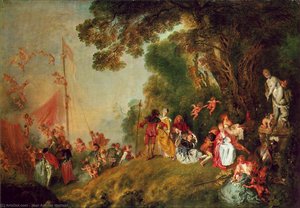
- Embarque a Citera
- Peregrinación a Citera
Artículos relacionados

The Subdued Radiance of Pastel: Exploring Nuance & Emotion in Art
Explore the nuanced world of pastel art! Discover its history, techniques & emotional power with expert insights from ArtsDot.com. Find museum-quality reproductions and learn about collecting this delicate medium.

Rococó: 10 Obras Maestras que Definieron una Época | Arte y Decoración en
Descubre las 10 obras maestras del Rococó que marcaron una época. Explora la elegancia de Fragonard, Boucher y Watteau en . Reproducciones de arte de calidad museo para decorar tu hogar con estilo.

La Estética Rococó: Opulencia, Rebelión y Placer en el Arte del Siglo XVIII
Descubre la fascinante estética rococó: su historia, características clave y los artistas más influyentes del siglo XVIII. Un análisis profundo para amantes del arte y coleccionistas.

La Sutileza del Pastel: Técnica, Historia y Resonancia Emocional en el Arte
Descubre la sutileza del pastel: técnica, historia y artistas clave como Degas y Renoir. Guías expertas sobre materiales, conservación y cómo expresar emociones a través de este bello arte.

The Allure of Elegance in Art: A Historical & Aesthetic Exploration of Refinement & Grace
Explore the exquisite world of Rococo art! Discover its history, masters (Watteau, Boucher & more), and defining elegance. Expert insights for collectors seeking museum-quality reproductions & custom portraits.