

 Ver en contexto
 Enviar
 Compartir
 Detalles

 Descargar
 Similares
 Radiografía
 Presentación de diapositivas
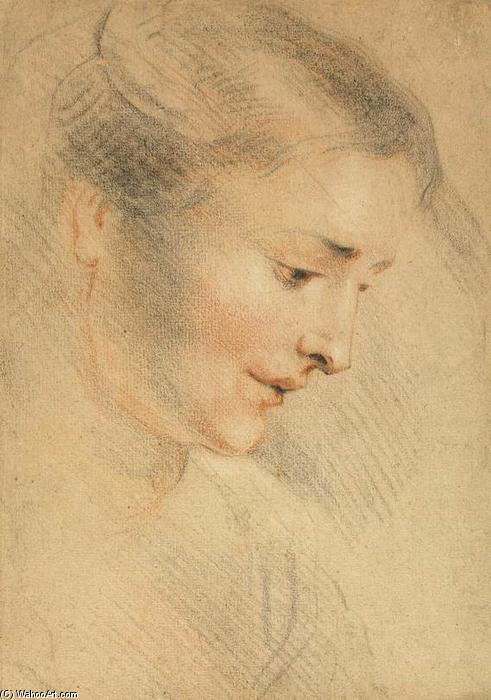
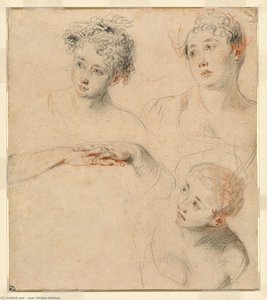
Study of a Woman's Head
 Rococo
 1710
1710- Renacimiento
 330.0 x 230.0 cm
 Museo del Hermitage
 Ver más
Adquiera una imagen digital de alta resolución y optimizada, muy superior a la vista previa en línea.
Cada archivo es preparado meticulosamente por nuestros especialistas internos mediante el uso de herramientas avanzadas y un experto retoque manual. Nos aseguramos de que cada imagen posea una claridad excepcional, una precisión cromática impecable y un detalle minucioso.
El archivo final se entrega por correo electrónico en un plazo de 72 horas, optimizado para su uso inmediato en entornos profesionales, editoriales y de impresión. Esta es la misma calidad en la que confían los estudios de diseño, las editoriales y las galerías de primer nivel.
Imagen Digital
Descarga un archivo de alta resolución para exhibición personal, impresión y proyectos creativos. ( Comprar impresión Comprar pintura hecha a mano)
Incluido en cada pedido de imágenes digitales
Entrega digital experta, garantizada.
Al elegir ArtsDot.com, no solo está adquiriendo una imagen; está recibiendo una obra de arte digital mejorada profesionalmente, elaborada con precisión y respaldada por una garantía de satisfacción. Esto es todo lo que incluye su pedido, automáticamente:

Entrega rápida por email
Recibirá su archivo de imagen digital en alta resolución por correo electrónico en un plazo de 72 horas tras realizar su pedido, listo para su uso inmediato.

Archivo digital optimizado por IA
Su obra de arte se optimiza profesionalmente mediante herramientas avanzadas de IA y edición manual, garantizando el máximo detalle, claridad y precisión cromática.

Reenvío gratuito de por vida
¿Has borrado o perdido tu archivo por error? No te preocupes: te lo volveremos a enviar en cualquier momento, sin coste adicional.

Sin gastos de importación, siempre
Disfrute de su obra de arte al instante sin aduanas, aranceles ni gastos de envío; las descargas digitales siempre están libres de impuestos.

Garantía de fidelidad de color
Garantizamos que su imagen digital refleje los colores originales con la mayor fidelidad posible, mediante el uso de herramientas profesionales y gestión del color.

Garantía de satisfacción de 60 días
Si no está satisfecho con su imagen digital, la revisaremos o le reembolsaremos el 100% en un plazo de 60 días, sin preguntas.

100% Garantía de devolución de dinero
¿No está satisfecho? Obtenga un reembolso completo dentro de los 60 días posteriores a la recepción de su archivo digital, sin necesidad de explicaciones.

Descuentos por pedidos grandes
Compra 3 imágenes, ahorra 10% - Compra 5, ahorra 15% - Compra 10+, ahorra 20%. Ideal para proyectos creativos, galerías y agencias.
Descripción del coleccionable
The Delicate Echoes of Rococo: Watteau’s ‘Study of a Woman’s Head’
Antoine Watteau's “Study of a Woman’s Head,” painted around 1710, isn’t merely a portrait; it’s a captured moment of contemplative beauty, a whisper from the heart of the Rococo era. This intimate sketch, rendered in delicate chalk on paper, offers a rare glimpse into Watteau's creative process – a testament to his meticulous observation and profound understanding of human emotion. Unlike grand historical or mythological scenes that dominated much of 18th-century art, Watteau focused on capturing fleeting expressions and the subtle nuances of everyday life, particularly within the burgeoning world of Parisian salons and theatrical circles.
The subject herself is presented with a remarkable honesty. She’s not idealized into an unattainable perfection; instead, she possesses a quiet vulnerability, her gaze directed slightly off-canvas, inviting the viewer to share in her unspoken thoughts. The artist's masterful use of light – soft and diffused – emphasizes the contours of her face, particularly her brow, chin, and forehead, creating a sense of depth and volume that belies the simplicity of the medium. Notice how Watteau doesn’t attempt to impose a rigid pose; rather, he allows the subject’s natural inclination to inform the composition, resulting in an image brimming with relaxed grace.
A Window into Watteau's Technique
Watteau’s technique is characterized by its remarkable precision and sensitivity. He employs a series of overlapping lines, each carefully rendered to build up form and texture. The chalk strokes vary in pressure and direction, creating a dynamic surface that seems to shimmer with life. Observe the subtle gradations of tone – the darker shadows defining her cheekbones, the lighter highlights illuminating her forehead – demonstrating Watteau’s command of chiaroscuro, a technique borrowed from Renaissance masters but adapted for the delicate aesthetic of Rococo. The loose, almost unfinished quality of the sketch adds to its charm and immediacy, suggesting that it was created in a moment of intense concentration.
The paper itself plays an important role. Its aged appearance – subtly textured and bearing the marks of handling – lends the drawing an authentic feel, as if it were a genuine preparatory study rather than a polished finished piece. This deliberate choice reinforces Watteau’s commitment to capturing the essence of his subject, rather than striving for flawless imitation.
Symbolism and the Rococo Spirit
“Study of a Woman’s Head” embodies many of the key characteristics of the Rococo style: elegance, grace, leisure, and an emphasis on emotional expression. The pose itself – relaxed, contemplative, and slightly melancholic – reflects the prevailing mood of the era, which favored introspection and refined sensibilities over the grandiosity of the Baroque. The subject’s gaze, as mentioned before, invites a connection with the viewer, suggesting a shared experience of quiet contemplation. This focus on individual emotion was a significant departure from the more overtly didactic art of previous generations.
Furthermore, the drawing's intimate scale – measuring just 33 x 23 cm – underscores the Rococo’s preference for smaller, more personal works of art, often intended for private enjoyment within salons and boudoirs. It speaks to a shift in artistic priorities towards capturing moments of beauty and emotion rather than grand narratives or heroic deeds.
A Timeless Masterpiece
“Study of a Woman’s Head” remains a captivating work of art, not just for its technical brilliance but also for its ability to evoke a sense of quiet contemplation. It's a reminder that beauty can be found in the simplest of things – a fleeting expression, a moment of stillness, and the delicate touch of a master artist’s hand. This sketch offers a profound insight into Watteau’s artistic vision and his enduring legacy as one of the most influential figures in the history of Western art.
Obras relacionadas

Biografía del artista
vida temprana y formación
Jean Antoine Watteau, un pintor francés, nació en Valenciennes, Francia, en 1684. Hay poco conocimiento sobre su vida temprana, pero se cree que recibió formación del artista Julien en Valenciennes antes de mudarse a París en 1702.ascenso a la prominencia
El estilo único de Watteau, que combinaba elementos de los estilos barroco y rococó emergente, rápidamente ganó popularidad. Su obra se caracterizó por su calidad luminosa y onírica, a menudo presentando escenas de la vida cotidiana y representaciones teatrales. Obras notables de este período incluyen:- El baile campestre (1718-1721), una pintura que muestra su dominio para capturar la esencia de la vida rústica y despreocupada.
- Ceres (Verano) (1705), un ejemplo de su habilidad para representar la belleza de la naturaleza y la experiencia humana.
- El contrato matrimonial (1710), una obra que destaca su capacidad para equilibrar la intimidad de las escenas domésticas con la formalidad de los acuerdos contractuales.
influencia y legado
El impacto de Watteau en el mundo del arte fue significativo, influyendo en el desarrollo del estilo rococó. Su obra se puede encontrar en varios museos, incluyendo el Galería Nacional de Arte (Washington, Estados Unidos) y el Museo del Prado (España). A pesar de su fallecimiento prematuro a los 37 años, Watteau dejó una marca indeleble en la historia del arte.explora más
Para profundizar en el mundo de Watteau, visite [https://ArtsDot.com/@/jean-antoine-watteau](https://ArtsDot.com/@/jean-antoine-watteau) y descubra la extensa colección de sus obras, incluyendo:- Retrato de una niña con sombrero (1715-1720), que muestra su habilidad para capturar las sutilezas de la expresión humana.
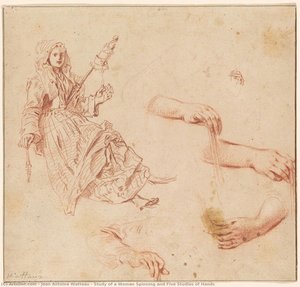
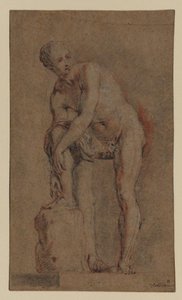
- Estudio de una mujer girando y cinco estudios de manos (1708-1712), que destaca su dedicación a dominar la complejidad de la forma humana.
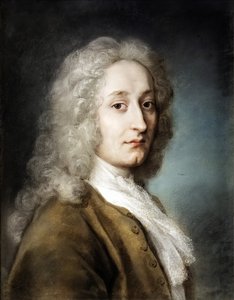
Jean-Antoine Watteau
1684 - 1721 , Francia
Breves datos
- Artistas Influenciados:
- Fragonard
- Boucher
- Artistas Que Influyeron:
- Tiziano
- Rubens
- Fecha De Muerte: 1721
- Fecha De Nacimiento: 1684
- Lugar De Nacimiento: Valenciennes, Francia
- Movimiento Artístico: Rococó
- Nacionalidad: Francés
- Nombre Completo: Jean-Antoine Watteau
- Obras Notables:
- El baile campestre
- Ceres (Verano)
- El contrato matrimonial
- Gilles
- Embarque a Citera
- Peregrinación a Citera

