 Ver en contexto
 Enviar
 Compartir
 Detalles

 Descargar
 Similares
 Radiografía
 Presentación de diapositivas
Napoleon I on His Imperial Throne-large


 Ver más
Giclée / Impresión de arte
Impresiones giclée o en lienzo de calidad de museo con producción rápida y opciones de acabado flexibles. ( Comprar pintura hecha a mano Comprar imagen)




P118B $10

P118H $10

P118W $10

P438Z $10

P508JH $12

P508YH $12

P805H $10

P805Z $10

P919BZ $10

P919G $10

P919XJ $10

P959ZH $10

P968JZ $12

W106C $8

W218G $10

W218JH $8

W218Y $10

W307PJ $10

W316G $10

W316PJ $8

W316Y $10

W398PJ $8

W4111J $10

W500HY $15

W500JH $15

W692G $12

W849H $8

W940BG $15

W953PJ $8




Elija entre nuestros tamaños predefinidos que respetan las proporciones originales de la obra.

Puede introducir sus propias dimensiones para adaptarse a un marco o espacio específico. Si el tamaño seleccionado no coincide con las proporciones de la imagen original, recortaremos la obra de arte o extenderemos la imagen con un borde con efecto espejo o de color sólido. Se enviará una maqueta digital para su aprobación antes de que comience la producción.
Tenga en cuenta que la vista previa en pantalla no refleja el recorte o la extensión real. Solo la maqueta mostrará con precisión la composición final.
Aunque existen tamaños personalizados, recomendamos seleccionar una dimensión de la lista predefinida para preservar las proporciones originales.
Envío a todo el mundo () en 2 semanas en lugar de las 4/5 semanas estándar. (23 agosto)

Envío exprés gratuito a todo el mundo

Lienzo de lino de alta calidad

Seguro de envío total

Garantía de reembolso de impuestos aduaneros

Garantía de fidelidad cromática exacta

Política de devolución de 60 días (solo por defectos)

Garantía de devolución del 100% del dinero

Descuento por cantidad
 La opción de vidrio solo está disponible en tamaños inferiores a 110 cm.

Napoleon I on His Imperial Throne-large
Giclée / Impresión de arte
Dimensiones de la reproducción
-


Precio total final
$ 62
Descripción de la pieza
The Majesty of Command: An Encounter with Imperial Grandeur
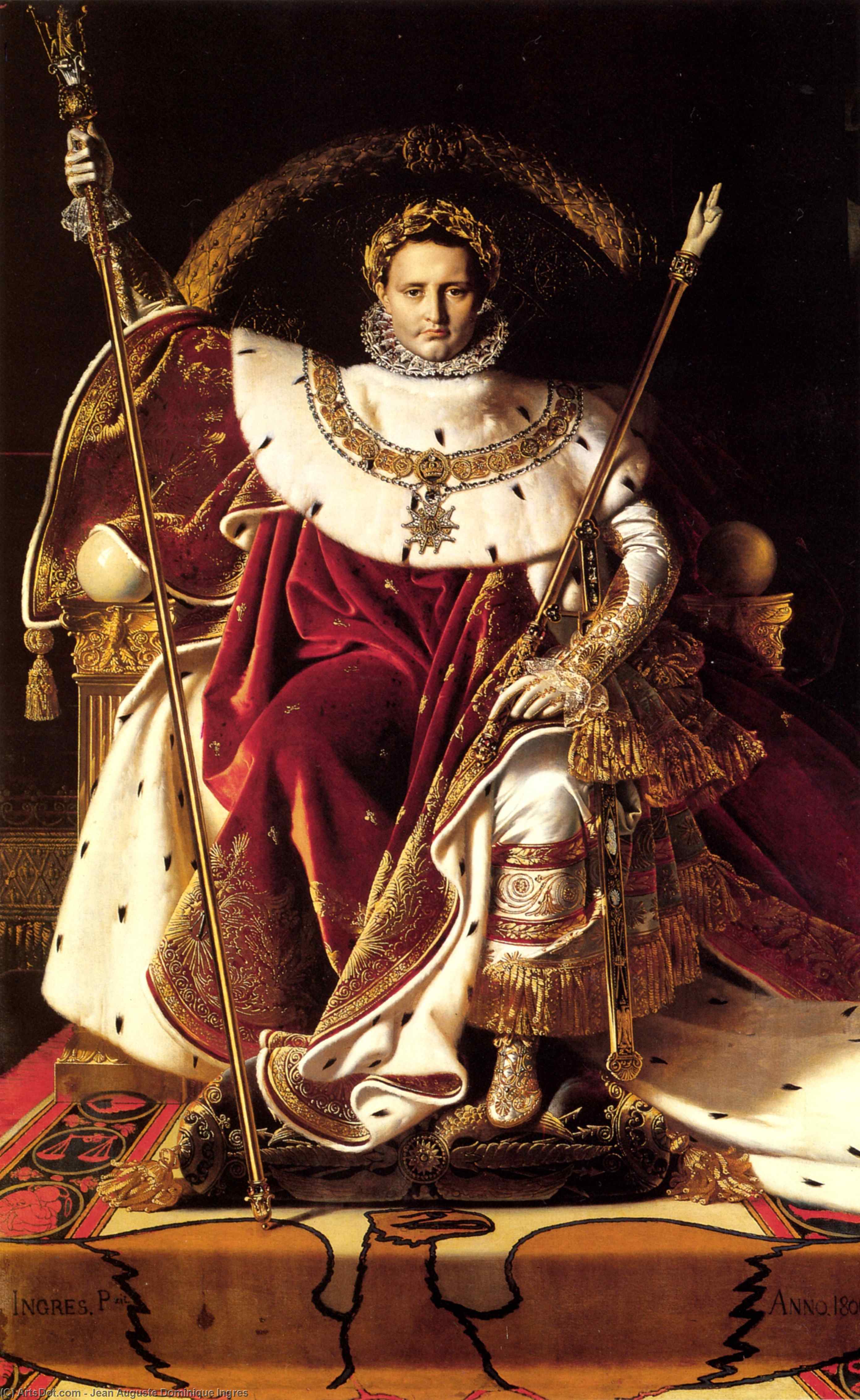
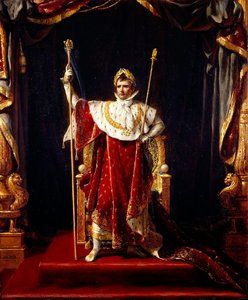
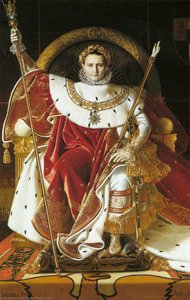
In the presence of Jean-Auguste-Dominique Ingres’s Napoleon I on His Imperial Throne, one does not merely observe a portrait; one experiences an encounter with absolute sovereignty. This monumental work serves as a breathtaking testament to the heights of Neoclassical ambition, capturing the Emperor not just as a man, but as a living icon of power. The composition is anchored by the imposing figure of Napoleon, seated upon a throne that seems to command the very space around it. Clad in opulent royal regalia, his posture is one of unshakeable stability and divine right. Every element, from the weight of his heavy, embroidered robes to the deliberate placement of his hands, contributes to an atmosphere of profound authority that transcends the canvas.
The visual narrative is enriched by a meticulous attention to detail that invites the viewer into a world of splendor and ceremony. As the eye wanders across the scene, it encounters the sharp, precise edges of the imperial regalia and the glint of ceremonial swords, symbols of both justice and conquest. The background, though subtly composed, provides a sense of depth and courtly presence, suggesting a larger world revolving around this singular, central sun of the French Empire. For the discerning collector or interior designer, this piece offers more than just decoration; it provides a focal point of historical gravity, capable of anchoring a room with its sheer psychological weight and regal elegance.
A Masterclass in Neoclassical Precision
Technically, this masterpiece exemplifies the virtuosity that made Ingres a titan of the nineteenth-century art world. Eschewing the loose, spontaneous brushwork of the Romantics, Ingres employs a disciplined, almost sculptural technique characterized by incredibly smooth surfaces and a flawless command of line. There is an almost tactile quality to the way he renders different textures—the heavy sheen of silk, the cold hardness of metallic ornaments, and the soft, commanding presence of skin. This precision creates a sense of hyper-reality, where the subject feels less like a painted image and more like a physical monument preserved in time.
The artist’s use of light is equally masterful, serving to sculpt the figure of Napoleon and imbue him with a luminous, almost otherworldly aura. The interplay of shadow and brilliance does not merely define form; it directs the viewer's emotional response, guiding the gaze toward the symbols of office and the resolute expression of the Emperor. This level of technical excellence makes a high-quality reproduction of this work an extraordinary investment for any space, as it brings with it the rigorous academic tradition and the sophisticated aesthetic of the French Neoclassical era.
Symbolism and the Legacy of Power
Beyond its surface beauty, the painting is a complex web of political and symbolic meaning. Every jewel, every fold of fabric, and every heraldic device serves to reinforce the legitimacy of Napoleon’s reign. The throne itself acts as an architectural extension of his will, while the swords held in hand represent the dual nature of his rule: the capacity for defense and the readiness for expansion. To display such a work is to invite a conversation about history, leadership, and the enduring human fascination with the concept of the "Great Man."
For those seeking to curate an environment of distinction, this artwork offers a profound emotional impact. It evokes a sense of awe, nostalgia, and intellectual stimulation. Whether placed in a formal study, a grand hallway, or a sophisticated living area, Napoleon I on His Imperial Throne acts as a window into a transformative epoch of European history. It is a piece that demands attention, rewards close study, and provides a timeless sense of prestige to any collection.
Obras relacionadas
Biografía del artista
Jean-Auguste-Dominique Ingres: Un Maestro del Neoclasicismo
- Nacido: 29 de agosto de 1780, Montauban, Francia
- Fallecido: 14 de enero de 1867, París
Primeros Años y Formación
Jean-Auguste-Dominique Ingres nació en una familia modesta en Montauban. Su padre, Jean-Marie-Joseph Ingres, era pintor y escultor, lo que le proporcionó una base artística temprana. Ingres recibió su formación inicial de su padre antes de inscribirse en la Académie Royale de Peinture, Sculpture et Architecture en Toulouse bajo Guillaume-Joseph Roques. En 1797, se mudó a París para estudiar con Jacques-Louis David, una figura destacada del Neoclasicismo. Esta tutoría demostró ser crucial en la configuración de la trayectoria artística de Ingres.
Desarrollo Artístico e Influencias
El estilo de Ingres estaba profundamente arraigado en las tradiciones del Renacimiento italiano y los maestros flamencos como Rafael y Nicolás Poussin. Estudió meticulosamente sus obras, esforzándose por emular su claridad, elegancia y formas idealizadas. La influencia de Jacques-Louis David también es evidente en la temprana adhesión de Ingres a los principios neoclásicos: un enfoque en la línea, la forma y los temas históricos o mitológicos. Sin embargo, Ingres desarrolló gradualmente su propio estilo distintivo, caracterizado por una mezcla única de precisión y sensualidad.
Obras Principales y Estilo
Ingres logró un reconocimiento significativo a través de varias obras notables:
- Los Embajadores de Agamenón en la Tienda de Aquiles (1801): Esta pintura le valió el Prix de Rome, marcando un momento crucial en su carrera.
- El Voto del Rey Luis XIII (1827): Una obra que demuestra su estilo Raphaelesco y que le granjeó un amplio reconocimiento.
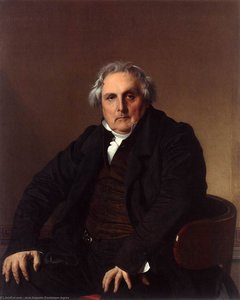
- Retrato del Señor Bertin (1833-1834): Este retrato marcó un período de éxito popular, mostrando su habilidad para capturar el carácter individual.
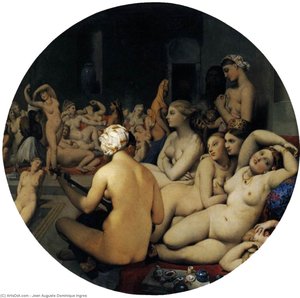
- El Baño Turco (1862): Una de sus obras posteriores y un ejemplo de sus pinturas orientalistas que representan el desnudo femenino, completada cuando tenía 83 años.
Los retratos de Ingres son particularmente celebrados por sus expresivas distorsiones de la forma y el espacio: una desviación de las convenciones neoclásicas estrictas que prefiguró los movimientos artísticos modernos. Empleó un estilo lineal con contornos precisos y colores vibrantes, creando a menudo una ilusión de profundidad mediante sombreado sutil.
Legado y Significado Histórico
El legado de Ingres se extiende mucho más allá de su propia producción prolífica. Exertió una profunda influencia en generaciones posteriores de artistas, incluidos Henri Matisse y Pablo Picasso, quienes admiraron su enfoque innovador de la forma y la composición. Su compromiso con los ideales clásicos mientras simultáneamente traspasaba los límites de la expresión artística consolidó su posición como un puente entre el Neoclasicismo y el Arte Moderno. La obra de Ingres continúa siendo exhibida en importantes museos de todo el mundo, testimonio de su belleza perdurable y su significado histórico.
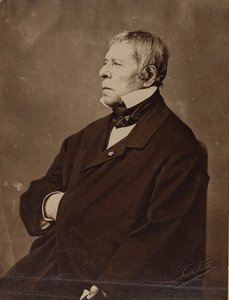
Jean-Auguste-Dominique Ingres
1780 - 1867 , Francia
Datos clave
- Artistas Influyentes:
- Rafael
- Nicolás Poussin
- Jacques-Louis David
- Fecha De Fallecimiento: 14 de enero de 1867
- Fecha De Nacimiento: 29 de agosto de 1780
- Influenciado Por:
- Henri Matisse
- Pablo Picasso
- Lugar De Nacimiento: Montauban, Francia
- Movimiento Artístico: Neoclasicismo
- Nacionalidad: Francés
- Nombre Completo: Jean-Auguste-Dominique Ingres
- Obras Notables:
- Los embajadores de Agamenón
- El voto del rey Luis XIII
- Retrato del Sr. Bertin
- El baño turco
Artículos relacionados

Renoir: Las 25 Obras Maestras del Impresionismo para Decorar tu Hogar con Arte
Descubre las 25 obras maestras de Renoir, el rey del impresionismo. Explora su técnica, historia y significado en cada pintura. Encuentra reproducciones de arte de alta calidad para decorar tu hogar con ArtsDot.com.
Neoclasicismo: 10 Obras Maestras que Definieron un Estilo Eterno |
Descubre las 10 obras maestras del Neoclasicismo con . Explora la historia de David, Ingres y Canova, su técnica y el legado de este estilo eterno. Reproducciones de arte de museo para tu hogar. ¡Explora la colección online!

Jean-Baptiste Debret: Witnessing Brazil’s Emergence Through Art & Identity
Explore the captivating art of Jean-Baptiste Debret, a key witness to Brazil’s imperial era. Discover his iconic portraits, historical scenes & insightful depictions of Brazilian life. Learn about his legacy and find museum-quality reproductions at ArtsDot.

Jean-Baptiste Carpeaux: Sculpting Passion & Controversy in 19th-Century France
Explore the passionate life & controversial works of Jean-Baptiste Carpeaux, a leading French sculptor of the Second Empire. Discover his realism, iconic sculptures like 'Ugolino,' and lasting legacy as a precursor to Rodin.
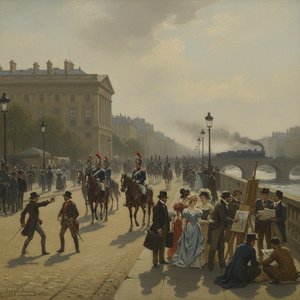
Émile Jean Horace Vernet: Romantic Realism & Depicting 19th-Century Life
Explore the life & art of Émile Jean Horace Vernet, a master of Romantic Realism. Discover his captivating battle scenes, portraits, and Orientalist works – a window into 19th-century France. Learn about his techniques & enduring legacy.