 Ver en contexto
 Enviar
 Compartir
 Detalles

 Descargar
 Similares
 Radiografía
 Presentación de diapositivas
 Stats
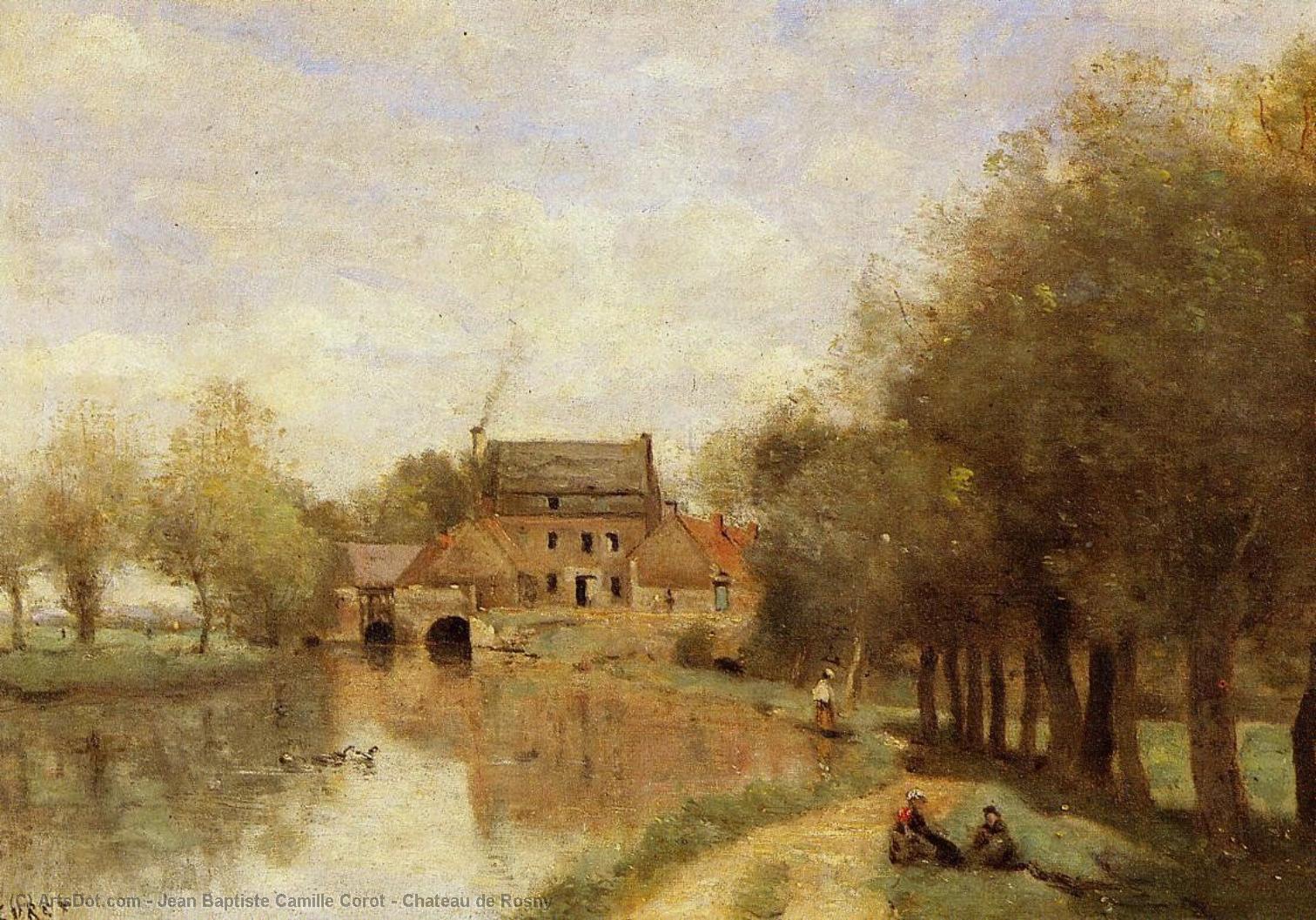
StatsChateau de Rosny


 Ver más
Giclée / Impresión de arte
Impresiones giclée o en lienzo de calidad de museo con producción rápida y opciones de acabado flexibles. ( Comprar pintura hecha a mano Switch to Digital Image)




P118B $10

P118H $10

P118W $10

P438Z $10

P508JH $12

P508YH $12

P805H $10

P805Z $10

P919BZ $10

P919G $10

P919XJ $10

P959ZH $10

P968JZ $12

W106C $8

W218G $10

W218JH $8

W218Y $10

W307PJ $10

W316G $10

W316PJ $8

W316Y $10

W398PJ $8

W4111J $10

W500HY $15

W500JH $15

W692G $12

W849H $8

W940BG $15

W953PJ $8




Elija entre nuestros tamaños predefinidos que respetan las proporciones originales de la obra.

Puede introducir sus propias dimensiones para adaptarse a un marco o espacio específico. Si el tamaño seleccionado no coincide con las proporciones de la imagen original, recortaremos la obra de arte o extenderemos la imagen con un borde con efecto espejo o de color sólido. Se enviará una maqueta digital para su aprobación antes de que comience la producción.
Tenga en cuenta que la vista previa en pantalla no refleja el recorte o la extensión real. Solo la maqueta mostrará con precisión la composición final.
Aunque existen tamaños personalizados, recomendamos seleccionar una dimensión de la lista predefinida para preservar las proporciones originales.
Envío a todo el mundo () en 2 semanas en lugar de las 4/5 semanas estándar. (8 septiembre)

Envío exprés gratuito a todo el mundo

Lienzo de lino de alta calidad

Seguro de envío total

Garantía de reembolso de impuestos aduaneros

Garantía de fidelidad cromática exacta

Política de devolución de 100 días (solo por defectos)

Garantía de devolución del 100% del dinero

Descuento por cantidad
 La opción de vidrio solo está disponible en tamaños inferiores a 110 cm.

Chateau de Rosny
Giclée / Impresión de arte
Dimensiones de la reproducción
-


Precio total final
$ 62
A Symphony in Stone and Light: Exploring Jean Baptiste Camille Corot’s Chateau de Rosny
The Musée du Louvre in Paris holds within its walls countless masterpieces, yet few evoke quite as profound a sense of serenity as Jean Baptiste Camille Corot’s “Château de Rosny.” Painted in 1840, this oil on canvas transcends mere depiction; it embodies the very spirit of the Naturalist movement and stands as a testament to Corot's unparalleled ability to capture the elusive beauty of landscape. Examining this iconic artwork reveals layers of artistic intention and historical significance that continue to inspire audiences today.The Landscape Painter’s Vision: Style and Technique
Corot’s distinctive style is immediately recognizable – a deliberate rejection of academic conventions favoring instead soft, feathery brushstrokes that prioritize atmospheric perspective. Unlike his contemporaries who sought to meticulously render every detail, Corot prioritized conveying the feeling of place above all else. He achieved this remarkable feat through painstaking observation of light and shadow, painstakingly blending pigments to create subtle gradations that mimic the natural world. The canvas itself is treated with a textured surface – not smooth and polished like those favored by earlier artists—but rather imbued with an organic quality that reflects the ruggedness of the hilltop setting. This technique wasn’t merely stylistic; it was integral to Corot's pursuit of capturing the ephemeral qualities of light, which he considered paramount to conveying emotion.Historical Context: The Naturalist Movement and Romantic Ideals
“Château de Rosny” emerged during a pivotal moment in artistic history – the ascendance of the Naturalist movement spearheaded by Gustave Courbet. Rejecting the idealized visions of Romanticism, Naturalists championed realism, striving for accuracy in portraying everyday subjects and landscapes without embellishment. However, Corot’s approach wasn't purely objective; it carried within it echoes of Romantic sensibilities—a yearning for sublime beauty and a fascination with the grandeur of nature. The château itself serves as a symbol of aristocratic power juxtaposed against the vast expanse of the surrounding countryside, prompting contemplation on themes of human ambition versus natural order.Symbolism Within Tranquility: Composition and Narrative
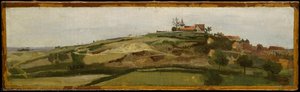
The painting’s composition is deceptively simple yet remarkably effective. Dominating the scene is the imposing castle perched atop a hill, its windows gleaming with reflected sunlight—a visual representation of resilience and permanence amidst the transient beauty of the landscape. Scattered throughout the hillside are figures – people and a dog – adding a touch of human presence without disrupting the overarching mood of tranquility. These elements aren’t merely decorative; they contribute to the narrative by suggesting an appreciation for both grandeur and intimacy, inviting viewers to contemplate their own relationship with the natural world.Emotional Resonance: Capturing Serenity Through Color Palette
Corot's masterful use of color palette reinforces the painting’s emotional impact. Predominantly muted hues—ochres, browns, greens—create a harmonious blend that evokes feelings of peace and contemplation. The subtle interplay of light and shadow enhances this effect, emphasizing textures and contours while simultaneously diffusing harshness. Viewing “Château de Rosny” is akin to stepping into a moment of stillness – allowing oneself to be enveloped by the beauty of the landscape and contemplating its enduring power to inspire awe and wonder.- Handmade oil painting reproductions of Chateau de Rosny are available at https://ArtsDot.com, allowing art lovers to own a piece of history and beauty.
- For more information on Corot’s life and work, visit Jean-Baptiste-Camille Corot on Wikipedia.https://Wikipedia.org/wiki/Jean-Baptiste-Camille_Corot
Obras relacionadas
Biografía del artista
Vida Temprana y Formación
Jean-Baptiste-Camille Corot, un renombrado pintor francés de paisajes y retratos, nació el 16 de julio de 1796 en París. Su familia, perteneciente a la burguesía, le proporcionó un entorno propicio para explorar sus inclinaciones artísticas. Inicialmente, los intereses de Corot se dirigieron hacia otros campos, pero finalmente descubrió su pasión por la pintura alrededor de 1821. Esto marcó el comienzo de su prolífica carrera, que más tarde influiría en el desarrollo del impresionismo.Trayectoria Artística y Obras Notables
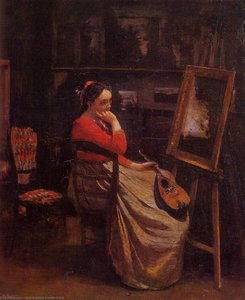
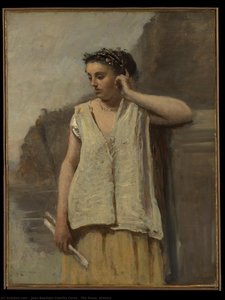
La trayectoria artística de Corot se caracteriza por una mezcla de tradición neoclásica e innovaciones al aire libre (plein air). Algunas de sus obras notables incluyen:- El Reposo (óleo sobre lienzo, circa 1860s), una pieza cautivadora que muestra la maestría de Corot para capturar la esencia de la serenidad.
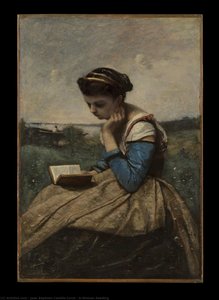
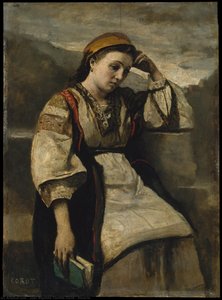
- Lectura Interrumpida (realismo, óleo, circa 1850s), un ejemplo conmovedor de la capacidad de Corot para retratar la vida cotidiana con profundidad y emoción.
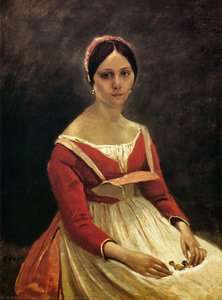
- Agostina (realismo, óleo, circa 1860s), un impresionante retrato que ejemplifica la habilidad de Corot para capturar la esencia de sus sujetos.
Influencias y Desarrollo Artístico
Corot fue influenciado por artistas como Gaspard Davidovich Poussin y Claude Lorrain, maestros del paisaje clásico francés. Sin embargo, su propio desarrollo artístico lo llevó a alejarse de las composiciones rígidas y formales del neoclasicismo para abrazar una aproximación más libre e intuitiva al paisaje. Su adopción de la pintura plein air fue revolucionaria en su época, permitiéndole capturar directamente las condiciones atmosféricas cambiantes y la luz natural. También se le considera un precursor del impresionismo debido a su enfoque en la atmósfera, el color y la pincelada suelta.Logros e Importancia Histórica
La vasta producción de Corot ha tenido un impacto duradero en el desarrollo de la pintura de paisajes. Su innovador enfoque, combinando técnicas tradicionales con innovaciones al aire libre, allanó el camino para futuras generaciones de artistas. Aunque no fue reconocido ampliamente durante su vida, su obra ganó una mayor apreciación póstumamente y ahora se le considera una figura clave en la historia del arte francés. Corot influyó directamente a muchos artistas impresionistas como Monet, Renoir y Pissarro, quienes admiraban su capacidad para capturar la atmósfera y la luz natural. Descubra más sobre las pinturas de Jean-Baptiste-Camille Corot en ArtsDot.com: https://ArtsDot.com/@/jean-baptiste-camille-corot Aprenda más sobre el Musée Courbet en Wikipedia: https://en.wikipedia.org/wiki/mus%c3%a9e_courbet_(ornans,_france)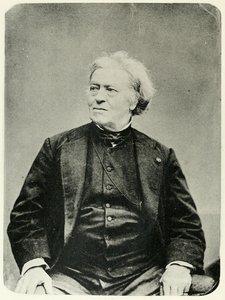
Jean-Baptiste-Camille Corot
1796 - 1875 , Francia
Datos clave
- Estilo Artístico: Neoclasicismo y Plein Air
- Influencia En Artistas: ['Impresionismo']
- Lugar De Nacimiento: París, Francia
- Nacimiento: 16 de julio de 1796
- Nacionalidad: Francesa
- Nombre Completo: Jean-Baptiste-Camille Corot
- Obras Notables:
- El Reposo
- Lectura interrumpida
- Agostina
Artículos relacionados

Paisajes Románticos: 10 Obras Maestras que Definieron un Movimiento Artístico
Descubre los 10 paisajes románticos más influyentes de artistas como Caspar David Friedrich y Turner. Explora la belleza, el simbolismo y las técnicas del movimiento romántico. Reproducciones de arte exclusivas en ArtsDot.com.

Katsushika Hokusai: Las 25 Obras Maestras del Ukiyo-e que Transformaron el Arte Japonés | ArtsDot
Descubre las 25 obras maestras de Katsushika Hokusai, el genio del ukiyo-e. Explora 'La Gran Ola', paisajes japoneses y su impacto en el arte moderno. Reproducciones de alta calidad para tu hogar en ArtsDot.com.

Giclée Prints: Archival Quality & Aesthetic Nuances for the Discerning Collector
Explore the world of giclée prints with ArtsDot. Learn about archival quality, aesthetic nuances & investment potential. Expert guidance for discerning art collectors seeking museum-quality reproductions and lasting value.

Goya: Las 25 Obras Maestras del Genio Español | Reproducciones de Arte en ArtsDot
Descubre las 25 obras maestras de Goya, el genio español. Explora retratos icónicos, 'Los Caprichos' y 'Las Pinturas Negras'. Reproducciones de arte en lienzo de alta calidad para decorar tu hogar con estilo. ¡Encuentra tu obra favorita en ArtsDot.com!

John Constable: Las 25 Obras Maestras del Paisaje Inglés | ArtsDot
Descubre las 25 obras maestras de John Constable, el pintor romántico inglés que capturó la belleza del paisaje. Explora su técnica, historia y significado en ArtsDot.com. Reproducciones de arte de alta calidad para tu hogar.