 Ver en contexto
 Enviar
 Compartir
 Detalles

 Descargar
 Similares
 Radiografía
 Presentación de diapositivas
 Estadísticas
Little Chaville


 Ver más
Giclée / Impresión de arte
Impresiones giclée o en lienzo de calidad de museo con producción rápida y opciones de acabado flexibles. ( Comprar pintura hecha a mano Cambiar a imagen digital)




P118B $10

P118H $10

P118W $10

P438Z $10

P508JH $12

P508YH $12

P805H $10

P805Z $10

P919BZ $10

P919G $10

P919XJ $10

P959ZH $10

P968JZ $12

W106C $8

W218G $10

W218JH $8

W218Y $10

W307PJ $10

W316G $10

W316PJ $8

W316Y $10

W398PJ $8

W4111J $10

W500HY $15

W500JH $15

W692G $12

W849H $8

W940BG $15

W953PJ $8




Elija entre nuestros tamaños predefinidos que respetan las proporciones originales de la obra.

Puede introducir sus propias dimensiones para adaptarse a un marco o espacio específico. Si el tamaño seleccionado no coincide con las proporciones de la imagen original, recortaremos la obra de arte o extenderemos la imagen con un borde con efecto espejo o de color sólido. Se enviará una maqueta digital para su aprobación antes de que comience la producción.
Tenga en cuenta que la vista previa en pantalla no refleja el recorte o la extensión real. Solo la maqueta mostrará con precisión la composición final.
Aunque existen tamaños personalizados, recomendamos seleccionar una dimensión de la lista predefinida para preservar las proporciones originales.
Envío a todo el mundo () en 2 semanas en lugar de las 4/5 semanas estándar. (12 septiembre)

Envío exprés gratuito a todo el mundo

Lienzo de lino de alta calidad

Seguro de envío total

Garantía de reembolso de impuestos aduaneros

Garantía de fidelidad cromática exacta

Política de devolución de 100 días (solo por defectos)

Garantía de devolución del 100% del dinero

Descuento por cantidad
 La opción de vidrio solo está disponible en tamaños inferiores a 110 cm.

Little Chaville
Giclée / Impresión de arte
Dimensiones de la reproducción
-


Precio total final
$ 62
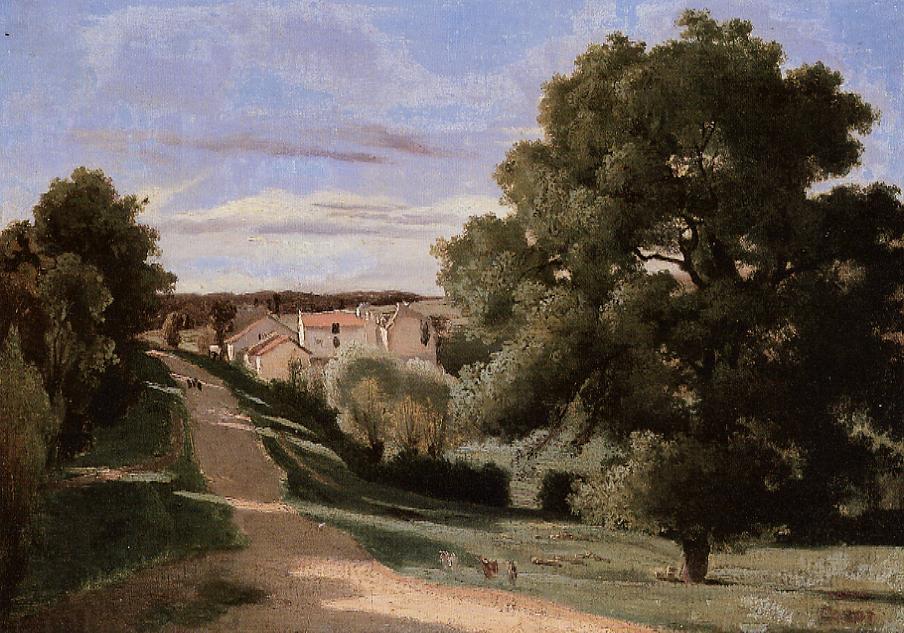
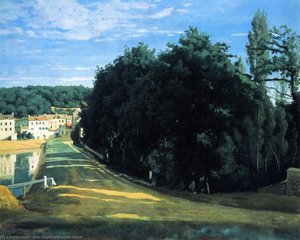
Little Chaville: A Moment of Tranquil Beauty by Jean-Baptiste-Camille Corot
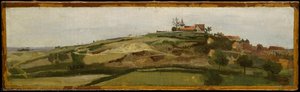
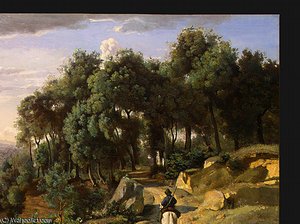
Jean-Baptiste-Camille Corot’s “Little Chaville,” painted in 1823, is more than just a depiction of a rural scene; it's a profound meditation on light, atmosphere, and the quiet dignity of nature. This evocative work captures a fleeting moment in the hills near Ville-d’Avray, offering a glimpse into a world untouched by the burgeoning industrialization of 19th-century France. The painting immediately draws the viewer in with its muted palette – predominantly greys, browns, and blues – skillfully employed to convey a sense of approaching storm and the subtle play of light on the landscape.
The composition itself is deceptively simple. A dirt road, worn smooth by time and use, snakes its way down through the hillside, leading the eye towards a distant plain. The houses nestled along this path are rendered with an almost hesitant touch, their forms dissolving slightly into the surrounding foliage. This deliberate blurring of edges – a hallmark of Corot’s style – creates a sense of depth and invites the viewer to step into the scene, imagining themselves walking alongside the solitary figure glimpsed on the left side of the canvas. This figure, likely a traveler or simply someone enjoying the view, adds a layer of human presence without disrupting the overall serenity.
Corot’s Revolutionary Approach: Plein Air and Atmospheric Perspective
“Little Chaville” exemplifies Corot's pivotal role in the development of landscape painting. Rejecting the academic tradition that demanded studio-based, idealized representations, Corot championed *plein air* painting – working directly from nature. This commitment is evident in the remarkably accurate depiction of light and shadow, achieved through meticulous observation and a deep understanding of atmospheric perspective. The grey cloudy sky, rendered with delicate brushstrokes, creates a palpable sense of depth, while the dark tones used for the trees and bushes alongside the path suggest an approaching storm. The use of cool blues and greys in the distance further emphasizes this spatial recession, creating a truly immersive experience for the viewer.
Corot’s technique involved layering thin glazes of oil paint, building up color gradually to achieve subtle tonal variations. This painstaking process allowed him to capture the ephemeral qualities of light – the way it shifts and changes throughout the day – with remarkable sensitivity. His brushwork is loose and expressive, avoiding sharp outlines in favor of soft edges that contribute to the painting’s overall dreamlike quality.
Historical Context & Symbolism
Painted in 1823, “Little Chaville” reflects a period of significant change in France. The Napoleonic era was over, and the country was grappling with the challenges of industrialization and social upheaval. Corot’s focus on rural landscapes can be seen as a reaction against these changes, a yearning for a simpler, more harmonious way of life. His frequent trips to Italy, particularly his second visit in 1834, profoundly influenced his style, introducing him to the works of classical landscape painters like Claude Lorrain and establishing a connection between French and Italian artistic traditions.
The painting’s symbolism is subtle yet powerful. The approaching storm suggests both danger and renewal, while the peaceful scene evokes a sense of tranquility and timelessness. It's a reminder of the beauty that can be found in the everyday, in the quiet moments of contemplation amidst nature’s grandeur. “Little Chaville” isn’t just a picturesque view; it’s an invitation to slow down, observe, and appreciate the simple wonders of the natural world.
Obras relacionadas
Biografía del artista
Vida Temprana y Formación
Jean-Baptiste-Camille Corot, un renombrado pintor francés de paisajes y retratos, nació el 16 de julio de 1796 en París. Su familia, perteneciente a la burguesía, le proporcionó un entorno propicio para explorar sus inclinaciones artísticas. Inicialmente, los intereses de Corot se dirigieron hacia otros campos, pero finalmente descubrió su pasión por la pintura alrededor de 1821. Esto marcó el comienzo de su prolífica carrera, que más tarde influiría en el desarrollo del impresionismo.Trayectoria Artística y Obras Notables
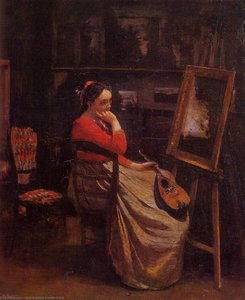
La trayectoria artística de Corot se caracteriza por una mezcla de tradición neoclásica e innovaciones al aire libre (plein air). Algunas de sus obras notables incluyen:- El Reposo (óleo sobre lienzo, circa 1860s), una pieza cautivadora que muestra la maestría de Corot para capturar la esencia de la serenidad.
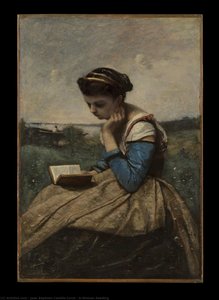
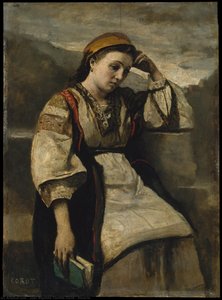
- Lectura Interrumpida (realismo, óleo, circa 1850s), un ejemplo conmovedor de la capacidad de Corot para retratar la vida cotidiana con profundidad y emoción.
- Agostina (realismo, óleo, circa 1860s), un impresionante retrato que ejemplifica la habilidad de Corot para capturar la esencia de sus sujetos.
Influencias y Desarrollo Artístico
Corot fue influenciado por artistas como Gaspard Davidovich Poussin y Claude Lorrain, maestros del paisaje clásico francés. Sin embargo, su propio desarrollo artístico lo llevó a alejarse de las composiciones rígidas y formales del neoclasicismo para abrazar una aproximación más libre e intuitiva al paisaje. Su adopción de la pintura plein air fue revolucionaria en su época, permitiéndole capturar directamente las condiciones atmosféricas cambiantes y la luz natural. También se le considera un precursor del impresionismo debido a su enfoque en la atmósfera, el color y la pincelada suelta.Logros e Importancia Histórica
La vasta producción de Corot ha tenido un impacto duradero en el desarrollo de la pintura de paisajes. Su innovador enfoque, combinando técnicas tradicionales con innovaciones al aire libre, allanó el camino para futuras generaciones de artistas. Aunque no fue reconocido ampliamente durante su vida, su obra ganó una mayor apreciación póstumamente y ahora se le considera una figura clave en la historia del arte francés. Corot influyó directamente a muchos artistas impresionistas como Monet, Renoir y Pissarro, quienes admiraban su capacidad para capturar la atmósfera y la luz natural. Descubra más sobre las pinturas de Jean-Baptiste-Camille Corot en ArtsDot.com: https://ArtsDot.com/@/jean-baptiste-camille-corot Aprenda más sobre el Musée Courbet en Wikipedia: https://en.wikipedia.org/wiki/mus%c3%a9e_courbet_(ornans,_france)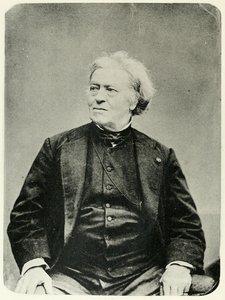
Jean-Baptiste-Camille Corot
1796 - 1875 , Francia
Datos clave
- Estilo Artístico: Neoclasicismo y Plein Air
- Influencia En Artistas: ['Impresionismo']
- Lugar De Nacimiento: París, Francia
- Nacimiento: 16 de julio de 1796
- Nacionalidad: Francesa
- Nombre Completo: Jean-Baptiste-Camille Corot
- Obras Notables:
- El Reposo
- Lectura interrumpida
- Agostina
Artículos relacionados

John Constable: Las 25 Obras Maestras del Paisaje Inglés | ArtsDot
Descubre las 25 obras maestras de John Constable, el pintor romántico inglés que capturó la belleza del paisaje. Explora su técnica, historia y significado en ArtsDot.com. Reproducciones de arte de alta calidad para tu hogar.

Paisajes Románticos: 10 Obras Maestras que Definieron un Movimiento Artístico
Descubre los 10 paisajes románticos más influyentes de artistas como Caspar David Friedrich y Turner. Explora la belleza, el simbolismo y las técnicas del movimiento romántico. Reproducciones de arte exclusivas en ArtsDot.com.

Evocations of Place: A Historical Journey Through Landscape Art
Explore the rich history of landscape art with ArtsDot. Discover renowned artists, movements like Impressionism & Romanticism, and expert guidance for collecting timeless pieces. Find your perfect serene escape today!
Cultivating Visions: A Historical Journey Through Rural Landscapes in Art
Explore the rich history of rural landscape painting with ArtsDot. Discover Impressionist masterpieces, key artists & movements. Find your perfect serene artwork and bring nature's beauty home.
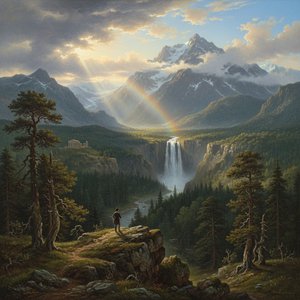
Evoking Nature's Sublime: A Comprehensive Exploration of 19th-Century Landscape Painting
Explore the captivating world of 19th-century landscape painting! Discover renowned artists like Friedrich & Monet, key movements, and find the perfect artwork to bring nature's serenity into your home. Expert insights at ArtsDot.