 Ver en contexto
 Enviar
 Compartir
 Detalles

 Descargar
 Similares
 Radiografía
 Presentación de diapositivas
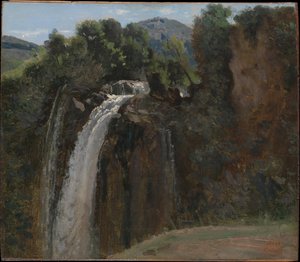
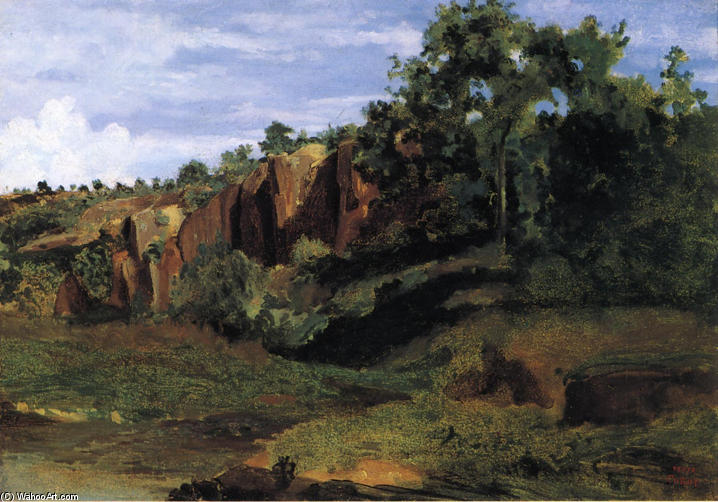
Rocks at Civita Castellana
 Oil On Canvas
- WallArt
- Realism
 1826
1826- 19th Century
 32.0 x 44.0 cm
 Ver más
Giclée / Impresión de arte
Impresiones giclée o en lienzo de calidad de museo con producción rápida y opciones de acabado flexibles. ( Comprar pintura hecha a mano Comprar imagen)




P118B $10

P118H $10

P118W $10

P438Z $10

P508JH $12

P508YH $12

P805H $10

P805Z $10

P919BZ $10

P919G $10

P919XJ $10

P959ZH $10

P968JZ $12

W106C $8

W218G $10

W218JH $8

W218Y $10

W307PJ $10

W316G $10

W316PJ $8

W316Y $10

W398PJ $8

W4111J $10

W500HY $15

W500JH $15

W692G $12

W849H $8

W940BG $15

W953PJ $8




Elija entre nuestros tamaños predefinidos que respetan las proporciones originales de la obra.

Puede introducir sus propias dimensiones para adaptarse a un marco o espacio específico. Si el tamaño seleccionado no coincide con las proporciones de la imagen original, recortaremos la obra de arte o extenderemos la imagen con un borde con efecto espejo o de color sólido. Se enviará una maqueta digital para su aprobación antes de que comience la producción.
Tenga en cuenta que la vista previa en pantalla no refleja el recorte o la extensión real. Solo la maqueta mostrará con precisión la composición final.
Aunque existen tamaños personalizados, recomendamos seleccionar una dimensión de la lista predefinida para preservar las proporciones originales.
Envío a todo el mundo () en 2 semanas en lugar de las 4/5 semanas estándar. (1 septiembre)

Envío exprés gratuito a todo el mundo

Lienzo de lino de alta calidad

Seguro de envío total

Garantía de reembolso de impuestos aduaneros

Garantía de fidelidad cromática exacta

Política de devolución de 60 días (solo por defectos)

Garantía de devolución del 100% del dinero

Descuento por cantidad
 La opción de vidrio solo está disponible en tamaños inferiores a 110 cm.

Rocks at Civita Castellana
Giclée / Impresión de arte
Dimensiones de la reproducción
-


Precio total final
$ 62
Rocks at Civita Castellana: A Moment of Tranquil Reflection by Jean-Baptiste-Camille Corot
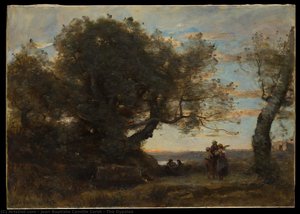
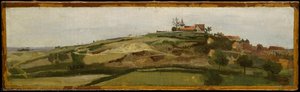
Jean-Baptiste-Camille Corot’s “Rocks at Civita Castellana,” painted in 1826-1827, is more than a simple landscape; it's a profound meditation on light, atmosphere, and the enduring beauty of the natural world. Measuring a modest 32 x 44 cm, this work transports us to the Sabine Hills near Rome, where Corot spent a crucial period of artistic development, profoundly shaping his distinctive style. The painting captures a dramatic yet serene scene – jagged rocks rising from a verdant hillside, punctuated by scattered trees and a subtle, cloudy sky – offering a glimpse into the artist’s meticulous observation and masterful ability to evoke emotion through color and form.
A Painter's Pilgrimage: Civita Castellana and Corot's Roman Years
Corot’s sojourn to Civita Castellana represents a pivotal moment in his artistic journey. As detailed in the Phillips Collection’s research, he arrived in May 1826, drawn to the ancient ruins and the harmonious relationship between landscape and architecture that the site offered. The village itself, a crumbling medieval fortress perched atop a hill, provided a compelling subject – a decaying monument to human history viewed through the lens of nature's relentless power. This period marked a shift in Corot’s work; he increasingly favored depicting untouched landscapes, prioritizing the immediate sensory experience over grand historical narratives. The painting reflects his fascination with capturing transient effects—the way light plays upon stone, the subtle shifts in color as clouds drift across the sky – elements that would become hallmarks of his oeuvre.
Realism and the Pursuit of Atmosphere
“Rocks at Civita Castellana” exemplifies Corot’s approach to Realism. Unlike the idealized landscapes favored by some of his contemporaries, Corot wasn't interested in creating a perfect representation; instead, he sought to capture the *impression* of the scene – the feeling of being present within that specific moment. Notice the broad, loose brushstrokes, particularly evident in the depiction of the rocks and the distant mountains. These aren’t meticulously rendered details but rather indications of form, suggesting volume and texture through color and light. The muted palette—dominated by greens, browns, and grays – contributes to the painting's overall sense of tranquility and timelessness. The small animal in the lower left corner adds a touch of unexpected life, grounding the scene and subtly reminding us of nature’s constant cycle.
Symbolism and Emotional Resonance
Beyond its technical brilliance, “Rocks at Civita Castellana” resonates with deeper symbolic meanings. The rugged rocks themselves can be interpreted as representing resilience, permanence, and the enduring power of nature. The hazy atmosphere evokes a sense of mystery and contemplation, inviting the viewer to lose themselves in the scene’s quiet beauty. Corot's work is often described as offering a spiritual experience—a connection with something larger than oneself. This painting embodies that spirit perfectly, providing a moment of serene escape from the complexities of urban life. It’s a testament to Corot’s ability to transform a simple landscape into a profound meditation on beauty and existence.
Obras relacionadas
Biografía del artista
Vida Temprana y Formación
Jean-Baptiste-Camille Corot, un renombrado pintor francés de paisajes y retratos, nació el 16 de julio de 1796 en París. Su familia, perteneciente a la burguesía, le proporcionó un entorno propicio para explorar sus inclinaciones artísticas. Inicialmente, los intereses de Corot se dirigieron hacia otros campos, pero finalmente descubrió su pasión por la pintura alrededor de 1821. Esto marcó el comienzo de su prolífica carrera, que más tarde influiría en el desarrollo del impresionismo.Trayectoria Artística y Obras Notables
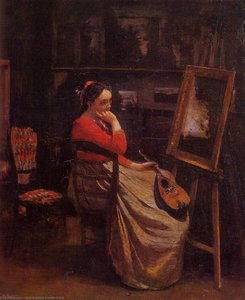
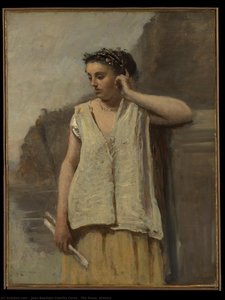
La trayectoria artística de Corot se caracteriza por una mezcla de tradición neoclásica e innovaciones al aire libre (plein air). Algunas de sus obras notables incluyen:- El Reposo (óleo sobre lienzo, circa 1860s), una pieza cautivadora que muestra la maestría de Corot para capturar la esencia de la serenidad.
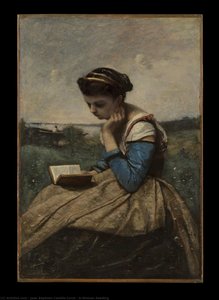
- Lectura Interrumpida (realismo, óleo, circa 1850s), un ejemplo conmovedor de la capacidad de Corot para retratar la vida cotidiana con profundidad y emoción.
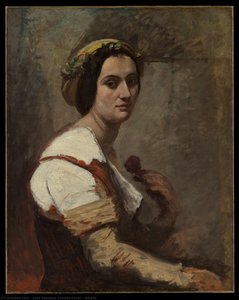
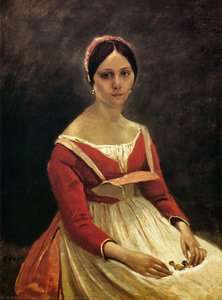
- Agostina (realismo, óleo, circa 1860s), un impresionante retrato que ejemplifica la habilidad de Corot para capturar la esencia de sus sujetos.
Influencias y Desarrollo Artístico
Corot fue influenciado por artistas como Gaspard Davidovich Poussin y Claude Lorrain, maestros del paisaje clásico francés. Sin embargo, su propio desarrollo artístico lo llevó a alejarse de las composiciones rígidas y formales del neoclasicismo para abrazar una aproximación más libre e intuitiva al paisaje. Su adopción de la pintura plein air fue revolucionaria en su época, permitiéndole capturar directamente las condiciones atmosféricas cambiantes y la luz natural. También se le considera un precursor del impresionismo debido a su enfoque en la atmósfera, el color y la pincelada suelta.Logros e Importancia Histórica
La vasta producción de Corot ha tenido un impacto duradero en el desarrollo de la pintura de paisajes. Su innovador enfoque, combinando técnicas tradicionales con innovaciones al aire libre, allanó el camino para futuras generaciones de artistas. Aunque no fue reconocido ampliamente durante su vida, su obra ganó una mayor apreciación póstumamente y ahora se le considera una figura clave en la historia del arte francés. Corot influyó directamente a muchos artistas impresionistas como Monet, Renoir y Pissarro, quienes admiraban su capacidad para capturar la atmósfera y la luz natural. Descubra más sobre las pinturas de Jean-Baptiste-Camille Corot en ArtsDot.com: https://ArtsDot.com/@/jean-baptiste-camille-corot Aprenda más sobre el Musée Courbet en Wikipedia: https://en.wikipedia.org/wiki/mus%c3%a9e_courbet_(ornans,_france)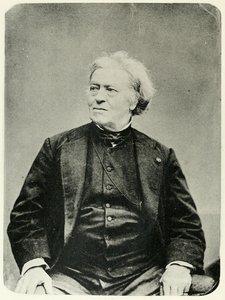
Jean-Baptiste-Camille Corot
1796 - 1875 , Francia
Datos clave
- Estilo Artístico: Neoclasicismo y Plein Air
- Influencia En Artistas: ['Impresionismo']
- Lugar De Nacimiento: París, Francia
- Nacimiento: 16 de julio de 1796
- Nacionalidad: Francesa
- Nombre Completo: Jean-Baptiste-Camille Corot
- Obras Notables:
- El Reposo
- Lectura interrumpida
- Agostina
Artículos relacionados
Verdant Visions: Exploring the Symbolism & Aesthetic Impact of Green in Art History
Explore the rich history & symbolism of green in art! Discover iconic paintings, techniques, and how to bring verdant harmony into your home with ArtsDot's expert guide.
Los 10 Cuadros Más Famosos Dominados por el Verde Cromado: Arte y Decoración
Descubre los 10 cuadros más famosos dominados por el verde cromado. Explora la historia, artistas como Monet y Renoir, e inspírate para decorar tu hogar con lienzos impresionistas. Reproducciones de arte en .
Los 10 Pinturas Más Famosas Dominadas por el Verde Cadmio | Arte y Decoración de Lujo
Descubre los 10 cuadros más famosos dominados por el verde cadmio. Explora la historia, artistas como Monet y Van Gogh, e inspiración para decoración con arte en . ¡Encuentra tu obra maestra!
Los 10 cuadros más famosos con tonos verde mar medio: Arte, historia y decoración
Descubre los 10 cuadros más famosos con tonos verde mar medio. Explora la historia, artistas como Monet y Renoir, e inspírate para decorar tu hogar con arte impresionista. Reproducciones de alta calidad en ArtsDot.com.
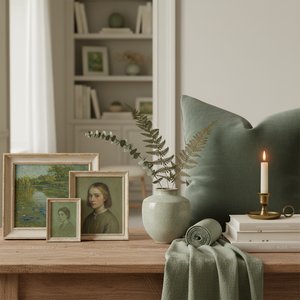
Los 10 Cuadros Más Famosos Dominados por el Verde Salvia | Arte y Decoración
Descubre los 10 cuadros más famosos dominados por el verde salvia. Explora la historia, artistas como Monet y Renoir, e inspírate para decorar tu hogar con lienzos de arte impresionista. Reproducciones de museo en .