 Ver en contexto
 Enviar
 Compartir
 Detalles

 Descargar
 Similares
 Radiografía
 Presentación de diapositivas
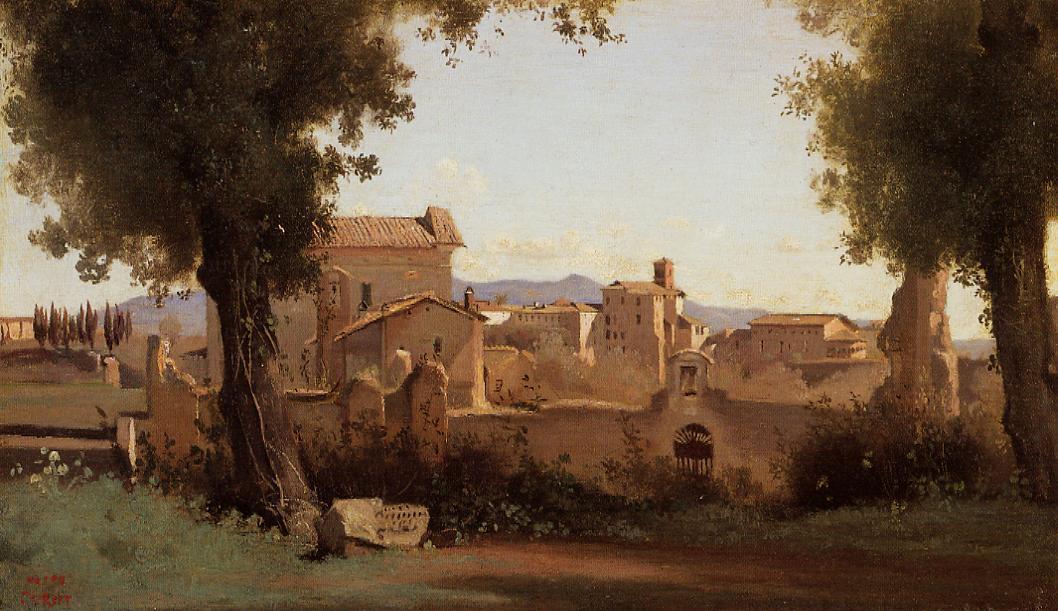
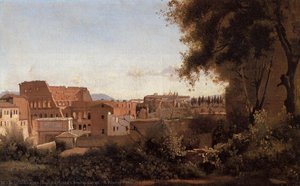
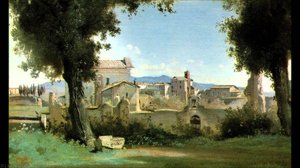
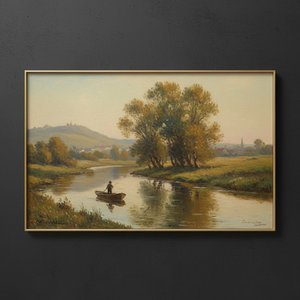
Rome - View from the Farnese Gardens, Morning


 Ver más
Giclée / Impresión de arte
Impresiones giclée o en lienzo de calidad de museo con producción rápida y opciones de acabado flexibles. ( Comprar pintura hecha a mano Comprar imagen)




P118B $10

P118H $10

P118W $10

P438Z $10

P508JH $12

P508YH $12

P805H $10

P805Z $10

P919BZ $10

P919G $10

P919XJ $10

P959ZH $10

P968JZ $12

W106C $8

W218G $10

W218JH $8

W218Y $10

W307PJ $10

W316G $10

W316PJ $8

W316Y $10

W398PJ $8

W4111J $10

W500HY $15

W500JH $15

W692G $12

W849H $8

W940BG $15

W953PJ $8




Elija entre nuestros tamaños predefinidos que respetan las proporciones originales de la obra.

Puede introducir sus propias dimensiones para adaptarse a un marco o espacio específico. Si el tamaño seleccionado no coincide con las proporciones de la imagen original, recortaremos la obra de arte o extenderemos la imagen con un borde con efecto espejo o de color sólido. Se enviará una maqueta digital para su aprobación antes de que comience la producción.
Tenga en cuenta que la vista previa en pantalla no refleja el recorte o la extensión real. Solo la maqueta mostrará con precisión la composición final.
Aunque existen tamaños personalizados, recomendamos seleccionar una dimensión de la lista predefinida para preservar las proporciones originales.
Envío a todo el mundo () en 2 semanas en lugar de las 4/5 semanas estándar. (29 agosto)

Envío exprés gratuito a todo el mundo

Lienzo de lino de alta calidad

Seguro de envío total

Garantía de reembolso de impuestos aduaneros

Garantía de fidelidad cromática exacta

Política de devolución de 60 días (solo por defectos)

Garantía de devolución del 100% del dinero

Descuento por cantidad
 La opción de vidrio solo está disponible en tamaños inferiores a 110 cm.

Rome - View from the Farnese Gardens, Morning
Giclée / Impresión de arte
Dimensiones de la reproducción
-


Precio total final
$ 62
A Moment Captured: Jean-Baptiste Camille Corot’s Rome from the Farnese Gardens
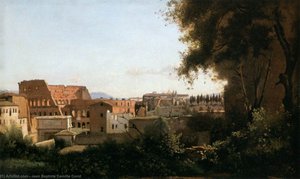
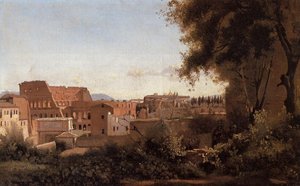
The morning light spills across the canvas of Jean-Baptiste Camille Corot's "Rome – View from the Farnese Gardens," transporting viewers back to 1826 and immersing them in a scene of understated grandeur. This painting isn’t merely a depiction of a cityscape; it’s an embodiment of Romantic sensibility—a profound meditation on beauty, solitude, and the sublime power of nature to inspire contemplation. Corot, already establishing himself as one of France's foremost landscape painters, sought not to overwhelm with dramatic vistas but rather to distill the essence of Rome into a harmonious composition that speaks directly to the soul.Style and Technique: Impressionistic Hints Within Classical Form
Corot’s style defies easy categorization, yet it undeniably leans toward Impressionism despite being painted decades before Monet and Renoir formally codified the movement. He eschewed meticulous detail in favor of capturing fleeting impressions of light and color—a technique honed through years of observation and experimentation with plein air painting. Thick impasto strokes dominate the surface, particularly around the trees and foliage, creating a palpable sense of texture and conveying the warmth of the sunlit morning. However, beneath this textured surface lies an underlying structure rooted in Classical principles; Corot carefully arranges buildings to create depth and perspective, mirroring the architectural grandeur of Rome itself. This juxtaposition—the spontaneity of Impressionism tempered by the discipline of Classicism—is characteristic of Corot’s artistic approach and contributes significantly to the painting's enduring appeal.Historical Context: Romantic Idealism Meets Urban Observation
Painted during a period marked by fervent Romantic idealism, “Rome” reflects the broader cultural preoccupation with exploring the emotional landscape of experience. Artists like Corot were drawn to landscapes as sources of spiritual renewal and sought to convey their awe at the majesty of nature—a reaction against the Enlightenment’s emphasis on reason and scientific inquiry. Yet, Corot wasn't simply celebrating wilderness; he was also acutely aware of the urban environment. The Farnese Gardens, a meticulously planned royal oasis nestled within Rome, served as his subject matter, representing both beauty and order amidst the complexities of city life. This careful balance between observation and imagination aligns perfectly with the Romantic ethos—a desire to capture not just what is seen but what is felt.Symbolism: Light as Revelation
The pervasive golden light bathing the scene holds symbolic significance beyond mere illumination. Corot skillfully utilizes chiaroscuro—the interplay of light and shadow—to sculpt forms and create a sense of drama, subtly hinting at divine presence. The dappled sunlight filtering through the trees symbolizes enlightenment and spiritual insight, mirroring the Romantic belief in nature’s capacity to elevate human consciousness. Furthermore, the solitary bench positioned prominently in the foreground represents contemplation and invites viewers to pause and absorb the beauty of the moment—a gesture that underscores Corot's artistic intention to inspire emotional resonance.Emotional Impact: Tranquility Amidst Grandeur
Ultimately, “Rome – View from the Farnese Gardens” succeeds in conveying a profound sense of tranquility amidst urban grandeur. The painting’s muted palette and harmonious composition evoke feelings of serenity and contemplation—a welcome respite from the hustle and bustle of modern life. It invites viewers to reconnect with their inner selves and appreciate the simple pleasures of observing beauty—a timeless message that continues to captivate audiences today. Corot's masterful rendering captures not just a visual scene but also an emotional state, cementing his place as one of the most influential landscape painters of the Romantic era.Obras relacionadas
Biografía del artista
Vida Temprana y Formación
Jean-Baptiste-Camille Corot, un renombrado pintor francés de paisajes y retratos, nació el 16 de julio de 1796 en París. Su familia, perteneciente a la burguesía, le proporcionó un entorno propicio para explorar sus inclinaciones artísticas. Inicialmente, los intereses de Corot se dirigieron hacia otros campos, pero finalmente descubrió su pasión por la pintura alrededor de 1821. Esto marcó el comienzo de su prolífica carrera, que más tarde influiría en el desarrollo del impresionismo.Trayectoria Artística y Obras Notables
La trayectoria artística de Corot se caracteriza por una mezcla de tradición neoclásica e innovaciones al aire libre (plein air). Algunas de sus obras notables incluyen:- El Reposo (óleo sobre lienzo, circa 1860s), una pieza cautivadora que muestra la maestría de Corot para capturar la esencia de la serenidad.
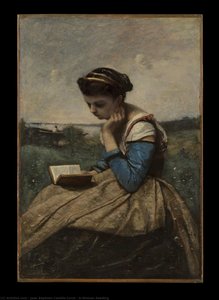
- Lectura Interrumpida (realismo, óleo, circa 1850s), un ejemplo conmovedor de la capacidad de Corot para retratar la vida cotidiana con profundidad y emoción.
- Agostina (realismo, óleo, circa 1860s), un impresionante retrato que ejemplifica la habilidad de Corot para capturar la esencia de sus sujetos.
Influencias y Desarrollo Artístico
Corot fue influenciado por artistas como Gaspard Davidovich Poussin y Claude Lorrain, maestros del paisaje clásico francés. Sin embargo, su propio desarrollo artístico lo llevó a alejarse de las composiciones rígidas y formales del neoclasicismo para abrazar una aproximación más libre e intuitiva al paisaje. Su adopción de la pintura plein air fue revolucionaria en su época, permitiéndole capturar directamente las condiciones atmosféricas cambiantes y la luz natural. También se le considera un precursor del impresionismo debido a su enfoque en la atmósfera, el color y la pincelada suelta.Logros e Importancia Histórica
La vasta producción de Corot ha tenido un impacto duradero en el desarrollo de la pintura de paisajes. Su innovador enfoque, combinando técnicas tradicionales con innovaciones al aire libre, allanó el camino para futuras generaciones de artistas. Aunque no fue reconocido ampliamente durante su vida, su obra ganó una mayor apreciación póstumamente y ahora se le considera una figura clave en la historia del arte francés. Corot influyó directamente a muchos artistas impresionistas como Monet, Renoir y Pissarro, quienes admiraban su capacidad para capturar la atmósfera y la luz natural. Descubra más sobre las pinturas de Jean-Baptiste-Camille Corot en ArtsDot.com: https://ArtsDot.com/@/jean-baptiste-camille-corot Aprenda más sobre el Musée Courbet en Wikipedia: https://en.wikipedia.org/wiki/mus%c3%a9e_courbet_(ornans,_france)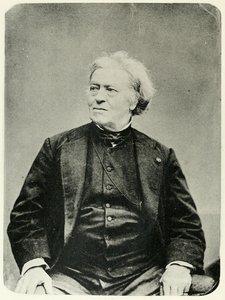
Jean-Baptiste-Camille Corot
1796 - 1875 , Francia
Datos clave
- Estilo Artístico: Neoclasicismo y Plein Air
- Influencia En Artistas: ['Impresionismo']
- Lugar De Nacimiento: París, Francia
- Nacimiento: 16 de julio de 1796
- Nacionalidad: Francesa
- Nombre Completo: Jean-Baptiste-Camille Corot
- Obras Notables:
- El Reposo
- Lectura interrumpida
- Agostina
Artículos relacionados
Cultivating Paradise: A Historical & Artistic Exploration of Gardens in Painting
Explore the rich history of gardens in painting! Discover masterpieces from Renaissance to Impressionism & beyond. Learn about symbolism, artists like Monet & Klimt, and find your perfect artwork at ArtsDot.
Jean-Baptiste-Camille Corot: A Poetic Realism – Bridging the Barbizon School and Early Impressionism
Explore the life & art of Camille Corot, a pivotal figure bridging the Barbizon School & Impressionism. Discover his poetic realism, signature style, and lasting influence on landscape painting. Learn more at ArtsDot.

Paul Cézanne: Las 25 Obras Maestras que Definieron el Arte Moderno | ArtsDot
Descubre las 25 obras maestras de Paul Cézanne que revolucionaron el arte moderno. Explora su técnica, inspiración y significado en paisajes, bodegones y retratos. Reproducciones de alta calidad para decorar tu hogar con arte inolvidable. ¡Explora la colección completa en ArtsDot.com!

Evocations of Place: A Historical Journey Through Landscape Art
Explore the rich history of landscape art with ArtsDot. Discover renowned artists, movements like Impressionism & Romanticism, and expert guidance for collecting timeless pieces. Find your perfect serene escape today!

Evocations of Place: A Historical Journey Through Landscape Art
Explore the rich history of landscape art with ArtsDot. Discover renowned artists, movements like Impressionism & tonalism, and expert guidance for collecting timeless pieces. Find your perfect serene escape today!