 Ver en contexto
 Enviar
 Compartir
 Detalles

 Descargar
 Similares
 Radiografía
 Presentación de diapositivas
 Estadísticas
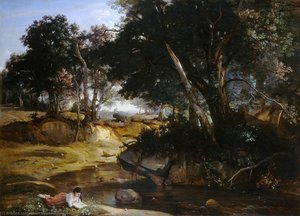
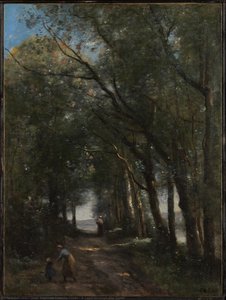
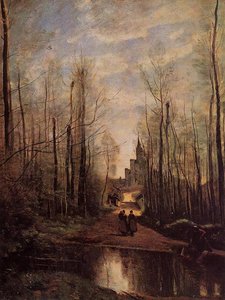
Stream in the Woods aka Un ruisseau sous bois


 Ver más
Reproducción al óleo hecha a mano
Óleo sobre lienzo pintado a mano en el tamaño y marco de su elección, realizado por encargo por nuestros artistas. ( Cambiar a Impresión Cambiar a imagen digital)




P118B $10

P118H $10

P118W $10

P438Z $10

P508JH $12

P508YH $12

P805H $10

P805Z $10

P919BZ $10

P919G $10

P919XJ $10

P959ZH $10

P968JZ $12

W106C $8

W218G $10

W218JH $8

W218Y $10

W307PJ $10

W316G $10

W316PJ $8

W316Y $10

W398PJ $8

W4111J $10

W500HY $15

W500JH $15

W692G $12

W849H $8

W940BG $15

W953PJ $8




Elija entre nuestros tamaños predefinidos que respetan las proporciones originales de la obra.

Puede ingresar sus propias dimensiones para adaptarse a un marco o espacio específico. Si el tamaño seleccionado no coincide con las proporciones de la imagen original, recortaremos la obra o extenderemos la pintura con elementos adicionales pintados a mano. Se le enviará una maqueta digital para su aprobación antes de comenzar la producción.
Tenga en cuenta que la vista previa en pantalla no refleja el recorte o la extensión reales. Solo la maqueta mostrará con precisión la composición final.
Si bien existen tamaños personalizados, recomendamos seleccionar una dimensión de la lista predefinida para preservar las proporciones originales.
Tras realizar el pedido, el equipo de ArtsDot.com enviará un correo electrónico al cliente para solicitar instrucciones y proporcionarle una vista previa del boceto.
Envío a todo el mundo () en 3-4 semanas en lugar de las 5 semanas estándar. (9 septiembre). Sin comprometer la calidad.

Envío exprés gratuito a todo el mundo

Lienzo de lino de alta calidad

Seguro de envío total

Garantía de reembolso de impuestos aduaneros

Garantía de fidelidad cromática exacta

Política de devolución de 100 días (solo por defectos)

Garantía de devolución del 100% del dinero

Descuento por cantidad
 La opción de vidrio solo está disponible en tamaños inferiores a 110 cm.

Stream in the Woods aka Un ruisseau sous bois
Técnica de reproducción
Dimensiones de la reproducción
-


Precio total final
$ 263
Jean-Baptiste-Camille Corot: A Symphony of Light and Shadow
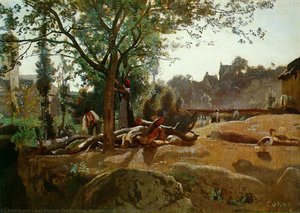
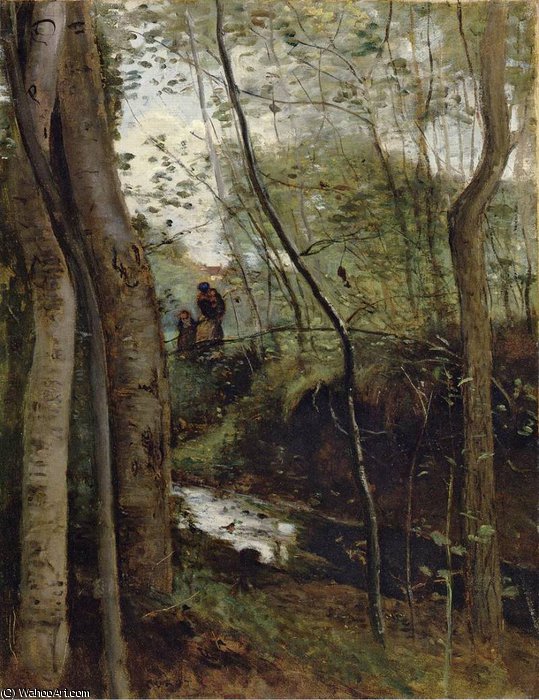
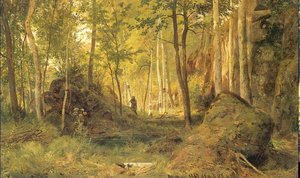
The scene unfolds with an almost hesitant grace – a small stream meandering through a dense forest, its waters reflecting the muted tones of the surrounding foliage. This is “Un ruisseau sous bois,” or “Stream in the Woods,” a quintessential work by Jean-Baptiste-Camille Corot, painted around 1820 and embodying the core tenets of his artistic philosophy: an unwavering devotion to capturing the ephemeral beauty of nature’s light and atmosphere. It's not a dramatic vista; rather, it’s a quiet meditation on the subtle poetry of the natural world – a moment frozen in time where the viewer can almost hear the gentle murmur of the water and feel the cool shade of the trees.
Corot, born in Paris in 1796, was profoundly shaped by his early childhood spent largely in the countryside. This immersion fostered an unparalleled sensitivity to light and texture, a direct connection to the land that would inform every aspect of his work. Unlike many artists of his era who sought grand narratives or heroic subjects, Corot focused on the simple, honest beauty of everyday landscapes – scenes he considered “the most beautiful things in the world.” His style, often described as ‘plein-air’ (meaning painted outdoors), was revolutionary for its time. He eschewed the polished finish and dramatic lighting favored by his contemporaries, opting instead for a looser, more atmospheric approach that prioritized observation over meticulous detail.
Technique and Impressionistic Precursors
The painting's remarkable effect stems from Corot’s masterful use of technique. Notice how he employs broken brushstrokes – short, deliberate marks of color rather than smooth blending – to create a sense of shimmering light and atmospheric haze. This technique, anticipating the later developments of Impressionism, allows the viewer’s eye to actively participate in constructing the image, filling in the gaps with their own perceptions. The muted palette—dominated by greens, browns, and grays—further enhances this effect, creating a feeling of depth and distance. The artist's careful attention to value – the lightness or darkness of colors – is crucial to the painting’s illusionistic quality, convincingly rendering the play of light filtering through the trees.
Several figures are subtly integrated into the landscape, adding a human element without disrupting the overall tranquility. They aren’t presented as protagonists but rather as observers, quietly enjoying the serenity of the stream. Two birds – one perched on a branch and another soaring above – contribute to the sense of natural harmony, reinforcing Corot's belief in the interconnectedness of all living things.
Symbolism and Emotional Resonance
“Un ruisseau sous bois” is more than just a depiction of a forest scene; it’s an exploration of fundamental human emotions. The stream itself symbolizes fluidity, change, and perhaps even the passage of time – themes frequently explored in Corot's work. The quietness and solitude of the setting evoke a sense of peace and contemplation, inviting the viewer to escape the pressures of urban life and reconnect with nature’s restorative power. The painting speaks to a deep yearning for simplicity and authenticity—values that resonated strongly with Corot himself.
Corot's influence on subsequent generations of landscape painters is undeniable. He paved the way for Impressionism, demonstrating the importance of capturing fleeting moments of light and atmosphere. Today, his work continues to inspire artists and art lovers alike, reminding us of the enduring beauty and profound significance of the natural world.
Obras relacionadas
Biografía del artista
Vida Temprana y Formación
Jean-Baptiste-Camille Corot, un renombrado pintor francés de paisajes y retratos, nació el 16 de julio de 1796 en París. Su familia, perteneciente a la burguesía, le proporcionó un entorno propicio para explorar sus inclinaciones artísticas. Inicialmente, los intereses de Corot se dirigieron hacia otros campos, pero finalmente descubrió su pasión por la pintura alrededor de 1821. Esto marcó el comienzo de su prolífica carrera, que más tarde influiría en el desarrollo del impresionismo.Trayectoria Artística y Obras Notables
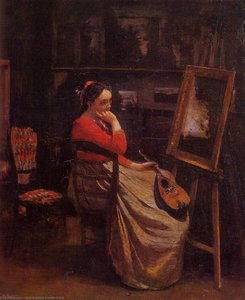
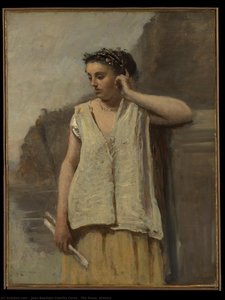
La trayectoria artística de Corot se caracteriza por una mezcla de tradición neoclásica e innovaciones al aire libre (plein air). Algunas de sus obras notables incluyen:- El Reposo (óleo sobre lienzo, circa 1860s), una pieza cautivadora que muestra la maestría de Corot para capturar la esencia de la serenidad.
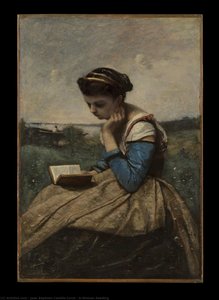
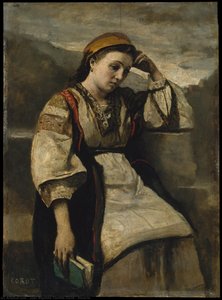
- Lectura Interrumpida (realismo, óleo, circa 1850s), un ejemplo conmovedor de la capacidad de Corot para retratar la vida cotidiana con profundidad y emoción.
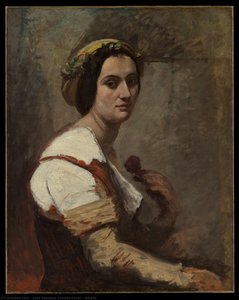
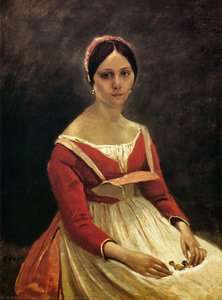
- Agostina (realismo, óleo, circa 1860s), un impresionante retrato que ejemplifica la habilidad de Corot para capturar la esencia de sus sujetos.
Influencias y Desarrollo Artístico
Corot fue influenciado por artistas como Gaspard Davidovich Poussin y Claude Lorrain, maestros del paisaje clásico francés. Sin embargo, su propio desarrollo artístico lo llevó a alejarse de las composiciones rígidas y formales del neoclasicismo para abrazar una aproximación más libre e intuitiva al paisaje. Su adopción de la pintura plein air fue revolucionaria en su época, permitiéndole capturar directamente las condiciones atmosféricas cambiantes y la luz natural. También se le considera un precursor del impresionismo debido a su enfoque en la atmósfera, el color y la pincelada suelta.Logros e Importancia Histórica
La vasta producción de Corot ha tenido un impacto duradero en el desarrollo de la pintura de paisajes. Su innovador enfoque, combinando técnicas tradicionales con innovaciones al aire libre, allanó el camino para futuras generaciones de artistas. Aunque no fue reconocido ampliamente durante su vida, su obra ganó una mayor apreciación póstumamente y ahora se le considera una figura clave en la historia del arte francés. Corot influyó directamente a muchos artistas impresionistas como Monet, Renoir y Pissarro, quienes admiraban su capacidad para capturar la atmósfera y la luz natural. Descubra más sobre las pinturas de Jean-Baptiste-Camille Corot en ArtsDot.com: https://ArtsDot.com/@/jean-baptiste-camille-corot Aprenda más sobre el Musée Courbet en Wikipedia: https://en.wikipedia.org/wiki/mus%c3%a9e_courbet_(ornans,_france)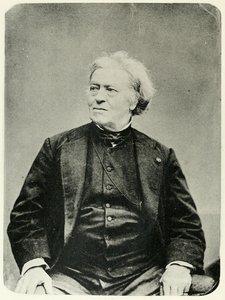
Jean-Baptiste-Camille Corot
1796 - 1875 , Francia
Datos clave
- Estilo Artístico: Neoclasicismo y Plein Air
- Influencia En Artistas: ['Impresionismo']
- Lugar De Nacimiento: París, Francia
- Nacimiento: 16 de julio de 1796
- Nacionalidad: Francesa
- Nombre Completo: Jean-Baptiste-Camille Corot
- Obras Notables:
- El Reposo
- Lectura interrumpida
- Agostina
Artículos relacionados
Capturing Ephemeral Light: A Comprehensive Exploration of Plein Air Painting's History & Enduring Legacy
Explore the rich history of plein air painting, from its origins with Constable & Corot to Impressionism's revolution. Discover techniques, key artists, and the enduring legacy of capturing light outdoors. Learn more at ArtsDot.
Alfred East: Pioneering Plein Air & Evoking Atmospheric Landscapes
Explore the life & work of Alfred East, a pioneer of British plein air painting. Discover his techniques for capturing atmospheric landscapes, Barbizon influences, and lasting legacy. Learn more at ArtsDot.
Capturing Ephemeral Light: A Comprehensive Exploration of Plein Air Painting's History & Enduring Legacy
Explore the rich history of plein air painting, from its origins to Impressionism & beyond. Discover key artists, techniques, and the enduring legacy of capturing light in landscape art. Find museum-quality reproductions at ArtsDot.
The Allure of Open Airs: Exploring Representations of Outdoors in Art History
Explore the rich history of outdoor painting! From Romantic landscapes to Impressionism's revolution, discover key artists, techniques & the enduring legacy of capturing light and nature in art. Learn more at ArtsDot.
Capturing Ephemeral Light: Plein Air Painting from Impressionism to Today
Explore the history of plein air painting, from its origins with the Barbizon school to Impressionism's revolution & contemporary practice. Discover techniques, artists like Monet & Renoir, and find museum-quality reproductions at ArtsDot.