 Enviar
 Compartir
 Detalles

 Descargar
 Similares
 Presentación de diapositivas
L’Amour à la Folie


 Ver más
Reproducción al óleo hecha a mano
Óleo sobre lienzo pintado a mano en el tamaño y marco de su elección, realizado por encargo por nuestros artistas. ( Comprar impresión Comprar imagen)




































Elija entre nuestros tamaños predefinidos que respetan las proporciones originales de la obra.

Puede ingresar sus propias dimensiones para adaptarse a un marco o espacio específico. Si el tamaño seleccionado no coincide con las proporciones de la imagen original, recortaremos la obra o extenderemos la pintura con elementos adicionales pintados a mano. Se le enviará una maqueta digital para su aprobación antes de comenzar la producción.
Tenga en cuenta que la vista previa en pantalla no refleja el recorte o la extensión reales. Solo la maqueta mostrará con precisión la composición final.
Si bien existen tamaños personalizados, recomendamos seleccionar una dimensión de la lista predefinida para preservar las proporciones originales.
Tras realizar el pedido, el equipo de ArtsDot.com enviará un correo electrónico al cliente para solicitar instrucciones y proporcionarle una vista previa del boceto.
Envío a todo el mundo () en 3-4 semanas en lugar de las 5 semanas estándar. (23 agosto). Sin comprometer la calidad.

Envío exprés gratuito a todo el mundo

Lienzo de lino de alta calidad

Seguro de envío total

Garantía de reembolso de impuestos aduaneros

Garantía de fidelidad cromática exacta

Política de devolución de 60 días (solo por defectos)

Garantía de devolución del 100% del dinero

Descuento por cantidad
 La opción de vidrio solo está disponible en tamaños inferiores a 110 cm.

L’Amour à la Folie
Técnica de reproducción
Dimensiones de la reproducción
-


Precio total final
$ 263
Descripción de la obra
Jean-Baptiste Carpeaux’s “L’Amour à la Folie”: A Dance of Passion and Madness
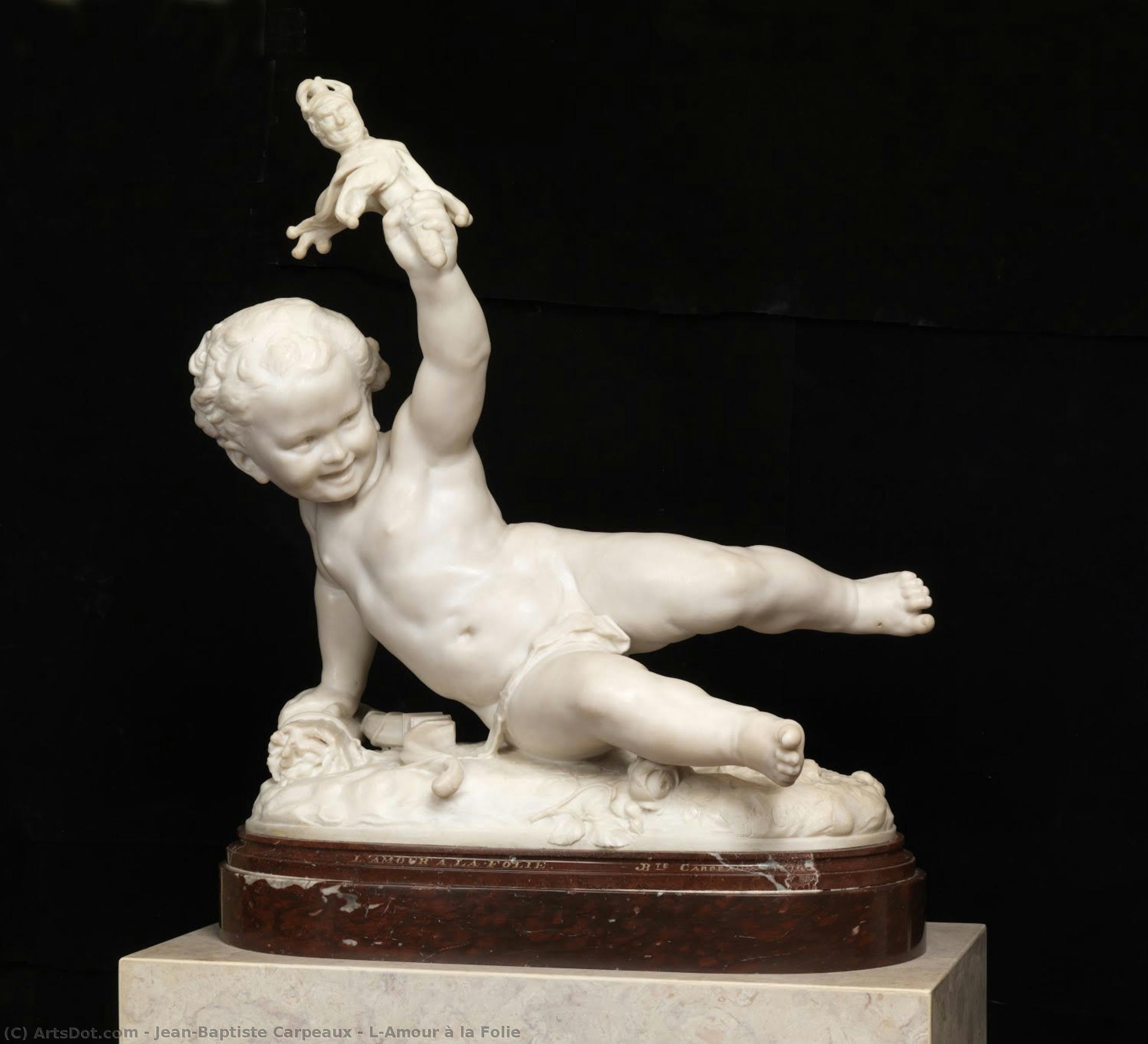
Jean-Baptiste Carpeaux's "L’Amour à la Folie," completed in 1869, is not merely a sculpture; it’s an intoxicating glimpse into the heart of Romanticism – a swirling vortex of emotion, movement, and barely contained chaos. Commissioned for the opulent façade of the Paris Opéra Garnier, this dynamic work immediately captivated audiences with its audacious energy and unsettling beauty. Carpeaux, a sculptor known for his ability to imbue marble with a startling sense of life, masterfully captures the essence of love as a force both exhilarating and utterly destructive.
The sculpture depicts a group of figures engaged in a frenzied dance, their limbs flung outwards in an apparent abandon. At the center stands a young man, his face contorted in a mixture of ecstasy and terror – a visual representation of being consumed by passion. Around him swirl women, some reaching out with desperate longing, others recoiling in horror. The composition is deliberately unbalanced, creating a sense of instability and suggesting that this “love” is not a gentle embrace but a turbulent storm. Carpeaux’s technique is particularly noteworthy; he employed a rough, almost unfinished surface, reminiscent of the brushstrokes of a painter, to heighten the sculpture's emotional intensity. The marble itself seems to writhe with movement, as if caught in an eternal dance.
A Sculptor Forged by Tradition and Rebellion
Carpeaux’s artistic journey was marked by both adherence to classical principles and a bold rejection of academic constraints. Trained initially under François Rude, the sculptor responsible for the iconic figures on the Arc de Triomphe, Carpeaux inherited a strong foundation in Roman sculpture. However, he quickly developed his own distinctive style, characterized by an emphasis on dramatic gesture, intense emotion, and a fascination with the human body’s capacity for both beauty and brutality. His early works, such as “The Fisherman of Bagnole,” demonstrated this talent, but it was his time in Rome that truly shaped his artistic vision – he immersed himself in the masterpieces of Michelangelo, Donatello, and Verrocchio, absorbing their dynamism and expressive power.
Carpeaux’s approach to sculpture was revolutionary for its time. He moved away from the idealized forms favored by Neoclassical sculptors, embracing a more naturalistic representation of the human figure. His figures were not static monuments but living, breathing beings caught in moments of intense feeling. This shift towards emotional realism, coupled with his willingness to experiment with technique – particularly his use of rough surfaces and dynamic poses – made him a controversial figure within the Parisian art world.
Symbolism and the Dark Side of Desire
“L’Amour à la Folie” is rich in symbolic meaning. The frenzied dance itself represents the chaotic nature of love, its ability to both uplift and destroy. The figures are not simply engaged in a playful celebration; they are trapped within a cycle of obsession and despair. The expressions on their faces – ranging from ecstatic joy to profound anguish – reveal the multifaceted nature of desire. Some scholars interpret the sculpture as an allegory for the destructive power of jealousy, while others see it as a commentary on the societal constraints placed upon women’s emotions.
The use of marble itself is significant. Marble, traditionally associated with purity and restraint, is here employed to depict a scene of intense passion and turmoil. This juxtaposition creates a powerful tension, suggesting that even the most enduring materials can be overwhelmed by the force of human emotion. The sculpture’s placement on the Opéra Garnier façade further amplifies its impact – it served as a dramatic visual statement, inviting audiences into a world of heightened sensation and emotional intensity.
A Legacy of Dramatic Emotion
“L’Amour à la Folie” remains one of Carpeaux's most celebrated works, admired for its raw emotion, dynamic composition, and masterful technique. It exemplifies the artist’s ability to capture the complexities of human experience – the intoxicating allure of love alongside its potential for devastation. Reproductions of this powerful sculpture continue to resonate with viewers today, offering a timeless meditation on the enduring mysteries of the heart. Its influence can be seen in the works of later sculptors, including Auguste Rodin, who shared Carpeaux’s commitment to portraying emotion with unprecedented intensity.
Obras relacionadas
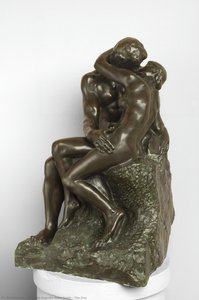
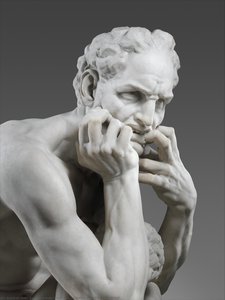
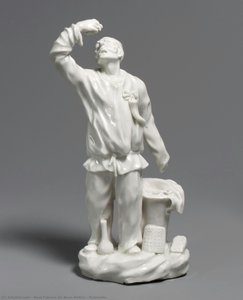
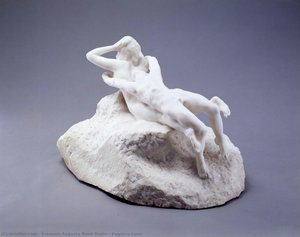
Biografía del artista
Jean-Baptiste Carpeaux: Una Biografía
- Nacido: Valenciennes, Francia (1827)
- Fallecido: 1875
Primeros Años y Desarrollo Artístico
Jean-Baptiste Carpeaux nació en Valenciennes, Francia, en 1827, en una familia de albañiles. Esta temprana exposición a la artesanía probablemente influyó en sus posteriores aspiraciones artísticas. Inicialmente estudió bajo la tutela de François Rude, un escultor prominente conocido por su trabajo en el Arco del Triunfo. En 1844, Carpeaux ingresó a la École des Beaux-Arts, perfeccionando aún más sus habilidades y desarrollando su visión artística.
Obras Destacadas y Logros Importantes
Carpeaux logró un reconocimiento significativo a lo largo de su carrera, particularmente durante el Segundo Imperio bajo Napoleón III. Su talento fue formalmente reconocido cuando ganó el Prix de Rome en 1854. Este prestigioso premio le permitió estudiar en Roma, donde se inspiró en las obras maestras de Miguel Ángel, Donatello y Verrocchio.
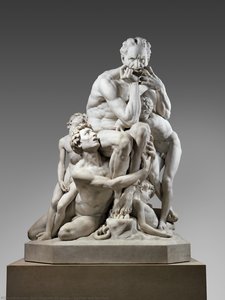
- Ugolino y sus Hijos: Una escultura poderosa y cargada de emoción que se encuentra en el Museo Metropolitano de Arte.
- Pêcheur napolitain à la coquille (Pescador Napolitano con Concha): Ubicada en el Musée du Louvre, esta obra ejemplifica su estilo naturalista.
- La Danse: Un relieve alto que adorna la fachada de la Ópera Garnier en París, mostrando movimiento dinámico y gracia.
- La negress (La Negrita): Una llamativa escultura de arcilla que demuestra realismo expresivo e influencias clásicas.
Estilo e Influencias
El estilo artístico de Carpeaux se caracteriza por su naturalismo, dinamismo y profundidad emocional. Se alejó de la formalidad rígida de la escultura neoclásica, adoptando un enfoque más fluido y expresivo. Su obra refleja las sensibilidades estéticas del Segundo Imperio, que incorporaba elementos de varios estilos históricos al tiempo que utilizaba materiales modernos de manera innovadora.
- Naturalismo: Carpeaux se esforzó por representar figuras con precisión anatómica y detalle realista.
- Movimiento: Capturó hábilmente una sensación de movimiento y energía en sus esculturas, lo que lo distinguía de muchos artistas contemporáneos.
- Emoción: Sus obras están imbuídas de poderosas emociones, transmitiendo narrativas y profundidad psicológica.
Legado e Influencia
Jean-Baptiste Carpeaux falleció el 12 de octubre de 1875, pero su influencia continúa resonando en el mundo del arte. Ahora se le reconoce como uno de los escultores más importantes del siglo XIX, un precursor de Auguste Rodin, cuyo trabajo se basó en las innovaciones de Carpeaux para capturar movimiento y emoción. Sus esculturas se exhiben en museos prominentes de todo el mundo, incluido el Musée d'Orsay en París.
- Estudiantes: Entre sus alumnos notables se encontraban Jules Dalou, Jean-Louis Forain y el escultor estadounidense Olin Levi Warner.
- Precursor de Rodin: El énfasis de Carpeaux en el naturalismo y el movimiento expresivo allanó el camino para las innovadoras esculturas de Rodin.
Para obtener más información sobre Jean-Baptiste Carpeaux y sus obras, visite ArtsDot.com.
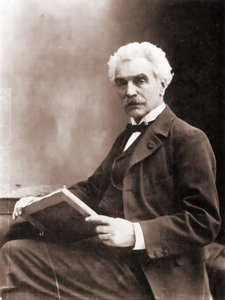
Jean-Baptiste Carpeaux
1827 - 1875 , Francia
Datos clave
- Artistas Influenciados:
- Jules Dalou
- Jean-Louis Forain
- Olin Levi Warner
- Artistas Que Influyeron:
- Miguel Ángel
- Donatello
- Verrocchio
- François Rude
- Fecha De Fallecimiento: 1875
- Fecha De Nacimiento: 1827
- Lugar De Nacimiento: Valenciennes, Francia
- Movimiento Artístico: Segunda Imperio, Realismo
- Nacionalidad: Francesa
- Nombre Completo: Jean-Baptiste Carpeaux
- Obras Notables:
- Pêcheur napolitain à la coquille
- La Danse
- Ugolino y sus hijos
- La negressa (La négresse)
Artículos relacionados

The Enduring Allure of Marble in Art History: From Classical Sculpture to Modern Abstraction
Explore the captivating history of marble sculpture from ancient Greece to modern art. Discover renowned artists like Canova & Michelangelo, carving techniques, and investment insights at ArtsDot.

Esculturas de Bronce Legendarias: 10 Obras Maestras que Transformaron el Arte | ArtsDot
Descubre las 10 esculturas de bronce más legendarias que revolucionaron el arte. Explora la historia de Rodin, Degas y otros maestros del bronce. Encuentra reproducciones de alta calidad e inspiración para tu hogar en ArtsDot.com.

Jean-Baptiste Carpeaux: Sculpting Passion & Controversy in 19th-Century France
Explore the passionate life & controversial works of Jean-Baptiste Carpeaux, a leading French sculptor of the Second Empire. Discover his realism, iconic sculptures like 'Ugolino,' and lasting legacy as a precursor to Rodin.

The Enduring Form: Exploring Themes & Techniques in Sculpture Across Historical Periods
Explore the rich history of sculpture from ancient masterpieces to contemporary innovations. Discover key techniques, influential artists & investment potential for discerning art collectors.
The Enduring Form: Sculpture Across History, Technique & Emotional Resonance
Explore the rich history of sculpture with ArtsDot. Discover key techniques, influential artists & investment potential for discerning collectors. Expert insights into valuing and collecting timeless masterpieces.