 Vista previa
 Compartir
 Compartir
 Ver detalles

 Descargar
 Ver similares
 Radiografía
 Presentación de diapositivas
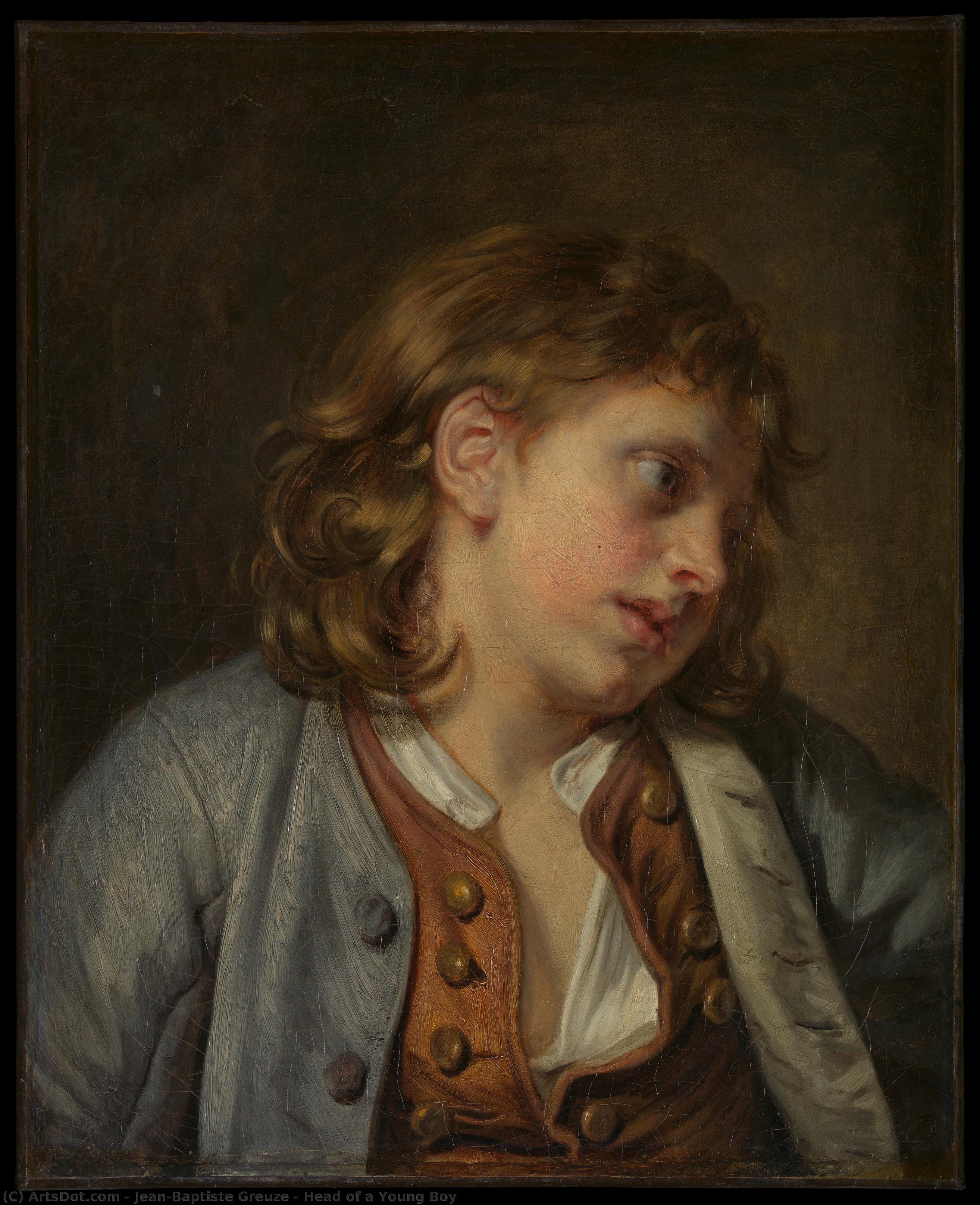
Head of a Young Boy


 Leer más
Reproducción al óleo hecha a mano
Óleo sobre lienzo pintado a mano en el tamaño y marco de su elección, realizado por encargo por nuestros artistas. ( Pedir impresión Comprar descarga)




P118B $10

P118H $10

P118W $10

P438Z $10

P508JH $12

P508YH $12

P805H $10

P805Z $10

P919BZ $10

P919G $10

P919XJ $10

P959ZH $10

P968JZ $12

W106C $8

W218G $10

W218JH $8

W218Y $10

W307PJ $10

W316G $10

W316PJ $8

W316Y $10

W398PJ $8

W4111J $10

W500HY $15

W500JH $15

W692G $12

W849H $8

W940BG $15

W953PJ $8




Elija entre nuestros tamaños predefinidos que respetan las proporciones originales de la obra.

Puede ingresar sus propias dimensiones para adaptarse a un marco o espacio específico. Si el tamaño seleccionado no coincide con las proporciones de la imagen original, recortaremos la obra o extenderemos la pintura con elementos adicionales pintados a mano. Se le enviará una maqueta digital para su aprobación antes de comenzar la producción.
Tenga en cuenta que la vista previa en pantalla no refleja el recorte o la extensión reales. Solo la maqueta mostrará con precisión la composición final.
Si bien existen tamaños personalizados, recomendamos seleccionar una dimensión de la lista predefinida para preservar las proporciones originales.
Tras realizar el pedido, el equipo de ArtsDot.com enviará un correo electrónico al cliente para solicitar instrucciones y proporcionarle una vista previa del boceto.
Envío a todo el mundo () en 3-4 semanas en lugar de las 5 semanas estándar. (21 agosto). Sin comprometer la calidad.

Envío exprés gratuito a todo el mundo

Lienzo de lino de alta calidad

Seguro de envío completo

Garantía de reembolso de aranceles aduaneros

Garantía de fidelidad cromática exacta

Política de devolución de 60 días (solo por defectos)

Garantía de devolución del 100% del dinero

Oferta por volumen
 La opción de vidrio solo está disponible en tamaños inferiores a 110 cm.

Head of a Young Boy
Técnica de reproducción
Tamaño de la reproducción
-


Precio total
$ 263
Descripción de la obra
A Portrait of Quietude: Jean-Baptiste Greuze’s ‘Head of a Young Boy’
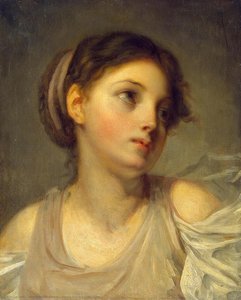
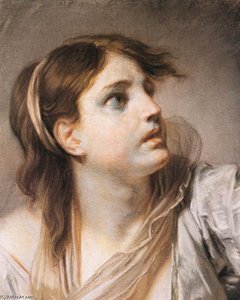
Jean-Baptiste Greuze's “Head of a Young Boy,” painted in 1763, is not merely a portrait; it’s a distilled essence of melancholy and introspection. This intimate oil on canvas, measuring just 48 x 39 cm, resides within the hallowed halls of The Metropolitan Museum of Art in New York, yet its impact transcends its physical location, resonating with viewers across centuries. Greuze, a pivotal figure in the transition from Rococo to Romanticism, masterfully captures a moment suspended between childhood and the burdens of experience – a poignant observation rendered with remarkable sensitivity.
The painting immediately draws the eye to the young boy himself, his brown hair framing a face etched with a subtle sadness. His gaze, directed outwards yet seemingly lost in thought, speaks volumes without uttering a single word. Greuze’s deliberate choice of a blurry background is crucial; it's not an accidental oversight but a carefully considered technique designed to isolate the subject and amplify his emotional state. The lack of extraneous detail forces the viewer to confront the boy’s quiet contemplation, creating a powerful sense of intimacy and vulnerability.
The Language of Rough Brushwork
Greuze's artistic approach is immediately apparent in the painting’s textured surface. Unlike the smooth, polished finishes favored by many of his contemporaries, Greuze employs a deliberately rough brushstroke – each stroke visible, unmasked, and contributing to the overall feeling of immediacy. This technique, characteristic of his studies made directly from models rather than commissioned portraits, imbues the work with a sense of spontaneity and raw emotion. It’s as if we are witnessing a fleeting moment captured in time, unfiltered and unidealized.
The brushwork isn't haphazard; it’s meticulously controlled to emphasize certain features – particularly the boy’s brow and mouth, subtly conveying his sadness. This deliberate roughness is a hallmark of Greuze’s style, distinguishing him from the more formal portraiture of the era and reflecting his focus on capturing genuine human feeling.
A Window into 18th-Century France
“Head of a Young Boy” emerged during a period of significant social and artistic change in France. The mid-1760s witnessed a growing interest in portraying the emotions and experiences of ordinary people – a shift away from the grand narratives and mythological subjects that dominated much of earlier art. Greuze’s work exemplifies this trend, offering a glimpse into the lives of children and the quiet sorrows they might experience. This painting was exhibited at the Salon of 1763, gaining recognition through its association with Pierre Jean Mariette, a prominent collector of drawings.
The subject matter itself – a young boy lost in thought – speaks to the anxieties and uncertainties of the time. It’s a reflection of the burgeoning sentimentalism that was gaining traction in French society, an emphasis on empathy, compassion, and the emotional lives of individuals. The painting subtly critiques societal expectations placed upon youth, hinting at the potential for loneliness and disillusionment.
Symbolism and Emotional Resonance
While seemingly simple, “Head of a Young Boy” is rich in symbolic meaning. The boy’s sadness isn't explicitly explained; it’s left to the viewer to interpret his emotions. This ambiguity invites contemplation and encourages a deeper engagement with the artwork. The muted color palette – dominated by blues and browns – further reinforces the painting’s somber mood, creating an atmosphere of quiet melancholy.
Greuze's ability to evoke such profound emotion through such a restrained composition is a testament to his artistic skill and sensitivity. “Head of a Young Boy” remains a powerful reminder of the enduring capacity of art to capture the complexities of human experience – a poignant meditation on childhood, sadness, and the quiet beauty of introspection.
Obras relacionadas

Biografía del artista
Primeros años y formación
Jean-Baptiste Greuze, un pintor francés, nació el 21 de agosto de 1725 en Tournus, Borgoña. Su padre, maestro techador, inicialmente desalentó las inclinaciones artísticas de su hijo, pero eventualmente, Grandon, un artista lyones, animó a Greuze a perseguir su pasión. En 1750, Greuze se mudó a París para estudiar bajo Charles-Joseph Natoire en la Real Academia de Pintura y Escultura.Ascenso a la fama
El gran avance de Greuze llegó en 1755 con su pintura *Le Père de Famille Expliquant la Bible à ses Enfants*, que fue comprada por un entusiasta del arte adinerado, Ange-Laurent Lalive de Jully. Esto llevó al reconocimiento de Greuze entre los filósofos y la comunidad artística. Luego viajó a Italia con Abbé Gougenot, donde pasó aproximadamente un año, inspirando sus futuras obras.Estilo artístico y obras notables
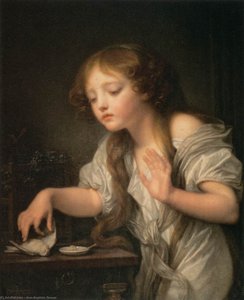
El estilo de Greuze se caracteriza por su enfoque en escenas de género, capturando la esencia de la vida cotidiana. Algunas obras notables incluyen:- *Una niña con un canario muerto* (Scottish National Gallery, Edimburgo), que muestra la capacidad de Greuze para evocar emociones.
- *Saboyano con una muñeca bailarina* (Albertina, Viena), destacando su habilidad para capturar el espíritu de sus sujetos.
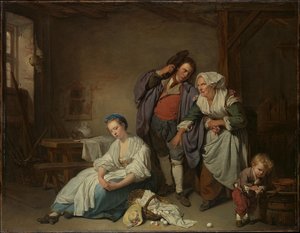
- *Niño con un huevo roto*, c. 1756 (Albertina, Viena), demostrando la temprana maestría de Greuze en la pintura de género.
Legado y vida posterior
El éxito de Greuze alcanzó su punto máximo en 1765, con trece obras expuestas en el Salón, incluyendo *La Jeune Fille qui Pleure son Oiseau Mort*, *La Bonne Mère* y *Le Mauvais Fils Puni* (Louvre). Sin embargo, su intento de transición a la pintura histórica fue recibido con críticas. Greuze falleció el 4 de marzo de 1805 en el Louvre, después de una vida marcada tanto por triunfos artísticos como por dificultades financieras.Influencias y desarrollo artístico
La obra de Greuze se desarrolló en un período de transición dentro del arte francés. Aunque inicialmente influenciado por el estilo rococó, con su énfasis en la elegancia y la sensualidad, Greuze evolucionó hacia una representación más realista y moralizante de la vida cotidiana. Se puede observar la influencia de los maestros holandeses en su atención al detalle y su enfoque en escenas domésticas. Su interés por retratar las emociones humanas, a menudo con un toque de melancolía o dramatismo, lo distingue de sus contemporáneos rococó. Su intento posterior de incursionar en la pintura histórica, aunque no fue bien recibido, refleja su deseo de ampliar su repertorio y alcanzar el prestigio asociado con este género.Significado histórico
Jean-Baptiste Greuze es recordado como un pintor clave del siglo XVIII francés, que ayudó a definir el género de la pintura de costumbres. Su capacidad para capturar momentos íntimos y transmitir mensajes morales a través de sus obras lo convirtió en un artista popular entre la burguesía de su época. Aunque su intento de pintar historia no tuvo éxito, su legado como maestro de la pintura de género sigue siendo significativo. Su obra representa una transición importante del rococó hacia el neoclasicismo, y su influencia se puede apreciar en generaciones posteriores de artistas franceses.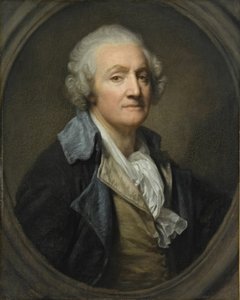
Jean-Baptiste Greuze
1725 - 1805 , Francia
Datos clave
- Artistas Influyentes:
- Charles-Joseph Natoire
- Charles Grandon
- Estilo Artístico: Rococó y género
- Fecha De Muerte: 4 de marzo de 1805
- Fecha De Nacimiento: 21 de agosto de 1725
- Lugar De Nacimiento: Tournus, Francia
- Nacionalidad: Francesa
- Nombre Completo: Jean-Baptiste Greuze
- Obras Notables:
- A Girl with a Dead Canary
- Savoyard with a Dancing Doll
- Boy with a Broken Egg
Artículos relacionados
Jean-Baptiste Greuze: Morality, Sentiment & the Rise of Genre Painting
Explore the life & art of Jean-Baptiste Greuze, a pivotal French Rococo painter renowned for his emotionally resonant genre scenes and moral lessons. Discover his legacy & impact on 18th-century art history.
Los 25 Tesoros del Hermitage: Arte Clásico para tu Hogar | ArtsDot
Descubre los 25 tesoros del Museo Hermitage de San Petersburgo. Explora la historia y belleza de Rembrandt, Leonardo da Vinci y más. Reproducciones de arte en ArtsDot.com para decorar tu hogar con obras maestras.
Édouard Manet: Las 25 Obras Maestras del Impresionismo para Decorar tu Hogar con Arte
Descubre las 25 obras maestras de Édouard Manet, el rebelde del impresionismo. Explora su historia, técnica y significado en cada cuadro famoso. Reproducciones de arte de museo para decorar tu hogar con estilo. ¡Explora la colección completa en ArtsDot.com!
Nostalgia en el Arte: 10 Obras Maestras que Evocan Recuerdos y Emociones
Descubre 10 obras maestras del impresionismo, romanticismo y más que evocan nostalgia y emociones profundas. Explora la historia de artistas famosos y encuentra lienzos artísticos para tu hogar en . ¡Inspírate con el arte clásico!
John George Brown: Capturing American Life & Sentiment in 19th-Century Genre Painting
Explore the captivating genre paintings of John George Brown, celebrated for his realistic depictions of 19th-century American life. Discover his legacy & find museum-quality reproductions at ArtsDot.