

 Ver en contexto
 Enviar
 Compartir
 Detalles

 Descargar
 Similares
 Radiografía
 Presentación de diapositivas
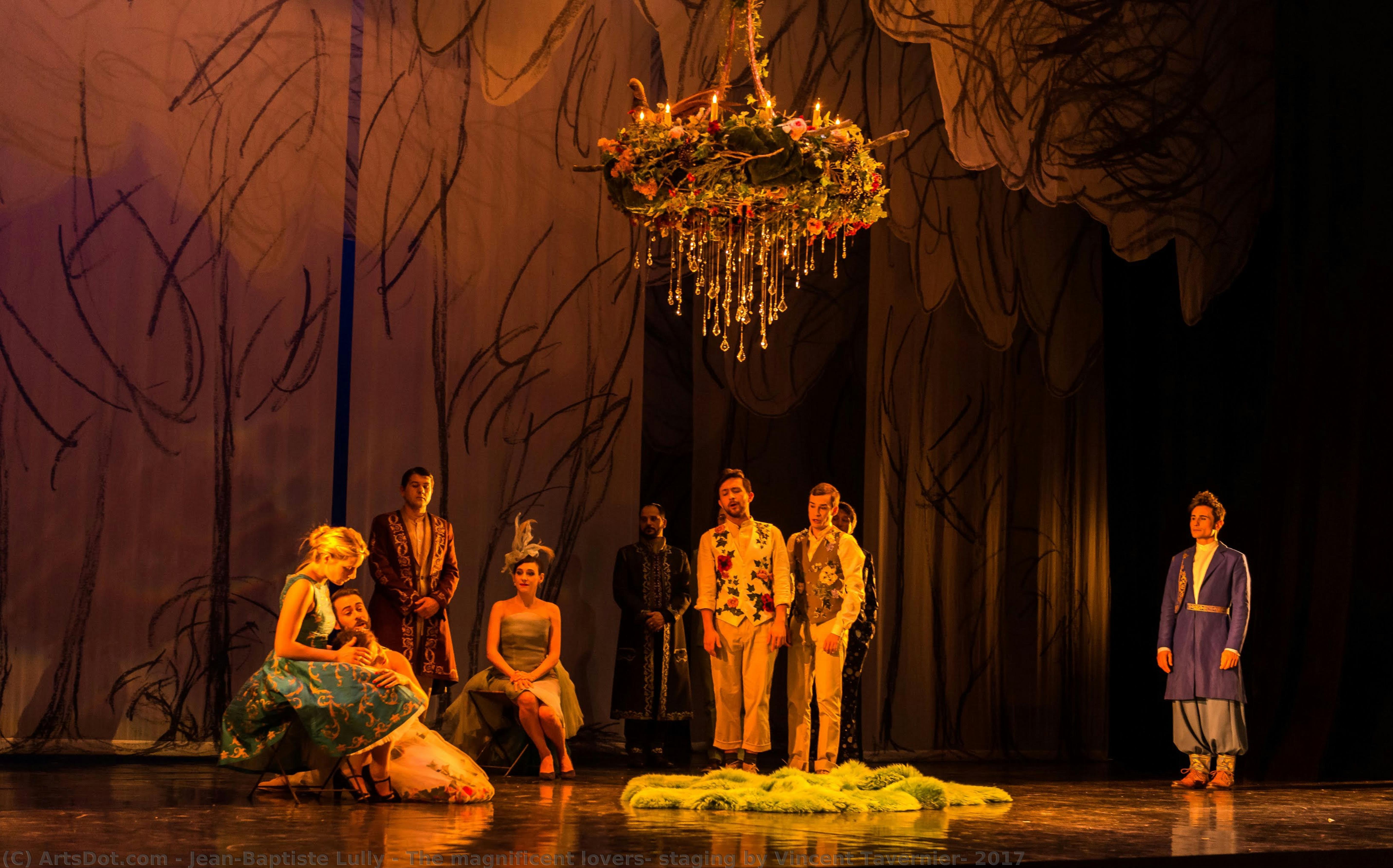
The magnificent lovers, staging by Vincent Tavernier, 2017


 Ver más
Giclée / Impresión de arte
Impresiones giclée o en lienzo de calidad de museo con producción rápida y opciones de acabado flexibles. ( Comprar pintura hecha a mano Comprar imagen)




































Elija entre nuestros tamaños predefinidos que respetan las proporciones originales de la obra.

Puede introducir sus propias dimensiones para adaptarse a un marco o espacio específico. Si el tamaño seleccionado no coincide con las proporciones de la imagen original, recortaremos la obra de arte o extenderemos la imagen con un borde con efecto espejo o de color sólido. Se enviará una maqueta digital para su aprobación antes de que comience la producción.
Tenga en cuenta que la vista previa en pantalla no refleja el recorte o la extensión real. Solo la maqueta mostrará con precisión la composición final.
Aunque existen tamaños personalizados, recomendamos seleccionar una dimensión de la lista predefinida para preservar las proporciones originales.
Envío a todo el mundo () en 2 semanas en lugar de las 4/5 semanas estándar. (28 agosto)

Envío exprés gratuito a todo el mundo

Lienzo de lino de alta calidad

Seguro de envío total

Garantía de reembolso de impuestos aduaneros

Garantía de fidelidad cromática exacta

Política de devolución de 60 días (solo por defectos)

Garantía de devolución del 100% del dinero

Descuento por cantidad
 La opción de vidrio solo está disponible en tamaños inferiores a 110 cm.

The magnificent lovers, staging by Vincent Tavernier, 2017
Giclée / Impresión de arte
Dimensiones de la reproducción
-


Precio total final
$ 62
Obras relacionadas










Biografía del artista
Jean-Baptiste Lully: The Architect of French Baroque Grandeur
Jean-Baptiste Lully (1632-1687) stands as a monumental figure in the history of Western music, a true innovator who fundamentally reshaped the soundscape of 17th-century France. More than just a composer, he was a meticulous craftsman, a shrewd administrator, and a key architect of Louis XIV’s opulent court – a man whose influence resonated throughout the musical world for centuries to come. Born in Florence into a family steeped in musical tradition, Lully's journey to becoming one of France’s most celebrated composers is a testament to his prodigious talent, relentless ambition, and strategic maneuvering within the complex political landscape of the era. His legacy isn’t simply defined by the sheer volume of his output, but by the distinctive style he forged – a vibrant synthesis of Italianate grandeur, French elegance, and an unprecedented level of dramatic integration with dance and spectacle.Early Life and Parisian Ascent
Lully's early life remains somewhat shrouded in mystery, though it’s clear that his musical education began at a remarkably young age. Accounts suggest he received instruction from a Franciscan friar, supplemented by self-study and the tutelage of established musicians like Nicolas Métru and François Roberday in Paris. His youthful talent quickly caught the eye of Roger de Lorraine, chevalier de Guise, who brought him to France as a companion for his niece, Mademoiselle de Montpensier. This introduction into the court’s inner circle proved pivotal, providing Lully with invaluable experience and access to influential figures. He rapidly gained recognition for his virtuosity on the violin and guitar, earning nicknames like “Baptiste” and “le grand baladin” – a street performer known for his skill and charm. Crucially, he secured a position as chamber musician to Mademoiselle de Montpensier, a role that allowed him to hone his skills and establish connections within the court’s musical circles. This early exposure to the intricacies of courtly entertainment—ballets, masques, and elaborate performances—would profoundly shape his future work. He developed a deep understanding of stagecraft and spectacle, which would later inform his groundbreaking operas.The Royal Patronage and Transformation of French Music
Lully's career truly took flight upon Louis XIV’s ascension to the throne in 1661. Recognizing Lully’s exceptional abilities and strategic value, the young king appointed him *Surintendant de la Musique*, effectively granting him control over all musical affairs at court. This unprecedented position allowed Lully to dismantle the existing musical traditions – dominated by Italian composers like Francesco Cavalli – and establish a distinctly French style. He systematically replaced the established instrumentalists with his own carefully selected musicians, creating the “Petits Violons” (Little Violins), an ensemble that prioritized clarity of texture and rhythmic precision—a departure from the denser polyphony favored in earlier music. Lully’s influence extended beyond instrumentation; he championed a new approach to opera, known as *tragédies lyriques*, which combined dramatic action with elaborate staging, lavish costumes, and spectacular dance sequences. These operas were not merely musical performances but immersive theatrical experiences designed to glorify the monarchy and showcase the splendor of the court. He meticulously crafted a musical language that was both elegant and powerful, perfectly suited for the grandeur of Louis XIV’s reign.Innovations in Opera and Ballet
Lully’s contributions to opera are nothing short of revolutionary. He moved away from the recitative-aria structure prevalent in Italian opera, favoring a more integrated approach where music, dance, and drama were seamlessly interwoven. His *tragédies lyriques* – works like *Cadmus et Hermione*, *Alceste*, and *Psyché* – featured complex orchestral textures, dramatic choruses, and highly stylized stage action. He also pioneered the use of *recitativo accompagnato*, a technique where the text is sung in a continuous flow accompanied by instrumental music, creating a sense of urgency and momentum. Lully’s influence on ballet was equally profound. He transformed the court ballets from simple spectacles into elaborate theatrical productions, incorporating innovative choreography, stage design, and musical accompaniment. His *ballet royal de la nuit* (Royal Night Ballet), with its evocative imagery and dramatic narrative, remains a landmark achievement in both opera and ballet history. His collaborations with playwrights like Molière—particularly in the *comédie-ballets* such as *Le Bourgeois gentilhomme* and *George Dandin*—demonstrated his ability to synthesize music, drama, and dance into a cohesive artistic whole. He wasn’t just composing music; he was designing entire theatrical experiences.Legacy and Historical Significance
Jean-Baptiste Lully died prematurely at the age of 55, leaving behind an unparalleled body of work that profoundly shaped the course of Western musical history. His innovations in opera and ballet established new standards for dramatic integration and orchestral writing, influencing generations of composers to come. He is credited with establishing a distinctly French style of music—characterized by elegance, clarity, and rhythmic vitality—that became synonymous with the court of Louis XIV. Lully’s influence extended beyond France, as his works were widely disseminated throughout Europe and served as models for composers in other countries. Today, Lully's music continues to be performed and celebrated worldwide, a testament to his enduring genius and his pivotal role in shaping the evolution of Western musical tradition. His legacy is not just one of technical brilliance but also of artistic vision—a profound understanding of how music could serve as a powerful tool for storytelling, spectacle, and the glorification of power.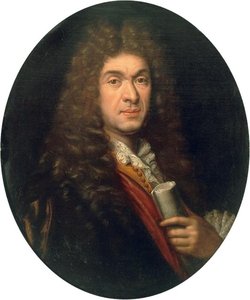
Jean-Baptiste Lully
1632 - 1687 , Italia
Datos clave
- Artistic Movement Or Style: Barroco Francés
- Artists Or Movements Influenced By This Artist:
- Louis XIV
- Molière
- Artists Who Influenced This Artist:
- Cavalli
- Roberday
- Date Of Birth: 28/29 Nov 1632
- Date Of Death: 22 Mar 1687
- Full Name: Jean-Baptiste Lully
- Nationality: Francés
- Notable Artworks:
- Ballet Royal
- Psyché
- Alceste
- Place Of Birth: Florencia, Italia

