 Ver en contexto
 Enviar
 Compartir
 Detalles

 Descargar
 Similares
 Radiografía
 Presentación de diapositivas
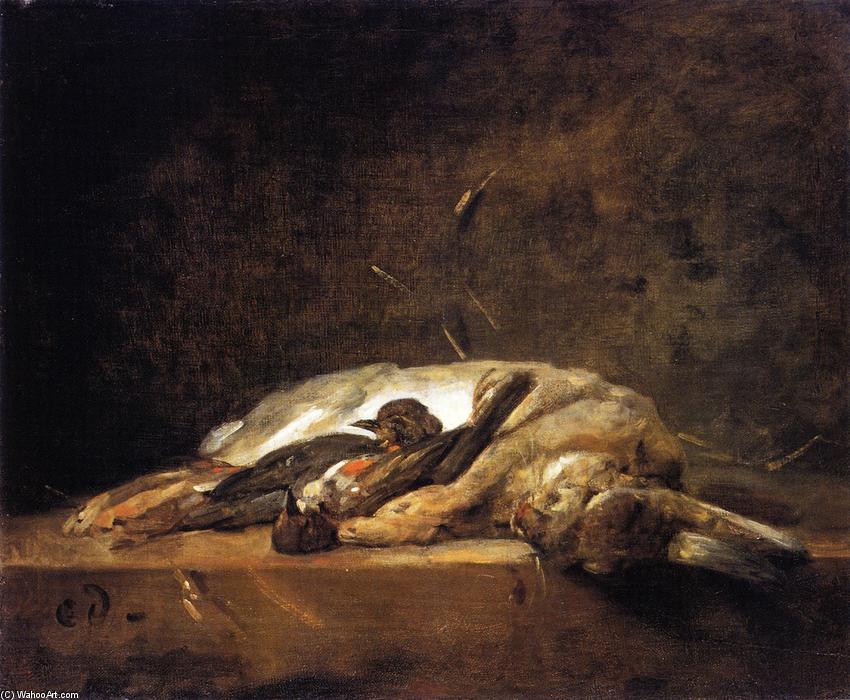
A Rabbit, Two Thrushes and Some Straw on a Stone Table


 Ver más
Giclée / Impresión de arte
Impresiones giclée o en lienzo de calidad de museo con producción rápida y opciones de acabado flexibles. ( Comprar pintura hecha a mano Comprar imagen)




P118B $10

P118H $10

P118W $10

P438Z $10

P508JH $12

P508YH $12

P805H $10

P805Z $10

P919BZ $10

P919G $10

P919XJ $10

P959ZH $10

P968JZ $12

W106C $8

W218G $10

W218JH $8

W218Y $10

W307PJ $10

W316G $10

W316PJ $8

W316Y $10

W398PJ $8

W4111J $10

W500HY $15

W500JH $15

W692G $12

W849H $8

W940BG $15

W953PJ $8




Elija entre nuestros tamaños predefinidos que respetan las proporciones originales de la obra.

Puede introducir sus propias dimensiones para adaptarse a un marco o espacio específico. Si el tamaño seleccionado no coincide con las proporciones de la imagen original, recortaremos la obra de arte o extenderemos la imagen con un borde con efecto espejo o de color sólido. Se enviará una maqueta digital para su aprobación antes de que comience la producción.
Tenga en cuenta que la vista previa en pantalla no refleja el recorte o la extensión real. Solo la maqueta mostrará con precisión la composición final.
Aunque existen tamaños personalizados, recomendamos seleccionar una dimensión de la lista predefinida para preservar las proporciones originales.
Envío a todo el mundo () en 2 semanas en lugar de las 4/5 semanas estándar. (26 agosto)

Envío exprés gratuito a todo el mundo

Lienzo de lino de alta calidad

Seguro de envío total

Garantía de reembolso de impuestos aduaneros

Garantía de fidelidad cromática exacta

Política de devolución de 60 días (solo por defectos)

Garantía de devolución del 100% del dinero

Descuento por cantidad
 La opción de vidrio solo está disponible en tamaños inferiores a 110 cm.

A Rabbit, Two Thrushes and Some Straw on a Stone Table
Giclée / Impresión de arte
Dimensiones de la reproducción
-


Precio total final
$ 62
Descripción de la pieza
The Still Life of Serenity: Jean-Baptiste Simeon Chardin’s Masterpiece
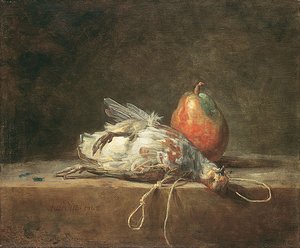
Jean-Baptiste-Siméon Chardin's “A Rabbit, Two Thrushes and Some Straw on a Stone Table” isn’t merely a depiction of animals and objects; it’s an invitation into a pocket of profound stillness. Painted in 1755, this oil on canvas transcends the conventions of traditional still life, offering instead a glimpse into a world imbued with gentle observation and quiet contemplation. The painting immediately draws the eye to its central subject: a rabbit, sprawled languidly upon a weathered stone table, seemingly lost in a peaceful slumber. Beside it, two thrushes perch attentively, their presence suggesting both companionship and a subtle awareness of the scene unfolding before them. Scattered around are a few stalks of straw – a humble detail that anchors the composition and speaks to the simple beauty of the natural world.
Chardin’s genius lies not in dramatic poses or vibrant colors, but in his masterful ability to capture the essence of everyday life with remarkable sensitivity. He eschews theatricality for an intimate portrayal of a moment suspended in time. The rabbit's relaxed posture, the birds’ watchful gaze – these are rendered with an exquisite delicacy that speaks volumes about Chardin’s profound understanding of animal behavior and his deep appreciation for their inherent grace.
A Painter of the Ordinary: Chardin’s Style and Technique
Born in Paris in 1699, Chardin was a pivotal figure in French art during the mid-18th century. He largely rejected the grand narratives favored by his contemporaries, instead focusing on scenes from domestic life – kitchen maids, children playing, and, as we see here, simple still lifes. His style is characterized by an almost unnerving realism, achieved not through meticulous detail but through a subtle manipulation of light, shadow, and texture. He employed a technique known as “granulation,” applying tiny dots of paint to create the illusion of surface texture – you can practically feel the rough grain of the straw and the soft fur of the rabbit.
Chardin’s use of color is restrained yet remarkably effective. He favors muted earth tones—browns, grays, and ochres—that evoke a sense of warmth and tranquility. The lighting is diffused and gentle, casting subtle shadows that enhance the three-dimensionality of the objects and create an atmosphere of quiet intimacy. The composition itself is carefully balanced, with each element contributing to the overall harmony of the scene.
Symbolism and Emotional Resonance
While seemingly straightforward, “A Rabbit, Two Thrushes and Some Straw” is rich in symbolic meaning. The rabbit, often associated with fertility, innocence, and vulnerability, embodies a sense of peaceful contentment. The thrushes, known for their song and association with joy, suggest a harmonious coexistence within the scene. The straw, a humble material, represents simplicity and the bounty of nature. Together, these elements create a tableau that speaks to the beauty of the ordinary—a reminder to find solace in the quiet moments of everyday life.
More than just a representation of objects, this painting evokes a feeling of profound serenity. It’s as if Chardin has captured a fleeting moment of peace and invited us to share in its stillness. The work speaks to our innate desire for connection with nature and the simple pleasures of life.
A Legacy of Quiet Observation
Jean-Baptiste Simeon Chardin's “A Rabbit, Two Thrushes and Some Straw on a Stone Table” stands as a testament to his unique artistic vision. It’s a painting that rewards careful observation and invites contemplation—a timeless masterpiece that continues to resonate with viewers today. Reproductions of this iconic work offer an opportunity to bring this sense of tranquility into your own home, allowing you to experience the quiet beauty captured by Chardin's masterful hand.
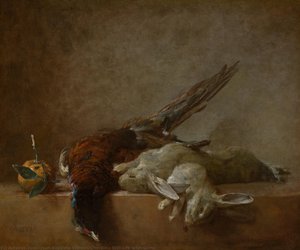
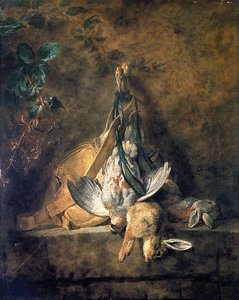
Obras relacionadas
Biografía del artista
Primeros años y formación
Jean Siméon Chardin, pintor francés, nació en París el 2 de noviembre de 1699. Es considerado uno de los maestros más grandes del bodegón y la pintura de género. La vida temprana de Chardin estuvo marcada por su nacimiento en una familia de fabricantes de armarios, lo que probablemente influyó en su interés por el arte. Rara vez abandonó París, viviendo en la orilla izquierda cerca de Saint-Sulpice hasta 1757.Carrera artística
En 1723, Chardin contrajo un acuerdo matrimonial con Marguerite Saintard, a quien no se casaría hasta 1731. Realizó aprendizajes con los pintores históricos Pierre-Jacques Cazes y Noël-Nicolas Coypel, convirtiéndose en maestro de la Académie de Saint-Luc en 1724.- Su primer reconocimiento llegó al exhibir una pintura en el 'Small Corpus Christi' en la Place Dauphine, que fue comprada por Van Loo, quien más tarde asistió al joven pintor.
- En 1728, presentó "La Raya" y "El Buffet", lo que condujo a su admisión en la Académie Royale de Peinture et de Sculpture.
Obras notables y exposiciones
El trabajo de Chardin ganó popularidad a través de grabados reproductivos, lo que le proporcionó ingresos en forma de regalías. Entre sus obras más destacadas se encuentran:- Los Rompedores de Piedras, una obra maestra que muestra su habilidad en el bodegón.
- Bodegón con manzanas y una jarra, que demuestra su uso de la suave difusión de la luz y el impasto granular.
Estilo e Influencias
El estilo de Chardin se caracteriza por su sobriedad, realismo y una atmósfera tranquila. A diferencia de muchos de sus contemporáneos, evitó los temas grandiosos y heroicos, prefiriendo representar escenas cotidianas y objetos humildes con gran detalle y sensibilidad. Su uso de la luz es sutil pero efectivo, creando una sensación de intimidad y calidez en sus obras. Se cree que Chardin estuvo influenciado por el naturalismo holandés del siglo XVII, así como por los pintores franceses de género como Jean-Baptiste Paternostre. Su enfoque en la observación directa y su rechazo a la idealización lo distinguen de otros artistas de su época.Legado
El legado de Chardin como maestro del bodegón y la pintura de género continúa inspirando a artistas y entusiastas del arte por igual. Su trabajo, caracterizado por una composición cuidadosamente equilibrada, una suave difusión de la luz y un impasto granular, sigue siendo un testimonio de su habilidad y dedicación al oficio. Explore más en Wikipedia: historia de la pintura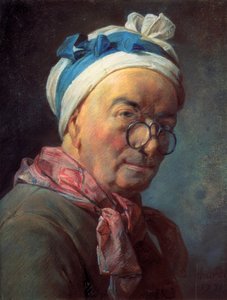
Jean-Baptiste-Siméon Chardin
1699 - 1779 , Francia
Datos clave
- Artistas Influyentes:
- Pierre-Jacques Cazes
- Noël-Nicolas Coypel
- Estilo Artístico: Realismo, Bodegón
- Fecha De Fallecimiento: 1779
- Fecha De Nacimiento: 2 de noviembre de 1699
- Lugar De Nacimiento: París, Francia
- Nacionalidad: Francés
- Nombre Completo: Jean-Baptiste-Siméon Chardin
- Obras Notables:
- Los picapedreros
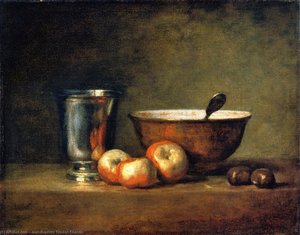
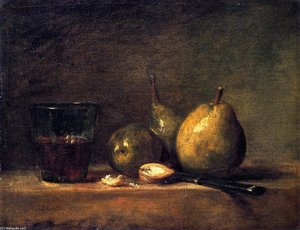
- Bodegón con manzanas y jarra
- ¡Oh! Si tan solo fuera fiel a mí
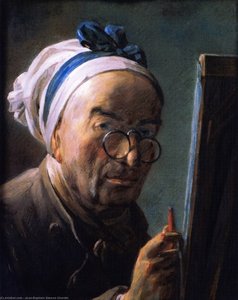
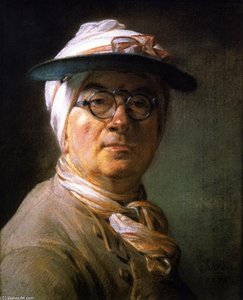
- Autorretrato con gafas
Artículos relacionados
Jean-Baptiste-Siméon Chardin: Master of Still Life & Everyday Elegance
Explore the serene world of Jean-Baptiste-Siméon Chardin, master of still life & genre painting. Discover his revolutionary techniques, enduring legacy, and timeless depictions of everyday elegance. Learn more at ArtsDot.
Silent Narratives: Exploring the Enduring Appeal of Still Life Painting Across Centuries
Explore the rich history of still life painting with ArtsDot. Discover Dutch Masters, decode vanitas symbolism & learn about collecting timeless art. Expert insights and museum-quality reproductions.
Feathered Visions: A Historical & Artistic Exploration of Birds in Painting
Explore the rich history of birds in painting! Discover symbolism, artistic movements & master artists like Audubon. High-quality reproductions available at ArtsDot.
The Enduring Appeal of Still Life: A Historical & Contemporary Exploration
Explore the rich history & symbolism of still life painting with ArtsDot. Discover masterpieces from the Dutch Golden Age, learn about vanitas art, and find expert guidance for collecting timeless artworks.
Clyfford Still's Abstract Expressionism: A Study of Color, Form & the Existential Landscape
Explore the profound world of Clyfford Still's Abstract Expressionism with ArtsDot. Discover his unique style, existential themes & investment potential. Expert analysis for discerning collectors.