 Ver en contexto
 Enviar
 Compartir
 Detalles

 Descargar
 Similares
 Radiografía
 Presentación de diapositivas
 Estadísticas
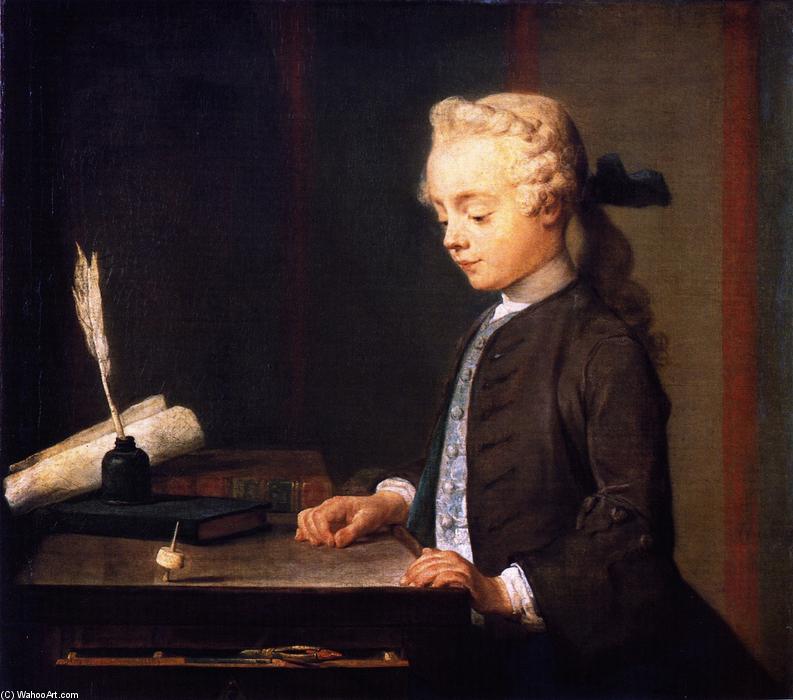
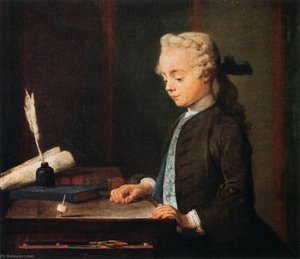
Portrait of the Son of M. Godefroy, Jeweller, Watching a Top Spin (also known as Child with Top or Portrait of Autuste-Gabriel Godefroy)
 Óleo sobre lienzo
- Arte de pared
- Baroque Realism
 1737
1737- Renacimiento
 67.0 x 76.0 cm
 Museo del Louvre
 Ver más
Reproducción al óleo hecha a mano
Óleo sobre lienzo pintado a mano en el tamaño y marco de su elección, realizado por encargo por nuestros artistas. ( Cambiar a Impresión Cambiar a imagen digital)




P118B $10

P118H $10

P118W $10

P438Z $10

P508JH $12

P508YH $12

P805H $10

P805Z $10

P919BZ $10

P919G $10

P919XJ $10

P959ZH $10

P968JZ $12

W106C $8

W218G $10

W218JH $8

W218Y $10

W307PJ $10

W316G $10

W316PJ $8

W316Y $10

W398PJ $8

W4111J $10

W500HY $15

W500JH $15

W692G $12

W849H $8

W940BG $15

W953PJ $8




Elija entre nuestros tamaños predefinidos que respetan las proporciones originales de la obra.

Puede ingresar sus propias dimensiones para adaptarse a un marco o espacio específico. Si el tamaño seleccionado no coincide con las proporciones de la imagen original, recortaremos la obra o extenderemos la pintura con elementos adicionales pintados a mano. Se le enviará una maqueta digital para su aprobación antes de comenzar la producción.
Tenga en cuenta que la vista previa en pantalla no refleja el recorte o la extensión reales. Solo la maqueta mostrará con precisión la composición final.
Si bien existen tamaños personalizados, recomendamos seleccionar una dimensión de la lista predefinida para preservar las proporciones originales.
Tras realizar el pedido, el equipo de ArtsDot.com enviará un correo electrónico al cliente para solicitar instrucciones y proporcionarle una vista previa del boceto.
Envío a todo el mundo () en 3-4 semanas en lugar de las 5 semanas estándar. (9 septiembre). Sin comprometer la calidad.

Envío exprés gratuito a todo el mundo

Lienzo de lino de alta calidad

Seguro de envío total

Garantía de reembolso de impuestos aduaneros

Garantía de fidelidad cromática exacta

Política de devolución de 100 días (solo por defectos)

Garantía de devolución del 100% del dinero

Descuento por cantidad
 La opción de vidrio solo está disponible en tamaños inferiores a 110 cm.

Portrait of the Son of M. Godefroy, Jeweller, Watching a Top Spin (also known as Child with Top or Portrait of Autuste-Gabriel Godefroy)
Técnica de reproducción
Dimensiones de la reproducción
-


Precio total final
$ 263
A Moment of Quiet Contemplation: Chardin’s ‘Portrait of the Son of M. Godefroy’
Jean-Baptiste-Siméon Chardin's “Portrait of the Son of M. Godefroy, Jeweller, Watching a Top Spin” – often referred to as "Child with Top" or "Portrait of Autuste-Gabriel Godefroy" – is not merely a depiction of a young boy; it’s a profound meditation on childhood innocence and the quiet dignity of everyday life. Painted in 1737, this intimate scene captures a fleeting moment of concentration, frozen in time with remarkable sensitivity and precision. The painting's unassuming subject matter—a boy absorbed in a simple activity – belies its enduring power to resonate with viewers across centuries. Measuring just 67 x 76 cm, the scale of the work contributes to its intensely personal feel, drawing us into the boy’s world as if we were witnesses to his private thoughts.
The Master of Still Life: Chardin's Unique Vision
- Style and Technique: Chardin was a master of *plein air* painting, though he primarily worked indoors. His technique is characterized by its remarkable restraint – a deliberate avoidance of dramatic gestures or opulent settings. Instead, he employed a muted palette dominated by browns, ochres, and grays, creating a sense of quiet solemnity. The use of light is particularly masterful, subtly illuminating the boy’s face and hands, emphasizing their delicate features and the textures of his clothing.
- Chardin's Subject Matter: Unlike many of his contemporaries who favored grand historical or mythological themes, Chardin focused on the ordinary: domestic scenes, still lifes, portraits of children and old men. He sought to capture the essence of human experience with a profound understanding of psychology and emotion.
- Influence of Craftsmanship: Born into a family of cabinetmakers, Chardin’s artistic sensibility was deeply rooted in an appreciation for craftsmanship and the beauty of materials. This influence is evident in his meticulous attention to detail and his ability to render textures with astonishing realism – from the worn fabric of the boy's jacket to the smooth surface of the wooden desk.
Symbolism and Context: A Window into 18th-Century France
The painting’s historical context is crucial to understanding its significance. France in the early 18th century was a society undergoing significant social and economic change, yet Chardin remained steadfastly focused on the lives of ordinary people. The boy's activity – watching a top spin – represents a simple pleasure, a moment of carefree enjoyment that speaks to the universal human desire for play and distraction. The scattered books suggest an early education, hinting at the burgeoning importance of literacy in this period. The inclusion of the jeweller’s son subtly connects the portrait to the world of commerce and craftsmanship, reflecting the economic realities of the time.
Emotional Impact and Enduring Appeal
"Portrait of the Son of M. Godefroy" possesses a remarkable emotional resonance that transcends its historical context. The boy's expression – a mixture of concentration and perhaps a touch of melancholy – invites viewers to contemplate themes of childhood, memory, and the fleeting nature of time. Chardin’s ability to capture such subtle nuances is what makes this painting so enduringly captivating. A hand-painted reproduction offers an unparalleled opportunity to experience the beauty and emotional depth of this masterpiece in your own home or studio.
Obras relacionadas
Biografía del artista
Primeros años y formación
Jean Siméon Chardin, pintor francés, nació en París el 2 de noviembre de 1699. Es considerado uno de los maestros más grandes del bodegón y la pintura de género. La vida temprana de Chardin estuvo marcada por su nacimiento en una familia de fabricantes de armarios, lo que probablemente influyó en su interés por el arte. Rara vez abandonó París, viviendo en la orilla izquierda cerca de Saint-Sulpice hasta 1757.Carrera artística
En 1723, Chardin contrajo un acuerdo matrimonial con Marguerite Saintard, a quien no se casaría hasta 1731. Realizó aprendizajes con los pintores históricos Pierre-Jacques Cazes y Noël-Nicolas Coypel, convirtiéndose en maestro de la Académie de Saint-Luc en 1724.- Su primer reconocimiento llegó al exhibir una pintura en el 'Small Corpus Christi' en la Place Dauphine, que fue comprada por Van Loo, quien más tarde asistió al joven pintor.
- En 1728, presentó "La Raya" y "El Buffet", lo que condujo a su admisión en la Académie Royale de Peinture et de Sculpture.
Obras notables y exposiciones
El trabajo de Chardin ganó popularidad a través de grabados reproductivos, lo que le proporcionó ingresos en forma de regalías. Entre sus obras más destacadas se encuentran:- Los Rompedores de Piedras, una obra maestra que muestra su habilidad en el bodegón.
- Bodegón con manzanas y una jarra, que demuestra su uso de la suave difusión de la luz y el impasto granular.
Estilo e Influencias
El estilo de Chardin se caracteriza por su sobriedad, realismo y una atmósfera tranquila. A diferencia de muchos de sus contemporáneos, evitó los temas grandiosos y heroicos, prefiriendo representar escenas cotidianas y objetos humildes con gran detalle y sensibilidad. Su uso de la luz es sutil pero efectivo, creando una sensación de intimidad y calidez en sus obras. Se cree que Chardin estuvo influenciado por el naturalismo holandés del siglo XVII, así como por los pintores franceses de género como Jean-Baptiste Paternostre. Su enfoque en la observación directa y su rechazo a la idealización lo distinguen de otros artistas de su época.Legado
El legado de Chardin como maestro del bodegón y la pintura de género continúa inspirando a artistas y entusiastas del arte por igual. Su trabajo, caracterizado por una composición cuidadosamente equilibrada, una suave difusión de la luz y un impasto granular, sigue siendo un testimonio de su habilidad y dedicación al oficio. Explore más en Wikipedia: historia de la pintura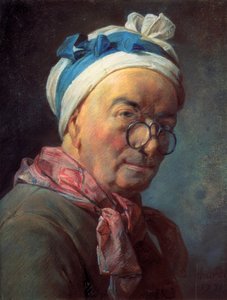
Jean-Baptiste-Siméon Chardin
1699 - 1779 , Francia
Datos clave
- Artistas Influyentes:
- Pierre-Jacques Cazes
- Noël-Nicolas Coypel
- Estilo Artístico: Realismo, Bodegón
- Fecha De Fallecimiento: 1779
- Fecha De Nacimiento: 2 de noviembre de 1699
- Lugar De Nacimiento: París, Francia
- Nacionalidad: Francés
- Nombre Completo: Jean-Baptiste-Siméon Chardin
- Obras Notables:
- Los picapedreros
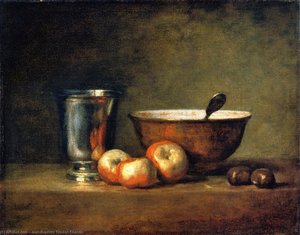
- Bodegón con manzanas y jarra
- ¡Oh! Si tan solo fuera fiel a mí
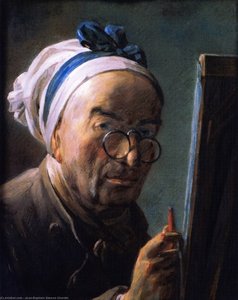
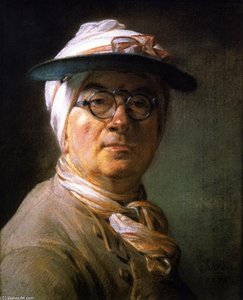
- Autorretrato con gafas
Artículos relacionados
Jean-Baptiste-Siméon Chardin: Master of Still Life & Everyday Elegance
Explore the serene world of Jean-Baptiste-Siméon Chardin, master of still life & genre painting. Discover his revolutionary techniques, enduring legacy, and timeless depictions of everyday elegance. Learn more at ArtsDot.
Las 25 Obras Maestras del Staatliche Museen Berlin: Arte, Historia y Decoración Exclusiva
Descubre las 25 obras maestras del Staatliche Museen Berlín. Explora la historia, el arte alemán y artistas como Nefertiti o Schinkel. Reproducciones de alta calidad para decorar tu hogar con elegancia. ¡Encuentra tu inspiración en ArtsDot.com!
El Siglo XVIII en el Arte: 10 Obras Maestras para Decorar con Historia y Elegancia
Descubre 10 obras maestras del siglo XVIII: Goya, Fragonard y más. Explora la historia, el arte barroco, rococó y neoclasicismo que inspiran decoración elegante. Reproducciones de alta calidad en ArtsDot.com.
Joan Miró: Las 25 Obras Maestras del Genio Catalán | Arte y Decoración
Descubre las 25 obras maestras de Joan Miró, el genio del surrealismo catalán. Explora su arte abstracto, colores vibrantes y la historia detrás de cada cuadro. Reproducciones de alta calidad en ArtsDot.com para transformar tu hogar con arte original.
Marianne North: Las 25 Obras Maestras de una Artista Victoriana en ArtsDot
Descubre las 25 obras maestras de Marianne North, la artista victoriana que capturó la belleza exótica de la botánica. Pinturas vibrantes y llenas de historia. Reproducciones de arte exclusivas en ArtsDot.com.