

 Ver en contexto
 Enviar
 Compartir
 Detalles

 Descargar
 Similares
 Radiografía
 Presentación de diapositivas
 Estadísticas
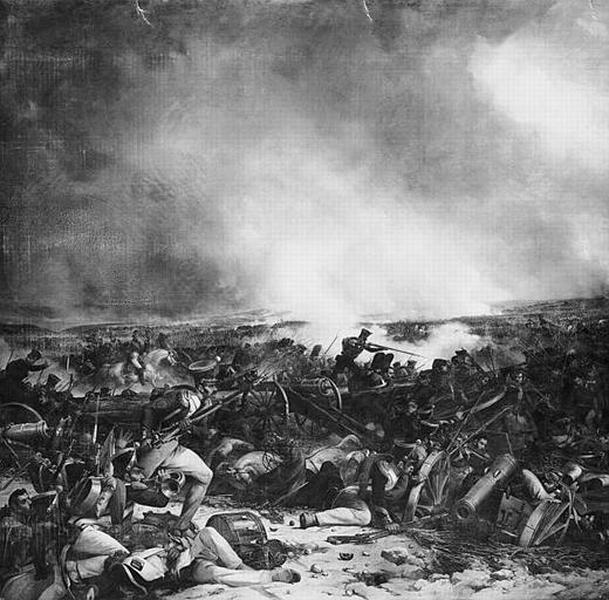
BATAILLE DE LA MOSKOWA.7 SEPTEMBRE 1812
 Ver más
Adquiera una imagen digital de alta resolución y optimizada, muy superior a la vista previa en línea.
Cada archivo es preparado meticulosamente por nuestros especialistas internos mediante el uso de herramientas avanzadas y un experto retoque manual. Nos aseguramos de que cada imagen posea una claridad excepcional, una precisión cromática impecable y un detalle minucioso.
El archivo final se entrega por correo electrónico en un plazo de 72 horas, optimizado para su uso inmediato en entornos profesionales, editoriales y de impresión. Esta es la misma calidad en la que confían los estudios de diseño, las editoriales y las galerías de primer nivel.
Imagen Digital
Descarga un archivo de alta resolución para exhibición personal, impresión y proyectos creativos. ( Cambiar a Impresión Comprar pintura hecha a mano)
Incluido en cada pedido de imágenes digitales
Entrega digital experta, garantizada.
Al elegir ArtsDot.com, no solo está adquiriendo una imagen; está recibiendo una obra de arte digital mejorada profesionalmente, elaborada con precisión y respaldada por una garantía de satisfacción. Esto es todo lo que incluye su pedido, automáticamente:

Entrega rápida por email
Recibirá su archivo de imagen digital en alta resolución por correo electrónico en un plazo de 72 horas tras realizar su pedido, listo para su uso inmediato.

Archivo digital optimizado por IA
Su obra de arte se optimiza profesionalmente mediante herramientas avanzadas de IA y edición manual, garantizando el máximo detalle, claridad y precisión cromática.

Reenvío gratuito de por vida
¿Has borrado o perdido tu archivo por error? No te preocupes: te lo volveremos a enviar en cualquier momento, sin coste adicional.

Sin gastos de importación, siempre
Disfrute de su obra de arte al instante sin aduanas, aranceles ni gastos de envío; las descargas digitales siempre están libres de impuestos.

Garantía de fidelidad de color
Garantizamos que su imagen digital refleje los colores originales con la mayor fidelidad posible, mediante el uso de herramientas profesionales y gestión del color.

Garantía de satisfacción de 100 días
Si no está satisfecho con su imagen digital, la revisaremos o le reembolsaremos el 100% en un plazo de 100 días, sin preguntas.

100% Garantía de devolución de dinero
¿No está satisfecho? Obtenga un reembolso completo dentro de los 100 días posteriores a la recepción de su archivo digital, sin preguntas.

Descuentos por pedidos grandes
Compra 3 imágenes, ahorra 10% - Compra 5, ahorra 15% - Compra 10+, ahorra 20%. Ideal para proyectos creativos, galerías y agencias.
Obras relacionadas




Biografía del artista
From Battlefield Valor to Brushstroke Heroism: The Life of Jean-Charles Langlois
Jean-Charles Langlois, a name often accompanied by the moniker “the Colonel,” embodies a fascinating intersection of military prowess and artistic dedication. Born in Beaumont-en-Auge in 1789, his life was far from the typical trajectory of a painter. He wasn’t drawn to art from a tender age, but rather thrust into the crucible of Napoleonic warfare. Graduating from the prestigious École Polytechnique in 1806, Langlois embarked on a distinguished military career, serving with unwavering bravery at pivotal battles such as Wagram, Gerona, and Waterloo. His courage wasn’t merely symbolic; he sustained serious injuries during his service, earning him the rank of Colonel by the remarkably young age of twenty-six – a testament to both his skill and the tumultuous era in which he lived. This early life profoundly shaped not only his character but also the very subject matter that would define his artistic legacy.A Soldier’s Eye for Landscape and Conflict
Retirement from active duty, though earned through valor, didn't signal a retreat from intensity for Langlois. Instead, it marked a transition – a refocusing of his energies onto the canvas. He turned to painting with a singular vision: to capture the raw, visceral experience of battle. Studying under Girodet-Trioson, he quickly specialized in landscapes, but these were not idyllic scenes of pastoral tranquility. They were landscapes *defined* by conflict, imbued with the drama and chaos of war. Langlois believed that battles represented the most intense experiences life could offer, a conviction that fueled his artistic pursuit. He wasn’t interested in glorifying warfare; rather, he sought to document its brutal reality, the sweeping scale of human struggle against the backdrop of nature's indifference. His early works included powerful depictions like “The Fire of Moscow,” “The Battle of Eylau,” and “The Battle of the Nile,” each a meticulously rendered testament to specific historical events.Panoramic Visions and Crimean War Documentation
Langlois’ artistic ambition extended beyond traditional easel painting. He became captivated by the emerging art form of panoramic painting, having been deeply impressed by Pierre Prévoist's “Panorama of Athens.” This fascination led him to specialize in creating large-scale immersive experiences that transported viewers directly onto the battlefield. These panoramas weren’t simply representations; they were attempts to recreate the overwhelming sensory impact of war – the smoke, the noise, the sheer scale of destruction. His dedication to realism took an innovative turn during the Crimean War. Recognizing the potential for accurate visual documentation, Langlois traveled with photographer Léon-Eugène Méhédin, utilizing photography as a tool to inform his paintings and ensure historical accuracy. This collaboration was groundbreaking for its time, foreshadowing the role of photography in war reporting and artistic practice.Legacy Preserved: The Musée Langlois and Enduring Impact
The tumultuous events of the Franco-Prussian War deeply impacted Langlois’ work. Many of his painstakingly created panoramas were tragically destroyed during the Siege of Paris (1870–1871), a devastating loss for both the artist and the preservation of historical memory. However, his broader artistic legacy was secured through the generosity of his family. In 1873, they bequeathed an impressive collection of 256 paintings – encompassing battles and military panoramas – to the Musée des Beaux-Arts de Caen. These works were later transferred to the Pavillon des Sociétés Savantes, a building renovated at his niece’s expense specifically to house the Langlois Museum. While even this collection suffered losses during the Battle for Caen in 1944, the surviving paintings continue to offer invaluable insights into the art and experience of 19th-century warfare. François-Émile de Lansac counted himself among Langlois’ pupils, further extending his influence on subsequent generations of artists. Jean-Charles Langlois remains a compelling figure – a soldier who became an artist, a historian who wielded a brush instead of a sword, and a pioneer in the visual documentation of conflict. His work serves as a powerful reminder of the human cost of war and the enduring power of art to capture its complexities.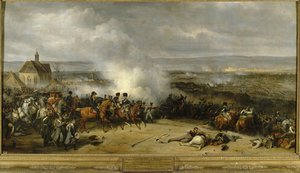
jean charles langlois
1789 - 1870
Breves datos
- Artistic Movement Or Style: Romanticism
- Artists Or Movements Influenced By This Artist: ['Panoramic Painting']
- Artists Who Influenced This Artist: ['Girodet-Trioson']
- Date Of Birth: July 22, 1789
- Date Of Death: March 23, 1870
- Full Name: Jean-Charles Langlois
- Nationality: French
- Notable Artworks:
- Fire of Moscow
- Battle of Eylau
- Battle of the Nile
- Place Of Birth: Beaumont-en-Auge, France