

 Ver en contexto
 Enviar
 Compartir
 Detalles

 Descargar
 Similares
 Radiografía
 Presentación de diapositivas
 Estadísticas
Bouquet de roses

 Ver más
Adquiera una imagen digital de alta resolución y optimizada, muy superior a la vista previa en línea.
Cada archivo es preparado meticulosamente por nuestros especialistas internos mediante el uso de herramientas avanzadas y un experto retoque manual. Nos aseguramos de que cada imagen posea una claridad excepcional, una precisión cromática impecable y un detalle minucioso.
El archivo final se entrega por correo electrónico en un plazo de 72 horas, optimizado para su uso inmediato en entornos profesionales, editoriales y de impresión. Esta es la misma calidad en la que confían los estudios de diseño, las editoriales y las galerías de primer nivel.
Imagen Digital
Descarga un archivo de alta resolución para exhibición personal, impresión y proyectos creativos. ( Cambiar a Impresión Comprar pintura hecha a mano)
Incluido en cada pedido de imágenes digitales
Entrega digital experta, garantizada.
Al elegir ArtsDot.com, no solo está adquiriendo una imagen; está recibiendo una obra de arte digital mejorada profesionalmente, elaborada con precisión y respaldada por una garantía de satisfacción. Esto es todo lo que incluye su pedido, automáticamente:

Entrega rápida por email
Recibirá su archivo de imagen digital en alta resolución por correo electrónico en un plazo de 72 horas tras realizar su pedido, listo para su uso inmediato.

Archivo digital optimizado por IA
Su obra de arte se optimiza profesionalmente mediante herramientas avanzadas de IA y edición manual, garantizando el máximo detalle, claridad y precisión cromática.

Reenvío gratuito de por vida
¿Has borrado o perdido tu archivo por error? No te preocupes: te lo volveremos a enviar en cualquier momento, sin coste adicional.

Sin gastos de importación, siempre
Disfrute de su obra de arte al instante sin aduanas, aranceles ni gastos de envío; las descargas digitales siempre están libres de impuestos.

Garantía de fidelidad de color
Garantizamos que su imagen digital refleje los colores originales con la mayor fidelidad posible, mediante el uso de herramientas profesionales y gestión del color.

Garantía de satisfacción de 100 días
Si no está satisfecho con su imagen digital, la revisaremos o le reembolsaremos el 100% en un plazo de 100 días, sin preguntas.

100% Garantía de devolución de dinero
¿No está satisfecho? Obtenga un reembolso completo dentro de los 100 días posteriores a la recepción de su archivo digital, sin preguntas.

Descuentos por pedidos grandes
Compra 3 imágenes, ahorra 10% - Compra 5, ahorra 15% - Compra 10+, ahorra 20%. Ideal para proyectos creativos, galerías y agencias.
A Symphony of Pink: Exploring Vuillard’s “Bouquet de Roses”
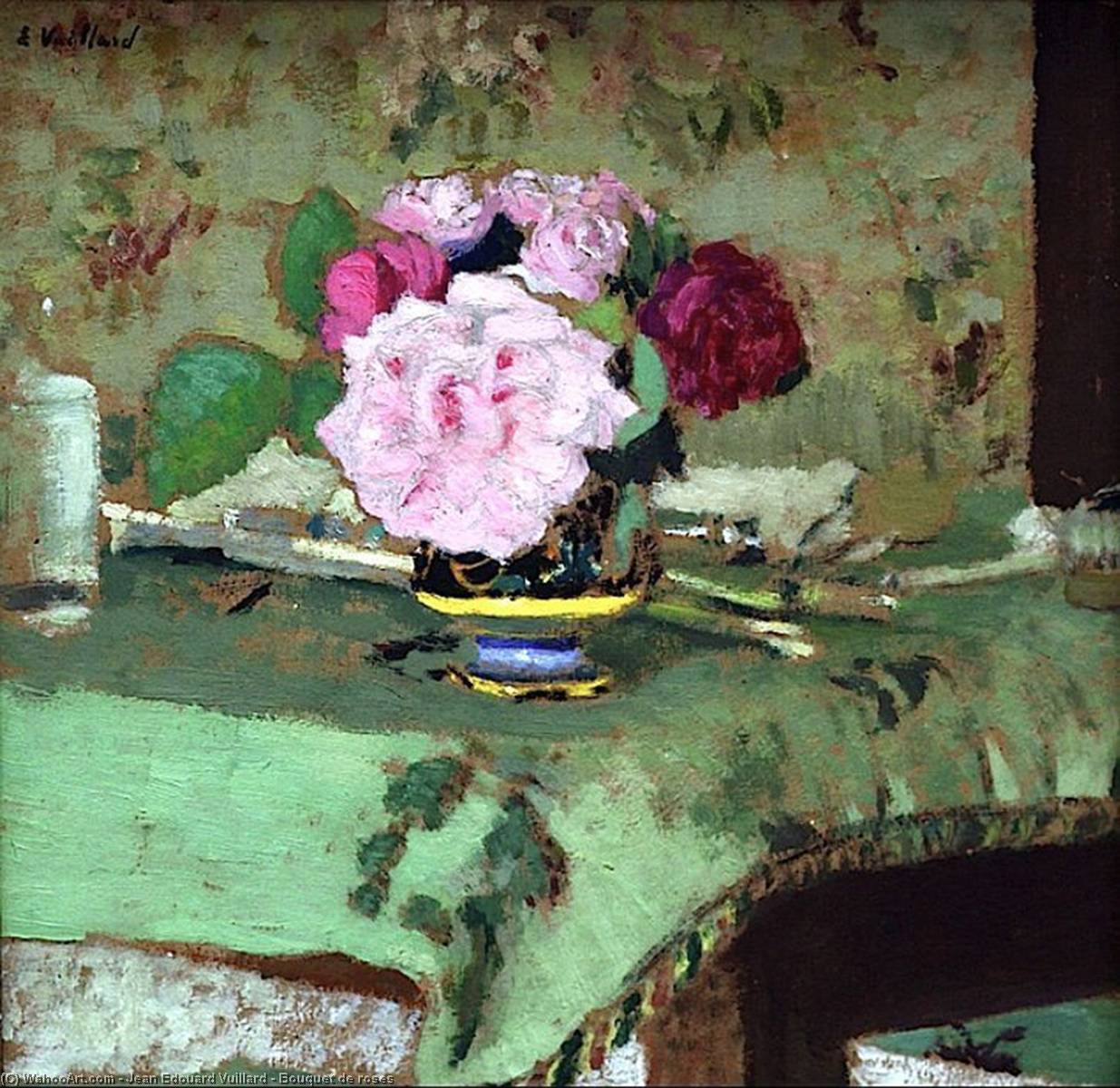
- Subject & Composition: This captivating still life presents a delicate bouquet of pink roses nestled within a dark blue vase, set upon a vibrant green table. The composition is intentionally intimate and focused; Vuillard eschews expansive backgrounds in favor of drawing the viewer’s eye directly to the floral arrangement and its immediate surroundings. The slightly flattened perspective enhances this sense of closeness, inviting contemplation rather than offering a realistic depiction of space.
- Style & Influences: “Bouquet de Roses” is deeply rooted in the Post-Impressionist movement, with hints of early Fauvism emerging in its bold color choices. Vuillard, as a key member of *Les Nabis*, was fascinated by simplifying forms and prioritizing subjective experience over strict representation. The influence of Japanese prints – favored by the Nabis for their flattened planes and decorative patterns – is subtly present in the artwork’s composition.
- Technique & Materials: Executed in oil paints on canvas, the painting showcases Vuillard's masterful use of impasto. The thick application of paint creates a tactile surface, adding depth and texture to both the roses and the table. Visible brushstrokes are not concealed but celebrated, contributing significantly to the artwork’s expressive quality. This technique imbues the piece with a sense of immediacy and energy.
- Historical Context & The Nabis: Jean-Édouard Vuillard (1868-1940) was a pivotal figure in the avant-garde art scene of late 19th and early 20th century France. *Les Nabis* – meaning “prophets” – sought to revolutionize painting by emphasizing color, pattern, and subjective vision. They rejected academic conventions and embraced a more decorative and symbolic approach to artmaking. Vuillard’s work, alongside that of Maurice Denis and Édouard Vuillard (note the shared name!), helped pave the way for modern movements like Cubism.
- Symbolism & Emotional Resonance: Roses have long been associated with beauty, love, remembrance, and even secrecy. Within the context of Vuillard’s work, they likely represent a quiet contemplation of these themes. The dark blue vase provides a striking contrast to the vibrant pink blooms, perhaps hinting at melancholy or hidden depths beneath the surface beauty. The overall effect is one of serene intimacy and gentle nostalgia.
- Interior Design & Collectibility: “Bouquet de Roses” offers a versatile aesthetic for interior spaces. Its muted yet rich color palette complements both traditional and contemporary settings. The painting’s intimate scale makes it ideal for bedrooms, dining rooms, or studies. As a representative work of a significant artistic movement and a celebrated artist, this piece – or a high-quality reproduction – would be a valuable addition to any art collection.
- A Note on the Name “Jean”: Interestingly, the name "Jean" appears frequently in French culture and history. While not directly related to the artwork’s subject matter, it's worth noting its prevalence as both a given name (as with the artist Jean-Édouard Vuillard) and a common textile term – referencing *jeans*, a durable fabric often associated with everyday life, creating an intriguing juxtaposition with the delicate beauty of the roses.
Obras relacionadas
Biografía del artista
early life and artistic beginnings
Jean-Édouard Vuillard (1868–1940) was a french painter, decorative artist, and printmaker. His life's work would later become a cornerstone of the avant-garde artistic group les nabis, alongside fellow visionaries like Maurice Denis and Édouard Vuillard. This collective would revolutionize the art world with their innovative approach to color and form.
Vuillard was born on november 11, 1868, in cuiseaux, france. His father was a civil servant, and his mother, a seamstress. He showed an early aptitude for drawing and painting, studying art from 1886 to 1888 at the Académie Julian and the École des Beaux-Arts in paris.
In 1889 he joined a group of art students that included Maurice Denis, Pierre Bonnard, Paul Sérusier, Ker-Xavier Roussel, and Félix Vallotton. They called themselves les Nabis (Hebrew for “Prophets”), and they drew their inspiration from the Synthetist paintings of Paul Gauguin’s Pont-Aven period.
the nabis movement and its influence
Like Gauguin, the Nabis advocated a symbolic, rather than a naturalistic, approach to color, and they usually applied their paint in ways that emphasized the flat surface of the canvas. Their admiration of japanese woodcuts, which were then in vogue in europe, inspired them to use simplified shapes and strong contours.
Les nabis, a group of young french artists active in paris from 1888 until 1900, played a large part in the transition from impressionism and academic art to abstract art, symbolism, and the other early movements of modernism. Their philosophy was based upon the philosophy of positivism, and the writings of auguste comte and hippolyte taine.
vuillard's later work and legacy
After 1900, when les nabis disbanded, Vuillard adopted a more realistic style, approaching landscapes and interiors with greater detail and vivid colors. He continued to produce paintings that explored domestic scenes and portraits of individuals from the intellectual and artistic circles of paris.
Vuillard’s distinctive style—characterized by muted palettes, flattened perspectives, and meticulous attention to texture—established him as one of the most important figures in french art at the turn of the century. His work anticipates many developments in cubism and fauvism, demonstrating a profound understanding of visual perception.
key works and exhibitions
Vuillard’s paintings can be found in various museums, including the musée de la révolution française (france), which boasts a rich collection of artworks, documents, and objects related to the revolutionary period. Some of his notable works include “Woman Sweeping” by Maurice Denis and “Jean de la Barre” by Jean Clouet, which depict a young man condemned to death for blasphemy during the ancien régime.
Vuillard’s later work, such as his portraits of french industry and arts figures, can be seen in various galleries, including those at intimism art movement and jean-édouard vuillard's page on ArtsDot.
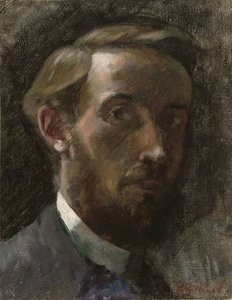
Jean-Édouard Vuillard
1868 - 1940 , Francia
Breves datos
- Artistic Movement Or Style: Nabis
- Artists Or Movements Influenced By This Artist:
- Cubism
- Fauvism
- Artists Who Influenced This Artist: ['Paul Gauguin']
- Date Of Birth: November 11, 1868
- Full Name: Jean-Édouard Vuillard
- Nationality: French
- Notable Artworks:
- Woman Sweeping
- Sunlit Interior
- Place Of Birth: Cuiseaux, France