 Ver en contexto
 Enviar
 Compartir
 Detalles

 Descargar
 Similares
 Radiografía
 Presentación de diapositivas
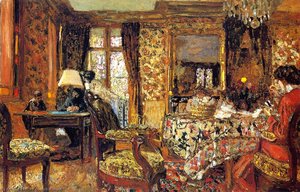
Interior The Drawing Room


 Ver más
Giclée / Impresión de arte
Impresiones giclée o en lienzo de calidad de museo con producción rápida y opciones de acabado flexibles. ( Comprar pintura hecha a mano Comprar imagen)




P118B $10

P118H $10

P118W $10

P438Z $10

P508JH $12

P508YH $12

P805H $10

P805Z $10

P919BZ $10

P919G $10

P919XJ $10

P959ZH $10

P968JZ $12

W106C $8

W218G $10

W218JH $8

W218Y $10

W307PJ $10

W316G $10

W316PJ $8

W316Y $10

W398PJ $8

W4111J $10

W500HY $15

W500JH $15

W692G $12

W849H $8

W940BG $15

W953PJ $8




Elija entre nuestros tamaños predefinidos que respetan las proporciones originales de la obra.

Puede introducir sus propias dimensiones para adaptarse a un marco o espacio específico. Si el tamaño seleccionado no coincide con las proporciones de la imagen original, recortaremos la obra de arte o extenderemos la imagen con un borde con efecto espejo o de color sólido. Se enviará una maqueta digital para su aprobación antes de que comience la producción.
Tenga en cuenta que la vista previa en pantalla no refleja el recorte o la extensión real. Solo la maqueta mostrará con precisión la composición final.
Aunque existen tamaños personalizados, recomendamos seleccionar una dimensión de la lista predefinida para preservar las proporciones originales.
Envío a todo el mundo () en 2 semanas en lugar de las 4/5 semanas estándar. (22 agosto)

Envío exprés gratuito a todo el mundo

Lienzo de lino de alta calidad

Seguro de envío total

Garantía de reembolso de impuestos aduaneros

Garantía de fidelidad cromática exacta

Política de devolución de 60 días (solo por defectos)

Garantía de devolución del 100% del dinero

Descuento por cantidad
 La opción de vidrio solo está disponible en tamaños inferiores a 110 cm.

Interior The Drawing Room
Giclée / Impresión de arte
Dimensiones de la reproducción
-


Precio total final
$ 62
Descripción de la pieza
A Quiet Moment in Time
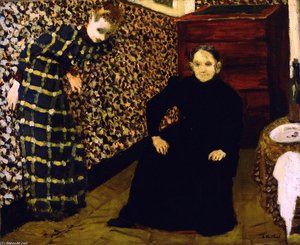
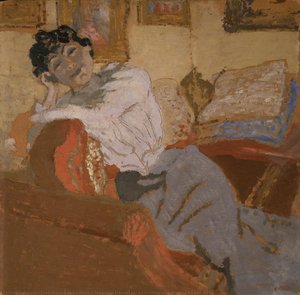
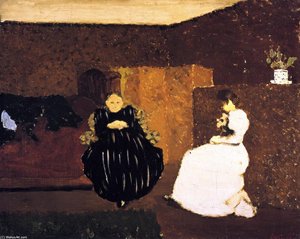
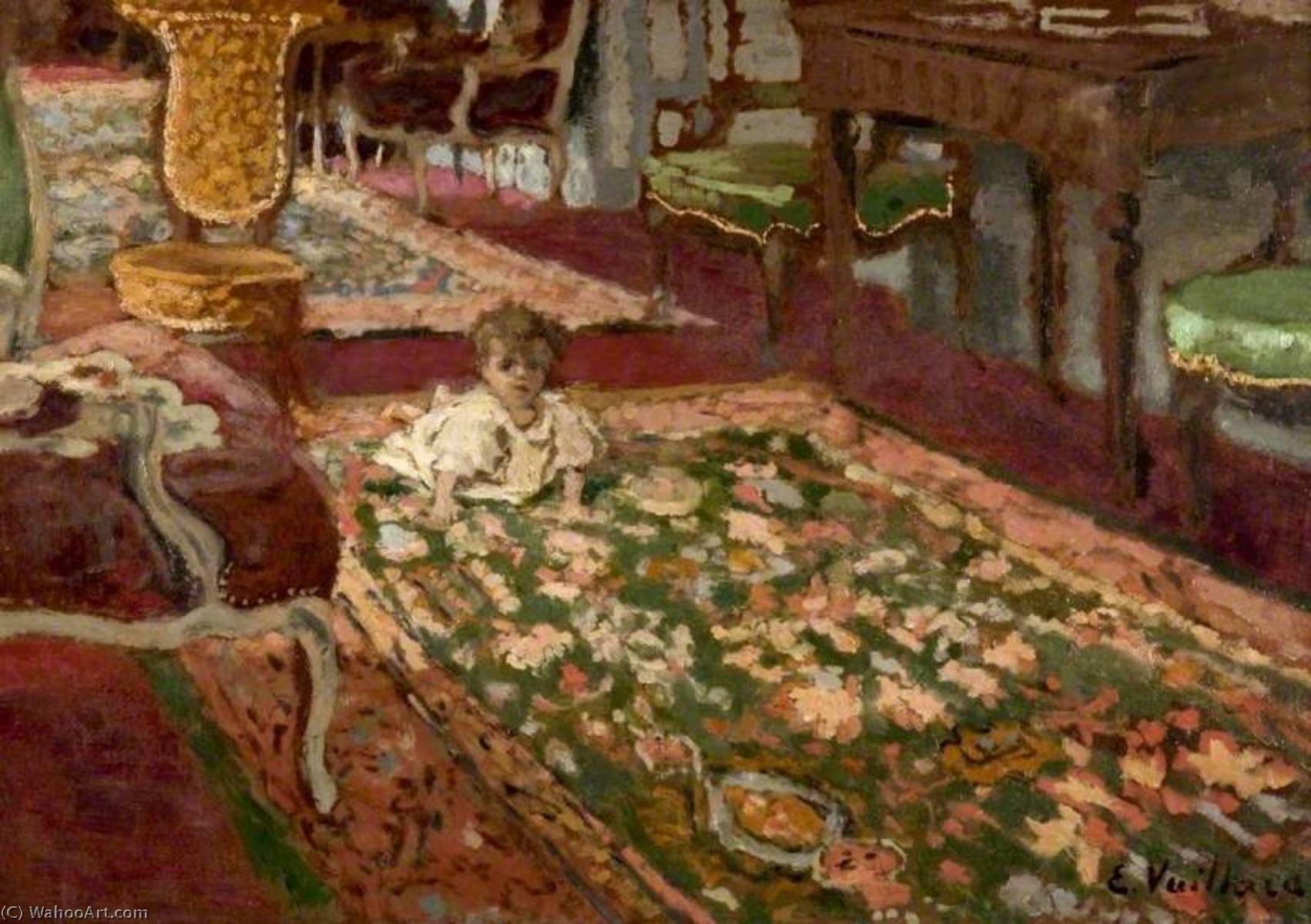
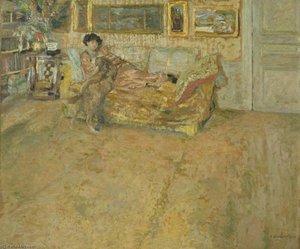
In the soft, dappled light of Jean-Édouard Vuillard’s 1901 masterpiece, Interior The Drawing Room, we are invited to step into a sanctuary of domestic tranquility. The painting captures a fleeting, intimate moment: a child resting or playing upon a lush red carpet that anchors the composition. This is not merely a depiction of a room, but an exploration of the soul of a home. As the eye wanders through the space, it encounters a carefully curated arrangement of furniture—chairs and couches that seem to cradle the silence of the afternoon. The presence of delicate vases tucked into the corners adds a touch of refined elegance, suggesting a life lived with grace and attention to beauty. For the collector or interior designer, this piece offers more than just decoration; it provides a window into a world where every object holds a memory.
The atmosphere is one of profound comfort, a cozy retreat from the bustling outside world. Vuillard utilizes the spatial arrangement to create a sense of enclosure that feels protective rather than restrictive. The way the child occupies the floor space, surrounded by the soft textures of the carpet and the structured silhouettes of the seating, evokes a nostalgic longing for the simplicity of childhood. It is an evocative scene that resonates deeply with anyone who finds beauty in the quiet, unobserved moments of daily life, making it a captivating centerpiece for any sophisticated living space.
The Intimate Language of Les Nabis
To understand the technical brilliance of this work, one must look to Vuillard’s roots within Les Nabis, the influential group of French avant-garde artists who sought to bridge the gap between fine art and decorative design. Moving away from the fleeting light effects of Impressionism, Vuillard embraced a more structured, almost rhythmic approach to composition. In Interior The Drawing Room, we see his mastery of flattened planes and intricate patterns. He treats the surface of the canvas as a tapestry, where color and form interweave to create a rich, tactile experience.
His technique is characterized by a delicate layering of tones that gives the room its unique depth. Rather than relying on heavy shadows, Vuillard uses subtle shifts in hue to define the boundaries between the red carpet, the furniture, and the walls. This approach, heavily influenced by the aesthetic of Japanese woodblock prints, allows him to focus on the decorative harmony of the scene. For those seeking a high-quality reproduction, this complexity is what makes the piece so rewarding; the interplay of light and pattern reveals new details upon every viewing, offering an enduring sense of discovery.
A Legacy of Modernist Inspiration
Beyond its immediate charm, this painting serves as a vital link in the evolution of modern art. The way Vuillard organizes space through patches of color and patterned surfaces laid the groundwork for much later movements, including Cubism and Fauvism. By deconstructing the traditional perspective and focusing on the decorative essence of the subject, he challenged the boundaries of what a painting could be. He transformed the mundane—a simple drawing room—into a profound study of abstraction and emotion.
Owning a reproduction of such a significant work allows one to bring this historical weight into a contemporary setting. It serves as a sophisticated nod to art history, blending seamlessly with modern minimalist decor or classic traditionalism alike. Interior The Drawing Room is not just a painting of a room; it is an invitation to appreciate the artistry in our own surroundings, reminding us that even the most private corners of our lives are worthy of being immortalized in color and light.
Obras relacionadas
Biografía del artista
early life and artistic beginnings
Jean-Édouard Vuillard (1868–1940) was a french painter, decorative artist, and printmaker. His life's work would later become a cornerstone of the avant-garde artistic group les nabis, alongside fellow visionaries like Maurice Denis and Édouard Vuillard. This collective would revolutionize the art world with their innovative approach to color and form.
Vuillard was born on november 11, 1868, in cuiseaux, france. His father was a civil servant, and his mother, a seamstress. He showed an early aptitude for drawing and painting, studying art from 1886 to 1888 at the Académie Julian and the École des Beaux-Arts in paris.
In 1889 he joined a group of art students that included Maurice Denis, Pierre Bonnard, Paul Sérusier, Ker-Xavier Roussel, and Félix Vallotton. They called themselves les Nabis (Hebrew for “Prophets”), and they drew their inspiration from the Synthetist paintings of Paul Gauguin’s Pont-Aven period.
the nabis movement and its influence
Like Gauguin, the Nabis advocated a symbolic, rather than a naturalistic, approach to color, and they usually applied their paint in ways that emphasized the flat surface of the canvas. Their admiration of japanese woodcuts, which were then in vogue in europe, inspired them to use simplified shapes and strong contours.
Les nabis, a group of young french artists active in paris from 1888 until 1900, played a large part in the transition from impressionism and academic art to abstract art, symbolism, and the other early movements of modernism. Their philosophy was based upon the philosophy of positivism, and the writings of auguste comte and hippolyte taine.
vuillard's later work and legacy
After 1900, when les nabis disbanded, Vuillard adopted a more realistic style, approaching landscapes and interiors with greater detail and vivid colors. He continued to produce paintings that explored domestic scenes and portraits of individuals from the intellectual and artistic circles of paris.
Vuillard’s distinctive style—characterized by muted palettes, flattened perspectives, and meticulous attention to texture—established him as one of the most important figures in french art at the turn of the century. His work anticipates many developments in cubism and fauvism, demonstrating a profound understanding of visual perception.
key works and exhibitions
Vuillard’s paintings can be found in various museums, including the musée de la révolution française (france), which boasts a rich collection of artworks, documents, and objects related to the revolutionary period. Some of his notable works include “Woman Sweeping” by Maurice Denis and “Jean de la Barre” by Jean Clouet, which depict a young man condemned to death for blasphemy during the ancien régime.
Vuillard’s later work, such as his portraits of french industry and arts figures, can be seen in various galleries, including those at intimism art movement and jean-édouard vuillard's page on ArtsDot.
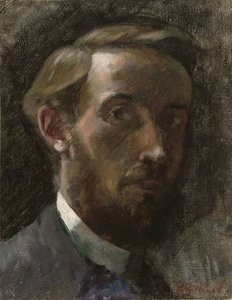
Jean-Édouard Vuillard
1868 - 1940 , Francia
Datos clave
- Artistic Movement Or Style: Nabis
- Artists Or Movements Influenced By This Artist:
- Cubism
- Fauvism
- Artists Who Influenced This Artist: ['Paul Gauguin']
- Date Of Birth: November 11, 1868
- Full Name: Jean-Édouard Vuillard
- Nationality: French
- Notable Artworks:
- Woman Sweeping
- Sunlit Interior
- Place Of Birth: Cuiseaux, France
Artículos relacionados
Édouard Manet: Las 25 Obras Maestras del Impresionismo para Decorar tu Hogar con Arte
Descubre las 25 obras maestras de Édouard Manet, el rebelde del impresionismo. Explora su historia, técnica y significado en cada cuadro famoso. Reproducciones de arte de museo para decorar tu hogar con estilo. ¡Explora la colección completa en ArtsDot.com!
Intimate Interiors & Poetic Ambiguity: Exploring the Vision of Jean-Édouard Vuillard
Discover the captivating world of Jean-Édouard Vuillard, a key figure of the Nabis movement. Explore his intimate interiors, unique style & lasting influence on modern art. Learn more at ArtsDot.

Impresionismo: 10 Obras Maestras que Capturan la Luz y el Momento
Descubre 10 obras maestras del impresionismo de Monet, Renoir y Degas. Explora la luz, el color y las historias detrás de estos icónicos cuadros. Reproducciones de arte en ArtsDot.com para decorar tu hogar con estilo.
Intimate Interiors: Domestic Life & Artistic Representation from Renaissance to Impressionism
Explore the evolution of domestic life in Western art from the Renaissance to Impressionism. Discover symbolism, realism & artistic techniques shaping intimate interior scenes. Learn more with ArtsDot.

Paul Cézanne: Las 25 Obras Maestras que Definieron el Arte Moderno | ArtsDot
Descubre las 25 obras maestras de Paul Cézanne que revolucionaron el arte moderno. Explora su técnica, inspiración y significado en paisajes, bodegones y retratos. Reproducciones de alta calidad para decorar tu hogar con arte inolvidable. ¡Explora la colección completa en ArtsDot.com!