 Ver en contexto
 Enviar
 Compartir
 Detalles

 Descargar
 Similares
 Radiografía
 Presentación de diapositivas
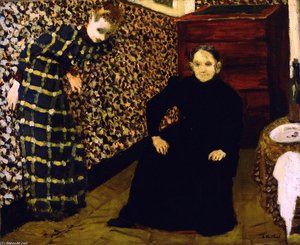
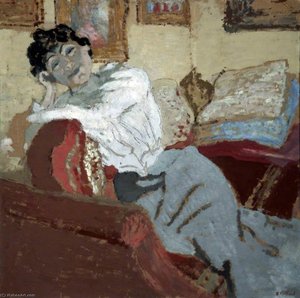
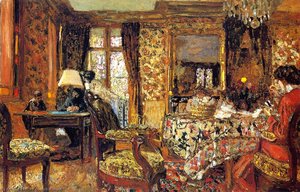
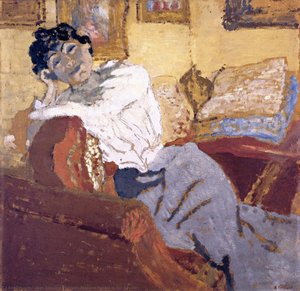
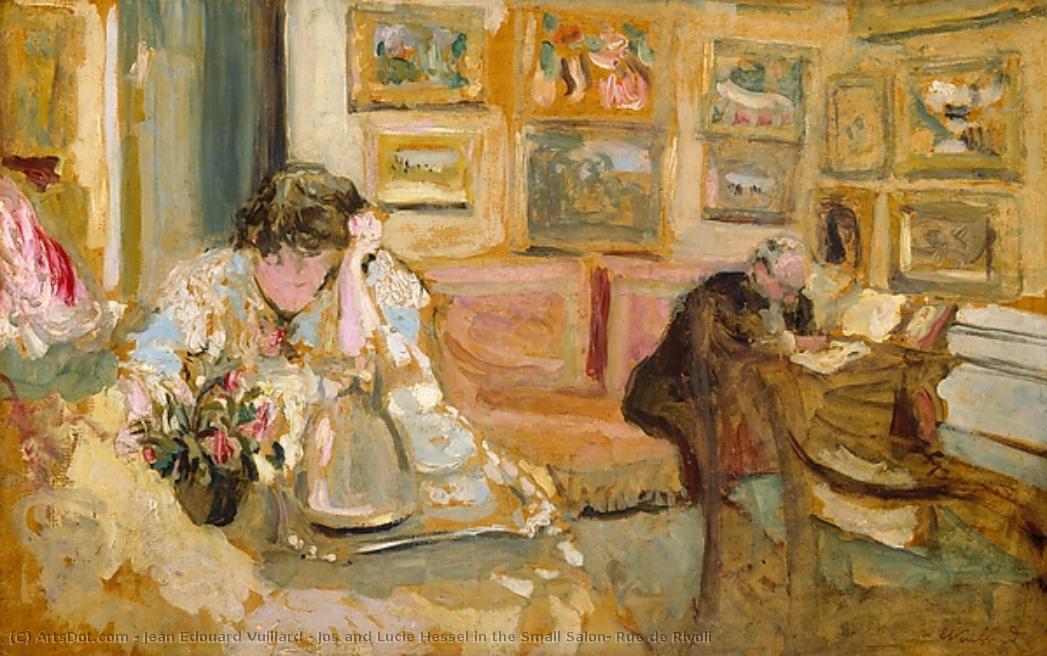
Jos and Lucie Hessel in the Small Salon, Rue de Rivoli
 Acrylic On Canvas
- WallArt
- Les Nabis
 1905
1905 37.0 x 57.0 cm
 Museo Metropolitano de Arte
 Ver más
Reproducción al óleo hecha a mano
Óleo sobre lienzo pintado a mano en el tamaño y marco de su elección, realizado por encargo por nuestros artistas. ( Comprar impresión Comprar imagen)




P118B $10

P118H $10

P118W $10

P438Z $10

P508JH $12

P508YH $12

P805H $10

P805Z $10

P919BZ $10

P919G $10

P919XJ $10

P959ZH $10

P968JZ $12

W106C $8

W218G $10

W218JH $8

W218Y $10

W307PJ $10

W316G $10

W316PJ $8

W316Y $10

W398PJ $8

W4111J $10

W500HY $15

W500JH $15

W692G $12

W849H $8

W940BG $15

W953PJ $8




Elija entre nuestros tamaños predefinidos que respetan las proporciones originales de la obra.

Puede ingresar sus propias dimensiones para adaptarse a un marco o espacio específico. Si el tamaño seleccionado no coincide con las proporciones de la imagen original, recortaremos la obra o extenderemos la pintura con elementos adicionales pintados a mano. Se le enviará una maqueta digital para su aprobación antes de comenzar la producción.
Tenga en cuenta que la vista previa en pantalla no refleja el recorte o la extensión reales. Solo la maqueta mostrará con precisión la composición final.
Si bien existen tamaños personalizados, recomendamos seleccionar una dimensión de la lista predefinida para preservar las proporciones originales.
Tras realizar el pedido, el equipo de ArtsDot.com enviará un correo electrónico al cliente para solicitar instrucciones y proporcionarle una vista previa del boceto.
Envío a todo el mundo () en 3-4 semanas en lugar de las 5 semanas estándar. (5 septiembre). Sin comprometer la calidad.

Envío exprés gratuito a todo el mundo

Lienzo de lino de alta calidad

Seguro de envío total

Garantía de reembolso de impuestos aduaneros

Garantía de fidelidad cromática exacta

Política de devolución de 60 días (solo por defectos)

Garantía de devolución del 100% del dinero

Descuento por cantidad
 La opción de vidrio solo está disponible en tamaños inferiores a 110 cm.

Jos and Lucie Hessel in the Small Salon, Rue de Rivoli
Técnica de reproducción
Dimensiones de la reproducción
-


Precio total final
$ 263
A Snapshot of Parisian Intimacy: Jean-Édouard Vuillard’s “Jos and Lucie Hessel in the Small Salon”
Jean-Édouard Vuillard's "Jos and Lucie Hessel in the Small Salon, Rue de Rivoli" isn't merely a portrait; it’s an exquisitely rendered distillation of friendship and domestic tranquility—a hallmark of Vuillard’s distinctive artistic vision. Painted in 1905, this piece exemplifies the artist’s fascination with capturing fleeting moments of everyday life within carefully constructed interiors, firmly establishing him as a pivotal figure in the burgeoning avant-garde movement known as Les Nabis.The Subject and Setting: A Familiar Face
The painting depicts Jos Hessel and his wife, Lucie, seated comfortably in their Parisian apartment—a space Vuillard frequented regularly, becoming a trusted companion to Thadée and Misia Natanson after their divorce. This intimacy is palpable; Vuillard eschews dramatic poses or grand gestures, instead presenting a scene of quiet contemplation. The room itself is rendered with meticulous detail – a dining table adorned with a vase holding flowers, several chairs strategically positioned around the space, and potted plants adding splashes of verdant color to the muted palette. These elements aren’t simply decorative; they contribute to Vuillard's masterful manipulation of spatial illusion, characteristic of Les Nabis’ approach.Style and Technique: Flattened Planes and Harmonious Color
Vuillard’s style is instantly recognizable for its rejection of traditional perspective. Like his fellow Nabis artists—Maurice Denis and Édouard Vuillard—he embraced a technique that prioritized flattened planes of color over realistic representation. This method, heavily influenced by Japanese prints (ukiyo-e), aimed to evoke emotion rather than accurately depict the physical world. The painting’s dominant hues are soft pastel shades – creams, peaches, and muted greens – blended seamlessly together to create an atmosphere of serene stillness. Vuillard skillfully utilizes layering and glazing techniques, allowing light to penetrate through translucent surfaces, resulting in a luminous quality that transcends mere visual fidelity.Historical Context: Impressionism's Legacy and the Dawn of Modern Art
“Jos and Lucie Hessel” sits squarely within the transitional period between Impressionism and Cubism. While Impressionists sought to capture fleeting impressions of light and color, Vuillard pushed beyond this aesthetic preoccupation, delving into explorations of form and perception. Les Nabis challenged the conventions of academic art by prioritizing subjective experience and emotional resonance—a reaction against the rigid formalism that dominated Parisian artistic circles at the time. The painting reflects a broader cultural shift toward valuing intuition and imagination as sources of creative inspiration.Symbolism and Emotional Impact: Capturing Essence
Beyond its formal innovations, “Jos and Lucie Hessel” resonates with deeper symbolic meanings. The carefully arranged furniture and plants symbolize domestic harmony and stability—a visual representation of the artist’s friendship with his patrons. More subtly, Vuillard's use of color contributes to the painting's emotional impact, conveying a sense of warmth, comfort, and understated beauty. It invites viewers to linger on its surface, absorbing the quiet dignity of human connection within a beautifully crafted space—a testament to Vuillard’s ability to transform ordinary scenes into enduring expressions of artistic vision.Obras relacionadas
Biografía del artista
early life and artistic beginnings
Jean-Édouard Vuillard (1868–1940) was a french painter, decorative artist, and printmaker. His life's work would later become a cornerstone of the avant-garde artistic group les nabis, alongside fellow visionaries like Maurice Denis and Édouard Vuillard. This collective would revolutionize the art world with their innovative approach to color and form.
Vuillard was born on november 11, 1868, in cuiseaux, france. His father was a civil servant, and his mother, a seamstress. He showed an early aptitude for drawing and painting, studying art from 1886 to 1888 at the Académie Julian and the École des Beaux-Arts in paris.
In 1889 he joined a group of art students that included Maurice Denis, Pierre Bonnard, Paul Sérusier, Ker-Xavier Roussel, and Félix Vallotton. They called themselves les Nabis (Hebrew for “Prophets”), and they drew their inspiration from the Synthetist paintings of Paul Gauguin’s Pont-Aven period.
the nabis movement and its influence
Like Gauguin, the Nabis advocated a symbolic, rather than a naturalistic, approach to color, and they usually applied their paint in ways that emphasized the flat surface of the canvas. Their admiration of japanese woodcuts, which were then in vogue in europe, inspired them to use simplified shapes and strong contours.
Les nabis, a group of young french artists active in paris from 1888 until 1900, played a large part in the transition from impressionism and academic art to abstract art, symbolism, and the other early movements of modernism. Their philosophy was based upon the philosophy of positivism, and the writings of auguste comte and hippolyte taine.
vuillard's later work and legacy
After 1900, when les nabis disbanded, Vuillard adopted a more realistic style, approaching landscapes and interiors with greater detail and vivid colors. He continued to produce paintings that explored domestic scenes and portraits of individuals from the intellectual and artistic circles of paris.
Vuillard’s distinctive style—characterized by muted palettes, flattened perspectives, and meticulous attention to texture—established him as one of the most important figures in french art at the turn of the century. His work anticipates many developments in cubism and fauvism, demonstrating a profound understanding of visual perception.
key works and exhibitions
Vuillard’s paintings can be found in various museums, including the musée de la révolution française (france), which boasts a rich collection of artworks, documents, and objects related to the revolutionary period. Some of his notable works include “Woman Sweeping” by Maurice Denis and “Jean de la Barre” by Jean Clouet, which depict a young man condemned to death for blasphemy during the ancien régime.
Vuillard’s later work, such as his portraits of french industry and arts figures, can be seen in various galleries, including those at intimism art movement and jean-édouard vuillard's page on ArtsDot.
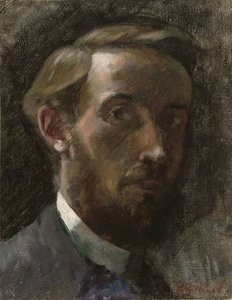
Jean-Édouard Vuillard
1868 - 1940 , Francia
Datos clave
- Artistic Movement Or Style: Nabis
- Artists Or Movements Influenced By This Artist:
- Cubism
- Fauvism
- Artists Who Influenced This Artist: ['Paul Gauguin']
- Date Of Birth: November 11, 1868
- Full Name: Jean-Édouard Vuillard
- Nationality: French
- Notable Artworks:
- Woman Sweeping
- Sunlit Interior
- Place Of Birth: Cuiseaux, France
Artículos relacionados
Intimate Interiors & Poetic Ambiguity: Exploring the Vision of Jean-Édouard Vuillard
Discover the captivating world of Jean-Édouard Vuillard, a key figure of the Nabis movement. Explore his intimate interiors, unique style & lasting influence on modern art. Learn more at ArtsDot.

Paul Cézanne: Las 25 Obras Maestras que Definieron el Arte Moderno | ArtsDot
Descubre las 25 obras maestras de Paul Cézanne que revolucionaron el arte moderno. Explora su técnica, inspiración y significado en paisajes, bodegones y retratos. Reproducciones de alta calidad para decorar tu hogar con arte inolvidable. ¡Explora la colección completa en ArtsDot.com!
The Enduring Legacy of French Art: Movements, Masters & Cultural Impact
Explore the rich history of French art, from the Salon to Impressionism & beyond. Discover iconic masters, key movements, and expert guidance for collecting timeless masterpieces. ArtsDot.
Claude Monet: Las 25 Obras Maestras del Impresionismo para Decorar tu Hogar con Arte
Descubre las 25 obras maestras de Claude Monet, el padre del impresionismo. Explora la historia, técnica y belleza de sus paisajes, nenúfares y 'Impresión, sole levant'. Encuentra reproducciones de arte exclusivas en ArtsDot.com.

Impresionismo: 10 Obras Maestras que Capturan la Luz y el Momento
Descubre 10 obras maestras del impresionismo de Monet, Renoir y Degas. Explora la luz, el color y las historias detrás de estos icónicos cuadros. Reproducciones de arte en ArtsDot.com para decorar tu hogar con estilo.