 Ver en contexto
 Enviar
 Compartir
 Detalles

 Descargar
 Similares
 Radiografía
 Presentación de diapositivas
 Estadísticas
Feeding the Young


 Ver más
Giclée / Impresión de arte
Impresiones giclée o en lienzo de calidad de museo con producción rápida y opciones de acabado flexibles. ( Comprar pintura hecha a mano Cambiar a imagen digital)




P118B $10

P118H $10

P118W $10

P438Z $10

P508JH $12

P508YH $12

P805H $10

P805Z $10

P919BZ $10

P919G $10

P919XJ $10

P959ZH $10

P968JZ $12

W106C $8

W218G $10

W218JH $8

W218Y $10

W307PJ $10

W316G $10

W316PJ $8

W316Y $10

W398PJ $8

W4111J $10

W500HY $15

W500JH $15

W692G $12

W849H $8

W940BG $15

W953PJ $8




Elija entre nuestros tamaños predefinidos que respetan las proporciones originales de la obra.

Puede introducir sus propias dimensiones para adaptarse a un marco o espacio específico. Si el tamaño seleccionado no coincide con las proporciones de la imagen original, recortaremos la obra de arte o extenderemos la imagen con un borde con efecto espejo o de color sólido. Se enviará una maqueta digital para su aprobación antes de que comience la producción.
Tenga en cuenta que la vista previa en pantalla no refleja el recorte o la extensión real. Solo la maqueta mostrará con precisión la composición final.
Aunque existen tamaños personalizados, recomendamos seleccionar una dimensión de la lista predefinida para preservar las proporciones originales.
Envío a todo el mundo () en 2 semanas en lugar de las 4/5 semanas estándar. (10 septiembre)

Envío exprés gratuito a todo el mundo

Lienzo de lino de alta calidad

Seguro de envío total

Garantía de reembolso de impuestos aduaneros

Garantía de fidelidad cromática exacta

Política de devolución de 100 días (solo por defectos)

Garantía de devolución del 100% del dinero

Descuento por cantidad
 La opción de vidrio solo está disponible en tamaños inferiores a 110 cm.

Feeding the Young
Giclée / Impresión de arte
Dimensiones de la reproducción
-


Precio total final
$ 62
A Tender Moment Captured in Earth and Light
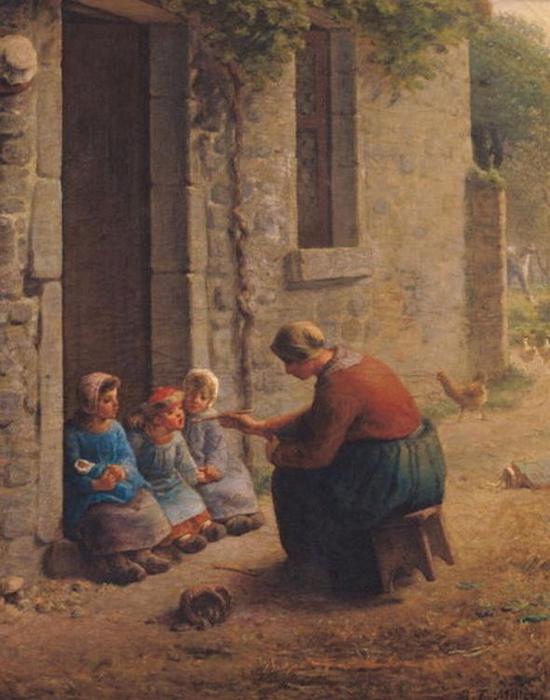
In the quiet, sun-drenched corners of rural France, there exist moments of profound simplicity that transcend time itself. Jean-François Millet, a master of the Realist movement, possessed the rare ability to elevate the mundane rituals of peasant life into the realm of the sacred. His work, Feeding the Young, serves as a breathtaking window into this vanished world. The painting presents a deeply intimate tableau: a mother, seated upon the earth, tending to her children with a devotion that feels both ancient and eternal. As she holds food for the two young girls nestled beside her, the scene unfolds with a rhythmic grace, anchored by the presence of figures standing in the periphery, suggesting a larger community bound by the shared labors and joys of the soil.
The composition is masterfully balanced, drawing the eye through a landscape that feels alive with subtle movement. Beyond the central family unit, the artist introduces delicate details—the flutter of birds near the sky's edge and the quiet shadows of the countryside—that breathe life into the stillness. This is not merely a depiction of a meal; it is an exploration of the interconnectedness between humanity and nature. The presence of the birds, drifting through the composition, mirrors the organic flow of life, reminding the viewer that even in the most humble settings, there is a cosmic harmony at play.
The Mastery of Realism and Texture
Millet’s technique is characterized by a profound respect for texture and the weight of reality. Eschewing the polished, artificial finishes of his contemporaries, he utilized a palette that feels pulled directly from the landscape—muted ochres, deep umbers, and soft, dusty greens. Each brushstroke serves to build a sense of physical presence; one can almost feel the coarse fabric of the clothing and the warmth of the sun-baked ground. This tactile quality is what makes a high-quality reproduction of this piece so captivating for interior spaces. The painting does not merely sit upon a wall; it brings a sense of grounded, organic depth to a room.
For the discerning collector or interior designer, Feeding the Young offers an unparalleled opportunity to introduce a sense of "quiet luxury" into a home. Unlike loud, avant-garde pieces that demand attention through shock, Millet’s work commands respect through its soulful serenity. It provides a focal point that invites contemplation rather than distraction. When placed in a well-curated room—perhaps paired with natural textures like linen, reclaimed wood, or stone—the painting acts as an emotional anchor, fostering an atmosphere of warmth, stability, and timeless elegance.
A Legacy of Dignity and Connection
To understand this work is to understand the heart of Jean-François Millet. Born into a farming family in Gruchy, his art was never an observation from afar; it was an expression of lived experience. This authenticity radiates from every inch of the canvas. There is no romanticized idealization here, only the raw, beautiful dignity of the working class. The symbolism of the mother feeding her young speaks to the universal themes of nurturance, survival, and the continuity of generations.
Owning a reproduction of such a masterpiece allows one to bring this legacy of human connection into the modern era. It serves as a poignant reminder in our fast-paced, digital world that there is immense value in the slow, the simple, and the communal. Whether you are an art enthusiast seeking to deepen your collection or a designer looking to infuse a space with historical soul, Feeding the Young stands as a testament to the enduring power of the human spirit and the quiet beauty found in the most humble of places.
Obras relacionadas
Biografía del artista
vida temprana y educación
jean-françois millet, nacido el 4 de octubre de 1814 en Normandía, Francia, emergió como una figura clave en la escuela de Barbizon y un defensor del movimiento artístico realista. Criado en una comunidad agrícola, la vida temprana de Millet estuvo impregnada de experiencias rurales, lo que influyó profundamente en sus temas artísticos.trayectoria artística
La formación artística formal de Millet comenzó en 1833 bajo la tutela del pintor de retratos Bon du Mouchel en Cherbourg. Posteriormente estudió con Théophile Langlois de Chèvreville, un estudiante del barón Gros. Apoyado por una beca, se trasladó a París en 1837 para asistir a la École des Beaux-Arts y estudió bajo Paul Delaroche. Sin embargo, su viaje no estuvo exento de contratiempos; en 1839, perdió su beca y fue rechazado por el salón.obras notables y movimiento realista
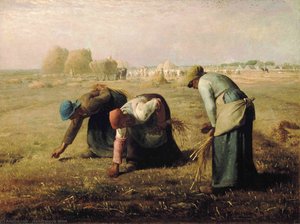
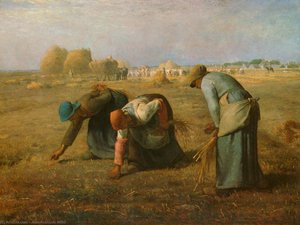
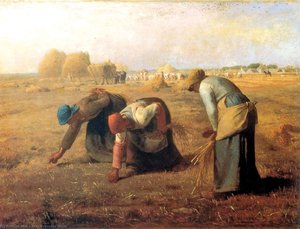
La trayectoria artística de Millet refleja su profunda conexión con sus raíces rurales y su dedicación a retratar la vida de los campesinos con dignidad y realismo. Algunas de sus obras notables incluyen:- Los recogedores (1855), una representación conmovedora de campesinos, que muestra la maestría de Millet en el realismo.
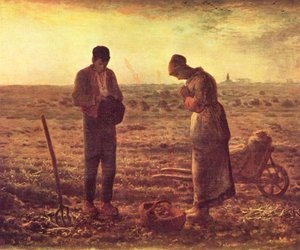
- El ángelus (1850-1861), una serie de pinturas que destacan las luchas diarias de la vida rural.
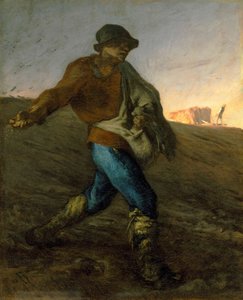
- El siembrador (1850), una representación icónica de las dificultades que enfrentan los agricultores, ahora ubicada en el Musée d'Orsay en París.
legado e influencia
El legado de Millet como fundador de la escuela de Barbizon lo marca como una figura fundamental en la transición hacia el realismo en el arte. Su influencia se puede ver en las obras de artistas posteriores, incluyendo Correa Benito Rebolledo, quien continuó ampliando los límites del realismo. Explore más sobre las obras de Millet y el movimiento realista en ArtsDot: Jean François Millet el mayor | ArtsDot El nuevo realismo artístico | ArtsDot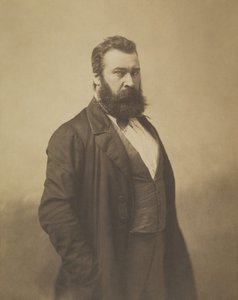
Jean-François Millet
1814 - 1875 , Francia
Datos clave
- Artistas Influenciados: ['Correa Benito Rebolledo']
- Artistas Que Influyeron:
- Bon du Mouchel
- Théophile Langlois
- Paul Delaroche
- Fecha De Muerte: 1875
- Fecha De Nacimiento: 4 de octubre de 1814
- Lugar De Nacimiento: Gruchy, Francia
- Movimiento Artístico: Realismo, Escuela de Barbizon
- Nacionalidad: Francés
- Nombre Completo: Jean-François Millet
- Obras Notables:
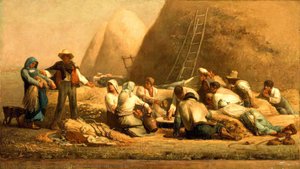
- Los segadores
- El ángelus
- El sembrador
Artículos relacionados

10 Obras Maestras del Realismo Romántico que Debes Conocer
Explora la emoción y el detalle del Realismo Romántico. Un viaje por 10 obras maestras que capturan la esencia humana con técnica y alma. Encuentra inspiración y reproducciones de calidad museo para tu hogar en ArtsDot.com. ¡Descubre toda la colección online!
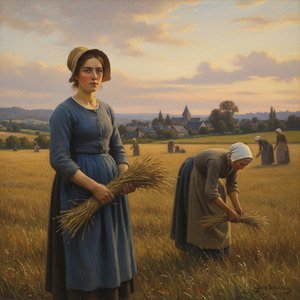
Jules Breton: Capturing the Poetic Soul of French Rural Life
Explore the captivating world of Jules Breton, master of French Realism. Discover his iconic paintings of rural life, learn about his artistic journey, and find high-quality reproductions to elevate your art collection at ArtsDot.
Émile Jean Horace Vernet: Romantic Realism & Depicting 19th-Century Life
Explore the life & art of Émile Jean Horace Vernet, a master of Romantic Realism. Discover his captivating battle scenes, portraits, and Orientalist works – a window into 19th-century France. Learn about his techniques & enduring legacy.
Jean-François Millet: Realism, Rural Life & the Poetic Depiction of Labor
Explore the life & work of Jean-François Millet, a founder of Realism. Discover his poignant depictions of rural France, iconic paintings like 'The Angelus,' and lasting influence on art history. Learn more at ArtsDot.
Léon Augustin L'Hermitte: Capturing the Soul of French Rural Life
Discover the captivating realist paintings of Léon Augustin L'Hermitte, masterfully depicting French rural life. Explore his technique, influences & legacy – a cornerstone of 19th-century art.