 Ver en contexto
 Enviar
 Compartir
 Detalles

 Descargar
 Similares
 Radiografía
 Presentación de diapositivas
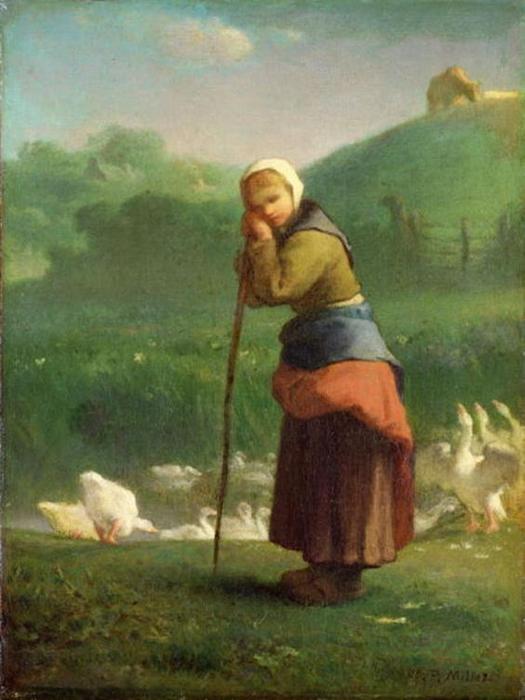
The Goose Girl at Gruchy


 Ver más
Reproducción al óleo hecha a mano
Óleo sobre lienzo pintado a mano en el tamaño y marco de su elección, realizado por encargo por nuestros artistas. ( Comprar impresión Comprar imagen)




P118B $10

P118H $10

P118W $10

P438Z $10

P508JH $12

P508YH $12

P805H $10

P805Z $10

P919BZ $10

P919G $10

P919XJ $10

P959ZH $10

P968JZ $12

W106C $8

W218G $10

W218JH $8

W218Y $10

W307PJ $10

W316G $10

W316PJ $8

W316Y $10

W398PJ $8

W4111J $10

W500HY $15

W500JH $15

W692G $12

W849H $8

W940BG $15

W953PJ $8




Elija entre nuestros tamaños predefinidos que respetan las proporciones originales de la obra.

Puede ingresar sus propias dimensiones para adaptarse a un marco o espacio específico. Si el tamaño seleccionado no coincide con las proporciones de la imagen original, recortaremos la obra o extenderemos la pintura con elementos adicionales pintados a mano. Se le enviará una maqueta digital para su aprobación antes de comenzar la producción.
Tenga en cuenta que la vista previa en pantalla no refleja el recorte o la extensión reales. Solo la maqueta mostrará con precisión la composición final.
Si bien existen tamaños personalizados, recomendamos seleccionar una dimensión de la lista predefinida para preservar las proporciones originales.
Tras realizar el pedido, el equipo de ArtsDot.com enviará un correo electrónico al cliente para solicitar instrucciones y proporcionarle una vista previa del boceto.
Envío a todo el mundo () en 3-4 semanas en lugar de las 5 semanas estándar. (2 septiembre). Sin comprometer la calidad.

Envío exprés gratuito a todo el mundo

Lienzo de lino de alta calidad

Seguro de envío total

Garantía de reembolso de impuestos aduaneros

Garantía de fidelidad cromática exacta

Política de devolución de 60 días (solo por defectos)

Garantía de devolución del 100% del dinero

Descuento por cantidad
 La opción de vidrio solo está disponible en tamaños inferiores a 110 cm.

The Goose Girl at Gruchy
Técnica de reproducción
Dimensiones de la reproducción
-


Precio total final
$ 263
The Goose Girl at Gruchy: A Portrait of Rural Dignity
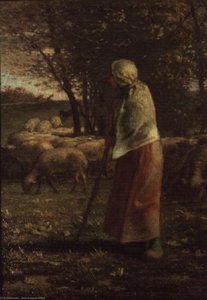
Jean-François Millet’s “The Goose Girl at Gruchy” is more than just a depiction of a peasant woman; it's a profound meditation on the dignity of labor, the enduring connection between humanity and the land, and a cornerstone of the Realist movement in 19th-century France. Born in Gruchy, Normandy, in 1814 – the very village immortalized within his canvas – Millet’s artistic vision was inextricably linked to his upbringing. His parents were farmers, and he spent his formative years immersed in the rhythms of rural life: the backbreaking toil of sowing, harvesting, and tending livestock. This intimate knowledge informs every brushstroke, lending an unparalleled authenticity to his work that resonated deeply with a society grappling with rapid industrialization and social upheaval.
The painting itself presents a remarkably realistic scene. A woman stands in a grassy field, her hands clasped to her face – a gesture of quiet contemplation or perhaps sorrow. She wears a simple blue dress, a practical garment reflecting her station, and holds a staff, suggesting a role as a shepherdess or caretaker of the flock. Scattered around her are chickens, rendered with meticulous detail, some close enough to touch, others receding into the distance. The presence of twelve birds isn’t merely decorative; it speaks to the vital connection between humans and nature, highlighting the importance of livestock in rural economies.
Style and Technique: Embracing Realism
Millet's style is firmly rooted in Realism, a movement that rejected Romantic idealism in favor of portraying everyday life with unflinching honesty. He meticulously observed his subjects – often peasants and laborers – capturing their physical appearance, clothing, and mannerisms with remarkable accuracy. The painting’s composition is deliberately unidealized; there are no heroic poses or dramatic lighting. Instead, Millet employs a muted palette of earthy tones—ochres, browns, and grays—to evoke the atmosphere of the Norman countryside. His brushwork is characterized by short, broken strokes that create a textured surface, emphasizing the roughness of the fabric and the solidity of the figures.
The use of light is particularly noteworthy. Millet masterfully employs natural light to sculpt the forms of his subjects, creating a sense of volume and depth. The shadows cast by the trees and fence add to the painting’s atmospheric quality, further enhancing its realism. He avoids any sentimentalization, presenting the scene with a stark honesty that was revolutionary for its time.
Symbolism and Historical Context
"The Goose Girl at Gruchy" wasn't simply a snapshot of rural life; it carried significant symbolic weight within the context of Millet’s artistic career. The painting is believed to be based on a local legend concerning a young girl who tended geese, reflecting the traditional agricultural practices of the region. Millet’s work challenged the prevailing artistic conventions of his era, which often depicted idealized versions of rural life. Instead, he chose to portray the lives of ordinary people – farmers, laborers, and peasants – with dignity and respect. This commitment to realism earned him both critical acclaim and controversy.
The painting’s creation coincided with a period of profound social change in France. The Industrial Revolution was transforming the country's economy and society, leading to mass migration from rural areas to urban centers. Millet’s work can be seen as a response to these changes, offering a poignant reminder of the values and traditions that were being lost.
Emotional Impact and Artistic Legacy
“The Goose Girl at Gruchy” possesses a quiet power that continues to resonate with viewers today. The woman's posture – hands clasped to her face – evokes a sense of vulnerability, solitude, and perhaps even melancholy. Yet, there is also an undeniable dignity in her presence, reflecting Millet’s belief in the inherent worth of all human beings, regardless of their social status. This painting remains a seminal work in the history of art, solidifying Millet's place as one of the most important Realist painters and influencing generations of artists to come.
Obras relacionadas
Biografía del artista
vida temprana y educación
jean-françois millet, nacido el 4 de octubre de 1814 en Normandía, Francia, emergió como una figura clave en la escuela de Barbizon y un defensor del movimiento artístico realista. Criado en una comunidad agrícola, la vida temprana de Millet estuvo impregnada de experiencias rurales, lo que influyó profundamente en sus temas artísticos.trayectoria artística
La formación artística formal de Millet comenzó en 1833 bajo la tutela del pintor de retratos Bon du Mouchel en Cherbourg. Posteriormente estudió con Théophile Langlois de Chèvreville, un estudiante del barón Gros. Apoyado por una beca, se trasladó a París en 1837 para asistir a la École des Beaux-Arts y estudió bajo Paul Delaroche. Sin embargo, su viaje no estuvo exento de contratiempos; en 1839, perdió su beca y fue rechazado por el salón.obras notables y movimiento realista
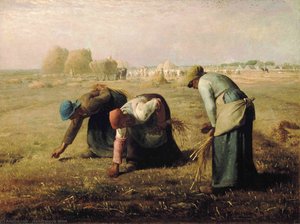
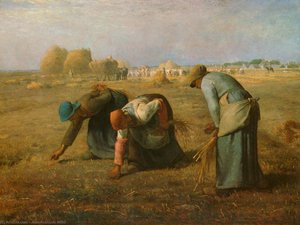
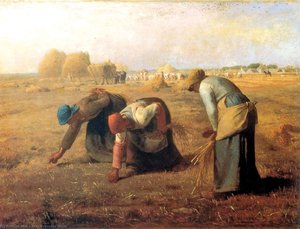
La trayectoria artística de Millet refleja su profunda conexión con sus raíces rurales y su dedicación a retratar la vida de los campesinos con dignidad y realismo. Algunas de sus obras notables incluyen:- Los recogedores (1855), una representación conmovedora de campesinos, que muestra la maestría de Millet en el realismo.
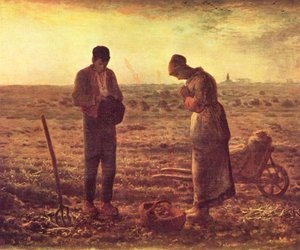
- El ángelus (1850-1861), una serie de pinturas que destacan las luchas diarias de la vida rural.
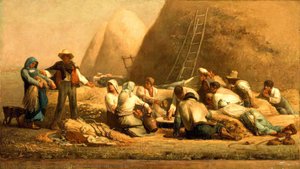
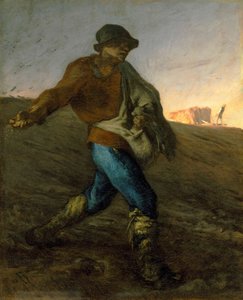
- El siembrador (1850), una representación icónica de las dificultades que enfrentan los agricultores, ahora ubicada en el Musée d'Orsay en París.
legado e influencia
El legado de Millet como fundador de la escuela de Barbizon lo marca como una figura fundamental en la transición hacia el realismo en el arte. Su influencia se puede ver en las obras de artistas posteriores, incluyendo Correa Benito Rebolledo, quien continuó ampliando los límites del realismo. Explore más sobre las obras de Millet y el movimiento realista en ArtsDot: Jean François Millet el mayor | ArtsDot El nuevo realismo artístico | ArtsDot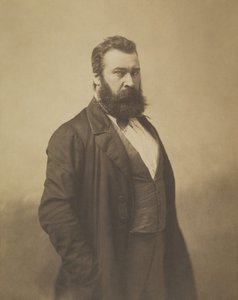
Jean-François Millet
1814 - 1875 , Francia
Datos clave
- Artistas Influenciados: ['Correa Benito Rebolledo']
- Artistas Que Influyeron:
- Bon du Mouchel
- Théophile Langlois
- Paul Delaroche
- Fecha De Muerte: 1875
- Fecha De Nacimiento: 4 de octubre de 1814
- Lugar De Nacimiento: Gruchy, Francia
- Movimiento Artístico: Realismo, Escuela de Barbizon
- Nacionalidad: Francés
- Nombre Completo: Jean-François Millet
- Obras Notables:
- Los segadores
- El ángelus
- El sembrador
Artículos relacionados
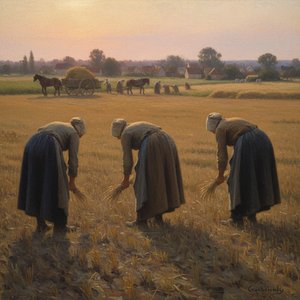
Jean-François Millet: Realism, Rural Life & the Poetic Depiction of Labor
Explore the life & work of Jean-François Millet, a founder of Realism. Discover his poignant depictions of rural France, iconic paintings like 'The Angelus,' and lasting influence on art history. Learn more at ArtsDot.

Echoes of Rural Life: Art's Enduring Representations of the Countryside
Explore the rich history of rural life in art! Discover masterpieces from Millet to Mauve & beyond. Learn about Realism, Barbizon School & find inspiration for your home with ArtsDot.
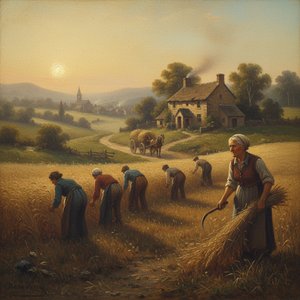
Echoes of Rural Life: Nostalgia, Labor & Identity in Art History
Explore the rich history of rural life in art! Discover how Realism captured labor & identity through masterpieces by Van Gogh, Millet & more. Expert analysis for collectors and enthusiasts.

Realismo en el Arte: 10 Obras Maestras que Cambiaron la Historia |
Descubre 10 obras maestras del Realismo que revolucionaron el arte. Explora la historia de Courbet, Millet y otros pintores realistas. Encuentra reproducciones de alta calidad para decorar tu hogar con
Cultivating Visions: Rural Life & Social Commentary in Art History
Explore the rich history of rural life in art! Discover masterpieces from Dutch Masters to Van Gogh & Courbet. Uncover artistic movements, social significance & expert collecting insights at ArtsDot.