 Ver en contexto
 Enviar
 Compartir
 Detalles

 Descargar
 Similares
 Radiografía
 Presentación de diapositivas
 Estadísticas
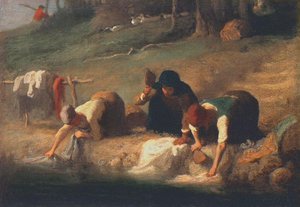
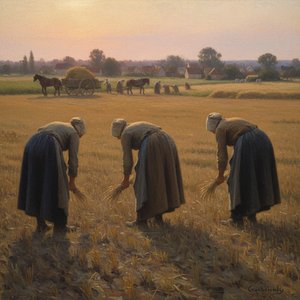
Washerwomen

 Ver más
Reproducción al óleo hecha a mano
Óleo sobre lienzo pintado a mano en el tamaño y marco de su elección, realizado por encargo por nuestros artistas. ( Cambiar a Impresión Cambiar a imagen digital)




P118B $10

P118H $10

P118W $10

P438Z $10

P508JH $12

P508YH $12

P805H $10

P805Z $10

P919BZ $10

P919G $10

P919XJ $10

P959ZH $10

P968JZ $12

W106C $8

W218G $10

W218JH $8

W218Y $10

W307PJ $10

W316G $10

W316PJ $8

W316Y $10

W398PJ $8

W4111J $10

W500HY $15

W500JH $15

W692G $12

W849H $8

W940BG $15

W953PJ $8




Elija entre nuestros tamaños predefinidos que respetan las proporciones originales de la obra.

Puede ingresar sus propias dimensiones para adaptarse a un marco o espacio específico. Si el tamaño seleccionado no coincide con las proporciones de la imagen original, recortaremos la obra o extenderemos la pintura con elementos adicionales pintados a mano. Se le enviará una maqueta digital para su aprobación antes de comenzar la producción.
Tenga en cuenta que la vista previa en pantalla no refleja el recorte o la extensión reales. Solo la maqueta mostrará con precisión la composición final.
Si bien existen tamaños personalizados, recomendamos seleccionar una dimensión de la lista predefinida para preservar las proporciones originales.
Tras realizar el pedido, el equipo de ArtsDot.com enviará un correo electrónico al cliente para solicitar instrucciones y proporcionarle una vista previa del boceto.
Envío a todo el mundo () en 3-4 semanas en lugar de las 5 semanas estándar. (10 septiembre). Sin comprometer la calidad.

Envío exprés gratuito a todo el mundo

Lienzo de lino de alta calidad

Seguro de envío total

Garantía de reembolso de impuestos aduaneros

Garantía de fidelidad cromática exacta

Política de devolución de 100 días (solo por defectos)

Garantía de devolución del 100% del dinero

Descuento por cantidad
 La opción de vidrio solo está disponible en tamaños inferiores a 110 cm.

Washerwomen
Técnica de reproducción
Dimensiones de la reproducción
-


Precio total final
$ 263
Jean-François Millet’s “The Washerwomen”: A Window into Rural Life
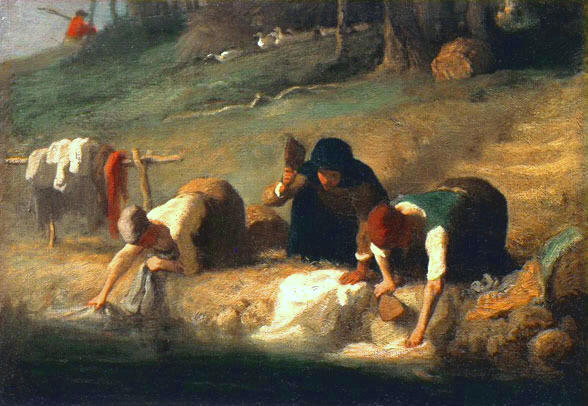
Jean-François Millet's "The Washerwomen," painted circa 1855, isn’t merely a depiction of women at work; it’s a profound meditation on labor, community, and the dignity inherent in everyday existence. Born in Gruchy, Normandy, in 1814, Millet’s artistic vision was inextricably linked to his humble beginnings – he spent his youth immersed in the rhythms of farm life, an experience that profoundly shaped his approach to art. Unlike many artists of his time who sought grand historical or mythological subjects, Millet chose to focus on the lives of rural laborers, a decision that initially met with skepticism but ultimately cemented his place as a pivotal figure in the Realist movement.
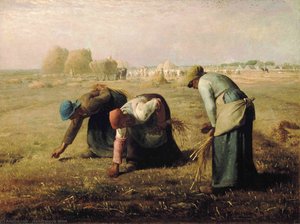
The painting captures a group of women engaged in the arduous task of washing clothes by the river. The scene is rendered with remarkable detail and earthy realism – Millet meticulously observed the textures of their clothing, the ripples of the water, and the subtle expressions on the women’s faces. Notice how he avoids idealization; these are not romanticized figures but individuals weathered by sun and toil. The composition itself is carefully constructed to convey a sense of shared purpose and quiet resilience. They work together, a small community bound by necessity and mutual support.
Realism and the Barbizon School
“The Washerwomen” exemplifies the core tenets of Realism, an artistic movement that sought to depict subjects truthfully and without embellishment. Millet’s work aligns closely with the Barbizon school, a group of artists who rejected the academic traditions of the Salon and instead chose to paint *en plein air* (outdoors), directly observing nature and its inhabitants. This commitment to direct observation is evident in the painting's accurate portrayal of light, shadow, and atmosphere. The muted palette – dominated by browns, grays, and ochres – further reinforces this sense of realism, mirroring the colors of the rural landscape.
Millet’s technique is characterized by a loose, expressive brushstroke that conveys both the physicality of the work and the emotional weight of the scene. He employs a broken color technique, applying small dabs of paint to create a textured surface that mimics the roughness of the clothing and the unevenness of the riverbank. This approach lends the painting a remarkable sense of immediacy and vitality.
Symbolism and Social Commentary
Beyond its technical merits, “The Washerwomen” carries significant symbolic weight. Millet’s focus on this seemingly mundane activity – washing clothes – elevates it to an act of quiet dignity and communal effort. The women are not presented as victims of circumstance but as active participants in a shared endeavor. The presence of the sheep in the background subtly connects the scene to the broader agricultural landscape, reminding us of the interconnectedness of rural life.
Furthermore, the painting can be interpreted as a subtle commentary on social inequality. Millet’s depiction of these working-class women challenges the prevailing artistic conventions that often ignored or romanticized the lives of the poor and marginalized. By portraying them with respect and empathy, he offers a powerful statement about the inherent worth of all human beings.
A Legacy of Dignity
“The Washerwomen” remains one of Millet’s most celebrated works, admired for its poignant realism, emotional depth, and enduring message of dignity. It stands as a testament to his ability to capture the essence of rural life and to imbue his art with profound social significance. Reproductions of this iconic painting offer a unique opportunity to bring Millet's vision into your home, serving as a reminder of the beauty and resilience found in everyday moments and the importance of recognizing the dignity of labor.
Obras relacionadas
Biografía del artista
vida temprana y educación
jean-françois millet, nacido el 4 de octubre de 1814 en Normandía, Francia, emergió como una figura clave en la escuela de Barbizon y un defensor del movimiento artístico realista. Criado en una comunidad agrícola, la vida temprana de Millet estuvo impregnada de experiencias rurales, lo que influyó profundamente en sus temas artísticos.trayectoria artística
La formación artística formal de Millet comenzó en 1833 bajo la tutela del pintor de retratos Bon du Mouchel en Cherbourg. Posteriormente estudió con Théophile Langlois de Chèvreville, un estudiante del barón Gros. Apoyado por una beca, se trasladó a París en 1837 para asistir a la École des Beaux-Arts y estudió bajo Paul Delaroche. Sin embargo, su viaje no estuvo exento de contratiempos; en 1839, perdió su beca y fue rechazado por el salón.obras notables y movimiento realista
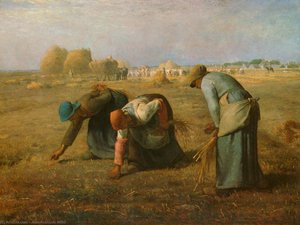
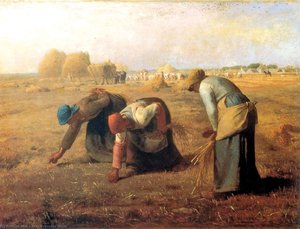
La trayectoria artística de Millet refleja su profunda conexión con sus raíces rurales y su dedicación a retratar la vida de los campesinos con dignidad y realismo. Algunas de sus obras notables incluyen:- Los recogedores (1855), una representación conmovedora de campesinos, que muestra la maestría de Millet en el realismo.
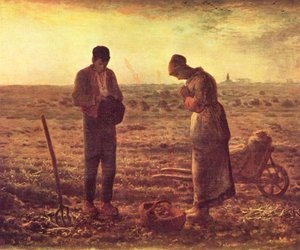
- El ángelus (1850-1861), una serie de pinturas que destacan las luchas diarias de la vida rural.
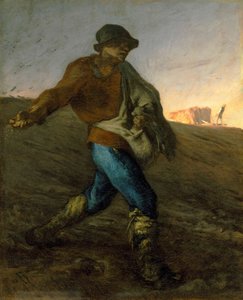
- El siembrador (1850), una representación icónica de las dificultades que enfrentan los agricultores, ahora ubicada en el Musée d'Orsay en París.
legado e influencia
El legado de Millet como fundador de la escuela de Barbizon lo marca como una figura fundamental en la transición hacia el realismo en el arte. Su influencia se puede ver en las obras de artistas posteriores, incluyendo Correa Benito Rebolledo, quien continuó ampliando los límites del realismo. Explore más sobre las obras de Millet y el movimiento realista en ArtsDot: Jean François Millet el mayor | ArtsDot El nuevo realismo artístico | ArtsDot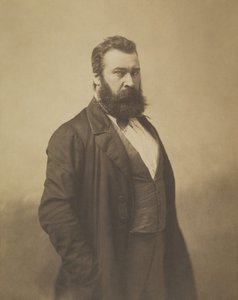
Jean-François Millet
1814 - 1875 , Francia
Datos clave
- Artistas Influenciados: ['Correa Benito Rebolledo']
- Artistas Que Influyeron:
- Bon du Mouchel
- Théophile Langlois
- Paul Delaroche
- Fecha De Muerte: 1875
- Fecha De Nacimiento: 4 de octubre de 1814
- Lugar De Nacimiento: Gruchy, Francia
- Movimiento Artístico: Realismo, Escuela de Barbizon
- Nacionalidad: Francés
- Nombre Completo: Jean-François Millet
- Obras Notables:
- Los segadores
- El ángelus
- El sembrador
Artículos relacionados

10 Obras Maestras del Realismo Romántico que Debes Conocer
Explora la emoción y el detalle del Realismo Romántico. Un viaje por 10 obras maestras que capturan la esencia humana con técnica y alma. Encuentra inspiración y reproducciones de calidad museo para tu hogar en ArtsDot.com. ¡Descubre toda la colección online!
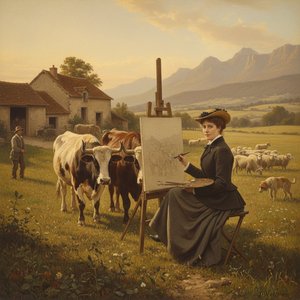
Rosa Bonheur: Realism, Rural Life & Redefining Women's Roles in 19th-Century Art
Explore the life & art of Rosa Bonheur, a pioneering Realist painter who redefined women's roles in 19th-century France. Discover her iconic animal paintings and lasting influence on art history. Learn more at ArtsDot.
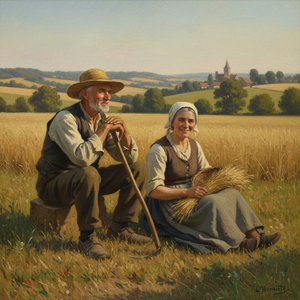
Léon Augustin L'Hermitte: Capturing the Soul of French Rural Life
Discover the captivating realist paintings of Léon Augustin L'Hermitte, masterfully depicting French rural life. Explore his technique, influences & legacy – a cornerstone of 19th-century art.
Jean-François Millet: Realism, Rural Life & the Poetic Depiction of Labor
Explore the life & work of Jean-François Millet, a founder of Realism. Discover his poignant depictions of rural France, iconic paintings like 'The Angelus,' and lasting influence on art history. Learn more at ArtsDot.

Echoes of Rural Life: Art's Enduring Representations of the Countryside
Explore the rich history of rural life in art! Discover masterpieces from Millet to Mauve & beyond. Learn about Realism, Barbizon School & find inspiration for your home with ArtsDot.