

 Ver en contexto
 Enviar
 Compartir
 Detalles

 Descargar
 Similares
 Radiografía
 Presentación de diapositivas
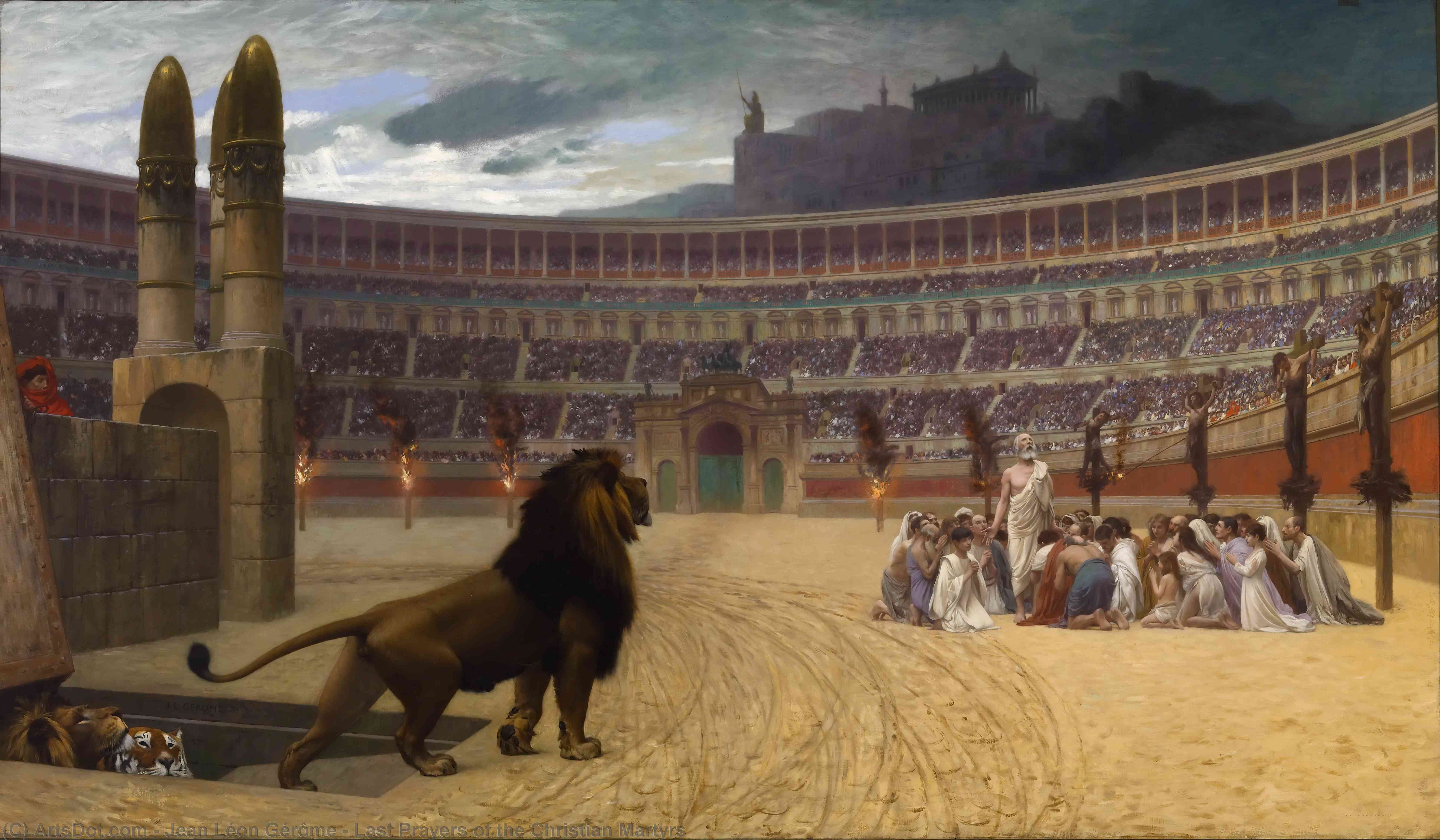
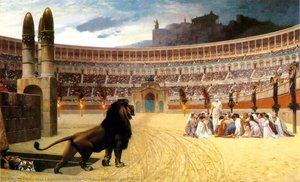
Last Prayers of the Christian Martyrs


 Ver más
Adquiera una imagen digital de alta resolución y optimizada, muy superior a la vista previa en línea.
Cada archivo es preparado meticulosamente por nuestros especialistas internos mediante el uso de herramientas avanzadas y un experto retoque manual. Nos aseguramos de que cada imagen posea una claridad excepcional, una precisión cromática impecable y un detalle minucioso.
El archivo final se entrega por correo electrónico en un plazo de 72 horas, optimizado para su uso inmediato en entornos profesionales, editoriales y de impresión. Esta es la misma calidad en la que confían los estudios de diseño, las editoriales y las galerías de primer nivel.
Imagen Digital
Descarga un archivo de alta resolución para exhibición personal, impresión y proyectos creativos. ( Comprar impresión Comprar pintura hecha a mano)
Incluido en cada pedido de imágenes digitales
Entrega digital experta, garantizada.
Al elegir ArtsDot.com, no solo está adquiriendo una imagen; está recibiendo una obra de arte digital mejorada profesionalmente, elaborada con precisión y respaldada por una garantía de satisfacción. Esto es todo lo que incluye su pedido, automáticamente:

Entrega rápida por email
Recibirá su archivo de imagen digital en alta resolución por correo electrónico en un plazo de 72 horas tras realizar su pedido, listo para su uso inmediato.

Archivo digital optimizado por IA
Su obra de arte se optimiza profesionalmente mediante herramientas avanzadas de IA y edición manual, garantizando el máximo detalle, claridad y precisión cromática.

Reenvío gratuito de por vida
¿Has borrado o perdido tu archivo por error? No te preocupes: te lo volveremos a enviar en cualquier momento, sin coste adicional.

Sin gastos de importación, siempre
Disfrute de su obra de arte al instante sin aduanas, aranceles ni gastos de envío; las descargas digitales siempre están libres de impuestos.

Garantía de fidelidad de color
Garantizamos que su imagen digital refleje los colores originales con la mayor fidelidad posible, mediante el uso de herramientas profesionales y gestión del color.

Garantía de satisfacción de 60 días
Si no está satisfecho con su imagen digital, la revisaremos o le reembolsaremos el 100% en un plazo de 60 días, sin preguntas.

100% Garantía de devolución de dinero
¿No está satisfecho? Obtenga un reembolso completo dentro de los 60 días posteriores a la recepción de su archivo digital, sin necesidad de explicaciones.

Descuentos por pedidos grandes
Compra 3 imágenes, ahorra 10% - Compra 5, ahorra 15% - Compra 10+, ahorra 20%. Ideal para proyectos creativos, galerías y agencias.
Descripción del coleccionable
A Moment Frozen in Time: Jean Léon Gérôme’s “Last Prayers of the Christian Martyrs”
Jean Léon Gérôme's "Last Prayers of the Christian Martyrs," completed in 1883, is more than just a depiction of a brutal historical event; it’s a meticulously crafted tableau of human drama and religious fervor. This oil on canvas masterpiece transports the viewer to the heart of a Roman coliseum, capturing the agonizing final moments of Christian martyrs facing their fate at the hands – or rather, claws – of a magnificent lion. The painting's power resides not just in its subject matter but in Gérôme’s masterful command of light, composition, and emotional intensity, hallmarks of his academic style that secured him international acclaim.
- Subject Matter: The scene is undeniably dramatic – a stark contrast between the impending death of the Christian martyrs and the indifferent majesty of the animal. It draws upon biblical narratives, specifically accounts of martyrdom, to explore themes of faith, sacrifice, and human endurance in the face of overwhelming power.
- Style & Technique: Gérôme’s approach is firmly rooted in the academic tradition, prioritizing realism and narrative clarity. The figures are rendered with painstaking detail, their expressions conveying a range of emotions – terror, resignation, piety – that resonate deeply with the viewer. His use of oil paint allows for rich textures and subtle gradations of light, creating a palpable sense of atmosphere within the coliseum.
- Composition: The composition is carefully structured to guide the eye through the scene. The lion dominates the upper portion, its presence both terrifying and awe-inspiring, while the kneeling figures occupy the lower half, emphasizing their vulnerability and devotion. The strategic placement of horses adds another layer of visual interest and reinforces the sense of a grand spectacle.
A Window into 19th-Century France: Historical Context & Artistic Influences
Gérôme’s work reflects the artistic currents of mid-19th century France, a period marked by a renewed interest in classical antiquity and a fascination with historical subjects. He was deeply influenced by artists like Paul Delaroche, his mentor at the École des Beaux-Arts, who championed narrative painting as a means of exploring moral and philosophical themes. Gérôme’s ability to fuse meticulous realism with dramatic storytelling aligned perfectly with this artistic sensibility, contributing significantly to his widespread popularity. The painting's subject matter – Christian martyrdom – was particularly relevant in an era grappling with questions of faith, morality, and the role of religion in society.
Symbolism & Emotional Impact: Decoding the Masterpiece
"Last Prayers of the Christian Martyrs" is laden with symbolic meaning. The lion represents imperial power, brutality, and the indifference of the pagan world to Christian beliefs. The martyrs themselves embody faith, courage, and sacrifice – virtues that resonated powerfully with viewers at the time. The painting’s emotional impact is profound, evoking feelings of pity, horror, and admiration for the unwavering devotion of these figures. Gérôme doesn't simply depict a historical event; he invites us to contemplate the very essence of human experience—the struggle between good and evil, faith and doubt.
Recreating History: Hand-Painted Reproductions Available
ArtsDot.com is proud to offer meticulously crafted hand-painted reproductions of Jean Léon Gérôme’s “Last Prayers of the Christian Martyrs.” These reproductions capture not only the visual details of the original but also the artistic spirit and emotional intensity that made it a timeless masterpiece. Each reproduction is created by skilled artisans, ensuring an unparalleled level of quality and authenticity. Own a piece of art history – bring this dramatic scene into your home or office and contemplate its enduring message.
Obras relacionadas

Biografía del artista
Primeros años y formación
Jean-Léon Gérôme, un renombrado pintor y escultor francés, nació el 11 de mayo de 1824 en Vesoul, Haute-Saône. Recibió sus primeras lecciones de dibujo del artista local Claude-Basile Cariage. En 1840, se trasladó a París para estudiar bajo la tutela de Paul Delaroche y posteriormente asistió a la École des Beaux-Arts.Ascenso a la fama
La pintura de Gérôme, El gallo de pelea (1846), le valió una medalla de tercer grado en el Salón de París de 1847. Esta obra fue considerada la epitome del movimiento neo-griego y lanzó su carrera. Se convirtió en uno de los maestros más influyentes de su tiempo, con estudiantes que incluían a Thomas Eakins, John Singer Sargent y Mary Cassatt.Comisiones importantes
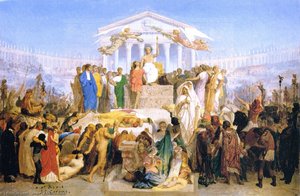
Gérôme recibió una comisión para pintar un gran mural, La edad de Augusto, el nacimiento de Cristo, que combinaba el nacimiento de Cristo con naciones conquistadas rindiendo homenaje a Augusto. Esta obra estaba destinada a halagar a Napoleón III, quien la encargó.Estilo artístico y legado
Las pinturas de Gérôme se caracterizaban por su meticulosa atención al detalle, colores vibrantes e iluminación dramática. A menudo utilizaba temas históricos o mitológicos para explorar temas de poder, violencia y sexualidad. Sus pinturas orientalistas, como Mujeres del harén alimentando palomas en un patio, fueron ampliamente admiradas por sus exóticos escenarios y representaciones eroticizadas de mujeres del Medio Oriente.- Explore "Oración Pública en la Mezquita de Amr, El Cairo" de Gérôme! Una obra maestra del orientalismo que exhibe la devoción islámica y la grandeza arquitectónica. Detalles ricos y tonos cálidos – una pieza atemporal para coleccionistas.
- Descubre 'Mujeres del Harem Alimentando Palomas', una impresionante obra maestra orientalista de Jean-Léon Gérôme (1894). Admira los detalles intrincados y los ricos colores en esta escena atemporal de la vida cotidiana.
Influencias y desarrollo
Gérôme fue influenciado por el neoclasicismo y el arte académico francés del siglo XIX. Su formación bajo Paul Delaroche le proporcionó una base sólida en la técnica pictórica tradicional, pero él desarrolló su propio estilo distintivo caracterizado por un realismo meticuloso y una narrativa teatral. Su interés por temas históricos y orientalistas reflejó las tendencias culturales de su época, marcadas por el colonialismo europeo y la fascinación por culturas exóticas. La obra de Gérôme también se relaciona con el movimiento neo-griego, que buscaba revivir los ideales estéticos del arte clásico griego y romano.Significado histórico
Jean-Léon Gérôme dejó un impacto significativo en el mundo del arte. Su habilidad técnica y su capacidad para crear escenas realistas y dramáticas lo convirtieron en uno de los pintores más populares de su tiempo. Además, su influencia se extendió a través de sus numerosos estudiantes, entre ellos figuras destacadas como Thomas Eakins y John Singer Sargent. Aunque su obra ha sido criticada por algunos por su representación estereotipada de culturas extranjeras, sigue siendo valorada por su importancia histórica y artística. Su legado perdura en las colecciones de museos de todo el mundo y continúa inspirando a artistas y amantes del arte hasta el día de hoy.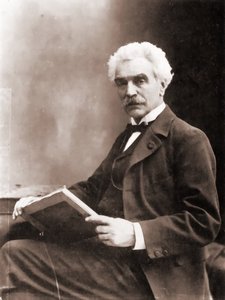
Jean-Léon Gérôme
1824 - 1904 , Francia
Breves datos
- Artistas Influenciados:
- Thomas Eakins
- John Singer Sargent
- Mary Cassatt
- Artistas Que Influyeron: ['Paul Delaroche']
- Fecha De Fallecimiento: 10 de enero de 1904
- Fecha De Nacimiento: 11 de mayo de 1824
- Lugar De Nacimiento: Vesoul, Francia
- Movimiento Artístico: Neoclásico, Orientalismo
- Nacionalidad: Francesa
- Nombre Completo: Jean-Léon Gérôme
- Obras Notables:
- La pelea de gallos
- Oración Pública en El Cairo
- Mujeres del Harem alimentando palomas

