 Ver en contexto
 Enviar
 Compartir
 Detalles

 Descargar
 Similares
 Radiografía
 Presentación de diapositivas
The Runners of the Pasha


 Ver más
Reproducción al óleo hecha a mano
Óleo sobre lienzo pintado a mano en el tamaño y marco de su elección, realizado por encargo por nuestros artistas. ( Comprar impresión Comprar imagen)




P118B $10

P118H $10

P118W $10

P438Z $10

P508JH $12

P508YH $12

P805H $10

P805Z $10

P919BZ $10

P919G $10

P919XJ $10

P959ZH $10

P968JZ $12

W106C $8

W218G $10

W218JH $8

W218Y $10

W307PJ $10

W316G $10

W316PJ $8

W316Y $10

W398PJ $8

W4111J $10

W500HY $15

W500JH $15

W692G $12

W849H $8

W940BG $15

W953PJ $8




Elija entre nuestros tamaños predefinidos que respetan las proporciones originales de la obra.

Puede ingresar sus propias dimensiones para adaptarse a un marco o espacio específico. Si el tamaño seleccionado no coincide con las proporciones de la imagen original, recortaremos la obra o extenderemos la pintura con elementos adicionales pintados a mano. Se le enviará una maqueta digital para su aprobación antes de comenzar la producción.
Tenga en cuenta que la vista previa en pantalla no refleja el recorte o la extensión reales. Solo la maqueta mostrará con precisión la composición final.
Si bien existen tamaños personalizados, recomendamos seleccionar una dimensión de la lista predefinida para preservar las proporciones originales.
Tras realizar el pedido, el equipo de ArtsDot.com enviará un correo electrónico al cliente para solicitar instrucciones y proporcionarle una vista previa del boceto.
Envío a todo el mundo () en 3-4 semanas en lugar de las 5 semanas estándar. (24 agosto). Sin comprometer la calidad.

Envío exprés gratuito a todo el mundo

Lienzo de lino de alta calidad

Seguro de envío total

Garantía de reembolso de impuestos aduaneros

Garantía de fidelidad cromática exacta

Política de devolución de 60 días (solo por defectos)

Garantía de devolución del 100% del dinero

Descuento por cantidad
 La opción de vidrio solo está disponible en tamaños inferiores a 110 cm.

The Runners of the Pasha
Técnica de reproducción
Dimensiones de la reproducción
-


Precio total final
$ 263
Descripción de la obra
A Cinematic Glimpse into the Orient
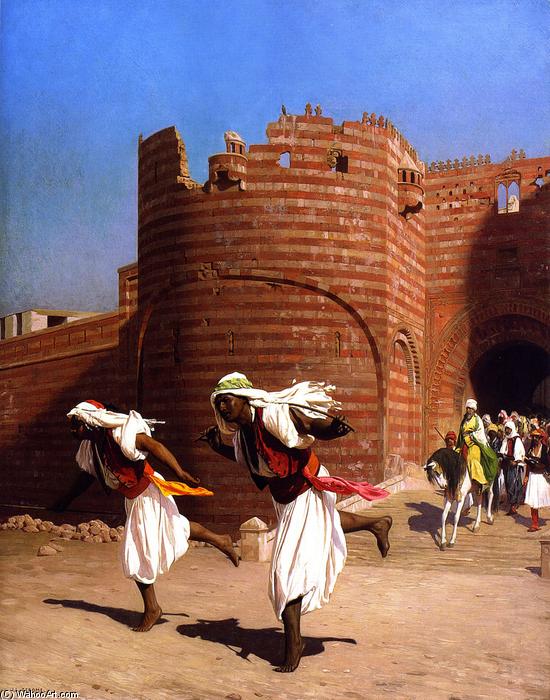
In the captivating oil on panel masterpiece, The Runners of the Pasha, Jean-Léon Gérôme invites viewers to step through a portal into the vibrant, sun-drenched landscapes of the nineteenth-century East. Created in 1867, this work serves as a breathtaking window into the heart of the Orientalism movement, a period when European artists were deeply enamored with the perceived exoticism and mystery of North Africa and the Middle East. The painting captures a moment of breathless kinetic energy, as two men sprint across a dusty expanse, their bodies leaning into the momentum of their flight. Set against the imposing backdrop of a formidable brick structure that evokes the grandeur of an ancient citadel or a desert palace, the scene is thick with the atmosphere of a story unfolding in real-time.
Gérôme, a master of narrative detail, utilizes his classical training to weave a complex tapestry of movement and stillness. The architecture, with its intricate brickwork and castle-like silhouettes, provides a sense of permanence and historical weight that contrasts sharply with the fleeting, frantic motion of the runners. As they dash past, their traditional attire—rendered with exquisite precision—flutters in the heat, adding to the sensory richness of the composition. The presence of onlookers in the periphery suggests a communal event, perhaps a race or a moment of sudden urgency, drawing the observer into the social fabric of this imagined or observed world.
Mastery of Technique and Light
The technical brilliance of The Runners of the Pasha lies in Gérôme’s ability to manipulate oil on panel to achieve a lifelike luminosity. The medium allows for a density of color and a smoothness of texture that brings the sun-baked surfaces of the architecture to life. Every brick, every fold of fabric, and every shadow cast upon the ground is treated with a meticulous realism that was the hallmark of Gérôme’s academic excellence. This precision does not merely serve a documentary purpose; it enhances the emotional weight of the scene, making the heat of the sun and the grit of the earth feel almost tangible to the viewer.
Beyond the mere depiction of figures, the painting explores the interplay between light and shadow to create depth and drama. The way the light hits the runners' limbs and illuminates the textures of the background building creates a rhythmic visual flow that guides the eye across the canvas. For the discerning collector or interior designer, this piece offers more than just a beautiful image; it provides a sophisticated focal point that commands attention through its complex layering of light, color, and motion.
An Eternal Allure for Modern Spaces
For those looking to infuse a contemporary interior with a sense of history and worldly elegance, The Runners of the Pasha offers unparalleled inspiration. The painting’s ability to evoke a sense of adventure and timelessness makes it a versatile choice for grand halls, private studies, or curated galleries. It is a work that speaks to the human fascination with the unknown and the beauty found in the intersection of culture and movement.
Owning a high-quality reproduction of this Gérôme masterpiece allows one to preserve the spirit of 19th-century Romanticism within a modern setting. The piece functions as a conversation starter, inviting guests to contemplate the historical context of Orientalism while appreciating the sheer virtuosity of French academic painting. Whether placed in a room characterized by minimalist modernism or classical opulence, the vibrant energy and rich textures of these runners continue to resonate, offering an enduring connection to the golden age of narrative art.
Obras relacionadas
Biografía del artista
Primeros años y formación
Jean-Léon Gérôme, un renombrado pintor y escultor francés, nació el 11 de mayo de 1824 en Vesoul, Haute-Saône. Recibió sus primeras lecciones de dibujo del artista local Claude-Basile Cariage. En 1840, se trasladó a París para estudiar bajo la tutela de Paul Delaroche y posteriormente asistió a la École des Beaux-Arts.Ascenso a la fama
La pintura de Gérôme, El gallo de pelea (1846), le valió una medalla de tercer grado en el Salón de París de 1847. Esta obra fue considerada la epitome del movimiento neo-griego y lanzó su carrera. Se convirtió en uno de los maestros más influyentes de su tiempo, con estudiantes que incluían a Thomas Eakins, John Singer Sargent y Mary Cassatt.Comisiones importantes
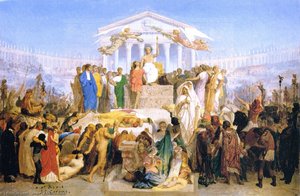
Gérôme recibió una comisión para pintar un gran mural, La edad de Augusto, el nacimiento de Cristo, que combinaba el nacimiento de Cristo con naciones conquistadas rindiendo homenaje a Augusto. Esta obra estaba destinada a halagar a Napoleón III, quien la encargó.Estilo artístico y legado
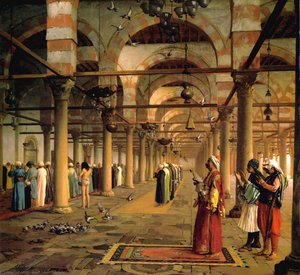
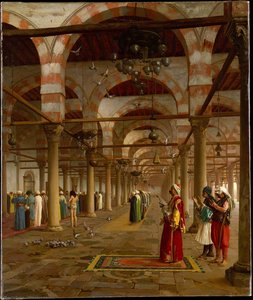
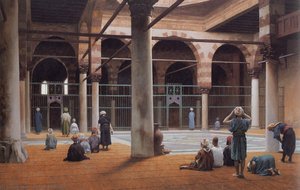
Las pinturas de Gérôme se caracterizaban por su meticulosa atención al detalle, colores vibrantes e iluminación dramática. A menudo utilizaba temas históricos o mitológicos para explorar temas de poder, violencia y sexualidad. Sus pinturas orientalistas, como Mujeres del harén alimentando palomas en un patio, fueron ampliamente admiradas por sus exóticos escenarios y representaciones eroticizadas de mujeres del Medio Oriente.- Explore "Oración Pública en la Mezquita de Amr, El Cairo" de Gérôme! Una obra maestra del orientalismo que exhibe la devoción islámica y la grandeza arquitectónica. Detalles ricos y tonos cálidos – una pieza atemporal para coleccionistas.
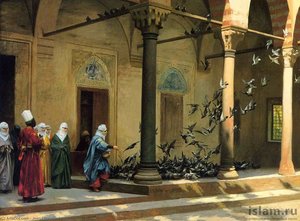
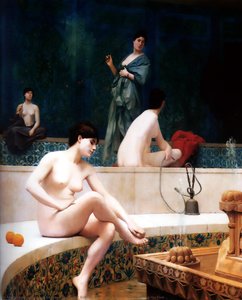
- Descubre 'Mujeres del Harem Alimentando Palomas', una impresionante obra maestra orientalista de Jean-Léon Gérôme (1894). Admira los detalles intrincados y los ricos colores en esta escena atemporal de la vida cotidiana.
Influencias y desarrollo
Gérôme fue influenciado por el neoclasicismo y el arte académico francés del siglo XIX. Su formación bajo Paul Delaroche le proporcionó una base sólida en la técnica pictórica tradicional, pero él desarrolló su propio estilo distintivo caracterizado por un realismo meticuloso y una narrativa teatral. Su interés por temas históricos y orientalistas reflejó las tendencias culturales de su época, marcadas por el colonialismo europeo y la fascinación por culturas exóticas. La obra de Gérôme también se relaciona con el movimiento neo-griego, que buscaba revivir los ideales estéticos del arte clásico griego y romano.Significado histórico
Jean-Léon Gérôme dejó un impacto significativo en el mundo del arte. Su habilidad técnica y su capacidad para crear escenas realistas y dramáticas lo convirtieron en uno de los pintores más populares de su tiempo. Además, su influencia se extendió a través de sus numerosos estudiantes, entre ellos figuras destacadas como Thomas Eakins y John Singer Sargent. Aunque su obra ha sido criticada por algunos por su representación estereotipada de culturas extranjeras, sigue siendo valorada por su importancia histórica y artística. Su legado perdura en las colecciones de museos de todo el mundo y continúa inspirando a artistas y amantes del arte hasta el día de hoy.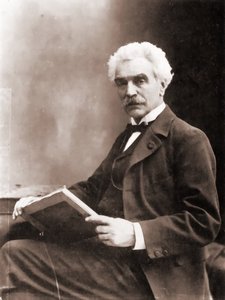
Jean-Léon Gérôme
1824 - 1904 , Francia
Datos clave
- Artistas Influenciados:
- Thomas Eakins
- John Singer Sargent
- Mary Cassatt
- Artistas Que Influyeron: ['Paul Delaroche']
- Fecha De Fallecimiento: 10 de enero de 1904
- Fecha De Nacimiento: 11 de mayo de 1824
- Lugar De Nacimiento: Vesoul, Francia
- Movimiento Artístico: Neoclásico, Orientalismo
- Nacionalidad: Francesa
- Nombre Completo: Jean-Léon Gérôme
- Obras Notables:
- La pelea de gallos
- Oración Pública en El Cairo
- Mujeres del Harem alimentando palomas
Artículos relacionados
Jean-Léon Gérôme: Academic Rigor & Orientalist Visions Shaping 19th-Century French Painting
Explore the captivating world of Jean-Léon Gérôme, a master of 19th-century academic painting & orientalism. Discover his historical works, artistic techniques, and lasting influence on art history.
La Mirada Fascinante: Orientalismo en el Arte del Siglo XIX – Representación, Recepción y Construcción de 'Oriente'
Explora el fascinante mundo del orientalismo en el arte del siglo XIX. Análisis profundo de su historia, representaciones artísticas y crítica cultural con Edward Said. Descubre cómo se construyó 'Oriente' en el imaginario occidental.
El Encanto de lo Exótico: Orientalismo en la Pintura del Siglo XIX y su Legado Artístico
Descubre el fascinante mundo del Orientalismo en la pintura del siglo XIX. Analizamos artistas clave, su impacto cultural y las críticas a esta representación exótica de Oriente. Un recorrido histórico con ArtsDot.
Beyond Exoticism: Unveiling the Complex Legacy of Orientalist Painting
Explore the fascinating & complex world of Orientalist painting! Discover its history, key artists like Gérôme & Lewis, and Edward Said's influential critique. Uncover nuance beyond stereotypes with ArtsDot.
John Frederick Lewis: Orientalism, Detail & Genre Painting in 19th-Century British Art
Explore the captivating Orientalist paintings of John Frederick Lewis! Discover his mastery of detail, genre scenes & influence on 19th-century British art. Learn about his life, techniques & legacy at ArtsDot.