 Ver en contexto
 Enviar
 Compartir
 Detalles

 Descargar
 Similares
 Radiografía
 Presentación de diapositivas
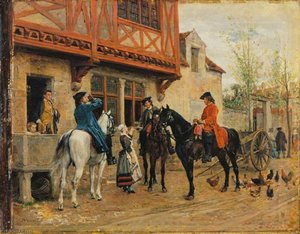
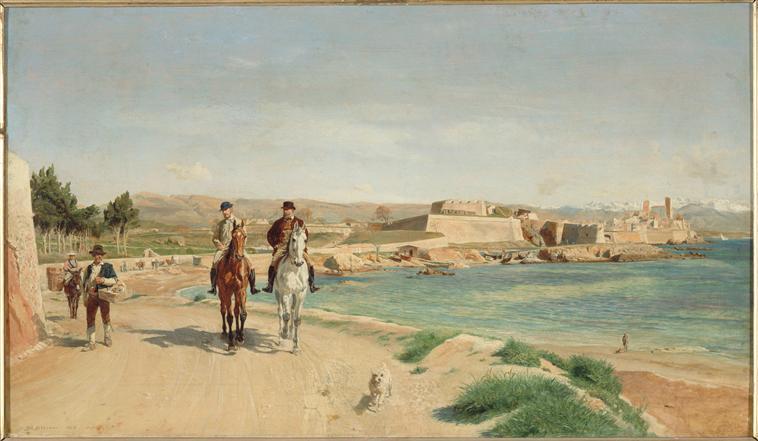
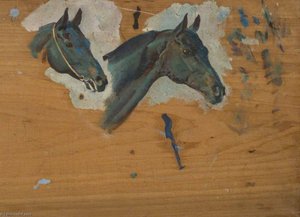
Antibes. The Horse Ride


 Ver más
Giclée / Impresión de arte
Impresiones giclée o en lienzo de calidad de museo con producción rápida y opciones de acabado flexibles. ( Comprar pintura hecha a mano Comprar imagen)




P118B $10

P118H $10

P118W $10

P438Z $10

P508JH $12

P508YH $12

P805H $10

P805Z $10

P919BZ $10

P919G $10

P919XJ $10

P959ZH $10

P968JZ $12

W106C $8

W218G $10

W218JH $8

W218Y $10

W307PJ $10

W316G $10

W316PJ $8

W316Y $10

W398PJ $8

W4111J $10

W500HY $15

W500JH $15

W692G $12

W849H $8

W940BG $15

W953PJ $8




Elija entre nuestros tamaños predefinidos que respetan las proporciones originales de la obra.

Puede introducir sus propias dimensiones para adaptarse a un marco o espacio específico. Si el tamaño seleccionado no coincide con las proporciones de la imagen original, recortaremos la obra de arte o extenderemos la imagen con un borde con efecto espejo o de color sólido. Se enviará una maqueta digital para su aprobación antes de que comience la producción.
Tenga en cuenta que la vista previa en pantalla no refleja el recorte o la extensión real. Solo la maqueta mostrará con precisión la composición final.
Aunque existen tamaños personalizados, recomendamos seleccionar una dimensión de la lista predefinida para preservar las proporciones originales.
Envío a todo el mundo () en 2 semanas en lugar de las 4/5 semanas estándar. (27 agosto)

Envío exprés gratuito a todo el mundo

Lienzo de lino de alta calidad

Seguro de envío total

Garantía de reembolso de impuestos aduaneros

Garantía de fidelidad cromática exacta

Política de devolución de 60 días (solo por defectos)

Garantía de devolución del 100% del dinero

Descuento por cantidad
 La opción de vidrio solo está disponible en tamaños inferiores a 110 cm.

Antibes. The Horse Ride
Giclée / Impresión de arte
Dimensiones de la reproducción
-


Precio total final
$ 62
Descripción de la pieza
A Moment Frozen in Time: Ernest Meissonier’s “Antibes. The Horse Ride”
Ernest Meissonier's "Antibes. The Horse Ride," painted in 1868, isn’t merely a landscape; it’s a meticulously crafted tableau vivant – a captured moment of leisurely elegance against the backdrop of the French Riviera. This oil-on-canvas masterpiece, currently residing within the Musée d'Orsay in Paris, offers a rare glimpse into the world of 19th-century leisure and the artistic prowess of a master of realism. Meissonier, deeply influenced by the Dutch masters like Gabriel Metsu, dedicated his career to depicting intimate scenes of everyday life with an almost obsessive attention to detail, earning him the moniker “the French Metsu.” “Antibes” exemplifies this approach, inviting us into a scene brimming with quiet sophistication and a palpable sense of timeless beauty.Composition and Technique: A Symphony of Precision
The painting’s composition is remarkably balanced, drawing the eye towards the central group of horse riders while simultaneously establishing a clear visual pathway through the landscape. The path itself, delineated with sharp linear perspective, guides us from the left foreground into the heart of the scene, anchoring the viewer within this idyllic setting. Meissonier's technique is nothing short of astonishing – a testament to his dedication and painstaking labor. He employs fine lines with incredible precision to define the folds of clothing, the manes of the horses, and even the architectural details of the distant fortress. The brushstrokes are remarkably subtle, creating an illusion of depth and texture that feels incredibly tactile. The artist’s mastery lies in rendering a sense of weightlessness and fluidity, capturing the effortless grace of the riders and their steeds. Notice how he uses atmospheric perspective – the gradual lightening and blurring of details in the distance – to convincingly portray the vastness of the coastal landscape.Color Palette and Light: A Muted Elegance
The color palette is deliberately restrained, dominated by earthy tones—browns, tans, greens, and blues—that evoke the natural beauty of the Mediterranean coast. This muted approach isn’t a sign of weakness; rather, it serves to heighten the sense of realism and tranquility. Subtle highlights catch the sunlight on the figures and the rolling hills, adding warmth and dimension without overwhelming the overall atmosphere. The lighting is soft and diffused, suggesting an overcast day or perhaps the hazy light of early morning or late afternoon – a quality that contributes significantly to the painting’s serene mood. It's a carefully considered choice, avoiding dramatic contrasts and instead favoring a gentle, almost melancholic beauty.Symbolism and Emotional Resonance: A Glimpse into Victorian Leisure
Beyond its technical brilliance, “Antibes” offers a fascinating window into the social customs of the mid-19th century. The scene depicts a leisurely horse ride along the coast – a popular pastime for the wealthy elite of the era. The riders themselves represent a certain level of privilege and leisure, embodying the ideals of Victorian society. While overtly symbolic elements are minimal, the painting evokes feelings of nostalgia, tranquility, and appreciation for the simple pleasures of life. There’s an undeniable sense of timelessness about the scene – it feels as if we've stepped back into a bygone era, witnessing a moment of quiet beauty that transcends time. The fortress in the background subtly hints at the region’s history and strategic importance, grounding the idyllic scene within a broader context.Historical Context and Legacy: A Masterpiece Preserved
Painted during the Second Empire under Napoleon III, “Antibes” reflects the era's fascination with historical narratives and romantic landscapes. Meissonier’s meticulous realism was highly valued by the royal court, and his works were frequently commissioned for grand displays of artistic skill. Today, "Antibes" stands as a testament to Meissonier’s enduring legacy – a remarkable example of 19th-century French painting that continues to captivate viewers with its exquisite detail, serene beauty, and evocative atmosphere. Reproductions of this iconic work offer an accessible way to experience the artistry and historical context of one of France's most celebrated painters.Obras relacionadas
Biografía del artista
Primeros años y formación
Jean-Louis Ernest Meissonier, un renombrado pintor y escultor francés, nació el 21 de febrero de 1815 en Lyon, Francia. Su padre, Charles, esperaba que siguiera sus pasos como exitoso hombre de negocios, pero la pasión de Meissonier por la pintura prevaleció. A los diecisiete años, obtuvo permiso de sus padres para dedicarse a una carrera artística. Su formación inicial incluyó estudiar bajo la tutela de Léon Cogniet y recibir la influencia de maestros holandeses en el Louvre. Esta base sentaría las bases para su estilo distintivo.Ascenso a la prominencia
El gran avance de Meissonier llegó con su pintura Les Bourgeois Flamands (Los Burgueses Holandeses), también conocida como La Visita al Burgomaestre, expuesta en el Salón de 1831. Esta obra, ahora parte de la colección del Sir Richard Wallace en Hertford House, Londres, marcó el comienzo de su éxito con la pintura miniatura en óleo con un detalle microscópico.- Sus obras posteriores, como El Juego de Ajedrez (1841), El Joven Tocando el Violonchelo (1842) y Pintor en su Estudio (1843), consolidaron su reputación por la meticulosa artesanía.
- Su matrimonio con Emma Steinhel, una mujer protestante de Estrasburgo, en 1838, marcó un hito personal significativo.
- La participación de Meissonier con la Guardia Nacional durante los días de junio de 1848 demostró su compromiso con el gobierno republicano.
Estilo y Obras Destacadas
Meissonier es a menudo denominado "el Metsu francés", en referencia al pintor holandés Gabriel Metsu, conocido por sus escenas domésticas burguesas en miniatura. Sus obras se caracterizan por su detalle microscópico e incluyen:- Alto en una Posada, propiedad del duque de Morny.
- La Pelea, propiedad de la reina Victoria.
- Los Jugadores y La Discusión (La Rixe), presentada a la corte inglesa por Napoleón III.
Influencia y Legado
Meissonier fue un exponente clave del clasicismo francés, influyendo en generaciones posteriores de artistas con su enfoque en la precisión técnica y el detalle minucioso. Su habilidad para capturar escenas cotidianas y eventos históricos con tal realismo microscópico lo convirtió en una figura muy solicitada en los salones parisinos. Su legado perdura como un testimonio del dominio técnico y la dedicación al arte, ofreciendo una ventana a la rica herencia cultural del siglo XIX francés. Se pueden encontrar sus obras en museos como el Musée d'Orsay de París.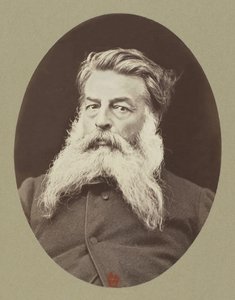
Jean-Louis Ernest Meissonier
1815 - 1891 , Francia
Datos clave
- Artistas Que Influyeron:
- Gabriel Metsu
- Léon Cogniet
- Movimiento Artístico: Clasicismo francés
- Nacionalidad: Francesa
- Nombre Completo: Jean-Louis Ernest Meissonier
- Obras Notables:
- Les bourgeois flamands
- El juego de ajedrez
- El joven tocando el violonchelo
- Pintor en su estudio
- Halt at an inn
- The brawl
- La rixe
- El emperador en Solferino
Artículos relacionados
Romantic Realism's Finest: 10 Masterpieces for Your Home | ArtsDot
Explore 10 defining masterpieces of Romantic Realism! Discover Courbet, Millet & Daumier's powerful paintings—capturing emotion and social realities. Find museum-quality reproductions for your home at ArtsDot.com.
Jean-Louis Ernest Meissonier: Realism, Historical Narrative & Artistic Perfection
Explore the world of Jean-Louis Ernest Meissonier, a master of French Realism renowned for his meticulously detailed historical & military scenes. Discover his iconic artworks and lasting legacy.
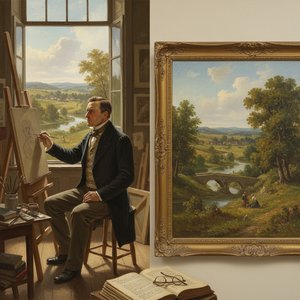
The Poetic Truth of Observation: Exploring 19th-Century Realism in Painting
Explore the captivating world of 19th-century Realism! Discover key artists like Courbet & Millet, masterpieces, and the powerful social commentary behind this influential art movement. Expert insights at ArtsDot.
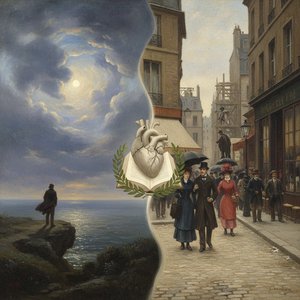
The Evocative Embrace of Reality: Exploring Romantic Realism in 19th-Century Painting
Explore the captivating world of Romantic Realism! Discover key artists like Courbet & Millet, masterpieces, and the social context behind this influential art movement. Expert insights for collectors at ArtsDot.
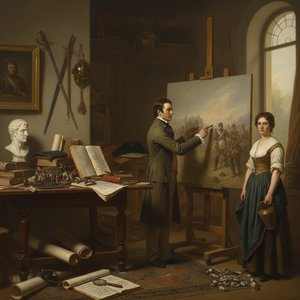
El Realismo Histórico del Siglo XIX: Una Búsqueda de la Verdad en el Arte
Descubre el Realismo del siglo XIX: su contexto histórico, artistas clave como Courbet y Millet, técnicas innovadoras y legado perdurable. Guía experta para coleccionistas y amantes del arte.