 Ver en contexto
 Enviar
 Compartir
 Detalles

 Descargar
 Similares
 Radiografía
 Presentación de diapositivas
San Juan el Bautista en el Desierto
 Óleo sobre lienzo
- Arte de pared
- Otros
 Renacimiento
 48.0 x 40.0 cm
 Museo Lázaro Galdiano
 Ver más
Reproducción al óleo hecha a mano
Óleo sobre lienzo pintado a mano en el tamaño y marco de su elección, realizado por encargo por nuestros artistas. ( Comprar impresión Comprar imagen)




P118B $10

P118H $10

P118W $10

P438Z $10

P508JH $12

P508YH $12

P805H $10

P805Z $10

P919BZ $10

P919G $10

P919XJ $10

P959ZH $10

P968JZ $12

W106C $8

W218G $10

W218JH $8

W218Y $10

W307PJ $10

W316G $10

W316PJ $8

W316Y $10

W398PJ $8

W4111J $10

W500HY $15

W500JH $15

W692G $12

W849H $8

W940BG $15

W953PJ $8




Elija entre nuestros tamaños predefinidos que respetan las proporciones originales de la obra.

Puede ingresar sus propias dimensiones para adaptarse a un marco o espacio específico. Si el tamaño seleccionado no coincide con las proporciones de la imagen original, recortaremos la obra o extenderemos la pintura con elementos adicionales pintados a mano. Se le enviará una maqueta digital para su aprobación antes de comenzar la producción.
Tenga en cuenta que la vista previa en pantalla no refleja el recorte o la extensión reales. Solo la maqueta mostrará con precisión la composición final.
Si bien existen tamaños personalizados, recomendamos seleccionar una dimensión de la lista predefinida para preservar las proporciones originales.
Tras realizar el pedido, el equipo de ArtsDot.com enviará un correo electrónico al cliente para solicitar instrucciones y proporcionarle una vista previa del boceto.
Envío a todo el mundo () en 3-4 semanas en lugar de las 5 semanas estándar. (24 agosto). Sin comprometer la calidad.

Envío exprés gratuito a todo el mundo

Lienzo de lino de alta calidad

Seguro de envío total

Garantía de reembolso de impuestos aduaneros

Garantía de fidelidad cromática exacta

Política de devolución de 60 días (solo por defectos)

Garantía de devolución del 100% del dinero

Descuento por cantidad
 La opción de vidrio solo está disponible en tamaños inferiores a 110 cm.

San Juan el Bautista en el Desierto
Técnica de reproducción
Dimensiones de la reproducción
-


Precio total final
$ 263
Descripción de la obra
A Wilderness of Faith: Decoding Bosch’s *St John the Baptist in the Wilderness*
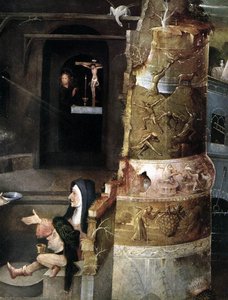
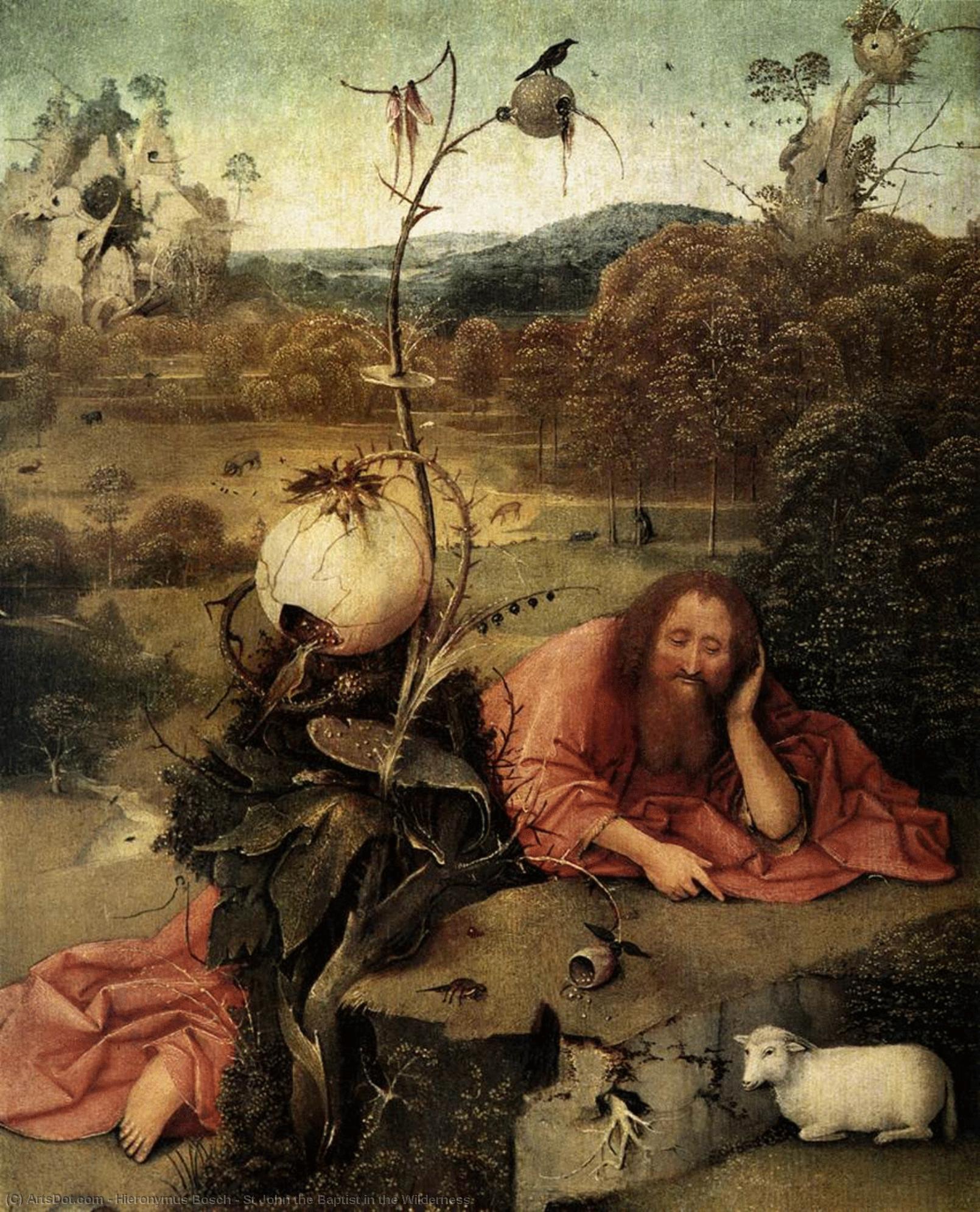
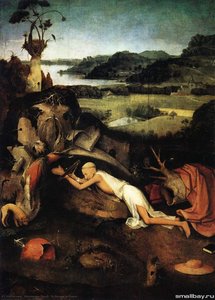
Hieronymus Bosch's *St John the Baptist in the Wilderness*, painted around 1489, is not simply a depiction of a biblical hermit; it’s an invitation into a realm where spirituality and introspection intertwine with the unsettling beauty of the natural world. Housed today at the Museo Lázaro Galdiano in Madrid, this oil on panel—measuring just 48 x 40 cm—possesses a captivating intimacy that belies its profound depth. Bosch doesn’t present us with the fiery prophet often seen in religious art; instead, we encounter a contemplative figure absorbed in quiet devotion, seated within a landscape teeming with subtle symbolism and an almost palpable sense of solitude.
The Language of Symbols: A Northern Renaissance Vision
Bosch's artistic style defies easy categorization. While rooted in the Northern Renaissance tradition, his work possesses a uniquely personal vision that anticipates elements of Surrealism centuries before its emergence. *St John the Baptist in the Wilderness* exemplifies this approach. The meticulous technique—layers of oil paint applied with precision to create rich textures and nuanced details—is immediately apparent. The scene isnrsquo;t merely observed; it’s constructed, imbued with a dreamlike quality that draws the viewer into its enigmatic atmosphere. A bird in flight above St. John echoes another perched nearby, visually suggesting a connection between earthly existence and divine realms. The sheep scattered throughout the wilderness symbolize purity and innocence, while the surrounding flora—often bizarre and fantastical—hints at hidden meanings and spiritual trials. The wilderness itself isnrsquo;t just a backdrop; it embodies a space of testing and purification, a place where one confronts oneself in search of communion with God.
Historical Echoes: Faith and Anxiety in 15th-Century Netherlands
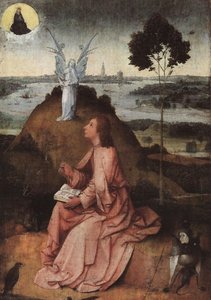
To understand *St John the Baptist in the Wilderness*, we must consider the historical context in which it was created. The late 15th century in the Netherlands was a period of religious fervor, societal upheaval, and growing anxieties about mortality and salvation. St. John the Baptist, as the forerunner to Christ, held particular significance—representing repentance, humility, and preparation for divine grace. Bosch’s depiction reflects these concerns, presenting a figure deeply immersed in contemplation amidst a world that feels both beautiful and precarious. Interestingly, art historians believe this painting may have originally formed part of an altarpiece alongside *St. John the Evangelist on Patmos*, suggesting a deliberate pairing intended to explore different facets of faith and revelation—the active preparation versus the visionary experience.
An Enduring Emotional Resonance
What truly sets Bosch’s work apart is its emotional impact. *St John the Baptist in the Wilderness* doesnrsquo;t shout its message; it whispers, inviting viewers to engage with their own spiritual questions and anxieties. The painting evokes a sense of quiet contemplation and melancholic beauty—a feeling that lingers long after one has turned away. Itrsquo;s a work that rewards repeated viewing, revealing new layers of meaning with each encounter. Bosch's innovative approach to religious themes profoundly influenced generations of artists, establishing him as a pivotal figure in art history. His ability to blend realism with fantastical elements continues to captivate and inspire, making his works timeless masterpieces—and ensuring that *St John the Baptist in the Wilderness* remains a powerful testament to the enduring human search for meaning.
The painting utilizes a muted color palette dominated by earthy tones and greens, creating a somber and contemplative mood. Lines are used to define forms with a degree of fluidity, contributing to the slightly distorted perspective. Shapes range from organic (the plant, David’s body) to geometric (the distant hills). Textures appear rough and layered, indicative of oil paint application.
Lighting is dramatic, casting strong shadows that emphasize David's form and create depth within the scene. Perspective is somewhat flattened, with a receding landscape in the background.
The subject matter centers on a moment of rest and vulnerability for the young shepherd-king, hinting at themes of innocence, solitude, and divine favor.
Obras relacionadas

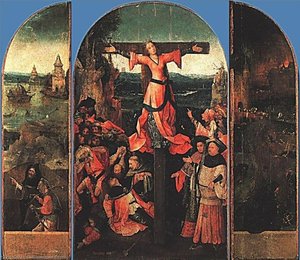
Biografía del artista
vida y carrera
Hieronymus Bosch, un pintor holandés/niederlandés destacado de Brabante, nació alrededor de 1450 en ‘s-Hertogenbosch, Países Bajos. Su vida permanece envuelta en misterio, con solo unos pocos registros de su existencia. A pesar de la falta de información biográfica, el arte de Bosch ha tenido un impacto profundo en el arte europeo del norte, particularmente en el siglo XVI.estilo artístico e influencias
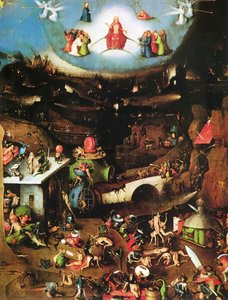
El estilo único de Bosch, caracterizado por **representaciones surrealistas e imaginativas de temas religiosos**, ha sido ampliamente influyente. Sus pinturas al óleo sobre madera, a menudo que presentan **visiones inquietantes y de pesadilla del infierno**, han sido objeto de numerosas interpretaciones. El Triptico del Juicio Final (c. 1480-1490) y el Jardín de las Delicias (c. 1490-1510) son dos de sus obras más celebradas, que muestran su maestría en el medio.obras notables y colecciones
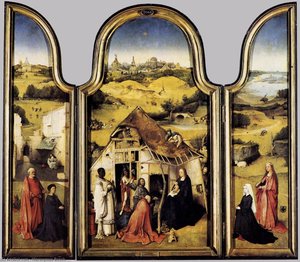
* Ascenso de los Benditos (renacimiento del norte, óleo sobre tabla): un ejemplo raro del trabajo de Bosch, que presenta una escena onírica y otrosa. * Epifanía (c. 1495, Museo Prado, Madrid): Un triptico que demuestra el uso innovador de óleo sobre madera por parte de Bosch. * Cabeza de un Halbedero (Museo Prado, Madrid): Un buen ejemplo de la pintura al óleo de retrato de Bosch, que muestra su atención al detalle.museos y colecciones que exhiben el trabajo de Bosch
* El Museo Prado, Madrid: Hogar de algunas de las obras más famosas de Bosch, incluyendo la Epifanía y el Triptico del Juicio Final. * El Museo de Arte de Filadelfia, Filadelfia: Presenta una versión de la Epifanía, ofreciendo una perspectiva única sobre el estilo artístico de Bosch.- Explore más obras de Hieronymus Bosch en https://ArtsDot.com/@/hieronymus-bosch
- Descubra el movimiento del arte flamenco temprano y sus figuras clave, incluyendo a Jan van Eyck y Pieter Bruegel el Viejo, en https://ArtsDot.com/@@/a@d3cpaf-the-erly-netherlandish-art-movement
- Aprenda más sobre la vida y obra de Pieter Bruegel el Viejo en https://en.wikipedia.org/wiki/pieter_bruegel_the_elder
legado
El estilo enigmático de Hieronymus Bosch ha cautivado a los entusiastas del arte durante siglos, y su influencia aún se puede ver en la obra de numerosos artistas. Su combinación única de **surrealismo e ideas profundas sobre la condición humana** ha solidificado su lugar como maestro de la pintura flamenco.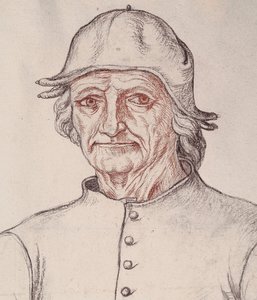
Jerónimo Bosch
1450 - 1516 , Países Bajos
Datos clave
- Artistas Influenciados: ['Pieter Bruegel el Viejo']
- Fecha De Muerte: 1516
- Fecha De Nacimiento: c. 1450
- Lugar De Nacimiento: 's-Hertogenbosch, Países Bajos
- Movimiento Artístico: Primitivos Flamencos
- Nacionalidad: Holandés
- Nombre Completo: Jerónimo Bosch
- Obras Notables:
- El Jardín de las Delicias
- Tríptico del Juicio Final
- Ascenso de los Benditos
- Epifanía
Artículos relacionados
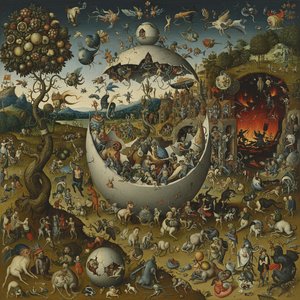
Hieronymus Bosch: Las 25 Obras Maestras del Genio Medieval | Arte y Decoración
Descubre las 25 obras maestras de Hieronymus Bosch, el enigmático pintor medieval. Explora 'El Jardín de las Delicias' y su simbolismo único. Reproducciones de arte de alta calidad para tu hogar en ArtsDot.com.
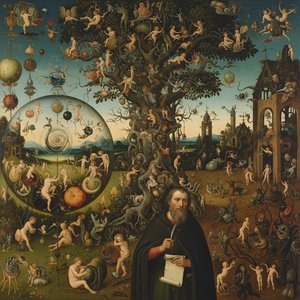
Hieronymus Bosch: Decoding the Visions of a Netherlandish Master
Explore the captivating world of Hieronymus Bosch! Delve into the symbolism, religious context, and artistic innovation of this Netherlandish master with ArtsDot's expert analysis. Discover his iconic paintings & lasting influence.

John Constable: Las 25 Obras Maestras del Paisaje Inglés | ArtsDot
Descubre las 25 obras maestras de John Constable, el pintor romántico inglés que capturó la belleza del paisaje. Explora su técnica, historia y significado en ArtsDot.com. Reproducciones de arte de alta calidad para tu hogar.

John Singer Sargent: Las 25 Obras Maestras del Retrato y la Belle Époque | ArtsDot
Descubre las 25 obras maestras de John Singer Sargent, el maestro del retrato y la Belle Époque. Explora su técnica impresionista, historias fascinantes y encuentra reproducciones de arte exclusivas para decorar tu hogar con elegancia en ArtsDot.com.
Las 25 Obras Maestras del Prado: Arte Español e Inspiración para tu Hogar
Descubre las 25 obras maestras del Museo del Prado: Velázquez, Goya, El Greco y más. Explora la historia, técnica y belleza de cada cuadro español. Encuentra reproducciones de arte exclusivas e inspira tu hogar con ArtsDot.com.