 Vista previa
 Compartir
 Compartir
 Ver detalles

 Descargar
 Ver similares
 Radiografía
 Presentación de diapositivas
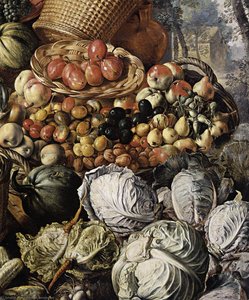
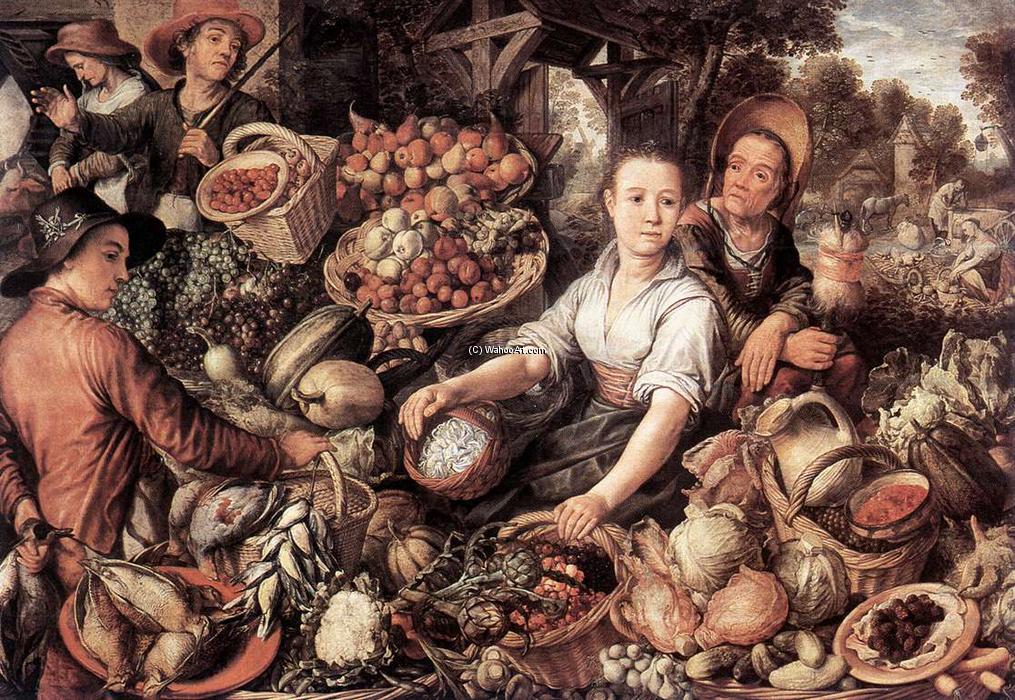
The Vegetable Market


 Leer más
Reproducción al óleo hecha a mano
Óleo sobre lienzo pintado a mano en el tamaño y marco de su elección, realizado por encargo por nuestros artistas. ( Pedir impresión Comprar descarga)




P118B $10

P118H $10

P118W $10

P438Z $10

P508JH $12

P508YH $12

P805H $10

P805Z $10

P919BZ $10

P919G $10

P919XJ $10

P959ZH $10

P968JZ $12

W106C $8

W218G $10

W218JH $8

W218Y $10

W307PJ $10

W316G $10

W316PJ $8

W316Y $10

W398PJ $8

W4111J $10

W500HY $15

W500JH $15

W692G $12

W849H $8

W940BG $15

W953PJ $8




Elija entre nuestros tamaños predefinidos que respetan las proporciones originales de la obra.

Puede ingresar sus propias dimensiones para adaptarse a un marco o espacio específico. Si el tamaño seleccionado no coincide con las proporciones de la imagen original, recortaremos la obra o extenderemos la pintura con elementos adicionales pintados a mano. Se le enviará una maqueta digital para su aprobación antes de comenzar la producción.
Tenga en cuenta que la vista previa en pantalla no refleja el recorte o la extensión reales. Solo la maqueta mostrará con precisión la composición final.
Si bien existen tamaños personalizados, recomendamos seleccionar una dimensión de la lista predefinida para preservar las proporciones originales.
Tras realizar el pedido, el equipo de ArtsDot.com enviará un correo electrónico al cliente para solicitar instrucciones y proporcionarle una vista previa del boceto.
Envío a todo el mundo () en 3-4 semanas en lugar de las 5 semanas estándar. (21 agosto). Sin comprometer la calidad.

Envío exprés gratuito a todo el mundo

Lienzo de lino de alta calidad

Seguro de envío completo

Garantía de reembolso de aranceles aduaneros

Garantía de fidelidad cromática exacta

Política de devolución de 60 días (solo por defectos)

Garantía de devolución del 100% del dinero

Oferta por volumen
 La opción de vidrio solo está disponible en tamaños inferiores a 110 cm.

The Vegetable Market
Técnica de reproducción
Tamaño de la reproducción
-


Precio total
$ 363
Descripción de la obra
The Enduring Bounty: Joachim Beuckelaer’s “The Vegetable Market”
Joachim Beuckelaer's "The Vegetable Market," painted around 1567, isn’t merely a depiction of a bustling marketplace; it’s a meticulously crafted window into the heart of 16th-century Antwerp – a city brimming with mercantile energy and quietly steeped in religious symbolism. This remarkable oil painting on panel captures a scene of astonishing abundance, overflowing stalls laden with an array of seasonal produce: vibrant cabbages, plump pumpkins, glistening fish, and bundles of herbs create a riot of color and texture that immediately draws the viewer into its captivating world. More than just a snapshot of daily life, Beuckelaer’s work offers a subtle meditation on prosperity, earthly pleasures, and the enduring presence of faith within a rapidly changing society. The painting's remarkable realism, achieved through painstaking detail and masterful use of light and shadow, speaks to the artist’s deep understanding of his subject matter – a testament to his role as one of the foremost market scene painters of his era.A Northern Renaissance Masterpiece: Composition and Technique
Beuckelaer’s compositional genius lies in his ability to create a sense of overwhelming depth within a relatively confined space. The arrangement of figures and goods is carefully orchestrated, utilizing linear perspective to draw the eye into the heart of the market. Overlapping forms and varying scales contribute to this illusion of three-dimensionality, while the use of chiaroscuro – dramatic contrasts between light and dark – imbues the scene with a palpable sense of volume and atmosphere. The artist’s brushwork is remarkably detailed, capturing the textures of fabrics, the sheen of fruit, and the rough surfaces of wooden stalls. Notice particularly the meticulous rendering of individual vegetables—each one rendered with an almost obsessive attention to detail, suggesting both the abundance of the harvest and the artist's deep appreciation for his subject matter. The painting’s foundation is a carefully constructed underdrawing, visible in infrared photography, revealing Beuckelaer’s methodical approach to composition and execution.Symbolism Woven into the Everyday
Beyond its immediate visual appeal, “The Vegetable Market” is rich with subtle symbolic layers. While ostensibly depicting a commonplace scene, the painting subtly alludes to broader themes of prosperity, earthly delights, and spiritual contemplation. The sheer profusion of goods represents not just material wealth but also the bounty of God’s creation. However, interwoven within this celebration of abundance are hints of potential excess and temptation – a deliberate nod to the biblical stories of Adam and Eve, and the dangers of worldly indulgence. Notably, a figure resembling Saint Sebastian is discreetly incorporated into the background, a poignant reminder of suffering and redemption, adding a layer of quiet solemnity to the vibrant scene. The inclusion of this religious motif suggests that even amidst the bustle of commerce, faith remains an essential element of life.Historical Context: Antwerp in the Age of Transition
To fully appreciate “The Vegetable Market,” it’s crucial to understand its historical context. Painted around 1567, the work reflects a period of significant social and religious change in Antwerp – a thriving commercial center grappling with the challenges of Protestantism and the decline of Spanish rule. Beuckelaer's decision to focus on secular subjects like market scenes—a departure from the predominantly religious works of his predecessors—mirrors this shift in artistic sensibilities. He elevated the everyday, transforming ordinary activities into objects of artistic contemplation. His work stands as a testament to the burgeoning interest in realism and humanism that characterized the Northern Renaissance, marking a pivotal moment in the development of still life painting.A Legacy of Detail: Reproduction and Appreciation
Today, “The Vegetable Market” continues to captivate viewers with its remarkable detail and evocative atmosphere. Reproductions offer an accessible way to experience this masterpiece, allowing us to appreciate Beuckelaer’s extraordinary skill and his profound understanding of the human condition. When selecting a reproduction, consider the quality of materials used – a fine-art print on archival paper will best preserve the painting's colors and details for generations to come. More than just an image, “The Vegetable Market” is a window into a bygone era—a celebration of abundance, faith, and the enduring power of art to illuminate our understanding of the world around us.Obras relacionadas
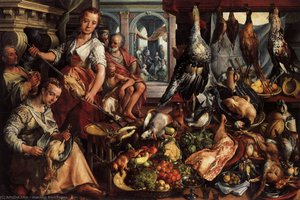
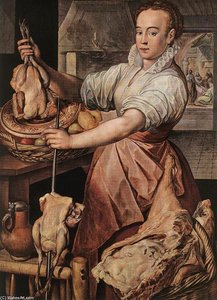
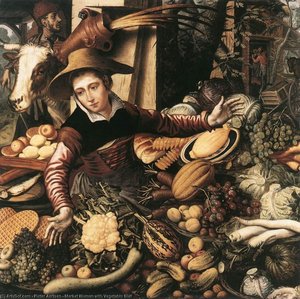
Biografía del artista
Joachim Beuckelaer: Una Vida en la Pintura Flamenca
- Nacido: Amberes, Bélgica (c. 1533)
- Fallecido: c. 1573
Joachim Beuckelaer fue un destacado pintor flamenco especializado en escenas de mercado y cocina, reconocido por sus detalladas representaciones de alimentos, utensilios domésticos y la integración de narrativas bíblicas dentro de la vida cotidiana. Su obra influyó significativamente en el desarrollo del arte bodegón no solo en Europa del Norte sino también en Italia.
Vida Temprana y Formación
Nacido en una familia de pintores, el padre de Beuckelaer, Mattheus Beuckeleer, estaba registrado como maestro en el Gremio de San Lucas de Amberes. Esta conexión familiar le proporcionó una temprana exposición al mundo del arte. Probablemente recibió su formación inicial de su padre y tío, Pieter Aertsen, un celebrado pintor conocido por ser pionero en escenas de mercado y cocina. Su hermano, Huybrecht Beuckelaer, también siguió sus pasos como pintor.
Joachim Beuckelaer se convirtió en maestro independiente dentro del Gremio de San Lucas de Amberes en 1560, marcando su entrada formal en la comunidad artística. A lo largo de su carrera, permaneció activo en Amberes, construyendo y refinando constantemente los temas establecidos por Aertsen.
Características Clave de Su Obra
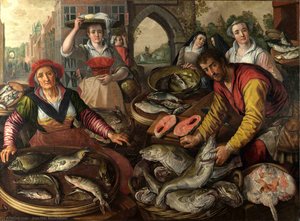
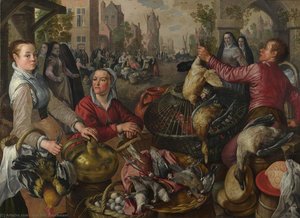
- Escenas de Mercado: Las escenas de mercado de Beuckelaer se caracterizaban por su meticuloso detalle e a menudo incorporaban episodios bíblicos en el fondo. Por ejemplo, su serie "Los Cuatro Elementos" representa un bullicioso mercado de pescado con doce variedades de peces que representan a los doce discípulos de Jesús, mientras que un arco revela a Cristo caminando sobre el Mar de Galilea.
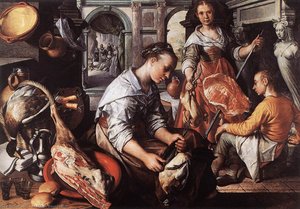
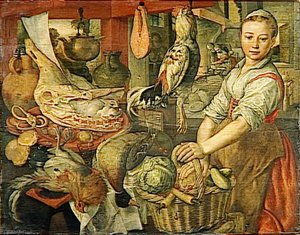
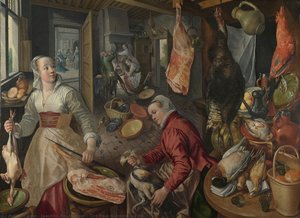
- Escenas de Cocina: Similar a Aertsen, las escenas de cocina de Beuckelaer mostraban abundantes ingredientes y entornos domésticos. Su "Escena de Cocina con Cristo en Emmaús" combina de forma única una lujosa preparación de alimentos con la historia bíblica de la aparición de Cristo a sus discípulos.
- Elementos Bodegón: Si bien es principalmente conocido por escenas de mercado y cocina, Beuckelaer también produjo bodegones que presentaban objetos cotidianos y alimentos, demostrando su dominio del detalle y el realismo. Su "Bodegón de una Cadena" (1563) se considera uno de los ejemplos fechados más tempranos de este tema.
Influencia y Legado
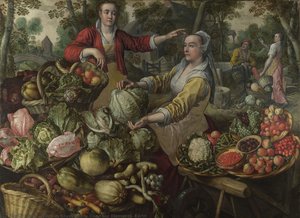
Las innovaciones artísticas de Beuckelaer tuvieron un impacto duradero en generaciones posteriores de pintores. Influyó significativamente a artistas como Frans Snyders, que desarrolló aún más el género de los bodegones elaborados, y Vincenzo Campi en Italia. La serie "Los Cuatro Elementos" es un testimonio de su habilidad para combinar sin problemas escenas cotidianas con simbolismo religioso, contribuyendo significativamente a la evolución tanto de la pintura de escenas de mercado/cocina como del floreciente campo del arte bodegón.
Significado Histórico
Joachim Beuckelaer jugó un papel crucial en la transición del arte flamenco de temas principalmente religiosos hacia sujetos más seculares. Sus detalladas representaciones de la vida cotidiana - mercados, cocinas y bodegones - reflejaban un creciente interés por el realismo y la observación dentro de la comunidad artística. Al integrar narrativas bíblicas en estas escenas, creó obras que eran visualmente cautivadoras y ricas en significado, consolidando su lugar como una figura clave en el arte flamenco del siglo XVI.
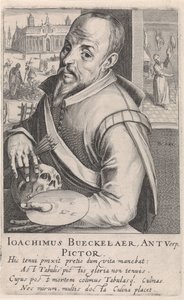
Joaquim Beuckelaer
1533 - 1573 , Bélgica
Datos clave
- Artistas Influenciados:
- Frans Snyders
- Vincenzo Campi
- Artistas Que Influyeron: ['Pieter Aertsen']
- Fecha De Fallecimiento: c. 1573
- Fecha De Nacimiento: c. 1533
- Lugar De Nacimiento: Amberes, Bélgica
- Movimiento Artístico: Renacimiento
- Nacionalidad: Flamenco
- Nombre Completo: Joachim Beuckelaer
- Obras Notables:
- Mercado de pescado
- Los cuatro elementos: Agua
- Cristo en Emmaús
- Carcasa de cerdo
Artículos relacionados
Silent Narratives: Exploring the Enduring Appeal of Still Life Painting Across Centuries
Explore the rich history of still life painting with ArtsDot. Discover Dutch Masters, decode vanitas symbolism & learn about collecting timeless art. Expert insights and museum-quality reproductions.
Clyfford Still's Abstract Expressionism: A Study of Color, Form & the Existential Landscape
Explore the profound world of Clyfford Still's Abstract Expressionism with ArtsDot. Discover his unique style, existential themes & investment potential. Expert analysis for discerning collectors.
The Enduring Appeal of Still Life: A Historical & Contemporary Exploration
Explore the rich history & symbolism of still life painting with ArtsDot. Discover masterpieces from the Dutch Golden Age, learn about vanitas art, and find expert guidance for collecting timeless artworks.
Abraham Hendricksz van Beyeren: Pioneering Dutch Still Life & the Banquet Tradition
Explore the captivating world of Dutch Golden Age still life with Abraham van Beyeren. Discover his innovative techniques, symbolic banquet scenes & lasting influence on art history. Learn about collecting these masterpieces.
De la Naturaleza Muerta Clásica a la Abstracción Contemporánea: Elevando los Espacios de Entretenimiento en Villas a Través de Reproducciones Artísticas
Descubre la evolución del bodegón y cómo integrar reproducciones artísticas de alta calidad en tu villa. Expertos en arte, selección exclusiva y asesoramiento personalizado.