

 Vista previa
 Compartir
 Compartir
 Ver detalles

 Descargar
 Ver similares
 Radiografía
 Presentación de diapositivas
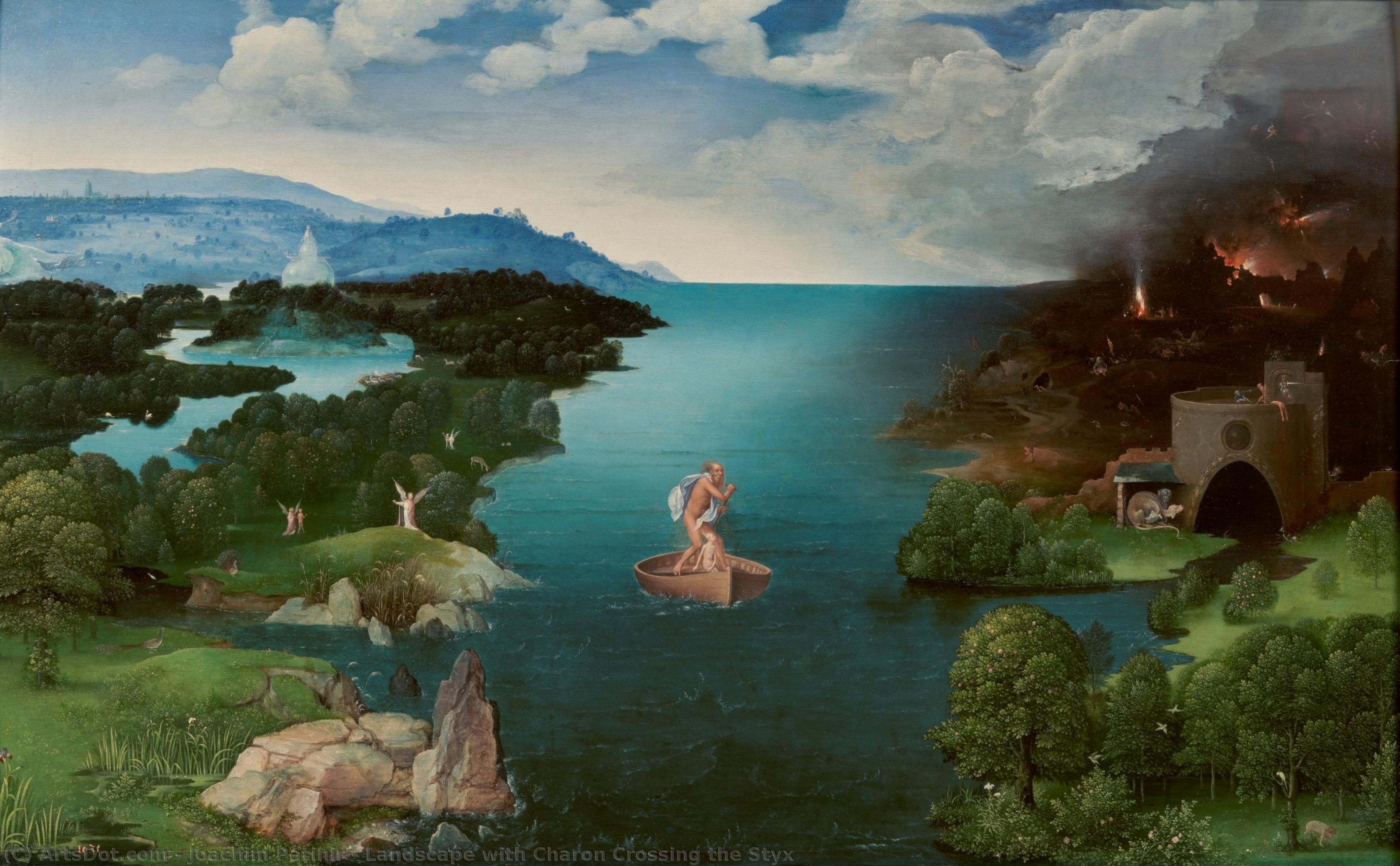
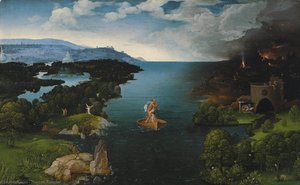
Landscape with Charon Crossing the Styx
 Northern Renaissance
 1524
1524 64.0 x 103.0 cm
 Museo del Prado
 Leer más
Adquiera una imagen digital de alta resolución y optimizada, muy superior a la vista previa en línea.
Cada archivo es preparado meticulosamente por nuestros especialistas internos mediante el uso de herramientas avanzadas y un experto retoque manual. Nos aseguramos de que cada imagen posea una claridad excepcional, una precisión cromática impecable y un detalle minucioso.
El archivo final se entrega por correo electrónico en un plazo de 72 horas, optimizado para su uso inmediato en entornos profesionales, editoriales y de impresión. Esta es la misma calidad en la que confían los estudios de diseño, las editoriales y las galerías de primer nivel.
Imagen Digital
Descarga un archivo de alta resolución para exhibición personal, impresión y proyectos creativos. ( Pedir impresión Encargar reproducción pintada a mano)
Incluido en cada compra de imágenes digitales
Entrega digital experta, garantizada.
Al elegir ArtsDot.com, no solo está adquiriendo una imagen; está recibiendo una obra de arte digital mejorada profesionalmente, elaborada con precisión y respaldada por una garantía de satisfacción. Esto es todo lo que incluye su pedido, automáticamente:

Entrega rápida por email
Recibirá su archivo de imagen digital en alta resolución por correo electrónico en un plazo de 72 horas tras realizar su pedido, listo para su uso inmediato.

Archivo digital optimizado por IA
Su obra de arte se optimiza profesionalmente mediante herramientas avanzadas de IA y edición manual, garantizando el máximo detalle, claridad y precisión cromática.

Reenvío gratuito de por vida
¿Has borrado o perdido tu archivo por error? No te preocupes: te lo volveremos a enviar en cualquier momento, sin coste adicional.

Sin gastos de importación, siempre
Disfrute de su obra de arte al instante sin aduanas, aranceles ni gastos de envío; las descargas digitales siempre están libres de impuestos.

Garantía de precisión de color
Garantizamos que su imagen digital refleje los colores originales con la mayor fidelidad posible, mediante el uso de herramientas profesionales y gestión del color.

Garantía de satisfacción de 60 días
Si no está satisfecho con su imagen digital, la revisaremos o le reembolsaremos el 100% en un plazo de 60 días, sin preguntas.

100% Garantía de devolución de dinero
¿No está satisfecho? Obtenga un reembolso completo dentro de los 60 días posteriores a la recepción de su archivo digital, sin necesidad de explicaciones.

Descuentos por volumen
Compra 3 imágenes, ahorra 10% - Compra 5, ahorra 15% - Compra 10+, ahorra 20%. Ideal para proyectos creativos, galerías y agencias.
Obras relacionadas
Biografía del artista
A Pioneer of the Northern Renaissance Landscape
Joachim Patinir, a name often whispered alongside that of Albrecht Altdorfer as a foundational figure in landscape painting, emerged from the artistic milieu of the Low Countries during the early 16th century. Born around 1480, likely in either Bouvignes or Dinant – towns nestled within present-day Belgium’s Wallonia region – Patinir's life remains shrouded in a degree of mystery. What is certain is that he established himself as a prominent artist in Antwerp by 1515, becoming a member of the Guild of Saint Luke and dedicating his career to a genre previously relegated to background detail. He died before October 5th, 1524, leaving behind a legacy that would fundamentally alter the course of Western art. Patinir wasn’t merely depicting landscapes; he was inventing a way of *seeing* them, imbuing them with narrative power and symbolic depth previously unseen.Early Influences and Artistic Development
The artistic currents flowing through the Low Countries at the turn of the 16th century profoundly shaped Patinir's early development. While concrete details about his training are scarce, scholars suggest a possible apprenticeship under Gerard David in Bruges. David’s meticulous realism and attention to detail undoubtedly left an impression on the young artist. However, it was the fantastical world-building of Hieronymus Bosch that arguably exerted the most significant influence. Patinir absorbed Bosch's penchant for imaginative landscapes populated with peculiar creatures and symbolic motifs, but he steered away from the moralizing allegories that characterized Bosch’s work. Instead, Patinir began to explore landscape as an independent entity, capable of conveying meaning in its own right. His early works demonstrate a clear understanding of naturalistic detail, combined with a growing lyrical fantasy—a unique blend that would become his signature style. A journey to Genoa in 1511 alongside David and Adrien Ysenbrandt likely broadened his artistic horizons, exposing him to different visual traditions and further refining his observational skills.Collaboration and the Birth of the “World Landscape”
Patinir’s career flourished within a collaborative environment. He forged close relationships with other leading Antwerp painters, most notably Quentin Metsys. Their joint masterpiece, *The Temptation of St Anthony* (c. 1520-1524), exemplifies their working dynamic: Patinir crafted the expansive and dramatic landscape, while Metsys populated it with figures depicting the saint’s trials. This collaboration highlights a common practice in the Low Countries at the time—the specialization of artistic skills. However, Patinir's contribution transcended mere technical execution; he was actively shaping the narrative through his landscapes. It was during this period that he truly pioneered what Ludwig von Baldass later termed the “Weltlandschaft,” or "world landscape." This style is characterized by panoramic vistas, high viewpoints offering a sweeping perspective, and an intricate layering of natural elements—mountains, forests, rivers, and plains—creating a sense of boundless space. The larger scale of his works, reminiscent of those by Bosch, further emphasized the immersive quality of these landscapes.Symbolism and the Pilgrimage of Life
Patinir’s landscapes were not simply representations of physical places; they were imbued with profound symbolic meaning. While often featuring religious subjects—the Flight into Egypt, the Baptism of Christ, the Penance of Saint Jerome—these narratives were frequently dwarfed by the grandeur of the surrounding environment. Scholars have interpreted these vast vistas as allegories of life’s pilgrimage, drawing parallels to biblical passages that describe humanity as wanderers on Earth, seeking spiritual communion with God. The steep mountains might represent obstacles and challenges, while winding rivers symbolize the journey itself. The distant horizons evoke a sense of longing for an ultimate destination—a heavenly realm beyond earthly concerns. This subtle yet powerful symbolism elevates Patinir’s landscapes beyond mere scenery, transforming them into meditations on faith, mortality, and the human condition. His use of color also played a crucial role; brown tones in the foreground suggest immediacy and physicality, while blues and greens recede into the distance, creating an illusion of depth and vastness.Legacy and Historical Significance
Joachim Patinir’s impact on the development of landscape painting is undeniable. He was the first Netherlandish artist to prioritize landscape as a primary subject, effectively establishing it as an independent genre. His innovative techniques—the high viewpoint, panoramic vistas, and symbolic use of natural elements—would influence generations of artists. Albrecht Dürer, who visited Patinir in 1521 and painted his portrait, famously dubbed him “der gute landschaftsmaler” (“the good painter of landscapes”), a testament to his growing reputation. Patinir’s work also paved the way for other landscape pioneers, such as Herri met de Bles, who further refined the world landscape style. While his career was relatively short, Patinir left an indelible mark on the art world, transforming the way artists and viewers perceived the natural environment. He wasn't just painting landscapes; he was creating a new visual language—a language that continues to resonate with audiences today, inviting us to contemplate the beauty, mystery, and spiritual significance of the world around us.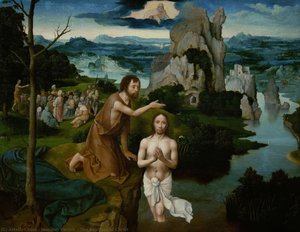
Joachim Patinir
1483 - 1524

