

 Ver en contexto
 Enviar
 Compartir
 Detalles

 Descargar
 Similares
 Radiografía
 Presentación de diapositivas
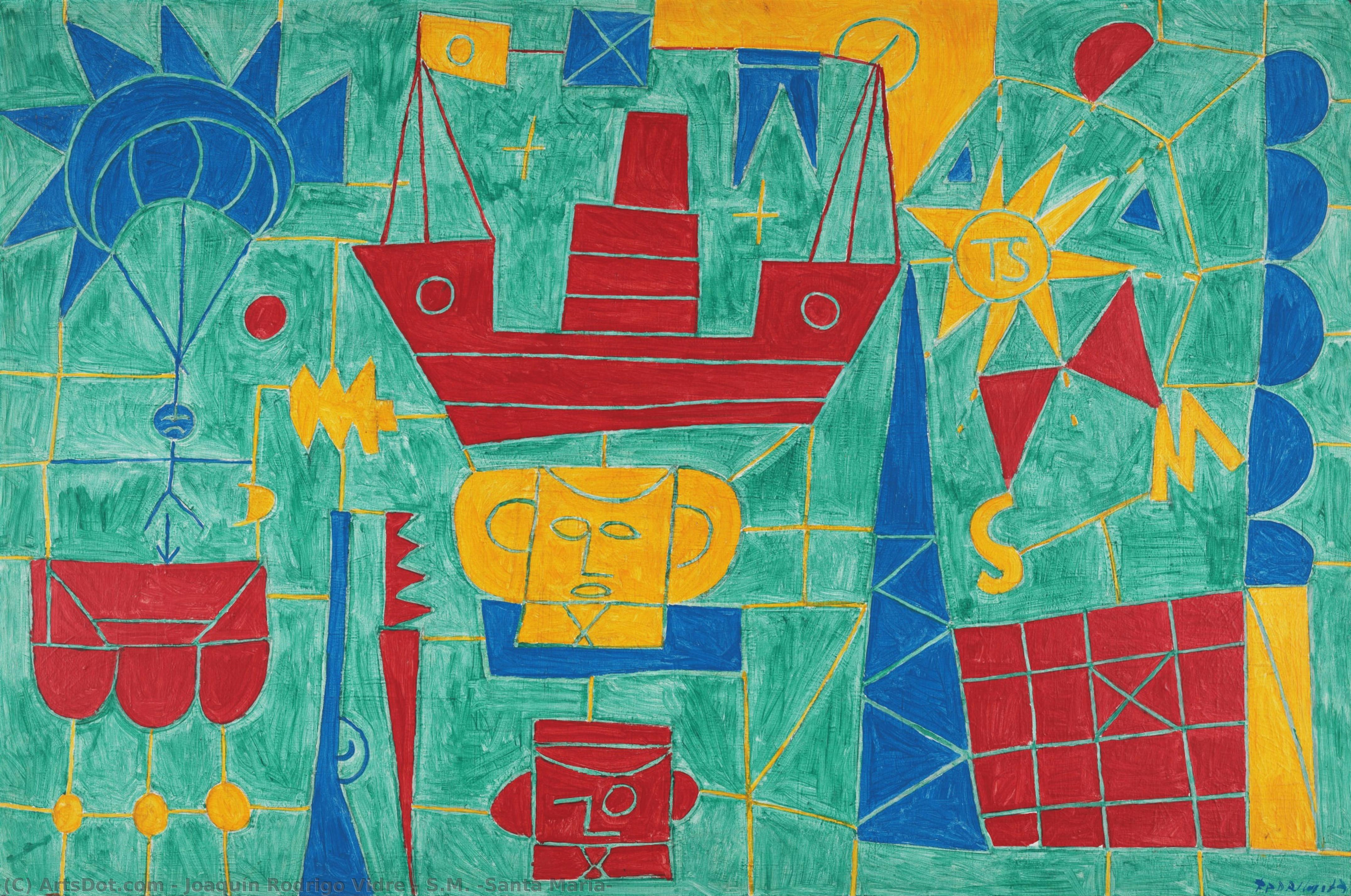
S.M. (Santa Maria)
 Painting
- Contemporary Art
 1961
1961- Modern
 97.0 x 146.0 cm
 Museu do Chiado - National Museum of Contemporary Art
 Ver más
Adquiera una imagen digital de alta resolución y optimizada, muy superior a la vista previa en línea.
Cada archivo es preparado meticulosamente por nuestros especialistas internos mediante el uso de herramientas avanzadas y un experto retoque manual. Nos aseguramos de que cada imagen posea una claridad excepcional, una precisión cromática impecable y un detalle minucioso.
El archivo final se entrega por correo electrónico en un plazo de 72 horas, optimizado para su uso inmediato en entornos profesionales, editoriales y de impresión. Esta es la misma calidad en la que confían los estudios de diseño, las editoriales y las galerías de primer nivel.
Imagen Digital
Descarga un archivo de alta resolución para exhibición personal, impresión y proyectos creativos. ( Comprar impresión Comprar pintura hecha a mano)
Incluido en cada pedido de imágenes digitales
Entrega digital experta, garantizada.
Al elegir ArtsDot.com, no solo está adquiriendo una imagen; está recibiendo una obra de arte digital mejorada profesionalmente, elaborada con precisión y respaldada por una garantía de satisfacción. Esto es todo lo que incluye su pedido, automáticamente:

Entrega rápida por email
Recibirá su archivo de imagen digital en alta resolución por correo electrónico en un plazo de 72 horas tras realizar su pedido, listo para su uso inmediato.

Archivo digital optimizado por IA
Su obra de arte se optimiza profesionalmente mediante herramientas avanzadas de IA y edición manual, garantizando el máximo detalle, claridad y precisión cromática.

Reenvío gratuito de por vida
¿Has borrado o perdido tu archivo por error? No te preocupes: te lo volveremos a enviar en cualquier momento, sin coste adicional.

Sin gastos de importación, siempre
Disfrute de su obra de arte al instante sin aduanas, aranceles ni gastos de envío; las descargas digitales siempre están libres de impuestos.

Garantía de fidelidad de color
Garantizamos que su imagen digital refleje los colores originales con la mayor fidelidad posible, mediante el uso de herramientas profesionales y gestión del color.

Garantía de satisfacción de 60 días
Si no está satisfecho con su imagen digital, la revisaremos o le reembolsaremos el 100% en un plazo de 60 días, sin preguntas.

100% Garantía de devolución de dinero
¿No está satisfecho? Obtenga un reembolso completo dentro de los 60 días posteriores a la recepción de su archivo digital, sin necesidad de explicaciones.

Descuentos por pedidos grandes
Compra 3 imágenes, ahorra 10% - Compra 5, ahorra 15% - Compra 10+, ahorra 20%. Ideal para proyectos creativos, galerías y agencias.
Descripción del coleccionable
A Narrative in Geometry: The Enigma of S.M.
In the profound landscape of twentieth-century abstraction, few works capture the intersection of political tension and graphic precision as poignantly as Joaquín Rodrigo Vidre’s S.M. (Santa Maria). Created in 1961, this masterpiece serves as a visual chronicle of a pivotal moment in Portuguese history. The title itself holds a hidden cipher, referencing the hijacking of the liner Santa Maria by Henrique Galvão—a daring act of maritime protest intended to illuminate the stifling political climate of Portugal to the international community. Through his unique lens, Vidre transforms a historical episode into a sophisticated language of signs, where the weight of real-world events is distilled into an elegant, orthogonal grid.
The painting presents a mesmerizing tension between order and chaos. At first glance, the viewer is met with an agitated, watery-green background that suggests the restless depths of the sea. Upon closer inspection, this fluid expanse is structured by a strict geometric arrangement. Vidre utilizes three primary colors to construct shapes that appear as if viewed through various architectural perspectives—elevation, plan, and cross-section. This technique allows the painting to function not merely as an image, but as a complex register of information, much like a written text or a map, where every shape contributes to a larger, unfolding narrative.
A Symphony of Symbols and Motion
The visual experience of S.M. is one of vibrant, rhythmic movement. While the underlying structure remains disciplined, the surface is alive with a multitude of elements that breathe life into the composition. Central to the work is the depiction of a boat carrying a solitary figure, acting as the optical anchor for the entire piece. Surrounding this central vessel, a fleet of other boats drifts through the green expanse, some pressing toward the edges of the frame while others cluster near the heart of the painting. This arrangement creates a sense of depth and a dynamic flow that guides the eye across the canvas.
Adding to this sense of vitality is the presence of numerous birds, scattered throughout the composition like musical notes on a staff. Some soar close to the central boat, while others appear as distant silhouettes, creating a layered atmosphere of movement and life. This interplay between the graphic, almost pictographic signs and the organic elements of nature creates a profound emotional resonance. For the collector or the interior designer, this piece offers more than just aesthetic beauty; it provides a window into a moment where art became a vessel for truth, making it an intellectually stimulating addition to any curated collection.
The Legacy of a Visionary
To appreciate S.M. is to understand the broader genius of Joaquín Rodrigo Vidre. While history often remembers him as the legendary composer of the Concierto de Aranjuez, his visual contributions reveal a mind capable of translating complex human experiences into pure, impactful form. His ability to synthesize information through color and geometry mirrors the precision of his musical compositions, where every note is placed with intentionality. This painting stands as a testament to his ability to bridge the gap between the personal, the political, and the abstract.
For those seeking to adorn a space with art that invites contemplation, this reproduction offers an unparalleled opportunity. It brings into a room a sense of historical gravity and modern sophistication. The work’s ability to function as both a decorative element—with its captivating greens and primary accents—and a deep narrative piece makes it a timeless choice for those who value art that speaks, challenges, and inspires.
Obras relacionadas
Biografía del artista
early life and education
Joaquín Rodrigo Vidre, born November 22, 1901, in Sagunto, Province of Valencia, Spain, was a composer and virtuoso pianist whose extraordinary musical journey began despite facing profound adversity. From the tender age of three, he endured the devastating impact of diphtheria, resulting in complete blindness—a circumstance that irrevocably shaped his artistic path yet fueled an unwavering determination to pursue music. Recognizing his innate talent early on, Rodrigo’s parents enrolled him in a specialized school for blind children where he honed his musical skills and developed a lifelong passion for sound. At eight years old, he commenced formal solfège instruction, piano lessons, and violin studies—establishing the foundation for his unparalleled mastery of instrumental music. His academic pursuits extended beyond music, fostering an appreciation for literature and cultivating intellectual curiosity. Notably, Rodrigo’s formative years were enriched by the guidance of Francisco Antich, a respected Valencian pedagogue who instilled in him a deep understanding of musical theory and composition, and Paul Dukas, renowned French composer and educator at the École Normale de Musique in Paris, who broadened his horizons with avant-garde artistic concepts.notable works
Rodrigo’s magnum opus, *Concierto de Aranjuez*, stands as a testament to his genius—a cornerstone of the classical guitar repertoire that transcends borders and captivates audiences worldwide. Composed in 1939 for guitarist Regino Sainz de la Maza during the tumultuous backdrop of World War II, this concerto embodies Rodrigo’s signature neoclassical style, characterized by elegant melodies and harmonic sophistication. The central adagio movement—a poignant exploration of emotion—is particularly celebrated for its breathtaking interplay between guitar and cor anglais—an instrument known for its rich timbre and expressive capabilities—creating a sonic tapestry that resonates with profound beauty and melancholy. Beyond *Concierto de Aranjuez*, Rodrigo’s oeuvre encompasses a diverse range of compositions, including *Fantasía para un gentilhombre* (1954), commissioned by Andrés Segovia, considered the “King” of the guitar; *Concierto Andaluz* (1963), conceived for four guitars and orchestra—a bold undertaking that showcased Rodrigo’s innovative orchestration skills; and numerous chamber works and pedagogical pieces designed to inspire future generations of musicians.awards and honors
Rodrigo's contributions to music garnered widespread recognition and acclaim throughout his illustrious career, culminating in prestigious accolades from both Spain and France. In 1983, he received the Premio Nacional de Música—Spain’s highest honor for musical achievement—acknowledging his enduring influence on Spanish artistic culture. Furthermore, in 1991, he was bestowed with the Marqués de los Jardines de Aranjuez—a hereditary title conferred by King Juan Carlos I—symbolizing royal patronage and recognizing Rodrigo's exceptional artistry. In 1996, he ascended to the pinnacle of national honor as recipient of the Príncipe de Asturias Award—Spain’s Nobel Prize for Literature—celebrating his profound impact on Spanish intellectual heritage. Finally, in 1998, Rodrigo was honored with Commander of the Order of Arts and Letters—a distinction bestowed by the French government—affirming his international stature and acknowledging his contribution to European artistic excellence.personal life
Joaquín Rodrigo married Victoria Kamhi, a Turkish-born pianist, in 1933, forging a harmonious partnership that nurtured their shared passion for music and enriched their family life. Their daughter, Cecilia Rodrigo, born January 27, 1941, inherited her father’s musical talent—a legacy that continues to inspire admiration and perpetuate Rodrigo's artistic spirit. Rodrigo maintained an active presence in the academic sphere, serving as Professor of Music History at Complutense University of Madrid until his retirement—sharing his knowledge and fostering a love for music among countless students. Throughout his life, Rodrigo remained steadfast in his belief that music possessed transformative power—a conviction reflected in his unwavering dedication to teaching and composing—leaving an indelible mark on the musical landscape of Spain and beyond. He passed away peacefully at his home in Madrid on July 6, 1999, aged 97—leaving behind a legacy of unparalleled artistic achievement and enduring inspiration.legacy
Joaquín Rodrigo’s influence extends far beyond his own compositions—resonating throughout the twentieth century and shaping the trajectory of classical guitar music. His *Concierto de Aranjuez*, in particular, has become an iconic masterpiece—performed globally by virtuoso guitarists and celebrated for its lyrical beauty and emotional depth. Rodrigo's innovative approach to orchestration—characterized by meticulous attention to detail and masterful tonal balance—established new standards for instrumental writing—inspiring composers across generations. Moreover, his pedagogical endeavors—focused on cultivating musical excellence and fostering a deep appreciation for artistic heritage—contributed significantly to the formation of future musicians—ensuring that Rodrigo’s legacy would endure as a beacon of creativity and intellectual curiosity. To delve deeper into Rodrigo's life and work, explore joaquín rodrigo vidre on ArtsDot.com.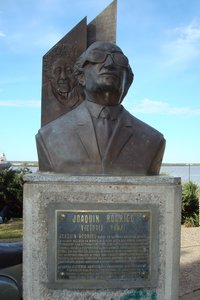
Joaquín Rodrigo Vidre
1901 - 1999 , España
Breves datos
- Artistic Movement Or Style: Neoclassical
- Artists Who Influenced This Artist:
- Paul Dukas
- Francisco Antich
- Date Of Birth: November 22, 1901
- Date Of Death: July 6, 1999
- Full Name: Joaquín Rodrigo Vidre
- Nationality: Spanish
- Notable Artworks:
- Concierto de Aranjuez
- Fantasía para un gentilhombre
- Concierto Andaluz
- Place Of Birth: Sagunto, Spain

