 Ver en contexto
 Enviar
 Compartir
 Detalles

 Descargar
 Similares
 Radiografía
 Presentación de diapositivas
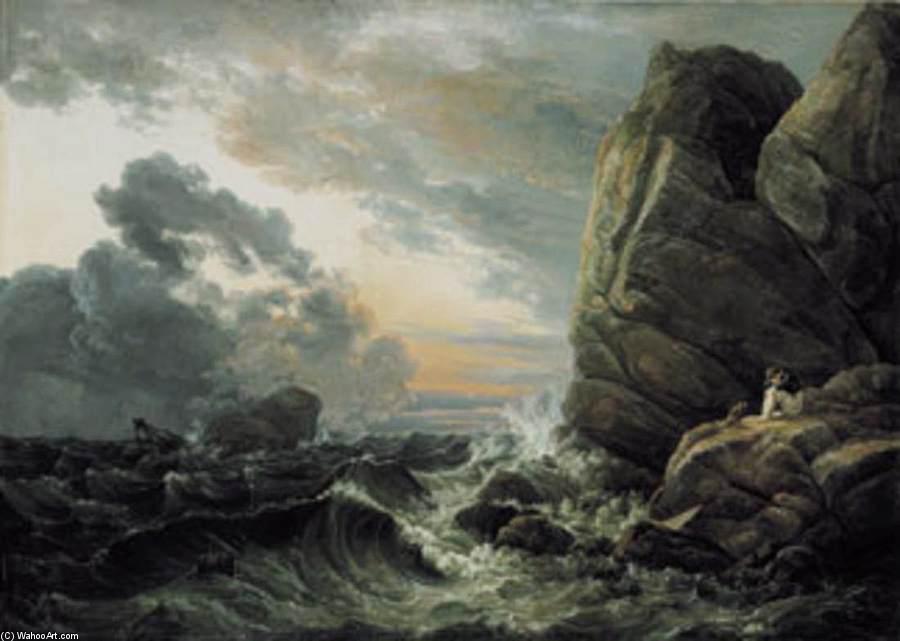
Morning after a Stormy Night
 Acrylic On Canvas
- WallArt
- Romanticism
 1819
1819 75.0 x 105.0 cm
 Neue Pinakothek
 Ver más
Reproducción al óleo hecha a mano
Óleo sobre lienzo pintado a mano en el tamaño y marco de su elección, realizado por encargo por nuestros artistas. ( Comprar impresión Comprar imagen)




P118B $10

P118H $10

P118W $10

P438Z $10

P508JH $12

P508YH $12

P805H $10

P805Z $10

P919BZ $10

P919G $10

P919XJ $10

P959ZH $10

P968JZ $12

W106C $8

W218G $10

W218JH $8

W218Y $10

W307PJ $10

W316G $10

W316PJ $8

W316Y $10

W398PJ $8

W4111J $10

W500HY $15

W500JH $15

W692G $12

W849H $8

W940BG $15

W953PJ $8




Elija entre nuestros tamaños predefinidos que respetan las proporciones originales de la obra.

Puede ingresar sus propias dimensiones para adaptarse a un marco o espacio específico. Si el tamaño seleccionado no coincide con las proporciones de la imagen original, recortaremos la obra o extenderemos la pintura con elementos adicionales pintados a mano. Se le enviará una maqueta digital para su aprobación antes de comenzar la producción.
Tenga en cuenta que la vista previa en pantalla no refleja el recorte o la extensión reales. Solo la maqueta mostrará con precisión la composición final.
Si bien existen tamaños personalizados, recomendamos seleccionar una dimensión de la lista predefinida para preservar las proporciones originales.
Tras realizar el pedido, el equipo de ArtsDot.com enviará un correo electrónico al cliente para solicitar instrucciones y proporcionarle una vista previa del boceto.
Envío a todo el mundo () en 3-4 semanas en lugar de las 5 semanas estándar. (24 agosto). Sin comprometer la calidad.

Envío exprés gratuito a todo el mundo

Lienzo de lino de alta calidad

Seguro de envío total

Garantía de reembolso de impuestos aduaneros

Garantía de fidelidad cromática exacta

Política de devolución de 60 días (solo por defectos)

Garantía de devolución del 100% del dinero

Descuento por cantidad
 La opción de vidrio solo está disponible en tamaños inferiores a 110 cm.

Morning after a Stormy Night
Técnica de reproducción
Dimensiones de la reproducción
-


Precio total final
$ 263
Descripción de la obra
A Moment of Serenity Amidst the Fury – Exploring Dahl’s “Morning After a Stormy Night”
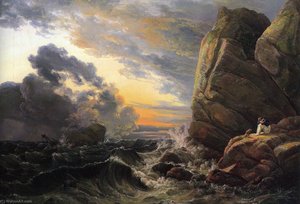
Johan Christian Clausen Dahl's "Morning after a Stormy Night," painted in 1819, isn’t merely a landscape; it’s a profound meditation on nature’s power and humanity’s resilience. Born in Bergen, Norway, during a period of burgeoning Romanticism, Dahl sought to capture the essence of his homeland – not just its physical beauty, but also its spirit. This particular work exemplifies that ambition with remarkable intensity. The painting immediately draws the viewer into a scene of dramatic aftermath, where the vestiges of a violent storm linger in the air and on the rugged coastline. It’s a visual poem to the quiet triumph over chaos, a testament to the enduring strength found within both the natural world and the human soul.
- Composition & Technique: Dahl masterfully employs atmospheric perspective – the subtle shifts in color and detail that suggest distance – to create a sense of depth. The foreground rocks are rendered with meticulous texture, their surfaces sculpted by countless storms, while the distant sea fades into a hazy blue. His brushwork is loose yet controlled, conveying both the turbulence of the recent weather and the stillness of the emerging dawn. Notice how he uses light to sculpt the scene; it’s not uniformly bright but rather dappled and diffused, lending an ethereal quality to the landscape.
- Color Palette: The painting's color scheme is dominated by cool blues and grays, reflecting the storm’s lingering presence. However, these are punctuated by warm ochres and browns in the rocks and the figure’s clothing, suggesting a return to warmth and life. The subtle hints of pink and lavender in the sky hint at the promise of a new day.
The Figure – A Beacon of Contemplation
Central to the painting is the solitary figure perched upon one of the larger rocks. This isn’t simply an incidental detail; it's a deliberate inclusion that invites profound reflection. The identity of this individual remains deliberately ambiguous, adding to the work’s universal appeal. They are not actively engaged in the landscape but rather lost in thought, gazing out at the recovering world. Some scholars suggest they represent humanity itself – observing nature’s renewal and finding solace in its enduring beauty. The figure's posture—slightly hunched, with a hand resting thoughtfully on their hip—conveys a sense of quiet contemplation and perhaps even weariness, suggesting that confronting such immense power can be both humbling and exhausting.
Symbolism:- The Rocks: Representing the enduring strength and resilience of nature.
- The Sea: Symbolizing the unpredictable forces of life and the passage of time.
- The Figure: Represents humanity’s ability to find peace and perspective amidst chaos.
A Window into the Romantic Era
“Morning after a Stormy Night” is deeply rooted in the tenets of Romanticism, an artistic movement that emphasized emotion, imagination, and the sublime beauty of nature. Dahl’s work aligns perfectly with this aesthetic sensibility – it's not about precise representation but rather about conveying a feeling, an experience. The painting reflects the Romantic fascination with dramatic landscapes, the power of natural forces, and the individual’s relationship to the wider world. It also echoes the movement’s interest in exploring themes of solitude, introspection, and the search for meaning – all powerfully conveyed through this evocative scene.
Collecting a Legacy – Reproduction & Beyond
Reproductions of “Morning after a Stormy Night” offer a remarkable opportunity to bring this iconic work into your home or office. ArtsDot’s hand-painted reproductions capture the essence of Dahl's original, faithfully recreating his masterful technique and atmospheric depth. Whether you are an art enthusiast, a collector seeking a piece of Norwegian heritage, or simply someone who appreciates breathtaking landscapes, this painting is sure to evoke a sense of wonder and tranquility. Consider it not just a decoration but a portal to the heart of Romanticism – a reminder of nature’s power and humanity's enduring spirit.
Obras relacionadas


Biografía del artista
El Romántico Paisajista Noruego: Johan Christian Claussen Dahl
Johan Christian Claussen Dahl, un nombre sinónimo de la aurora del romanticismo noruego y el nacimiento de su edad de oro pictórica, nació en Bergen, Noruega, en 1788. Hijo de un humilde pescador, su destino trascendió las olas del mar para adentrarse en el mundo del arte, convirtiéndose en una figura seminal que moldeó la identidad visual de su nación y resonó profundamente en el panorama artístico europeo. Su formación inicial como artista decorativo en Bergen fue solo el preludio de un viaje transformador que lo llevaría a Copenhague, donde, gracias al apoyo de ciudadanos ilustrados, estudió en la prestigiosa Academia Real de Bellas Artes de Dinamarca. Bajo la tutela de Christian August Lorentzen y influenciado por las obras de Christoffer Wilhelm Eckersberg y los paisajes poéticos de Jens Juel, Dahl comenzó a forjar su propio camino artístico, uno que se caracterizaría por una profunda conexión con la naturaleza noruega y una sensibilidad romántica inigualable.De Copenhague a Dresde: Forjando un Estilo Romántico
Tras dejar Copenhague en 1818, Dahl emprendió un viaje de estudios por Europa, visitando centros culturales clave como Dresde. Fue en esta ciudad donde su carrera realmente despegó, asumiendo el cargo de profesor en la Escuela Superior de Bellas Artes en 1824. Entre sus alumnos se encontraban figuras destacadas del arte noruego, como Peder Balke y Knud Bull, a quienes inculcó su pasión por el paisaje y su visión romántica. Dresde se convirtió en su hogar creativo, aunque nunca olvidó sus raíces ni la belleza de Noruega. Sus frecuentes viajes a su tierra natal le proporcionaron una fuente inagotable de inspiración para sus pinturas, permitiéndole capturar la esencia de sus paisajes con una precisión técnica y una emotividad poética que lo distinguieron de sus contemporáneos. Junto a figuras como Caspar David Friedrich y Carl Gustav Carus, Dahl se consolidó como uno de los pintores más influyentes del romanticismo alemán, dejando una huella imborrable en la estética de su época.El Padre de la Pintura Noruega: Paisajes que Hablan al Alma
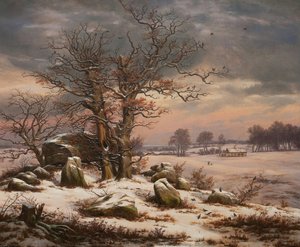
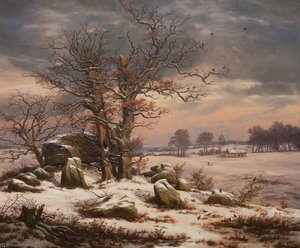
Dahl es universalmente reconocido como "el padre de la pintura de paisajes noruega", un título bien merecido por su contribución fundamental a la definición de una identidad artística nacional. Sus obras no eran meras representaciones de la naturaleza; eran interpretaciones románticas impregnadas de un profundo amor y respeto por Noruega. Pinturas como "Vista del Feigumfoss en Lysterfjord" ejemplifican su maestría para capturar la serenidad y la majestuosidad de los fiordos noruegos, mientras que obras como “Winter landscape near Vordingborg” revelan su habilidad para transmitir la atmósfera melancólica y evocadora de los paisajes invernales. Su capacidad para equilibrar la luz y el color, característica distintiva del romanticismo, se manifiesta en cada pincelada, creando composiciones vibrantes y llenas de vida que invitan al espectador a sumergirse en la belleza natural de Noruega. Dahl no solo pintaba paisajes; contaba historias, evocaba emociones y celebraba la identidad cultural de su país.Legado e Impacto Cultural: Un Pionero Visionario
La influencia de Johan Christian Claussen Dahl se extiende mucho más allá del ámbito artístico. Fue un ferviente defensor de la preservación del patrimonio histórico noruego y jugó un papel crucial en la fundación de la Galería Nacional de Noruega (Nasjonalgalleriet), a la que donó su propia colección de arte, consolidando su compromiso con el desarrollo cultural de su nación. Su participación activa en la Sociedad Artística de Oslo demuestra su dedicación al fomento del arte y la cultura en Noruega. A pesar de las tragedias personales que marcaron su vida – la pérdida de su primera esposa y varios hijos – Dahl perseveró en su labor artística, dejando un legado imborrable que continúa inspirando a artistas y amantes del arte hasta el día de hoy. Su visión romántica y su profundo amor por Noruega lo convierten en una figura indispensable en la historia del arte, un pionero visionario que sentó las bases para el desarrollo del arte noruego moderno.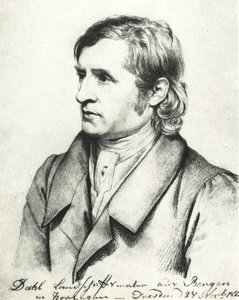
Johan Christian Dahl
1788 - 1857 , Noruega
Datos clave
- Artistas Influenciados: ['Knud Baade']
- Artistas Que Influyeron:
- John Constable
- Caspar David Friedrich
- Fecha De Fallecimiento: 14 de octubre de 1857
- Fecha De Nacimiento: 24 de febrero de 1788
- Lugar De Nacimiento: Bergen, Noruega
- Movimiento Artístico: Romanticismo
- Nacionalidad: Noruego
- Nombre Completo: Johan Christian Claussen Dahl
- Obras Notables:
- Paisaje invernal cerca de Vordingborg
- Iglesia de Harnham, cerca de Salisbury
Artículos relacionados
Johan Christian Dahl: Pioneering Norwegian Romantic Landscape Painting
Explore the life & art of Johan Christian Dahl, Norway's first great Romantic painter. Discover his iconic landscapes, cultural impact, and lasting legacy with ArtsDot.

Paisajes Románticos: 10 Obras Maestras que Definieron un Movimiento Artístico
Descubre los 10 paisajes románticos más influyentes de artistas como Caspar David Friedrich y Turner. Explora la belleza, el simbolismo y las técnicas del movimiento romántico. Reproducciones de arte exclusivas en ArtsDot.com.

John Constable: Las 25 Obras Maestras del Paisaje Inglés | ArtsDot
Descubre las 25 obras maestras de John Constable, el pintor romántico inglés que capturó la belleza del paisaje. Explora su técnica, historia y significado en ArtsDot.com. Reproducciones de arte de alta calidad para tu hogar.

Evocations of Place: A Historical Journey Through Landscape Art
Explore the rich history of landscape art with ArtsDot. Discover renowned artists, movements like Impressionism & Romanticism, and expert guidance for collecting timeless pieces. Find your perfect serene escape today!
The Allure of the Horizon: A Comprehensive Exploration of Seascape Art Through History & Emotion
Explore the captivating world of seascape art! Discover its history, key artists & movements – from Dutch Masters to Impressionism. Expert insights for collectors and enthusiasts at ArtsDot.