

 Ver en contexto
 Enviar
 Compartir
 Detalles

 Descargar
 Similares
 Radiografía
 Presentación de diapositivas
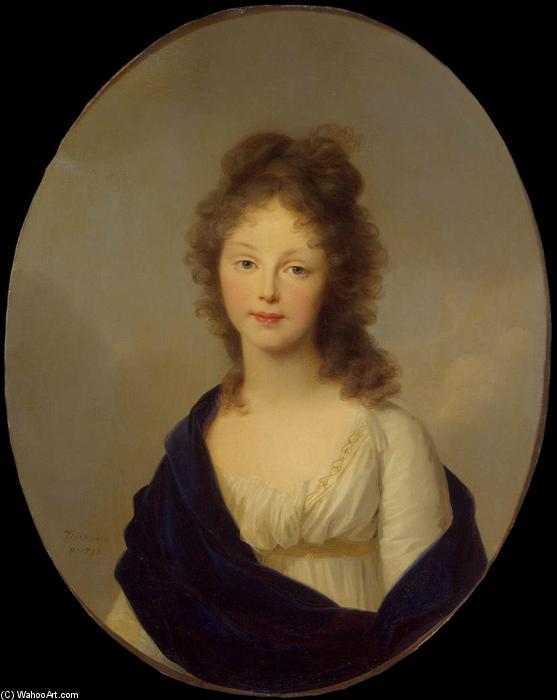
Portrait of Queen Luise of Prussia
 Acrylic On Canvas
- WallArt
- Rococo Neoclassicism
 1798
1798 76.0 x 61.0 cm
 Museo del Hermitage
 Ver más
Giclée / Impresión de arte
Impresiones giclée o en lienzo de calidad de museo con producción rápida y opciones de acabado flexibles. ( Comprar pintura hecha a mano Comprar imagen)




P118B $10

P118H $10

P118W $10

P438Z $10

P508JH $12

P508YH $12

P805H $10

P805Z $10

P919BZ $10

P919G $10

P919XJ $10

P959ZH $10

P968JZ $12

W106C $8

W218G $10

W218JH $8

W218Y $10

W307PJ $10

W316G $10

W316PJ $8

W316Y $10

W398PJ $8

W4111J $10

W500HY $15

W500JH $15

W692G $12

W849H $8

W940BG $15

W953PJ $8




Elija entre nuestros tamaños predefinidos que respetan las proporciones originales de la obra.

Puede introducir sus propias dimensiones para adaptarse a un marco o espacio específico. Si el tamaño seleccionado no coincide con las proporciones de la imagen original, recortaremos la obra de arte o extenderemos la imagen con un borde con efecto espejo o de color sólido. Se enviará una maqueta digital para su aprobación antes de que comience la producción.
Tenga en cuenta que la vista previa en pantalla no refleja el recorte o la extensión real. Solo la maqueta mostrará con precisión la composición final.
Aunque existen tamaños personalizados, recomendamos seleccionar una dimensión de la lista predefinida para preservar las proporciones originales.
Envío a todo el mundo () en 2 semanas en lugar de las 4/5 semanas estándar. (6 septiembre)

Envío exprés gratuito a todo el mundo

Lienzo de lino de alta calidad

Seguro de envío total

Garantía de reembolso de impuestos aduaneros

Garantía de fidelidad cromática exacta

Política de devolución de 100 días (solo por defectos)

Garantía de devolución del 100% del dinero

Descuento por cantidad
 La opción de vidrio solo está disponible en tamaños inferiores a 110 cm.

Portrait of Queen Luise of Prussia
Giclée / Impresión de arte
Dimensiones de la reproducción
-


Precio total final
$ 62
Portrait of Queen Luise of Prussia – A Study in Regal Restraint
Johann Friedrich August Tischbein’s “Portrait of Queen Luise of Prussia,” painted in 1798, is more than just a likeness; it's a carefully constructed tableau of power, melancholy, and the quiet dignity demanded by royal circumstance. The painting immediately draws the eye to the subject – Queen Luise, a woman whose life, tragically cut short at the age of thirty-three, was defined by both privilege and profound isolation. Tischbein masterfully captures her gaze; it’s direct, intelligent, yet subtly withdrawn, hinting at a deep well of unspoken thoughts and experiences.
The composition is remarkably restrained, typical of the Neoclassical style gaining prominence during the late 18th century. The palette is muted – predominantly blues, creams, and browns – reflecting the somber atmosphere surrounding the Queen’s life. Her gown, a rich blue velvet, speaks to her status, while the subtle folds and drapery are rendered with meticulous detail, showcasing Tischbein's skill in capturing texture and form. Note the careful placement of the pearls adorning her neck; they aren’t ostentatious but rather serve as quiet emblems of royal authority.
A Royal Portrait Within a Turbulent Era
Painted during a period of significant political upheaval – the French Revolution was already casting its shadow across Europe – the portrait offers a poignant glimpse into the anxieties and uncertainties of the era. Luise’s Prussia, though powerful, was increasingly threatened by revolutionary fervor. Her marriage to Friedrich-Wilhelm II, intended to solidify an alliance between Prussia and the Netherlands, ultimately proved fraught with challenges, marked by political maneuvering and personal discord. Tischbein, a keen observer of his time, subtly reflects this instability through the Queen’s expression – a hint of sadness underlies her composure.
Furthermore, Luise's life was inextricably linked to the complex dynastic politics of the Prussian court. Her father, Frederick William II, was a formidable ruler known for his military prowess and ruthless ambition. Her early years were shaped by the strictures of royal upbringing, emphasizing duty, decorum, and strategic alliances. Tischbein’s portrait isn't merely a depiction of a woman; it’s an embodiment of these expectations – a visual representation of a Queen navigating a treacherous world.
Symbolism and the Language of Portraiture
Beyond its immediate realism, the painting is rich in symbolic detail. The Queen’s posture—her hands resting gracefully on her lap—conveys both strength and vulnerability. The carefully arranged background – a simple, dark wall – serves to isolate Luise, emphasizing her importance as the central figure. It's a deliberate choice that underscores her position at the apex of power, yet simultaneously hints at her confinement within the rigid expectations of royal life.
The ponytail in her hair, a relatively modern styling choice for the time, is particularly noteworthy. It suggests a desire to assert individuality amidst the constraints of tradition – a subtle rebellion against the prescribed image of the regal woman. It’s a small detail that speaks volumes about Luise's character and her quiet determination.
A Timeless Reflection
"Portrait of Queen Luise of Prussia" is more than just a historical document; it’s a profoundly moving portrait of a woman caught between duty, desire, and the limitations imposed by her station. Tischbein’s masterful technique, combined with his astute understanding of human psychology, creates an image that continues to resonate with viewers today. It serves as a poignant reminder of the complexities of royal life and the enduring power of art to capture both the outward appearance and the hidden depths of the human spirit.
Obras relacionadas

Biografía del artista
El Legado del Leipziger Tischbein
Johann Friedrich August Tischbein, un nombre pronunciado con reverencia en los pasillos de la historia del arte alemán, permanece como un símbolo perdurable del refinamiento de finales del siglo XVIII. Conocido afectuosamente como el Leipziger Tischbein, su vida fue un tapiz tejido con los hilos de un distinguido linaje artístico. Nacido en Maastricht, Países Bajos, en 1750, era hijo del célebre escenógrafo Johann Valentin Tischbein. Esta inmersión temprana en las artes teatrales y visuales le proporcionó una base única, fusionando la gran escala de la escenografía con la precisión íntima requerida para el retrato. Sus años formativos fueron moldeados bajo la mirada atenta de su tío, Johann Heinrich Tischiente, en Kassel, donde dominó la elegancia persistente de los principios barrocos antes de que los vientos del Neoclasicismo comenzaran a remodelar el paisaje europeo.
La trayectoria del genio de Tischbein se vio alterada irrevocablemente por su espíritu errante y su búsqueda de la excelencia más allá de las fronteras alemanas. En 1768, un viaje transformador lo llevó a París, el corazón palpitante de la innovación artística. Dentro de los vibrantes estudios de Johann Georg Wille, Tischbein experimentó una profunda evolución estilística. Se alejó de la pesada ornamentación de su juventud para abrazar, en su lugar, la claridad, la estructura y el detalle meticuloso que definían al emergente movimiento neoclásico. Esta estancia parisina hizo más que refinar su pincelada; expandió sus horizontes intelectuales, permitiéndole absorber la esencia misma de la sofisticación francesa, la cual traduciría más tarde en sus encargos alemanes.
Un Viaje por el Corazón de Europa
La maduración artística de Tischbein continuó a través de una ambiciosa expedición por Italia en 1777, un viaje que sirvió tanto de peregrinación como de hito profesional. Fue durante este período de intensa inmersión cultural cuando encontró el talento floreciente de Jacques-Louis David. Este encuentro de mentes entre dos maestros de la época fomentó una colaboración duradera, vinculando a Tischbein con la vanguardia de la revolución artística napoleónica. La influencia del paisaje italiano y los ideales clásicos encontrados en Roma infundieron su obra con una atemporalidad, mezclando el rigor estructural aprendido en París con un nuevo sentido de gracia y profundidad histórica.
A su regreso a Alemania, la reputación de Tischbein le precedió, conduciéndolo a un prestigioso nombramiento como pintor de la corte de Friedrich Karl August, Príncipe de Waldeck y Pyrmont. Su función no era meramente la de un decorador de rostros, sino la de un custodio del estatus y la identidad. Al establecerse en los círculos artísticos de Weimar, su obra se convirtió en un puente entre el viejo mundo de esplendor aristocrático y la nueva era del retrato ilustrado. Su capacidad para capturar tanto el parecido físico como el matiz psicológico de sus sujetos lo convirtió en una figura muy solicitada entre la élite europea.
Maestría Artística e Influencia Educativa
Más allá del lienzo, la contribución de Tischbein al mundo del arte estuvo profundamente arraigada en su compromiso con la pedagogía y el crecimiento institucional. Su influencia se extendió mucho más allá de su propio estudio a través de sus roles de liderazgo en Leipzig. Como director y supervisor del programa de artes visuales de la academia, desempeñó un papel crucial en la formación de la siguiente generación de pintores alemanes. Su dedicación a la formalización de la educación artística aseguró que la precisión técnica y los valores estéticos que defendió perduraran mucho después de su fallecimiento en 1812.
La importancia de Johann Friedrich August Tischbein reside en su posición única como figura de transición. Su obra representa una síntesis magistral de varias eras:
- La Base Barroca: Un aprecio persistente por el drama y la profundidad heredado del legado teatral de su padre.
- Precisión Neoclásica: Las líneas disciplinadas y limpias y la precisión anatómica adquiridas en los estudios de París.
- El Espíritu de la Ilustración: Un enfoque en la claridad, la verdad y la representación digna del individuo.
Hoy en día, sus obras se erigen como un testimonio de una era de profundo cambio cultural, recordándonos un tiempo en que el retrato no consistía simplemente en capturar un parecido, sino en documentar el alma misma de una época en transición.
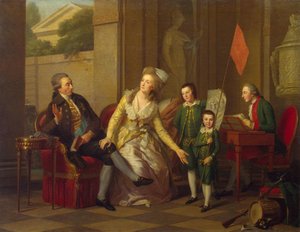
Johann Friedrich August Tischbein
1750 - 1812 , Países Bajos
Datos clave
- Artistic Movement Or Style: Classical Rococo
- Artists Or Movements Influenced By This Artist: ['Jacques Louis David']
- Artists Who Influenced This Artist:
- Johann Valentin Tischbein
- Johannes Georg Wille
- Date Of Birth: March 9, 1750
- Date Of Death: June 21, 1812
- Full Name: Johann Friedrich August Tischbein
- Nationality: German
- Notable Artworks:
- Portrait of Salomon Rendorp
- Portrait of Willem Arnold Alting
- Place Of Birth: Maastricht, Netherlands
Artículos relacionados

Drama Barroca: Llevando la Grandeza y la Emoción a los Interiores Contemporáneos
Descubre cómo el drama y la grandeza del arte barroco pueden transformar tus interiores. Guía experta, inspiración y reproducciones de alta calidad en .

The Enduring Power of Painting: A Historical & Contemporary Exploration of Form and Emotion
Explore the rich history & enduring techniques of oil painting with ArtsDot. Discover masterpieces, learn about art collecting, and find authentic handmade reproductions crafted by skilled artists.

The Dramatic Flourish: Exploring the Baroque Movement's Enduring Legacy in Art History
Explore the dramatic world of Baroque art! Discover iconic artists like Caravaggio & Rubens, defining techniques, and its lasting impact on art history. Expert insights for collectors & enthusiasts at ArtsDot.

The Enduring Legacy of Oil on Canvas: Technique, History & Aesthetic Impact
Explore the rich history & techniques of oil painting – from Renaissance masters to Impressionism. Discover pigments, layering methods, and why this timeless medium endures. Expert insights for artists & art enthusiasts.

Barroco Sublime: 10 Obras Maestras que Definieron una Época |
Descubre las 10 obras maestras del Barroco que marcaron una época. Caravaggio, Bernini y Velázquez cobran vida en . Reproducciones de arte de calidad museo para decorar tu hogar con elegancia. ¡Explora la colección online!