

 Ver en contexto
 Enviar
 Compartir
 Detalles

 Descargar
 Similares
 Radiografía
 Presentación de diapositivas
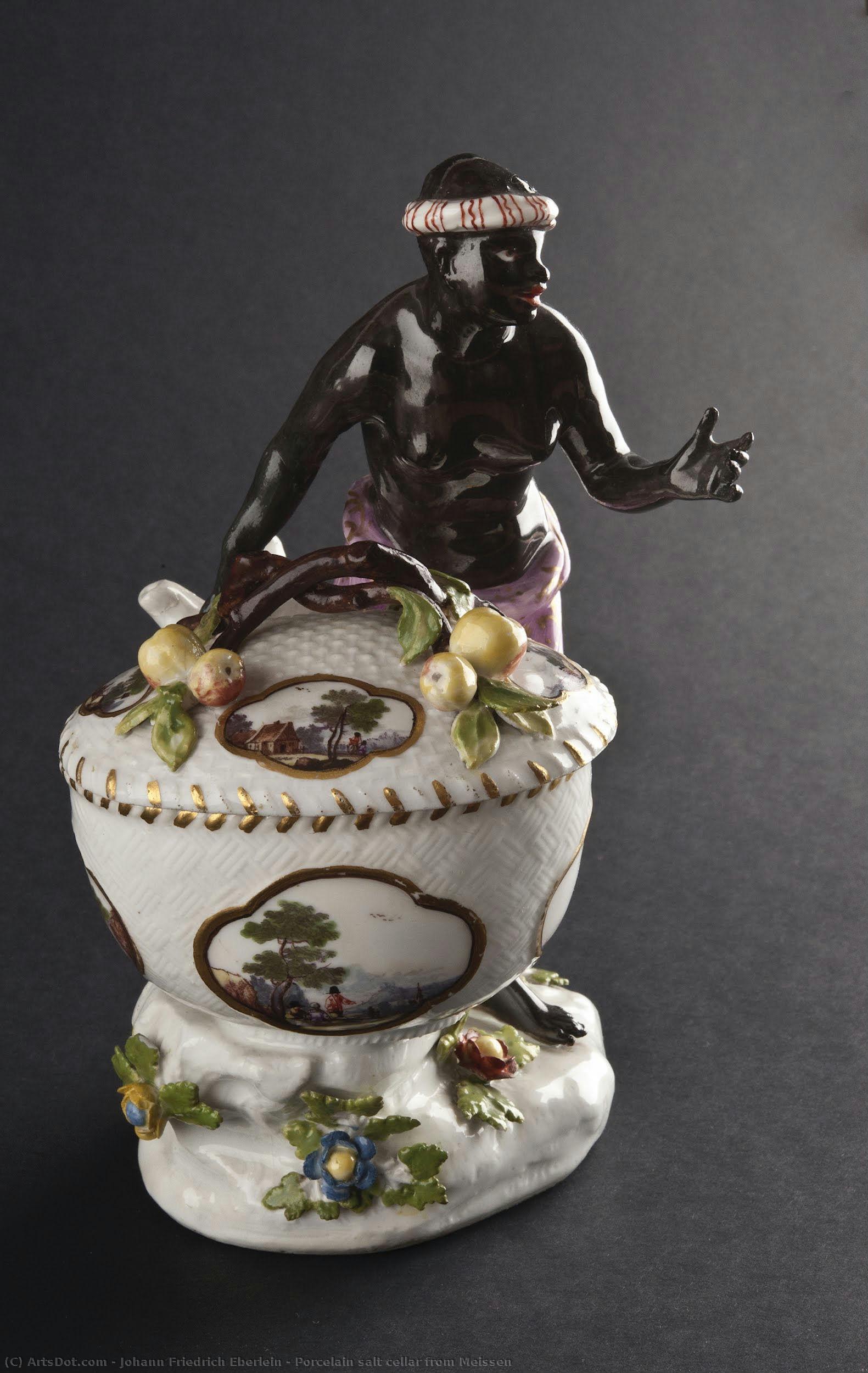
Porcelain salt cellar from Meissen


 Ver más
Adquiera una imagen digital de alta resolución y optimizada, muy superior a la vista previa en línea.
Cada archivo es preparado meticulosamente por nuestros especialistas internos mediante el uso de herramientas avanzadas y un experto retoque manual. Nos aseguramos de que cada imagen posea una claridad excepcional, una precisión cromática impecable y un detalle minucioso.
El archivo final se entrega por correo electrónico en un plazo de 72 horas, optimizado para su uso inmediato en entornos profesionales, editoriales y de impresión. Esta es la misma calidad en la que confían los estudios de diseño, las editoriales y las galerías de primer nivel.
Imagen Digital
Descarga un archivo de alta resolución para exhibición personal, impresión y proyectos creativos. ( Comprar impresión Comprar pintura hecha a mano)
Incluido en cada pedido de imágenes digitales
Entrega digital experta, garantizada.
Al elegir ArtsDot.com, no solo está adquiriendo una imagen; está recibiendo una obra de arte digital mejorada profesionalmente, elaborada con precisión y respaldada por una garantía de satisfacción. Esto es todo lo que incluye su pedido, automáticamente:

Entrega rápida por email
Recibirá su archivo de imagen digital en alta resolución por correo electrónico en un plazo de 72 horas tras realizar su pedido, listo para su uso inmediato.

Archivo digital optimizado por IA
Su obra de arte se optimiza profesionalmente mediante herramientas avanzadas de IA y edición manual, garantizando el máximo detalle, claridad y precisión cromática.

Reenvío gratuito de por vida
¿Has borrado o perdido tu archivo por error? No te preocupes: te lo volveremos a enviar en cualquier momento, sin coste adicional.

Sin gastos de importación, siempre
Disfrute de su obra de arte al instante sin aduanas, aranceles ni gastos de envío; las descargas digitales siempre están libres de impuestos.

Garantía de fidelidad de color
Garantizamos que su imagen digital refleje los colores originales con la mayor fidelidad posible, mediante el uso de herramientas profesionales y gestión del color.

Garantía de satisfacción de 60 días
Si no está satisfecho con su imagen digital, la revisaremos o le reembolsaremos el 100% en un plazo de 60 días, sin preguntas.

100% Garantía de devolución de dinero
¿No está satisfecho? Obtenga un reembolso completo dentro de los 60 días posteriores a la recepción de su archivo digital, sin necesidad de explicaciones.

Descuentos por pedidos grandes
Compra 3 imágenes, ahorra 10% - Compra 5, ahorra 15% - Compra 10+, ahorra 20%. Ideal para proyectos creativos, galerías y agencias.
Obras relacionadas








Biografía del artista
The Silent Maestro of Meissen Porcelain
Johann Friedrich Eberlein (1695-1749) remains a figure shrouded in relative obscurity compared to his contemporaries – Johann Christian Reimarus and Johann Gottlieb Zahn – yet he stands as arguably the most influential porcelain artist of his era, shaping the aesthetic trajectory of Meissen’s golden age. Born in Dresden, Germany, Eberlein's life was marked by both artistic brilliance and personal tragedy, leaving behind a legacy that continues to inspire admiration for its understated elegance and profound technical mastery. While history often remembers the loudest voices, it is the quiet precision of Eberlein that defined the very soul of 18th-century European ceramic excellence.
The foundations of his unparalleled skill were laid during his formative years in Dresden, where he underwent a rigorous apprenticeship under Johann Christian Reimarus. As a prominent Meissen porcelain master and a champion of the burgeoning Rococo style, Reimarus provided Eberlein with more than just technical instruction; he instilled in him a meticulous attention to detail and a deep understanding of sculptural principles. This early training allowed Eberlein to bridge the gap between mere decoration and fine art, transforming functional vessels into miniature masterpieces of movement and form.
A Revolution of Form and Subtlety
By the mid-1730s, Eberlein had emerged as a respected force within the Meissen workshop, demonstrating an exceptional ability to model porcelain figures and vessels that captured the imagination of the European aristocracy. His distinctive style was a departure from the flamboyant exuberance often associated with his peers. Instead, Eberlein favored a sense of subtlety and restraint, prioritizing graceful curves and delicate ornamentation over excessive embellishment. His work is characterized by an almost unnerving stillness—a quality that gave his porcelain figures a lifelike yet ethereal presence.
This mastery was perhaps most evident in his ability to handle complex compositions. One of his most breathtaking achievements includes:
- The Porcelain Salt Cellar: A highly decorative and technically demanding piece featuring a figure of a woman from Africa, rendered with such artistry that the intricate textures of her basket and the delicate porcelain skin appear remarkably real.
- Gilt-Bronze Mounted Candelabra: Works that showcased his ability to integrate porcelain with precious metals, creating opulent centerpieces for the most prestigious 18th-century tablescapes.
Technical Innovation and Lasting Legacy
Beyond his aesthetic contributions, Eberlein was a true pioneer of ceramic science. He was instrumental in developing innovative techniques for achieving flawless surfaces and intricate textures, most notably through the refinement of pâte dure. This dense, biscuit-fired porcelain glaze allowed for a level of remarkably detailed sculpting that had previously been impossible, enabling artists to capture the finest folds of fabric or the subtle musculature of a figure. His technical breakthroughs were not merely personal triumphs; they were meticulously documented and disseminated throughout the Meissen workshop, profoundly impacting subsequent generations of artists.
The historical significance of Johann Friedrich Eberlein lies in his ability to elevate porcelain from a luxury craft to a high art form. Through his dedication to precision and his mastery of the Rococo spirit, he helped establish Meissen as the premier name in European ceramics. Even today, his works serve as a testament to an era where technical innovation and poetic grace met in the delicate medium of porcelain, leaving an indelible mark on the history of decorative arts.
johann friedrich eberlein
1695 - 1749 , Germany
Breves datos
- Artistic Movement Or Style: Rococo
- Artists Or Movements Influenced By This Artist: ['European Decorative Arts']
- Artists Who Influenced This Artist: ['Meissen Porcelain Manufactory']
- Date Of Birth: 1695
- Full Name: Johann Friedrich Eberlein
- Nationality: German
- Notable Artworks:
- Candelabra
- Salt cellar
- Place Of Birth: Dresden, Germany

