

 Enviar
 Compartir
 Detalles

 Descargar
 Similares
 Presentación de diapositivas
Portrait Relief of Arnout Vosmaer (1720-1799)


 Ver más
Giclée / Impresión de arte
Impresiones giclée o en lienzo de calidad de museo con producción rápida y opciones de acabado flexibles. ( Comprar pintura hecha a mano Comprar imagen)




































Elija entre nuestros tamaños predefinidos que respetan las proporciones originales de la obra.

Puede introducir sus propias dimensiones para adaptarse a un marco o espacio específico. Si el tamaño seleccionado no coincide con las proporciones de la imagen original, recortaremos la obra de arte o extenderemos la imagen con un borde con efecto espejo o de color sólido. Se enviará una maqueta digital para su aprobación antes de que comience la producción.
Tenga en cuenta que la vista previa en pantalla no refleja el recorte o la extensión real. Solo la maqueta mostrará con precisión la composición final.
Aunque existen tamaños personalizados, recomendamos seleccionar una dimensión de la lista predefinida para preservar las proporciones originales.
Envío a todo el mundo () en 2 semanas en lugar de las 4/5 semanas estándar. (2 septiembre)

Envío exprés gratuito a todo el mundo

Lienzo de lino de alta calidad

Seguro de envío total

Garantía de reembolso de impuestos aduaneros

Garantía de fidelidad cromática exacta

Política de devolución de 60 días (solo por defectos)

Garantía de devolución del 100% del dinero

Descuento por cantidad
 La opción de vidrio solo está disponible en tamaños inferiores a 110 cm.

Portrait Relief of Arnout Vosmaer (1720-1799)
Giclée / Impresión de arte
Dimensiones de la reproducción
-


Precio total final
$ 62
A Glimpse into Dutch Aristocracy: The Portrait Relief of Arnout Vosmaer
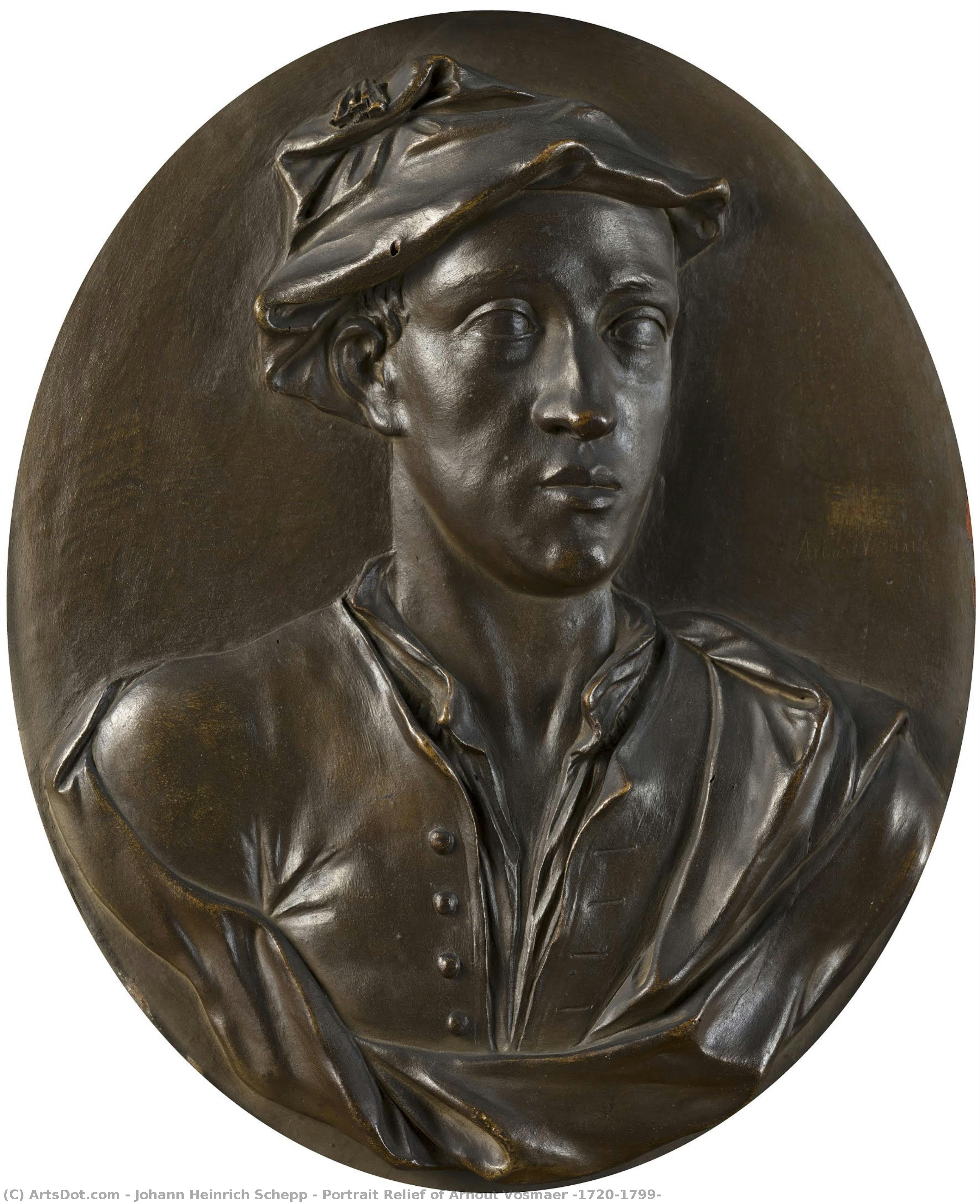
Johann Heinrich Schepp’s “Portrait Relief of Arnout Vosmaer (1720-1799),” created in 1772, offers a compelling window into the world of 18th-century Dutch aristocracy. More than just a likeness, this remarkable terracotta relief captures the essence of a man – Arnout Vosmaer – a figure of considerable standing within his society. Housed within the esteemed Mauritshuis in The Hague, Netherlands, the work stands as a testament to Schepp’s skill and the enduring power of portraiture. It's a piece that invites contemplation on notions of status, character, and the artistry of capturing human presence in three dimensions.The Artist and His Craft: Johann Heinrich Schepp
Born in Hamburg in 1702, Johann Heinrich Schepp emerged as a prominent German sculptor whose career flourished throughout the 18th century. While perhaps not as universally recognized today as some of his contemporaries, Schepp’s contributions to German art are significant, particularly his ability to imbue portraiture with both realism and psychological depth. His work reflects the artistic sensibilities of the era – a period characterized by a growing interest in individual expression and a move away from purely formal representations. Schepp's skill is evident not only in this relief but also in other notable works such as those found at the Museum Monastery Church in Ettal, Germany, demonstrating his versatility across various sculptural forms. He possessed a keen eye for detail, translating it into tangible form with remarkable precision. The portrait of Vosmaer exemplifies this talent; every line etched on the man’s face, every fold in his clothing, speaks to Schepp's meticulous approach and dedication to capturing a true likeness.A Portrait of Character: Arnout Vosmaer and His Time
Arnout Vosmaer (1720-1799) was a prominent figure within Dutch society, and this portrait relief serves as a visual record of his presence. The man depicted exudes an air of quiet authority; his gaze is direct, almost stern, suggesting intelligence and perhaps a certain reserve. He wears a hat and clothing typical of the period, indicative of his social standing. The choice to render him in relief—a three-dimensional form projecting from a background—adds weight and gravitas to the portrait. This technique was often employed for commemorating important individuals, elevating their image beyond a simple two-dimensional representation. The historical context is crucial: 1772 falls within a period of relative stability and prosperity for the Dutch Republic, though political tensions were brewing that would eventually lead to significant changes in the coming decades. Vosmaer’s portrait reflects this era of measured confidence and established social hierarchies.The Art of Relief Sculpture and its Emotional Resonance
Schepp's choice of terracotta as his medium further enhances the work's character. The warm, earthy tones of the clay lend a sense of timelessness to the piece, evoking a feeling of antiquity. Relief sculpture, unlike fully three-dimensional statues, requires a unique mastery of light and shadow to create depth and form. Schepp skillfully manipulates these elements, using subtle gradations to define Vosmaer’s features and clothing. The result is a portrait that feels both tangible and imbued with an inner life. The emotional impact lies in the quiet dignity conveyed by Vosmaer's expression and posture. It’s not a flamboyant or overtly expressive portrayal; rather, it’s a study of character—a glimpse into the soul of a man who occupied a position of influence within his community. The relief invites viewers to contemplate not only Vosmaer himself but also the values and aspirations of the society he represented.Obras relacionadas
Biografía del artista
primeros años y carrera
Johann Heinrich Schepp, un destacado escultor alemán, nació en Hamburgo en 1702 y falleció en 1776. La obra de su vida es un testimonio de su maestría en la escultura, una disciplina que definió el paisaje artístico de la Alemania del siglo XVIII.obras notables
Una de las piezas más memorables de Schepp es el relieve del retrato de Arnout Vosmaer (1720-1799), creado en 1772. Esta obra demuestra su extraordinaria habilidad para capturar la esencia misma de sus sujetos, de una manera muy similar a las obras de Anselm Feuerbach exhibidas en la Schackgalerie en Múnich, Alemania (descubriendo el arte del romanticismo tardío en la Schackgalerie, Múnich).contribución al arte alemán
Las contribuciones de Schepp al arte alemán son innegables. Sus esculturas, como las de la iglesia del monasterio museo (Ettal, Alemania), no solo reflejan su destreza técnica, sino que también ofrecen una ventana al contexto cultural e histórico de la Alemania del siglo XVIII (la iglesia del monasterio museo (Ettal, Alemania)).legado
- Su obra ha sido presentada en diversos museos, incluyendo el Mauritshuis en La Haya, Países Bajos (Johann Heinrich Schepp: relieve del retrato de Arnout Vosmaer (1720-1799), escultura, ver en ArtsDot).
- Su influencia puede apreciarse en las obras de otros escultores alemanes, como Franz Bernhard Schuller (Franz Bernhard Schuller, ver en ArtsDot).
- El legado de Schepp continúa inspirando tanto a artistas como a entusiastas del arte, permaneciendo su obra como una parte vital de la historia del arte alemán.
conclusión
El impacto de Johann Heinrich Schepp en el mundo de la escultura es indiscutible. A través de sus creaciones, ha proporcionado un portal hacia la Alemania del siglo XVIII, exhibiendo su dominio absoluto del oficio. Como parte integrante de la historia del arte alemán, su legado seguirá inspirando e influyendo a los artistas durante las generaciones venideras.- Vea más de la obra de Johann Heinrich Schepp en ArtsDot: Johann Heinrich Schepp | ArtsDot
- Explore el arte alemán y su historia: arte alemán en Wikipedia
Johann Heinrich Schepp
1702 - 1776 , Alemania
Datos clave
- Artistas O Movimientos Influenciados Por Este Artista:
- Francesco Zuccarelli
- Samuel Scott
- Artistas Que Influyeron En Este Artista:
- Daniel Gardelle
- Jean-Baptiste Massé
- Fecha De Fallecimiento: 12 de junio de 1789
- Fecha De Nacimiento: 22 de diciembre de 1702
- Lugar De Nacimiento: Ginebra, Suiza
- Movimiento O Estilo Artístico: Orientalismo, Pastel, Rococó
- Nacionalidad: Suizo/Francés
- Nombre Completo: Jean-Étienne Liotard
- Obras Notables:
- Cadmo matando al dragón
- Retrato de Voltaire
- El hallazgo de Moisés
Artículos relacionados

Esculturas de Bronce Legendarias: 10 Obras Maestras que Transformaron el Arte | ArtsDot
Descubre las 10 esculturas de bronce más legendarias que revolucionaron el arte. Explora la historia de Rodin, Degas y otros maestros del bronce. Encuentra reproducciones de alta calidad e inspiración para tu hogar en ArtsDot.com.

The Enduring Form: Exploring Themes & Techniques in Sculpture Across Historical Periods
Explore the rich history of sculpture from ancient masterpieces to contemporary innovations. Discover key techniques, influential artists & investment potential for discerning art collectors.

Las 10 Obras Maestras de Bronce que Revolucionaron la Historia del Arte | ArtsDot
Descubre las 10 esculturas de bronce más influyentes de la historia del arte. Explora obras maestras de Rodin, Degas y otros genios. Encuentra reproducciones de arte de calidad museo en ArtsDot.com.

The Enduring Form: Sculpture Across History, Technique & Emotional Resonance
Explore the rich history of sculpture with ArtsDot. Discover key techniques, influential artists & investment potential for discerning collectors. Expert insights into valuing and collecting timeless masterpieces.
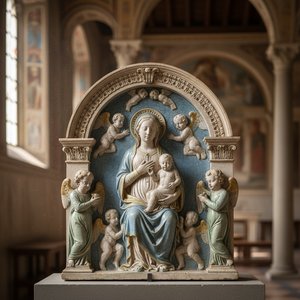
Luca della Robbia: Renaissance Sculpture & the Innovation of Terracotta Glazing
Discover the innovative terracotta glazing techniques of Luca della Robbia, a Renaissance master sculptor. Explore his iconic works, legacy, and collecting tips with ArtsDot.

