

 Ver en contexto
 Enviar
 Compartir
 Detalles

 Descargar
 Similares
 Radiografía
 Presentación de diapositivas
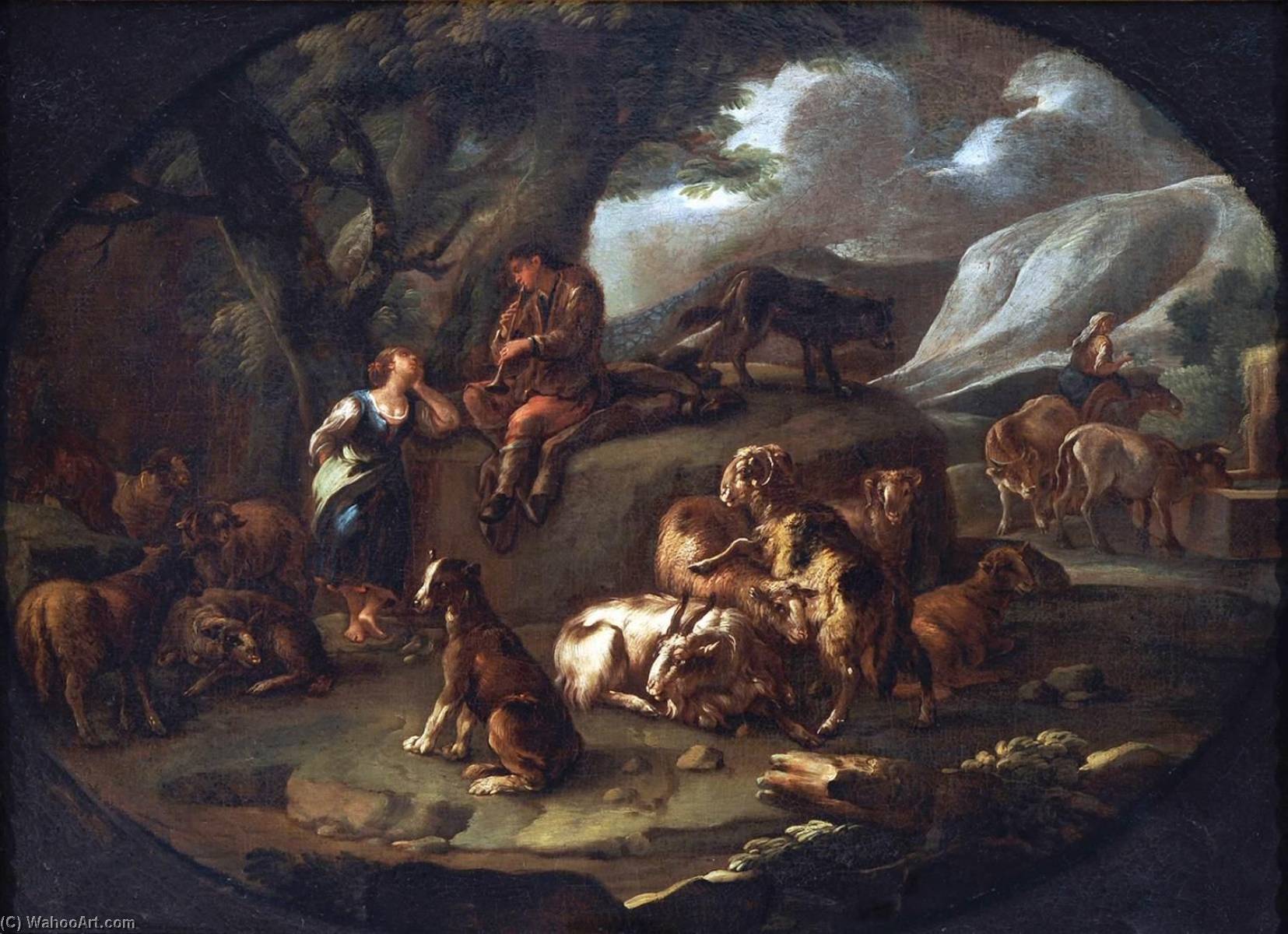
Pastoral Landscape
 1684
1684 76.0 x 99.0 cm
 Ver más
Giclée / Impresión de arte
Impresiones giclée o en lienzo de calidad de museo con producción rápida y opciones de acabado flexibles. ( Comprar pintura hecha a mano Comprar imagen)




































Elija entre nuestros tamaños predefinidos que respetan las proporciones originales de la obra.

Puede introducir sus propias dimensiones para adaptarse a un marco o espacio específico. Si el tamaño seleccionado no coincide con las proporciones de la imagen original, recortaremos la obra de arte o extenderemos la imagen con un borde con efecto espejo o de color sólido. Se enviará una maqueta digital para su aprobación antes de que comience la producción.
Tenga en cuenta que la vista previa en pantalla no refleja el recorte o la extensión real. Solo la maqueta mostrará con precisión la composición final.
Aunque existen tamaños personalizados, recomendamos seleccionar una dimensión de la lista predefinida para preservar las proporciones originales.
Envío a todo el mundo () en 2 semanas en lugar de las 4/5 semanas estándar. (7 septiembre)

Envío exprés gratuito a todo el mundo

Lienzo de lino de alta calidad

Seguro de envío total

Garantía de reembolso de impuestos aduaneros

Garantía de fidelidad cromática exacta

Política de devolución de 100 días (solo por defectos)

Garantía de devolución del 100% del dinero

Descuento por cantidad
 La opción de vidrio solo está disponible en tamaños inferiores a 110 cm.

Pastoral Landscape
Giclée / Impresión de arte
Dimensiones de la reproducción
-


Precio total final
$ 62
Obras relacionadas





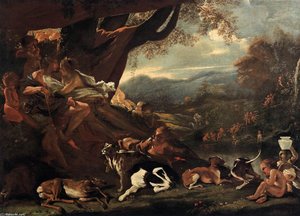

Biografía del artista
The Pastoral Vision of Johann Melchior Roos
In the grand tapestry of the Baroque era, few artists captured the quiet, breathing essence of the natural world as tenderly as Johann Melchior Roos. Born on December 27, 1663, in the historic German city of Heidelberg, Roos was destined for a life steeped in the traditions of landscape and animal painting. He was the son of the esteemed Johann Heinrich Roos, a master whose pastoral idylls had already begun to introduce a new level of atmospheric depth to German art. Growing up under his father's tutelage, the young Roos did not merely learn technique; he inherited a way of seeing—a way that prioritized the subtle interplay of light upon fur, leaf, and earth.
His early development was marked by a restless, wandering spirit that would eventually define his artistic identity. After honing his skills in Düsseldorf under the guidance of Anton Philipsz Amman, Roos’s journey led him through the prestigious drawing academies of the Hague, specifically the Confrerie Pictura. However, it was his movement toward the warmth of the south that truly transformed his palette. By traveling to Rome and later settling in Florence around 1690, he immersed himself in the luminous, sun-drenched landscapes of Italy. This period of engagement with Tuscan culture allowed him to fuse the meticulous, disciplined training of the North with the classical idealism and radiant light of the Italian Baroque.
A Mastery of Light and Animalia
Roos’s work is celebrated for its profound ability to elevate the mundane to the magnificent. While many of his contemporaries sought fame through grand historical narratives or complex mythological allegories, Roos found his muse in the serene, unhurried rhythms of rural life. He became a master of the Italianate landscape, creating scenes where the rolling hills of Tuscany and the rugged beauty of places like Tivoli served as stages for quiet drama. His compositions often feature animals—goats, sheep, and cattle—rendered with such anatomical precision and textural richness that they seem to pulse with life within the frame.
The technique employed by Roos was a sophisticated marriage of disegno and atmospheric observation. He possessed an extraordinary ability to manipulate tonal gradations, using subtle brushstrokes to convey the weight of a shadow or the shimmering heat of a summer afternoon. His palette, often dominated by muted greens, earthy browns, and soft blues, reflected a deep respect for naturalism. In masterpieces such as his depictions of Mount Tivoli, one can witness a breathtaking fusion of classical balance and Baroque realism, where every element—from the delicate foliage to the graceful posture of a shepherd—contributes to an overarching sense of tranquility and understated elegance.
Legacy and Historical Significance
The historical significance of Johann Melchior Roos lies in his role as a bridge between the Northern European tradition and the Mediterranean aesthetic. He did not merely copy the Italian masters; he translated their light through a Germanic lens of precision and detail. His ability to capture the pastoral idyll—a world of peace, abundance, and quiet contemplation—offered a soothing counterpoint to the more turbulent and dramatic themes prevalent in much of 17th-century art.
Throughout his life, which concluded in Braunschweig in 1731, Roos remained a singular figure. His influence can be traced through the enduring popularity of the animal portrait and the landscape genre, genres that continue to resonate with viewers seeking beauty in the natural order. To look upon a work by Roos is to step into an Arcadian dream, where time slows down, and the simple presence of a shepherd or a grazing herd becomes a profound meditation on the harmony of existence.
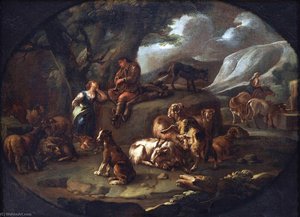
johann melchior roos
1631 - 1631
Datos clave
- Artistic Movement Or Style: Baroque Painter
- Artists Or Movements Influenced By This Artist: ['Dutch Golden Age']
- Artists Who Influenced This Artist: ['Peter Paul Rubens']
- Date Of Birth: December 27, 1663
- Full Name: Johann Melchior Roos
- Nationality: German
- Notable Artworks: ['Rosa di Tivoli']
- Place Of Birth: Heidelberg