

 Ver en contexto
 Enviar
 Compartir
 Detalles

 Descargar
 Similares
 Radiografía
 Presentación de diapositivas
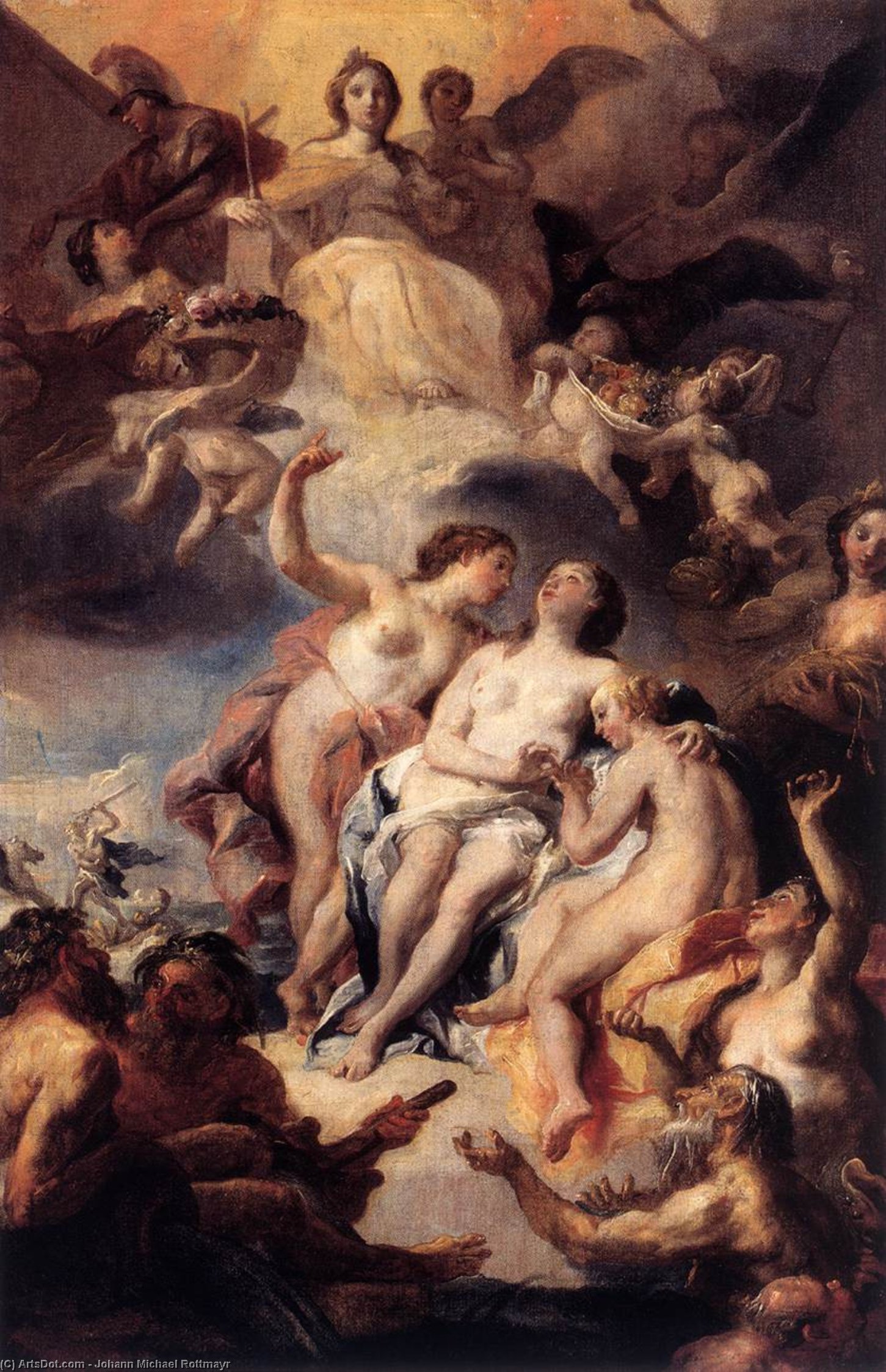
Homage to a Tutelary Goddess
 Oil On Canvas
- WallArt
- Baroque Style
 135.0 x 170.0 cm
 Residenzgalerie
 Ver más
Adquiera una imagen digital de alta resolución y optimizada, muy superior a la vista previa en línea.
Cada archivo es preparado meticulosamente por nuestros especialistas internos mediante el uso de herramientas avanzadas y un experto retoque manual. Nos aseguramos de que cada imagen posea una claridad excepcional, una precisión cromática impecable y un detalle minucioso.
El archivo final se entrega por correo electrónico en un plazo de 72 horas, optimizado para su uso inmediato en entornos profesionales, editoriales y de impresión. Esta es la misma calidad en la que confían los estudios de diseño, las editoriales y las galerías de primer nivel.
Imagen Digital
Descarga un archivo de alta resolución para exhibición personal, impresión y proyectos creativos. ( Comprar impresión Comprar pintura hecha a mano)
Incluido en cada pedido de imágenes digitales
Entrega digital experta, garantizada.
Al elegir ArtsDot.com, no solo está adquiriendo una imagen; está recibiendo una obra de arte digital mejorada profesionalmente, elaborada con precisión y respaldada por una garantía de satisfacción. Esto es todo lo que incluye su pedido, automáticamente:

Entrega rápida por email
Recibirá su archivo de imagen digital en alta resolución por correo electrónico en un plazo de 72 horas tras realizar su pedido, listo para su uso inmediato.

Archivo digital optimizado por IA
Su obra de arte se optimiza profesionalmente mediante herramientas avanzadas de IA y edición manual, garantizando el máximo detalle, claridad y precisión cromática.

Reenvío gratuito de por vida
¿Has borrado o perdido tu archivo por error? No te preocupes: te lo volveremos a enviar en cualquier momento, sin coste adicional.

Sin gastos de importación, siempre
Disfrute de su obra de arte al instante sin aduanas, aranceles ni gastos de envío; las descargas digitales siempre están libres de impuestos.

Garantía de fidelidad de color
Garantizamos que su imagen digital refleje los colores originales con la mayor fidelidad posible, mediante el uso de herramientas profesionales y gestión del color.

Garantía de satisfacción de 60 días
Si no está satisfecho con su imagen digital, la revisaremos o le reembolsaremos el 100% en un plazo de 60 días, sin preguntas.

100% Garantía de devolución de dinero
¿No está satisfecho? Obtenga un reembolso completo dentro de los 60 días posteriores a la recepción de su archivo digital, sin necesidad de explicaciones.

Descuentos por pedidos grandes
Compra 3 imágenes, ahorra 10% - Compra 5, ahorra 15% - Compra 10+, ahorra 20%. Ideal para proyectos creativos, galerías y agencias.
Descripción del coleccionable
A Symphony of Light and Faith: Exploring Johann Michael Rottmayr’s Homage to a Tutelary Goddess
Johann Michael Rottmayr (1654-1730), born in Lauf an der Pegnitz, Bavaria, represents a crucial juncture in European art history – the graceful surrender of Baroque grandeur to the playful exuberance of Rococo. He wasn't merely inheriting artistic traditions; he was actively reshaping them, channeling the brilliance of Italian Renaissance masters into a distinctly Austrian aesthetic that would resonate powerfully throughout Central Europe. Rottmayr’s formative years were spent absorbing the lessons of Venetian luminaries like Titian and Veronese under Johann Carl Loth, an encounter that instilled within him not just technical prowess but also a profound understanding of how to capture emotion and grandeur on canvas. This grounding in classical ideals fueled his ambition to elevate Austrian art beyond mere imitation, forging a path toward innovation while honoring the legacy of its predecessors.- Style & Composition: Rottmayr’s Homage to a Tutelary Goddess exemplifies the Baroque's dramatic flair tempered by Rococo’s delicate ornamentation. The composition is meticulously balanced, drawing the eye upwards towards a central female figure bathed in radiant light – a deliberate echo of Renaissance depictions of divine majesty. Diagonal lines dominate the scene, creating dynamism and conveying a sense of movement that contrasts with the stillness often associated with religious art.
- Technique: Rottmayr’s masterful application of oil paint on canvas is characterized by painstaking detail and expressive brushwork. Layers upon layers of pigment build up to create textures that capture both luminosity and subtle nuances of color, mirroring the meticulous craftsmanship demanded by monumental fresco commissions. The artist skillfully manipulated light and shadow—a technique honed during his Venetian apprenticeship—to sculpt form and imbue the painting with an ethereal quality.
Historical Context: Melk Abbey and the Habsburg Court
The artwork’s genesis lies within the opulent Habsburg court of Vienna, where Rottmayr served as a prolific painter for Emperor Karl VI. However, its most celebrated incarnation resides in Melk Abbey, Lower Austria – specifically, the breathtaking dome that dominates the monastery's skyline. Rottmayr undertook this ambitious project with unwavering dedication, transforming the abbey into a testament to Habsburg piety and artistic patronage. The commission underscored the importance of religious iconography during the Baroque period, reflecting the fervent belief system prevalent throughout Europe at the time. Furthermore, it solidified Rottmayr’s reputation as one of Austria's foremost artists, securing his place within the annals of art history.Symbolism & Narrative Depth
The central female figure embodies a profound spiritual aspiration—a direct reference to ancient goddesses revered throughout pagan cultures. Surrounded by angelic beings engaged in musical instruments and floral offerings, she symbolizes divine grace and benevolent protection. The bird held aloft represents freedom – an emblem of the soul ascending towards enlightenment. These symbolic elements transcend mere decoration; they convey a complex narrative about faith, beauty, and transcendence—themes central to Baroque artistic expression.Emotional Impact & Artistic Legacy
Rottmayr’s Homage to a Tutelary Goddess transcends its formal constraints, captivating viewers with its luminous palette and masterful execution. The painting evokes feelings of serenity, reverence, and awe – qualities that continue to resonate with audiences today. Rottmayr's influence extended far beyond Melk Abbey; his innovative approach to fresco painting established him as a pioneer of the Rococo style, inspiring generations of artists who sought to capture the sublime beauty of divine inspiration. It stands as an enduring monument to artistic brilliance and a poignant reminder of Europe’s rich cultural heritage.Obras relacionadas




Biografía del artista
A Legacy of Light: The Life and Art of Johann Michael Rottmayr
Johann Michael Rottmayr (1654-1730) stands as a pivotal figure in the transition from the High Baroque to the Rococo styles in Central Europe. He wasn’t merely a painter; he was a conduit, skillfully channeling the vibrant energy of Italian Renaissance masters through the lens of burgeoning Austrian artistic sensibilities. Rottmayr's journey began within a family already touched by artistry, providing fertile ground for his innate talents to blossom. His formative years were spent in Lauf an der Pegnitz, Germany, where he received his initial artistic training under Johann Carl Loth in Venice – a period that instilled within him a profound appreciation for the techniques and aesthetics of Venetian Renaissance painters. Loth’s tutelage wasn't simply about mastering brushstrokes; it was immersing Rottmayr in the world of Titian, Veronese, and Tintoretto, fostering an understanding of coloristic richness, dramatic composition, and masterful use of light and shadow – elements that would permeate his entire artistic career.From Venetian Roots to Salzburg Patronage
This Venetian influence remained a cornerstone of Rottmayr’s style throughout his life. He wasn't alone in absorbing Italian influences; Hans Adam Weissenkircher, a contemporary from Lauf, also brought these artistic currents northwards, fostering a shared aesthetic dialogue that enriched the region’s art scene. Following Loth’s guidance, Rottmayr embarked on a path of independent exploration and experimentation, honing his skills and developing his distinctive vision. His artistic ambitions soon attracted the attention of influential patrons, notably Prince-Bishop Maximilian Franz von Thun und Hohenlohe in Salzburg – securing him a prestigious position as the general painter to the Bishopric. This patronage afforded Rottmayr unparalleled opportunities for creative fulfillment and established his reputation within Salzburg’s aristocratic circles. He flourished under Thun’s support, undertaking ambitious projects that showcased his growing mastery of technique and composition. Notably, he collaborated closely with Johann Bernhard Fischer von Erlach on Schloss Frain an der Thaya (now Vranov nad Dyjí), creating a harmonious architectural ensemble where Rottmayr's frescoes seamlessly integrated with the building’s design – demonstrating his commitment to synthesizing artistic disciplines.The Sublime Ceiling: Melk Abbey and Artistic Innovation
Rottmayr’s most celebrated achievement undoubtedly resides in the monumental fresco adorning the central dome of Melk Abbey, Austria. Completed between 1698 and 1703, this masterpiece represents a pinnacle of Baroque illusionistic painting and embodies Rottmayr's unparalleled command of perspective and color theory. The scene depicts a breathtaking vision of heaven – swirling clouds illuminated by radiant light, populated by angelic figures and saints – transforming the abbey’s interior into an ethereal realm of divine splendor. This ambitious undertaking required meticulous planning and execution, reflecting Rottmayr’s dedication to pushing the boundaries of artistic innovation. It cemented his place as one of Austria's foremost Baroque painters and continues to inspire awe in visitors today. Beyond Melk Abbey, Rottmayr produced numerous significant works across Austria and Germany, including frescoes for Karlskirche in Vienna – notably *Intercession of Charles Borromeo supported by the Virgin Mary*, which exemplifies his masterful use of dramatic lighting and emotive color palettes.A Synthesis of Styles: Rottmayr’s Artistic Contribution
Rottmayr wasn't merely replicating Italian artistic conventions; he was adapting them, infusing them with a distinctly Austrian character. His paintings embody a dynamic interplay of light and shadow, vibrant colors, and dramatic composition – hallmarks of the Baroque aesthetic. However, his explorations extended beyond mere stylistic imitation; Rottmayr demonstrated a growing sensitivity to form and detail, foreshadowing the elegance and refinement of the Rococo period. He skillfully blended Venetian influences with Austrian traditions, creating artworks that transcended stylistic boundaries and cemented his legacy as a pivotal figure in European art history. His influence resonated throughout subsequent generations of artists, shaping the artistic landscape of Austria and beyond.A Lasting Impression: Rottmayr’s Enduring Legacy
Johann Michael Rottmayr died peacefully in Vienna on October 25th, 1730, leaving behind a remarkable body of work that continues to captivate audiences worldwide. His frescoes, ceiling paintings, and architectural collaborations stand as enduring monuments to his artistic genius – testament to his unwavering dedication to craftmanship and his profound understanding of the expressive potential of visual art. Rottmayr’s legacy extends beyond the beauty of his creations; it resides in his role as a bridge between eras—a conduit for transmitting Italian Renaissance ideals into the burgeoning Baroque style of Central Europe. He is rightfully considered one of Austria's most important painters of the late 17th and early 18th centuries, securing his place among the artistic luminaries of his time. His work continues to inspire admiration and scholarly study—a testament to its enduring power and significance in the history of art.
Johann Michael Rottmayr
1654 - 1730 , Alemania
Breves datos
- Artistic Movement Or Style: Barroco
- Artists Or Movements Influenced By This Artist: ['Austríaco barroco']
- Artists Who Influenced This Artist: ['Johann Carl Loth']
- Date Of Birth: Dic. 11, 1654
- Date Of Death: Oct. 25, 1730
- Full Name: Johann Michael Rottmayr
- Nationality: Austríaco
- Notable Artworks:
- Melk Abbey Dome
- Intercesión de San Carlos Borromeo
- Vulcan
- Place Of Birth: Lauf, Alemania

