

 Ver en contexto
 Enviar
 Compartir
 Detalles

 Descargar
 Similares
 Radiografía
 Presentación de diapositivas
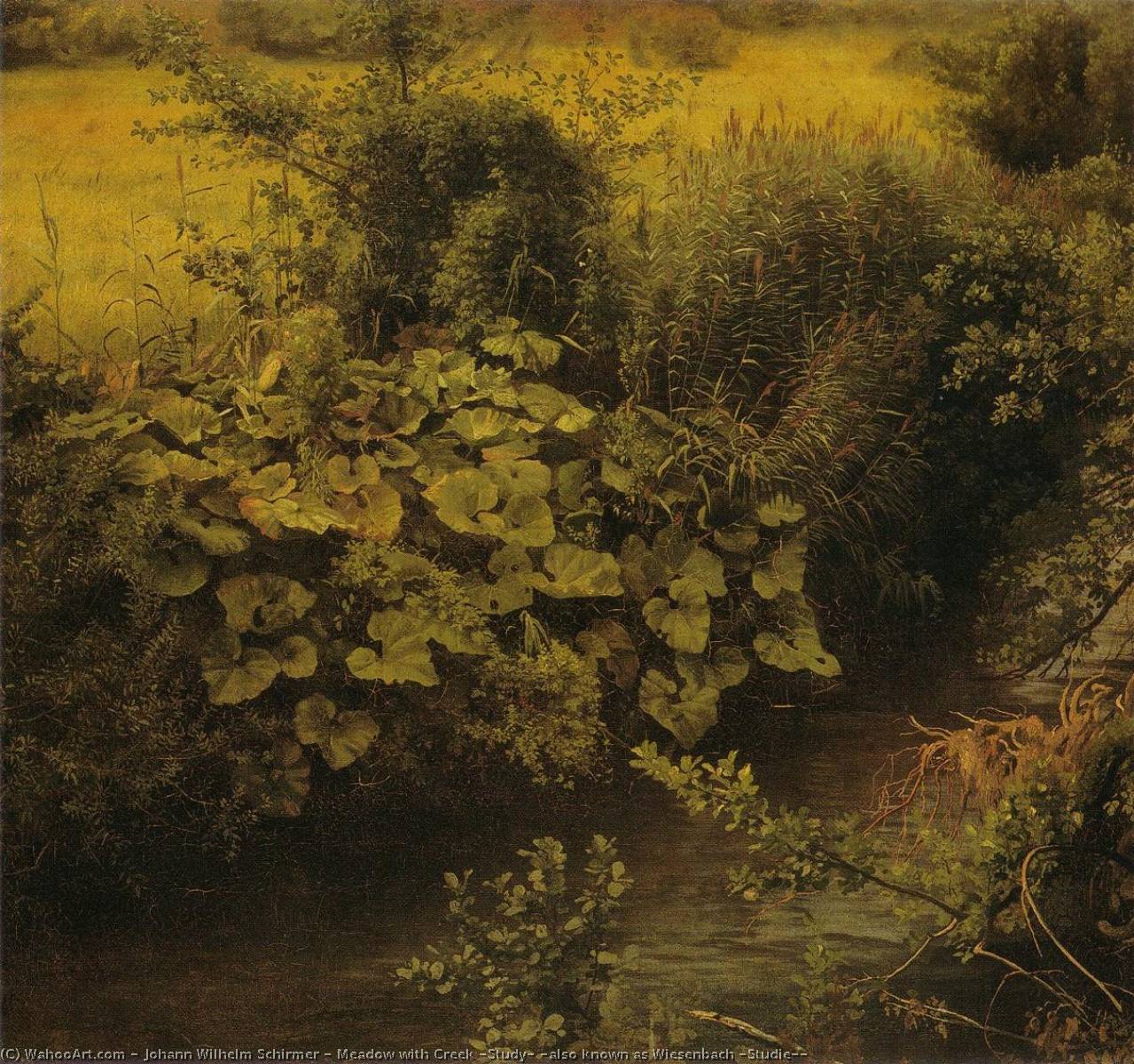
Meadow with Creek (Study) (also known as Wiesenbach (Studie))

 Ver más
Reproducción al óleo hecha a mano
Óleo sobre lienzo pintado a mano en el tamaño y marco de su elección, realizado por encargo por nuestros artistas. ( Comprar impresión Comprar imagen)




































Elija entre nuestros tamaños predefinidos que respetan las proporciones originales de la obra.

Puede ingresar sus propias dimensiones para adaptarse a un marco o espacio específico. Si el tamaño seleccionado no coincide con las proporciones de la imagen original, recortaremos la obra o extenderemos la pintura con elementos adicionales pintados a mano. Se le enviará una maqueta digital para su aprobación antes de comenzar la producción.
Tenga en cuenta que la vista previa en pantalla no refleja el recorte o la extensión reales. Solo la maqueta mostrará con precisión la composición final.
Si bien existen tamaños personalizados, recomendamos seleccionar una dimensión de la lista predefinida para preservar las proporciones originales.
Tras realizar el pedido, el equipo de ArtsDot.com enviará un correo electrónico al cliente para solicitar instrucciones y proporcionarle una vista previa del boceto.
Envío a todo el mundo () en 3-4 semanas en lugar de las 5 semanas estándar. (28 agosto). Sin comprometer la calidad.

Envío exprés gratuito a todo el mundo

Lienzo de lino de alta calidad

Seguro de envío total

Garantía de reembolso de impuestos aduaneros

Garantía de fidelidad cromática exacta

Política de devolución de 60 días (solo por defectos)

Garantía de devolución del 100% del dinero

Descuento por cantidad
 La opción de vidrio solo está disponible en tamaños inferiores a 110 cm.

Meadow with Creek (Study) (also known as Wiesenbach (Studie))
Técnica de reproducción
Dimensiones de la reproducción
-


Precio total final
$ 263
Obras relacionadas








Biografía del artista
The Architect of Atmosphere: The Life and Legacy of Johann Wilhelm Schirmer
In the grand tapestry of nineteenth-century European art, few threads are as vital to the development of landscape painting as those woven by Johann Wilhelm Schirmer. A true pioneer of the Düsseldorf School, Schirmer did not merely paint scenery; he captured the very soul of the natural world, infusing it with a profound psychological depth and an unparalleled atmospheric realism. Born in 1807 in Jülich, within the Prussian Duchy of Jülich, his journey from a student of historical painting to a master of the landscape reflects a transformative era in German art—a period where the rigid structures of classicism began to yield to the emotive power of Romanticism.
Schirmer’s artistic foundation was laid under the rigorous tutelage of Wilhelm von Schadow at the prestigious Düsseldorf Academy. Initially, his path seemed destined for the grand narratives of historical painting, a discipline that demanded meticulous precision and a deep understanding of classical composition. However, the seeds of a different vision were already germinating within him. Influenced by the timeless landscapes of Nicolas Poussin, Schirmer began to seek a way to marry classical order with the burgeoning spirit of his age. This evolution was further catalyzed by his encounter with Carl Friedrich Lessing, whose passion for Romantic philosophy ignited Schirmer’s interest in exploring themes of sublime beauty and the introspective power of nature.
A Journey Through Light and Terrain
The true breadth of Schirmer's genius is perhaps best understood through his extensive travels across the European continent. These were not merely excursions for leisure, but essential pilgrimages that served as the lifeblood of his creative output. As he traversed the rugged terrains of the Black Forest, the majestic peaks of Switzerland, and the sun-drenched vistas of Italy, Schirmer acted as a visual chronicler of the sublime. His time in Normandy and along the Netherlands coast allowed him to master the depiction of water and light, seen most vibrantly in works such as Sea Surf on the Normandy Coast, where the kinetic energy of crashing waves is rendered with breathtaking vitality.
Each landscape he encountered became a laboratory for technical refinement. He possessed a rare ability to distill the essence of a location onto canvas, using a sophisticated palette and nuanced brushwork to evoke specific moods. Whether it was the tranquil, cool tones found in Rocks in a River or the dramatic tension of an Approaching Thunderstorm in the Roman Campagna, Schirmer’s work moved between the serene and the tempestuous. His ability to balance the structural integrity learned from his classical training with the spontaneous, emotional textures of Romanticism allowed him to create landscapes that felt both eternal and immediate.
The Professorship and Lasting Influence
Schirmer's ascent within the art world was marked by significant professional milestones that solidified his role as a leader of his generation. In 1830, he secured an assistant professorship at the Düsseldorf Academy, and by 1839, he had attained a full professorship. This position granted him the autonomy to shape the next wave of German artists, instilling in them a disciplined approach to observation that would define the Düsseldorf School's international reputation. His influence extended far beyond his own canvases, as he mentored students who would go on to carry his legacy of atmospheric realism into the late nineteenth century.
The historical significance of Johann Wilhelm Schirmer lies in his role as a bridge between eras. He took the disciplined, compositional rigor of the classical tradition and breathed into it the breath of Romantic emotion. Through his eyes, the landscape became more than just a subject; it became a vessel for human feeling, a mirror for the sublime, and a testament to the enduring majesty of the natural world. Even today, his works remain vital touchstones for anyone seeking to understand the profound evolution of German landscape art.
johann wilhelm schirmer
1807 - 1863
Datos clave
- Artistic Movement Or Style: Düsseldorf School
- Artists Or Movements Influenced By This Artist: ['Poussin']
- Artists Who Influenced This Artist: ['Schadow']
- Date Of Birth: September 5, 1807
- Full Name: Johann Wilhelm Schirmer
- Nationality: German
- Notable Artworks:
- The Grotto of Egeria
- Twelve Scenes from the History of Abraham
- Place Of Birth: Jülich, Prussia

