

 Vista previa
 Compartir
 Compartir
 Ver detalles

 Descargar
 Ver similares
 Radiografía
 Presentación de diapositivas
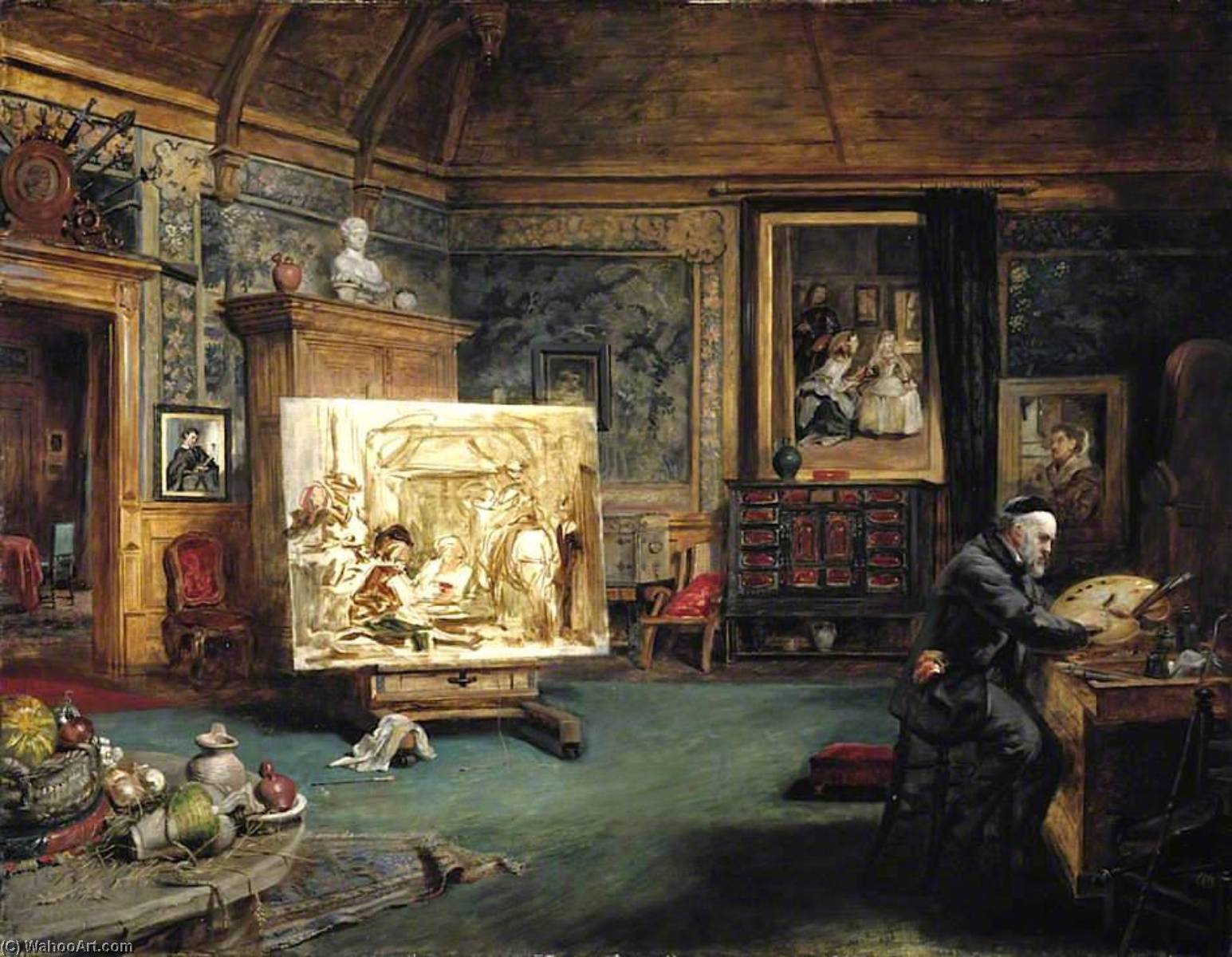
John Phillip, Artist, in his Studio

 Leer más
Adquiera una imagen digital de alta resolución y optimizada, muy superior a la vista previa en línea.
Cada archivo es preparado meticulosamente por nuestros especialistas internos mediante el uso de herramientas avanzadas y un experto retoque manual. Nos aseguramos de que cada imagen posea una claridad excepcional, una precisión cromática impecable y un detalle minucioso.
El archivo final se entrega por correo electrónico en un plazo de 72 horas, optimizado para su uso inmediato en entornos profesionales, editoriales y de impresión. Esta es la misma calidad en la que confían los estudios de diseño, las editoriales y las galerías de primer nivel.
Imagen Digital
Descarga un archivo de alta resolución para exhibición personal, impresión y proyectos creativos. ( Pedir impresión Encargar reproducción pintada a mano)
Incluido en cada compra de imágenes digitales
Entrega digital experta, garantizada.
Al elegir ArtsDot.com, no solo está adquiriendo una imagen; está recibiendo una obra de arte digital mejorada profesionalmente, elaborada con precisión y respaldada por una garantía de satisfacción. Esto es todo lo que incluye su pedido, automáticamente:

Entrega rápida por email
Recibirá su archivo de imagen digital en alta resolución por correo electrónico en un plazo de 72 horas tras realizar su pedido, listo para su uso inmediato.

Archivo digital optimizado por IA
Su obra de arte se optimiza profesionalmente mediante herramientas avanzadas de IA y edición manual, garantizando el máximo detalle, claridad y precisión cromática.

Reenvío gratuito de por vida
¿Has borrado o perdido tu archivo por error? No te preocupes: te lo volveremos a enviar en cualquier momento, sin coste adicional.

Sin gastos de importación, siempre
Disfrute de su obra de arte al instante sin aduanas, aranceles ni gastos de envío; las descargas digitales siempre están libres de impuestos.

Garantía de precisión de color
Garantizamos que su imagen digital refleje los colores originales con la mayor fidelidad posible, mediante el uso de herramientas profesionales y gestión del color.

Garantía de satisfacción de 60 días
Si no está satisfecho con su imagen digital, la revisaremos o le reembolsaremos el 100% en un plazo de 60 días, sin preguntas.

100% Garantía de devolución de dinero
¿No está satisfecho? Obtenga un reembolso completo dentro de los 60 días posteriores a la recepción de su archivo digital, sin necesidad de explicaciones.

Descuentos por volumen
Compra 3 imágenes, ahorra 10% - Compra 5, ahorra 15% - Compra 10+, ahorra 20%. Ideal para proyectos creativos, galerías y agencias.
Descripción del coleccionable
The Painting's Significance
The painting is a portrait of John Phillip, an artist sitting at a desk with a book open in front of him, possibly working on a new piece of art. The room is filled with various objects, including books, chairs, and vases, which add to the overall decoration and create a sense of warmth and comfort. A clock hangs on the wall, indicating the time as the artist works. Key Features of the painting include:- The use of warm colors, which creates a cozy atmosphere
- The attention to detail in the depiction of the objects in the room
- The capture of the artist's personality and essence
Artist and Museum
John Ballantyne was a Scottish painter, born in Kelso in 1815. He trained at the Trustees' Academy in Edinburgh under William Allan and Thomas Duncan. The painting is now part of the collection at the Scottish National Portrait Gallery, which is known for its extensive collection of portraits of famous Scots. You can find more information about the artist and the museum on ArtsDot.com and Wikipedia.The painting is a remarkable example of John Ballantyne's skill and attention to detail. It provides a glimpse into the life of John Phillip, an artist who was known for his work in Spain. The painting's warm colors and cozy atmosphere make it a joy to behold, and its historical significance makes it a valuable addition to any art collection.
Obras relacionadas









Biografía del artista
John Ballantyne (1815–1897): A Highland Visionary
John Ballantyne, a name perhaps less familiar than some of his contemporaries within the grand narratives of 19th-century British art, nevertheless represents a significant and quietly powerful voice in Scottish landscape painting. Born in Kelso, Roxburghshire, in 1815, into a family with roots deeply entwined with publishing – notably through his brother, John Ballantyne the publisher (a figure intimately connected to Walter Scott’s literary endeavors) – Ballantyne's artistic journey was shaped by both familial legacy and a profound connection to the rugged beauty of his native Highlands. He initially pursued studies at the Trustees’ Drawing Academy in Edinburgh, honing his skills before venturing into London, where he immersed himself in the vibrant art scene and sought opportunities for further development. However, it was a return to Scotland that ultimately defined his artistic focus and established him as a key figure in depicting the dramatic landscapes of Perthshire and the Scottish Alps.
Ballantyne’s early career saw him exhibiting regularly at both the Royal Scottish Academy and the Royal Academy in London. While he produced a diverse body of work – including portraits, still lifes, and genre scenes – it is his landscape paintings that truly capture his distinctive style and enduring appeal. His artistic development can be traced through several key influences. The Pre-Raphaelite Brotherhood, with its emphasis on meticulous detail, vibrant color palettes, and a romanticized portrayal of nature, undoubtedly played a role in shaping his approach. However, Ballantyne’s work transcends mere imitation; he infused these influences with a uniquely Scottish sensibility, capturing the atmospheric drama, the dramatic light, and the elemental power of the Highland terrain. The influence of artists like Peter De Wint, known for his evocative depictions of the Scottish Highlands, is also evident in Ballantyne's compositions and color choices.
The Palette of the Highlands
Ballantyne’s artistic signature lies in his masterful manipulation of light and color. He possessed an exceptional ability to capture the fleeting effects of sunlight on mountain peaks, lochs, and heather-covered moorlands. His palette was rich and varied, employing a wide range of hues – from deep blues and greens to vibrant yellows and ochres – to create a sense of depth, atmosphere, and emotional resonance. He wasn’t simply aiming for topographical accuracy; he sought to convey the *feeling* of being in these wild landscapes, imbuing his paintings with a palpable sense of drama and solitude. His use of atmospheric perspective—the subtle shifts in color and tone that suggest distance—is particularly noteworthy, creating an illusion of vastness and scale.
A key element of Ballantyne’s style was his meticulous attention to detail, particularly in the rendering of trees and foliage. He frequently depicted ancient Scots pines, their gnarled branches reaching skyward like skeletal fingers, and clusters of heather, rendered with a remarkable sensitivity to texture and color. These details, combined with his skillful use of light and shadow, lent his paintings a sense of realism that belied their romanticized qualities. His depictions of trees were not merely decorative; they served as anchors within the composition, providing points of focus and contributing to the overall sense of drama.
Major Works and Themes
Among Ballantyne’s most celebrated works are his series of paintings depicting the Scottish Alps – particularly Ben Nevis and Glencoe. These landscapes were not simply picturesque vistas; they were imbued with a profound sense of spirituality and awe. He frequently depicted these scenes during periods of inclement weather, capturing the dramatic interplay of light and shadow, the swirling mists, and the raw power of nature. His painting “The Cascade at Glen Nevis” (1864) is considered one of his finest achievements, showcasing his mastery of color and composition. Similarly, his series of paintings depicting Perthshire – including views of Loch Tay and the Trossachs – are equally compelling, capturing the beauty and tranquility of these iconic Scottish landscapes.
Beyond the purely scenic, Ballantyne’s work also explored themes of solitude, contemplation, and the relationship between humanity and nature. His paintings often depict lone figures— shepherds, travelers, or simply individuals lost in thought—standing within the vastness of the Highland landscape. These figures serve as a reminder of our own smallness in the face of nature's grandeur, inviting viewers to contemplate their place in the world.
Legacy and Historical Significance
Despite not achieving widespread fame during his lifetime, John Ballantyne’s work has enjoyed a significant revival in recent decades. His paintings are now recognized as important examples of 19th-century Scottish landscape painting, offering a unique and evocative portrayal of the Highlands. His influence can be seen in the works of later artists who followed in his footsteps, including Paul Nash and David Morison. Ballantyne’s meticulous observation, masterful technique, and profound connection to the Scottish landscape have secured his place as a significant figure in British art history – a quiet giant whose vision continues to resonate with viewers today.
Ballantyne died in Edinburgh in 1897, leaving behind a substantial body of work that provides invaluable insights into the beauty and spirit of Scotland. His paintings remain treasured possessions within Scottish collections, offering a window into a bygone era and a testament to the enduring power of landscape art.
john ballantyne
1815 - 1897
Datos clave
- Artistic Movement Or Style: Romantic landscape
- Artists Or Movements Influenced By This Artist: ['Pre-Raphaelite art']
- Artists Who Influenced This Artist: ['MacWhirter']
- Date Of Birth: 1815
- Date Of Death: 1897
- Full Name: John Ballantyne
- Nationality: Scottish
- Notable Artworks:
- The Alps
- Perthshire Scenery
- Tree Studies
- Place Of Birth: Kelso, Scotland

