

 Ver en contexto
 Enviar
 Compartir
 Detalles

 Descargar
 Similares
 Radiografía
 Presentación de diapositivas
 Estadísticas
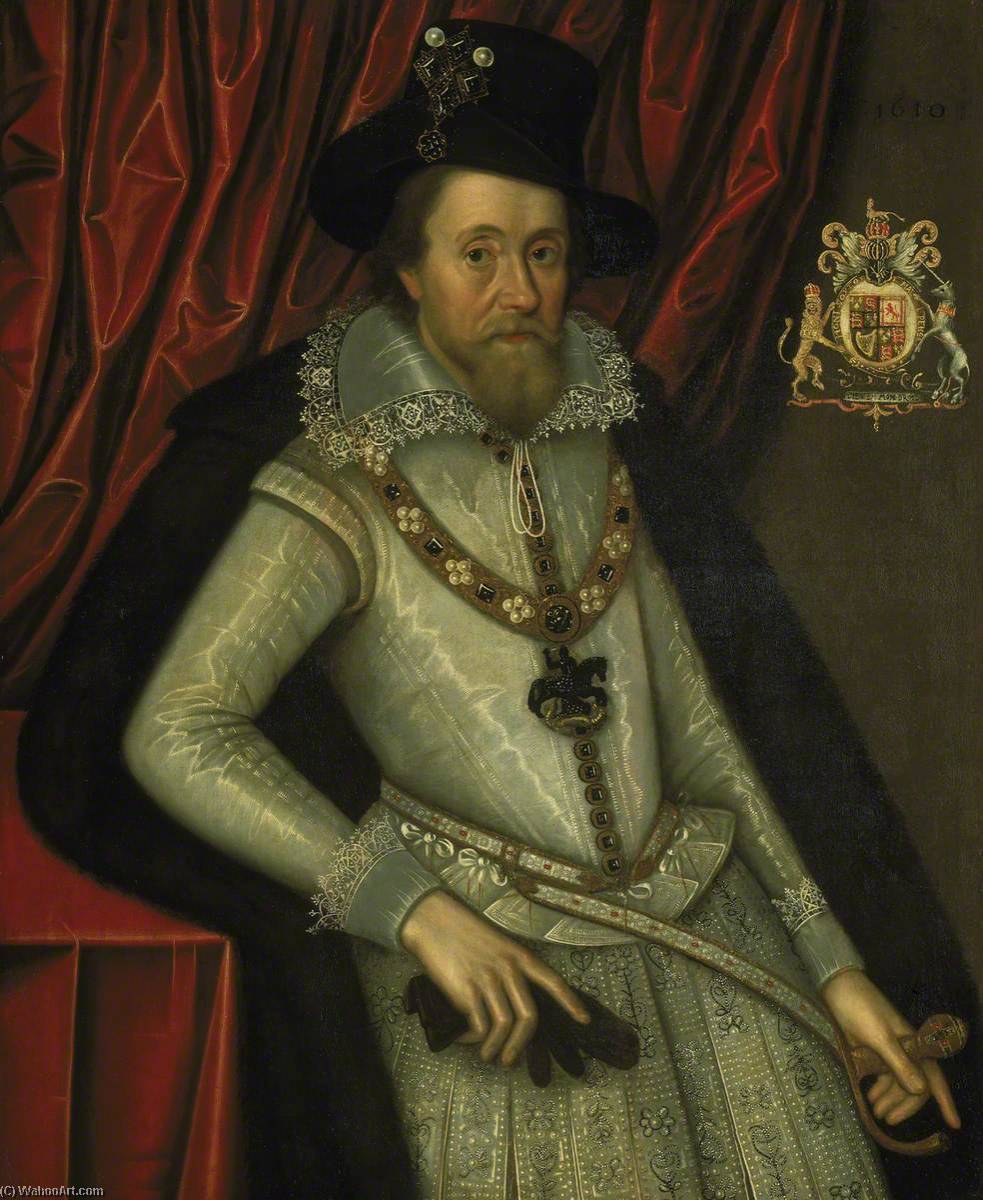
James I (1566–1625)
 1610
1610 104.0 x 84.0 cm
 Ver más
Adquiera una imagen digital de alta resolución y optimizada, muy superior a la vista previa en línea.
Cada archivo es preparado meticulosamente por nuestros especialistas internos mediante el uso de herramientas avanzadas y un experto retoque manual. Nos aseguramos de que cada imagen posea una claridad excepcional, una precisión cromática impecable y un detalle minucioso.
El archivo final se entrega por correo electrónico en un plazo de 72 horas, optimizado para su uso inmediato en entornos profesionales, editoriales y de impresión. Esta es la misma calidad en la que confían los estudios de diseño, las editoriales y las galerías de primer nivel.
Imagen Digital
Descarga un archivo de alta resolución para exhibición personal, impresión y proyectos creativos. ( Cambiar a Impresión Comprar pintura hecha a mano)
Incluido en cada pedido de imágenes digitales
Entrega digital experta, garantizada.
Al elegir ArtsDot.com, no solo está adquiriendo una imagen; está recibiendo una obra de arte digital mejorada profesionalmente, elaborada con precisión y respaldada por una garantía de satisfacción. Esto es todo lo que incluye su pedido, automáticamente:

Entrega rápida por email
Recibirá su archivo de imagen digital en alta resolución por correo electrónico en un plazo de 72 horas tras realizar su pedido, listo para su uso inmediato.

Archivo digital optimizado por IA
Su obra de arte se optimiza profesionalmente mediante herramientas avanzadas de IA y edición manual, garantizando el máximo detalle, claridad y precisión cromática.

Reenvío gratuito de por vida
¿Has borrado o perdido tu archivo por error? No te preocupes: te lo volveremos a enviar en cualquier momento, sin coste adicional.

Sin gastos de importación, siempre
Disfrute de su obra de arte al instante sin aduanas, aranceles ni gastos de envío; las descargas digitales siempre están libres de impuestos.

Garantía de fidelidad de color
Garantizamos que su imagen digital refleje los colores originales con la mayor fidelidad posible, mediante el uso de herramientas profesionales y gestión del color.

Garantía de satisfacción de 100 días
Si no está satisfecho con su imagen digital, la revisaremos o le reembolsaremos el 100% en un plazo de 100 días, sin preguntas.

100% Garantía de devolución de dinero
¿No está satisfecho? Obtenga un reembolso completo dentro de los 100 días posteriores a la recepción de su archivo digital, sin preguntas.

Descuentos por pedidos grandes
Compra 3 imágenes, ahorra 10% - Compra 5, ahorra 15% - Compra 10+, ahorra 20%. Ideal para proyectos creativos, galerías y agencias.
Obras relacionadas









Biografía del artista
A Courtly Hand: The Life and Art of John de Critz the Elder
John de Critz the Elder, a name perhaps less immediately recognizable than his continental contemporaries, nevertheless occupies a pivotal position in the history of English portraiture. Born in 1551, his life unfolded during a period of immense transformation for England – the waning years of the Tudor dynasty and the ascendance of the Stuarts. While details of his early training remain somewhat elusive, it is widely believed he received his formative artistic education in the Netherlands, likely within the vibrant circle of Flemish painters who were profoundly influencing Northern European art at the time. This background would prove crucial to shaping his distinctive style, a meticulous realism tempered by an elegant formality that perfectly suited the tastes of the English court. De Critz wasn’t merely a painter; he was a chronicler of power, capturing the likenesses of those who steered the nation through turbulent times.From Flemish Roots to Royal Patronage
The artistic landscape de Critz entered upon arriving in England was already rich with talent, but his particular skill set – an ability to render textures with astonishing accuracy and a gift for conveying both status and personality – quickly garnered attention. He became deeply embedded within the orbit of Robert Cecil, 1st Earl of Salisbury, James I’s powerful chief minister. Cecil wasn't simply a patron; he was instrumental in establishing de Critz as *the* premier portraitist of the Jacobean court. De Critz’s workshop flourished, becoming a hub for artistic production and attracting other skilled painters who assisted him with commissions. This collaborative nature of his practice is important to note – while many portraits bear his signature, they often represent the combined efforts of several hands under his direction. His early works demonstrate a clear debt to Flemish masters like Hans Holbein the Younger, particularly in their precise detail and restrained color palettes. However, de Critz gradually developed a more uniquely English sensibility, characterized by a greater emphasis on decorative elements and a subtle psychological depth in his portrayals.The Art of Representation: Style and Technique
De Critz’s portraits are not simply likenesses; they are statements of authority, wealth, and social standing. He excelled at depicting the opulent fabrics, intricate jewelry, and elaborate costumes that signified a person's position within the hierarchical structure of Jacobean society. His technique was painstaking, built upon layers of carefully applied paint to create a remarkable sense of three-dimensionality. He favored a relatively small scale for his portraits, which contributed to their intimacy and allowed for an exceptional level of detail. The use of light is particularly noteworthy, often directed to illuminate the face and hands, drawing the viewer’s attention to these key features of identity. He wasn't interested in dramatic chiaroscuro or emotional intensity; instead, he sought a calm, dignified representation that emphasized the sitter’s inherent nobility. His portraits are imbued with a sense of quiet confidence, reflecting the stability and order that Cecil and James I aimed to project.Key Works and Lasting Legacy
Among de Critz's most celebrated works is his portrait of James I, which exists in numerous versions and served as a template for countless copies. These portraits are not merely images of the king; they are carefully constructed symbols of royal power, emphasizing his authority and divine right to rule. His portraits of Robert Cecil himself are equally significant, offering insights into the mind and character of this influential statesman. Beyond these iconic depictions of royalty and nobility, de Critz also painted a number of portraits of lesser-known figures, providing valuable glimpses into the lives of those who inhabited the Jacobean court.- His influence extended beyond portraiture
- He was involved in designing decorative schemes for royal buildings.
- De Critz’s workshop continued to thrive after his death in 1642
A Chronicler of an Era
John de Critz the Elder died in 1642, leaving behind a substantial body of work that continues to fascinate and inform our understanding of Jacobean England. He wasn’t a revolutionary artist; he didn't seek to break with tradition or explore new artistic frontiers. Instead, he perfected an existing style, adapting it to the specific needs and tastes of his patrons. His lasting significance lies in his ability to capture the essence of a particular moment in English history – a time of political intrigue, religious tension, and burgeoning national identity. He stands as a testament to the power of portraiture not simply as a means of recording likenesses, but as a powerful tool for shaping perceptions and constructing narratives about those who held positions of authority. His portraits remain invaluable historical documents, offering us a glimpse into the world of the Jacobean court and the individuals who shaped its destiny.
john de critz the elder
1551 - 1642
Breves datos
- Artistic Movement Or Style: Northern Renaissance Art
- Artists Who Influenced This Artist:
- Hans Holbein the Younger
- Pieter Bruegel
- Date Of Birth: 1551/2
- Date Of Death: 1642
- Full Name: John de Critz the Elder
- Nationality: Dutch
- Notable Artworks:
- Portrait of Robert Cecil
- Portrait of James I
- Place Of Birth: Flemish